
Small White Dog Breeds: Cute White Dogs, Sizes & Temperaments
A beautiful white coat is only the beginning. Compare the everyday realities of six small white dog breeds—from energy and barking to brushing, tear stains, and apartment life.
Written for future dog owners: Updated September 2026 · General education, not veterinary advice
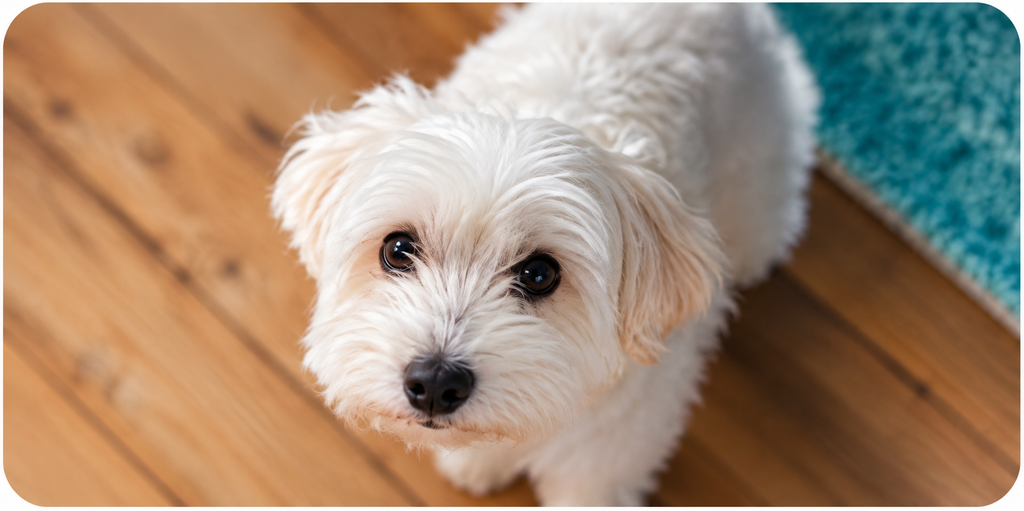
A responsible match goes beyond coat color. Breed tendencies are useful starting points, but temperament and health also reflect genetics, early socialization, training, age, and the individual dog. Meet adult dogs where possible and discuss health testing with a responsible breeder or rescue.
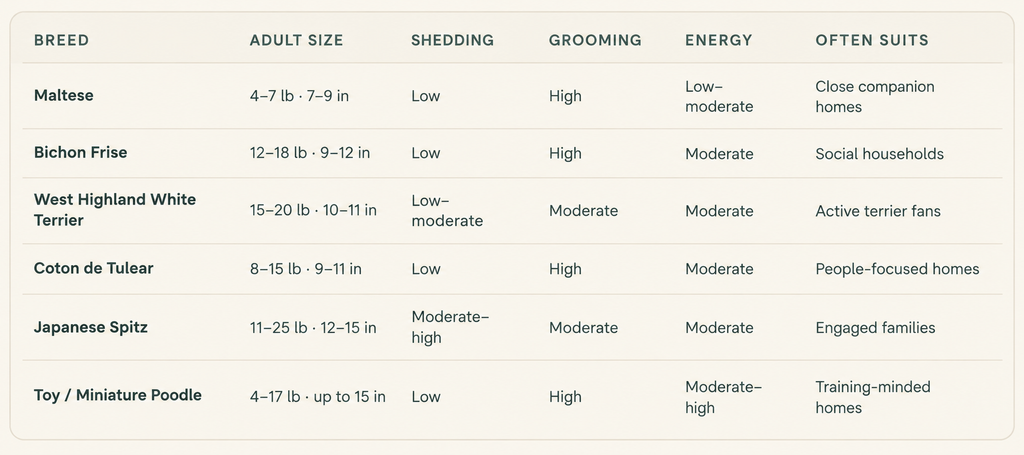
Six small white breeds at a glance
Adult ranges are approximate; reputable breed clubs and veterinarians can help you interpret them for an individual dog.
Start with your lifestyle
Narrow the shortlist
Maltese
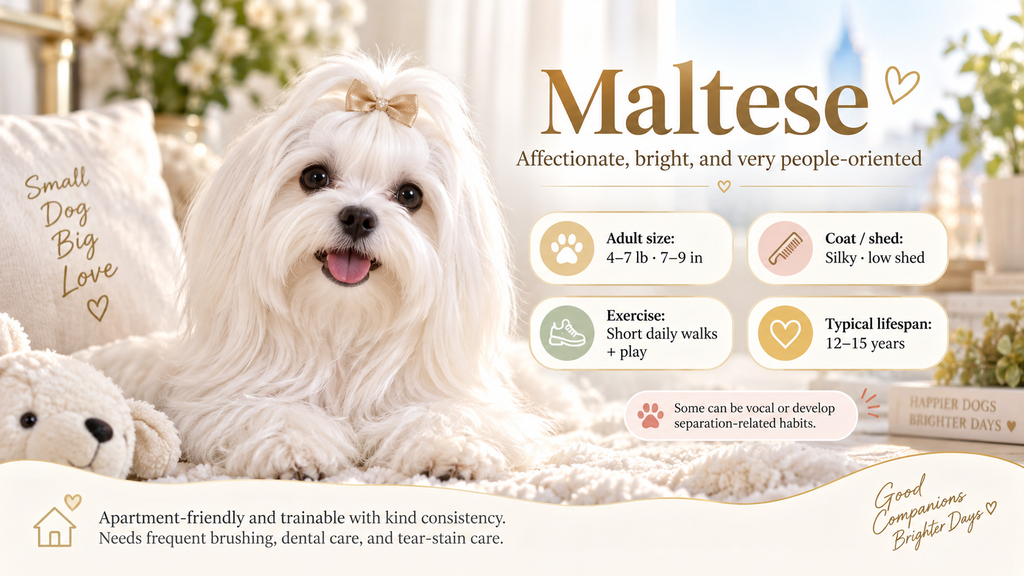
Affectionate, bright, and very people-oriented. The Maltese is one of the smallest choices here, but that silky white coat needs consistent care.
| Adult size 4–7 lb · 7–9 in | Coat / shed Silky · low shed |
| Exercise Short daily walks + play | Typical lifespan 12–15 years |
Usually apartment-friendly and trainable with kind consistency; some can become vocal or develop separation-related habits. Best for owners happy to brush frequently, maintain dental care, and manage tear staining around the eyes.
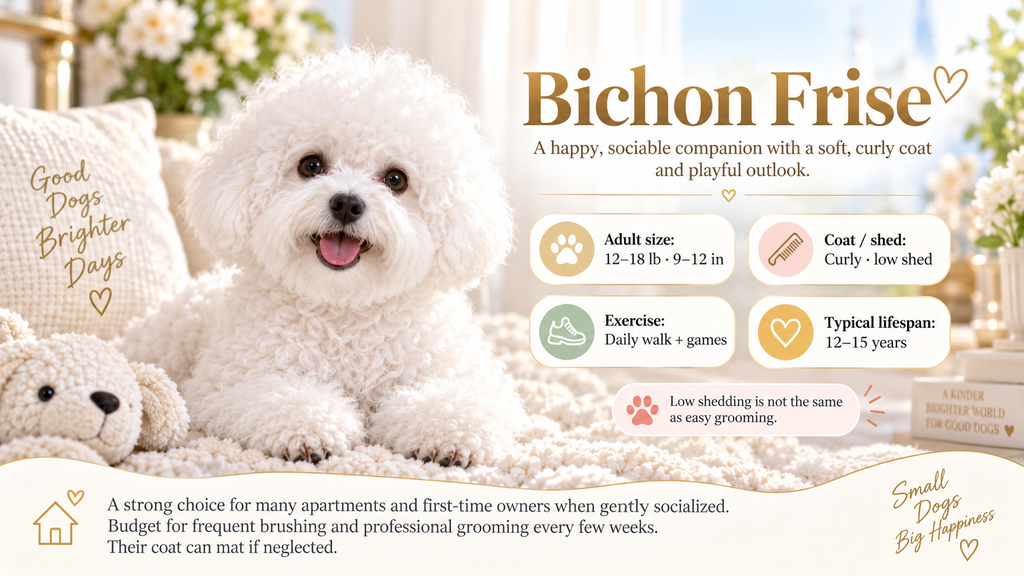
Bichon Frise
A happy, sociable companion with a soft, curly coat and playful outlook. Bichons are often engaging family dogs when gently socialized.
| Adult size 12–18 lb · 9–12 in | Coat / shed Curly · low shed |
| Exercise Daily walk + games | Typical lifespan 12–15 years |
A strong choice for many apartments and first-time owners, provided you budget for brushing and professional grooming every few weeks. Their low-shedding coat can mat if neglected; low shedding is not the same as easy grooming.
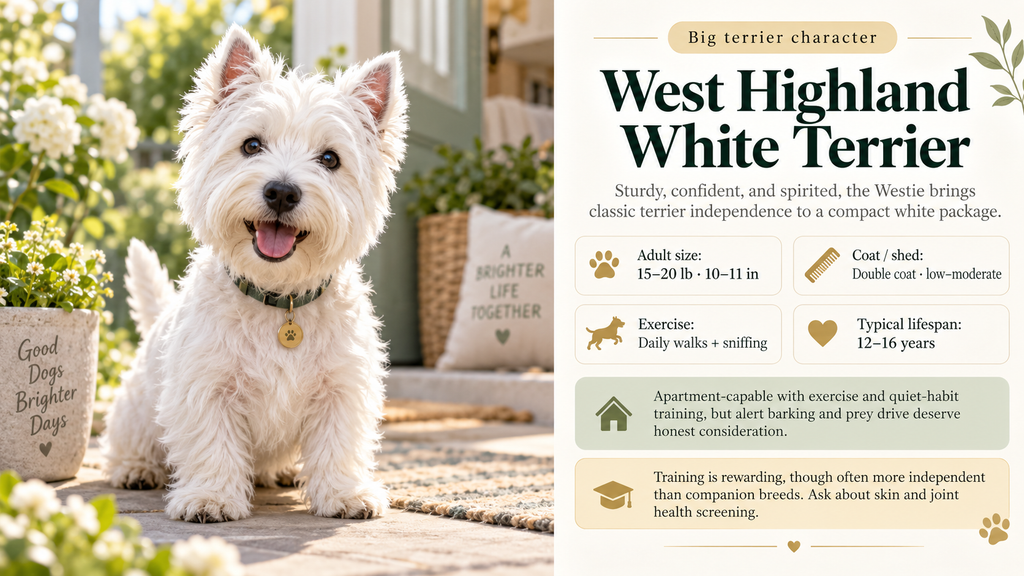
West Highland White Terrier
Sturdy, confident, and spirited, the Westie brings classic terrier independence to a compact white package.
| Adult size 15–20 lb · 10–11 in | Coat / shed Double coat · low–moderate |
| Exercise Daily walks + sniffing | Typical lifespan 12–16 years |
Westies can work in apartments when exercised and taught quiet habits, but their alert bark and prey drive deserve honest consideration. Training is usually rewarding, though they may be more independent than companion breeds. Ask breeders about skin and joint health screening.
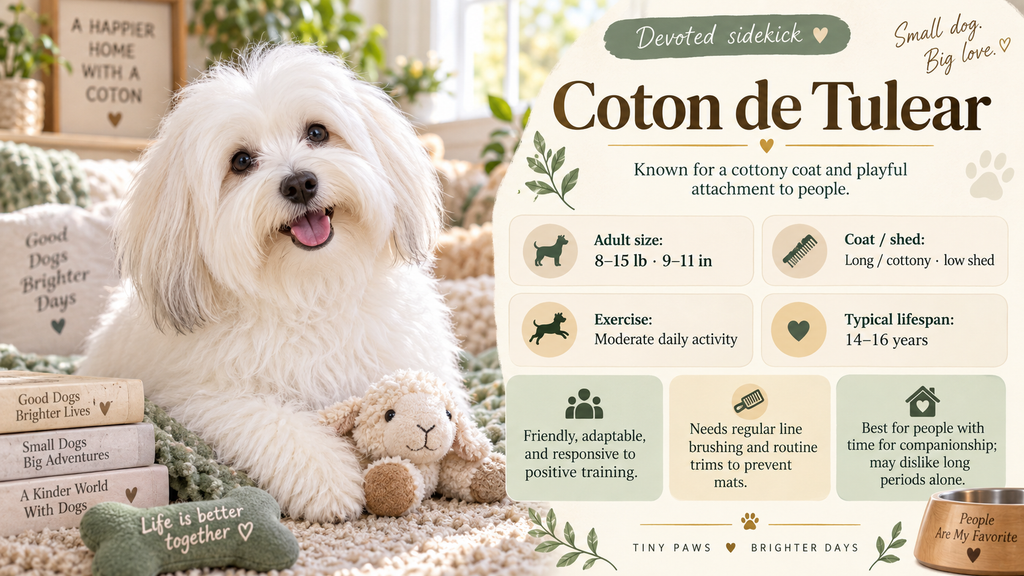
Coton de Tulear
Known for a cottony coat and playful attachment to people, this breed often thrives where it can be included in daily life.
| Adult size 8–15 lb · 9–11 in | Coat / shed Long / cottony · low shed |
| Exercise Moderate daily activity | Typical lifespan 14–16 years |
Cotons are often friendly, adaptable, and responsive to positive training. Their main trade-off is coat care: regular line brushing and routine trims prevent painful mats. They can dislike long periods alone, so they are best for people with time for companionship.
White-coat reality check
Low shedding is not low maintenance
Low-shedding coats still trap loose hair and can mat close to the skin. Most need several brush sessions each week—sometimes daily.
No breed is truly hypoallergenic. People react to proteins in dander, saliva, and urine as well as hair. Spend time with the individual dog before committing.
Tear staining can be especially visible on white faces. Gentle daily cleaning, veterinary advice for persistent staining, and avoiding harsh home remedies are sensible basics.
Small dogs are prone to dental disease. Daily tooth brushing, suitable chews, and regular veterinary dental checks belong in the ownership plan.
Before you decide
Choose with your ordinary Tuesday in mind
The best match is the dog whose everyday needs genuinely fit your schedule, not the dog whose photo is hardest to resist.
- Can you reliably provide grooming time or budget for a professional groomer every 4–8 weeks?
- Will your building, neighbors, and routine tolerate an alert barker—or can you commit to early training?
- Does the dog’s energy level fit your real daily walks, play, and training time?
- Have you met dogs of the breed and reviewed responsible breeder or rescue health information?
The Takeaway
The best small white dog is the one that fits your life after the novelty wears off.
If you want a tiny, devoted companion, begin with the Maltese. For an upbeat social dog, consider the Bichon Frise or Coton de Tulear. Want terrier spirit? Meet a Westie. Prefer a clever training partner? A Toy or Miniature Poodle may stand out. And if a fluffy double coat does not put you off, the Japanese Spitz can be a joyful choice. In every case, match grooming, energy, noise, and companionship needs to your household first.