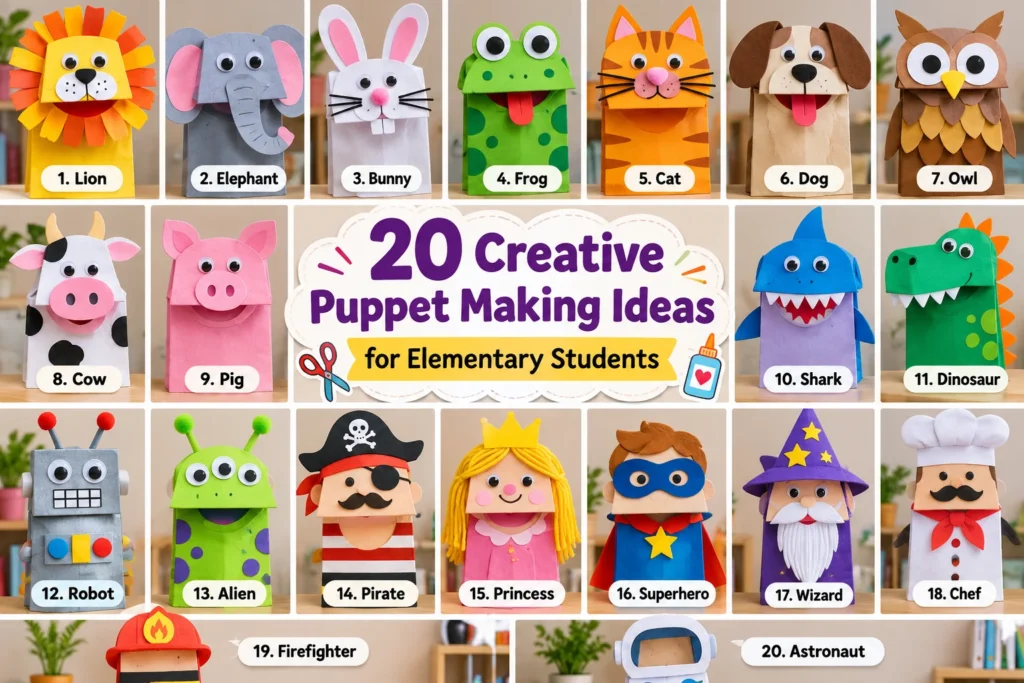
Paper bag puppets are one of the easiest and most affordable crafts for preschoolers, kindergarteners, and elementary students. With ordinary lunch bags, colorful construction paper, glue, and markers, children can create animal characters, imaginary creatures, and storytelling companions.
Unlike crafts made only for decoration, these handmade characters encourage children to communicate, explore emotions, and participate in imaginative play. They also offer opportunities to practice cutting, gluing, drawing, and hand-eye coordination.
The National Association for the Education of Young Children (NAEYC) highlights how simple props, including handmade puppets, can support storytelling, comprehension, and dramatic play in early childhood classrooms.
This guide features 15 creative puppet ideas, basic construction instructions, and a practical classroom storytelling framework.
How to Make a Basic Paper Bag Puppet
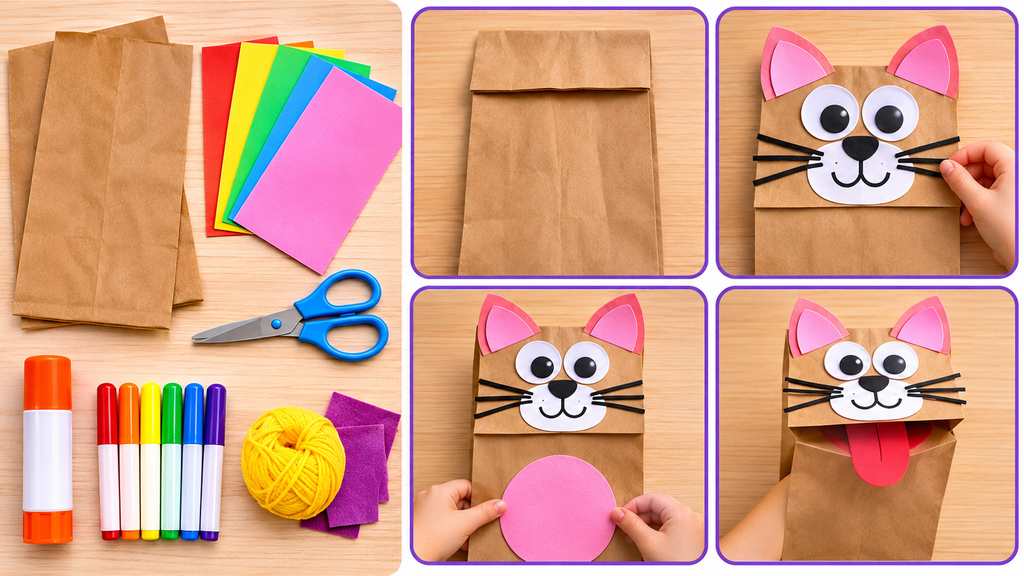
Before exploring individual characters, children should understand how the folded bottom of a lunch bag creates a moving mouth.
Materials you’ll need:
- Brown or white paper lunch bags
- Colorful construction paper
- Child-safe scissors
- Glue sticks
- Washable markers or crayons
- Optional yarn and fabric scraps
Place the bag flat with its folded bottom facing upward. Decorate this flap as the character’s face and the longer section as its body.
Slide your hand inside the opening. Moving your fingers behind the folded flap makes the character appear to speak.
For younger children, prepare large paper shapes in advance and avoid loose decorations that could present choking hazards.
Easy Animal Puppet Crafts for Preschool and Kindergarten
Animal characters are excellent starting projects because children can recognize familiar facial features and customize each design.
Brown Bear Puppet — Best for Beginners
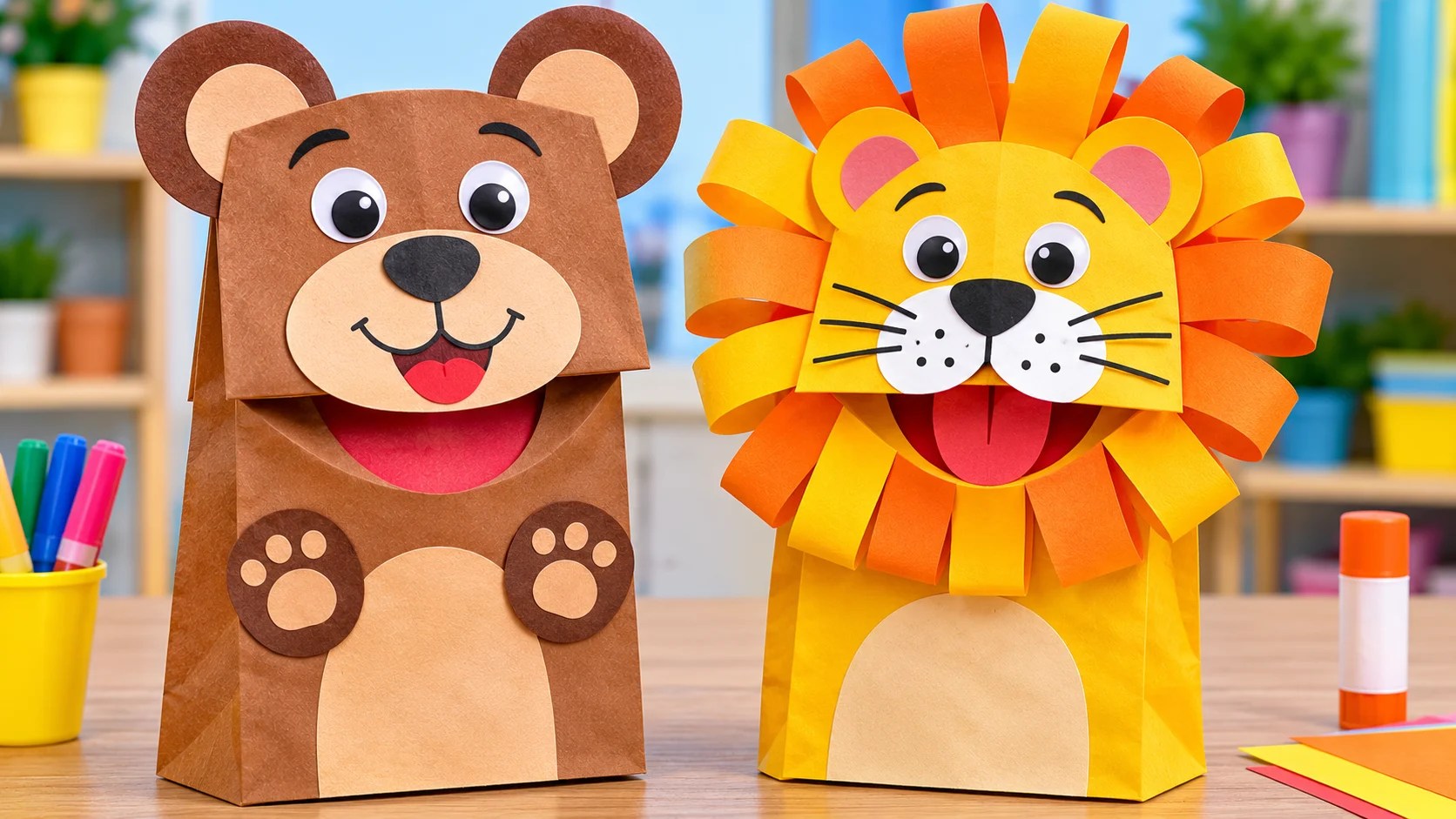
Transform a brown lunch bag into a friendly bear using two round paper ears, a large oval muzzle, and a black nose.
Draw expressive eyes and attach the ears behind the folded flap.
Creative extension: Ask children to describe where their bear lives and what it eats.
Colorful Lion Puppet — Best for Texture Exploration
Create a lion’s mane using strips of yellow and orange construction paper.
Arrange the strips around the face and attach rounded ears, eyes, and a smiling mouth.
Children can curl or fold the paper strips to experiment with different textures.
Bunny Rabbit Puppet — Best for Spring Crafts
Attach two long paper ears to the top of a white lunch bag.
Add a pink triangular nose, whiskers, and large front teeth.
This character works especially well during spring celebrations and Easter-themed classroom activities.
Frog Puppet — Best for Learning About Animals
Cover the front of a paper bag with green construction paper.
Attach large circular eyes above the folded flap and add a red paper tongue beneath it.
Use the finished frog to introduce simple conversations about ponds, insects, and animal habitats.
Cute Cat Puppet — Best for Shape Recognition
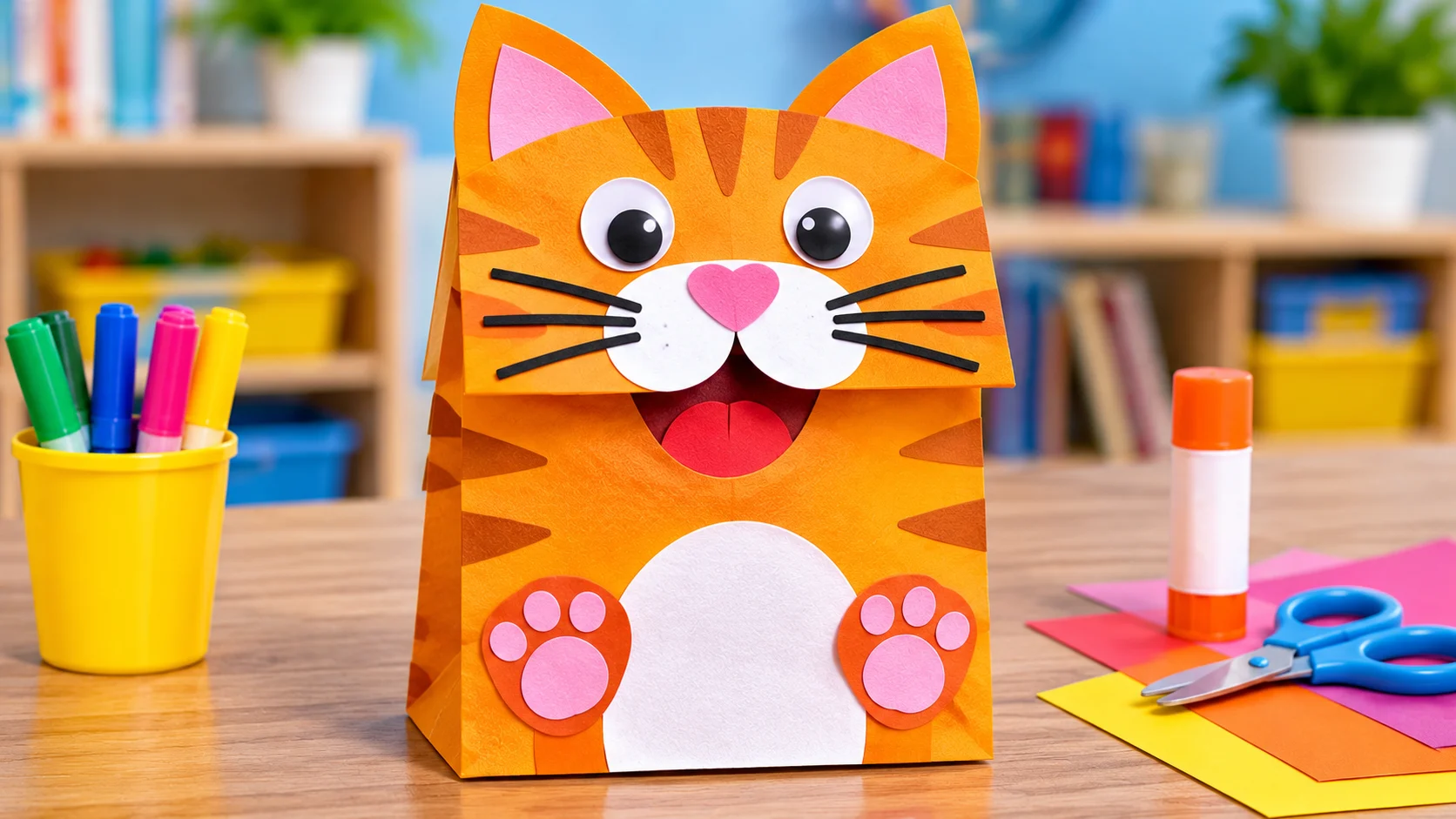
Cut triangular ears, oval eyes, and thin paper whiskers.
Attach the features to a brown, orange, or white bag.
Encourage children to create different facial expressions using simple geometric shapes.
Puppy Dog Puppet — Best for Pretend Play
Create floppy ears using brown paper and attach a large black nose to the face.
Add a pink tongue beneath the mouth flap.
Children can name their puppies and invent stories about caring for pets.
Elephant Puppet — Best for Creative Construction
Use gray construction paper to cover the bag.
Attach two oversized ears and a long, curved paper trunk.
Ask children to explore how the elephant’s trunk could move during imaginative storytelling.
Owl Puppet — Best for Woodland Themes
Create an owl using brown paper wings, large circular eyes, and a triangular beak.
Decorate its body with overlapping feather-shaped paper pieces.
This project pairs naturally with woodland animal stories and nature discussions.
Creative Character and Fantasy Puppet Ideas
Once children understand the basic design, encourage them to create characters that express emotions, personalities, and imaginative stories.
Friendly Monster Puppet — Best for Imagination
Give children colorful paper scraps and invite them to design an original monster.
They can add multiple eyes, unusual ears, colorful teeth, or funny facial expressions.
There is no single correct design, making this an excellent open-ended activity.
Princess Puppet — Best for Storytelling
Decorate a lunch bag with a paper dress, crown, and colorful hair.
Children can invent a princess character with unique abilities, interests, and adventures.
Encourage stories focused on problem-solving rather than appearance.
Pirate Puppet — Best for Dramatic Play
Create a pirate hat from black construction paper.
Add a paper eye patch, striped clothing, and a friendly smile.
Use this character in treasure-hunt stories featuring maps, clues, and imaginary islands.
Robot Puppet — Best for STEM Connections
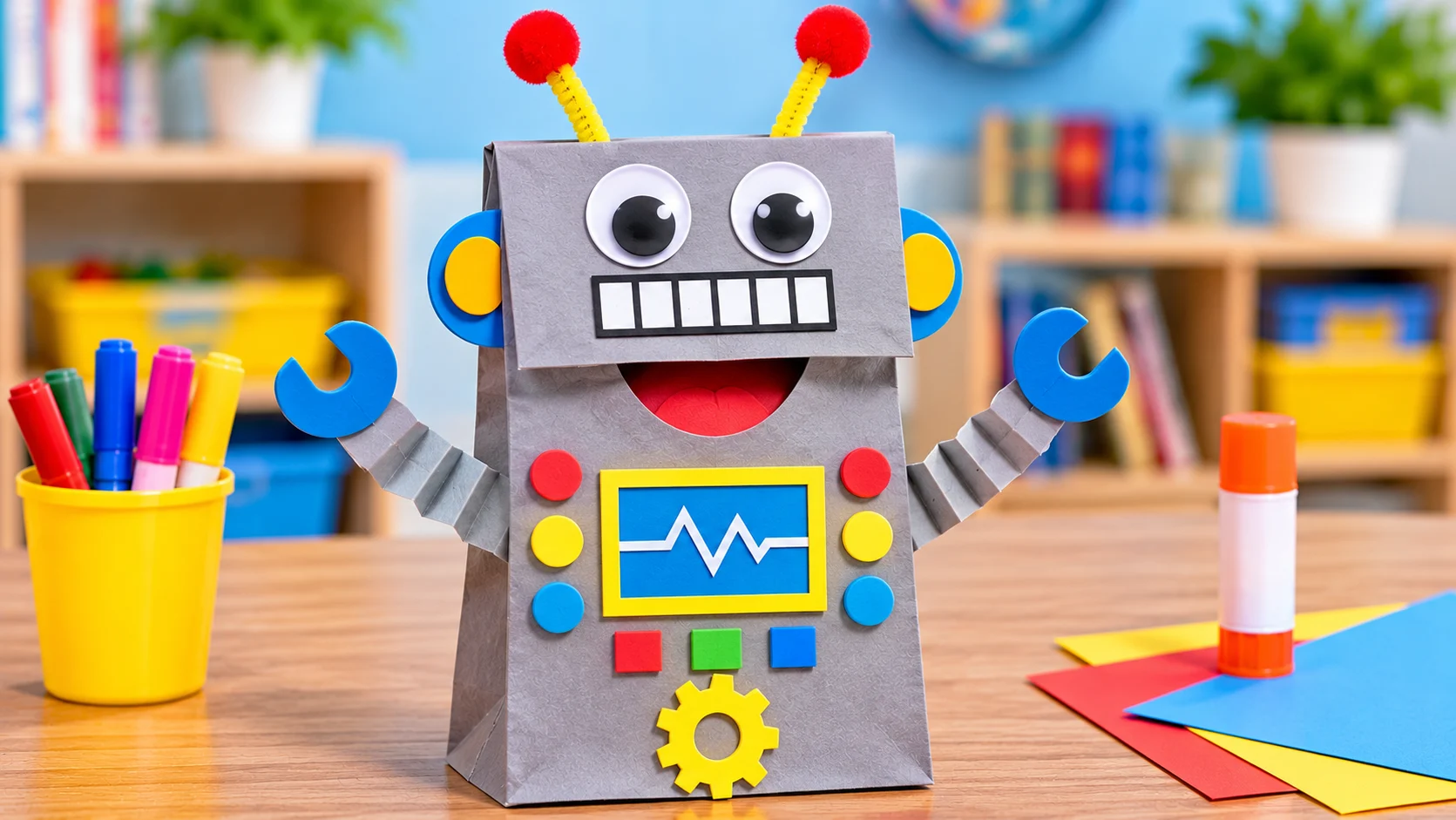
Cover the bag with gray paper and decorate it using squares, rectangles, and circles.
Add paper antennas and colorful control buttons.
Challenge children to explain what their robots do and which problems they solve.
Dinosaur Puppet — Best for Prehistoric Adventures
Decorate a green paper bag with triangular spikes and a long paper tail.
Add large eyes and a mouth with rounded paper teeth.
Students can compare their imagined dinosaur with pictures of real prehistoric animals.
Community Helper Puppet — Best for Social Learning
Invite children to create firefighters, doctors, teachers, or other community helpers.
Use paper uniforms, hats, and simple illustrated tools.
Discuss how different people contribute to their neighborhoods.
Family Character Puppet — Best for Emotional Expression
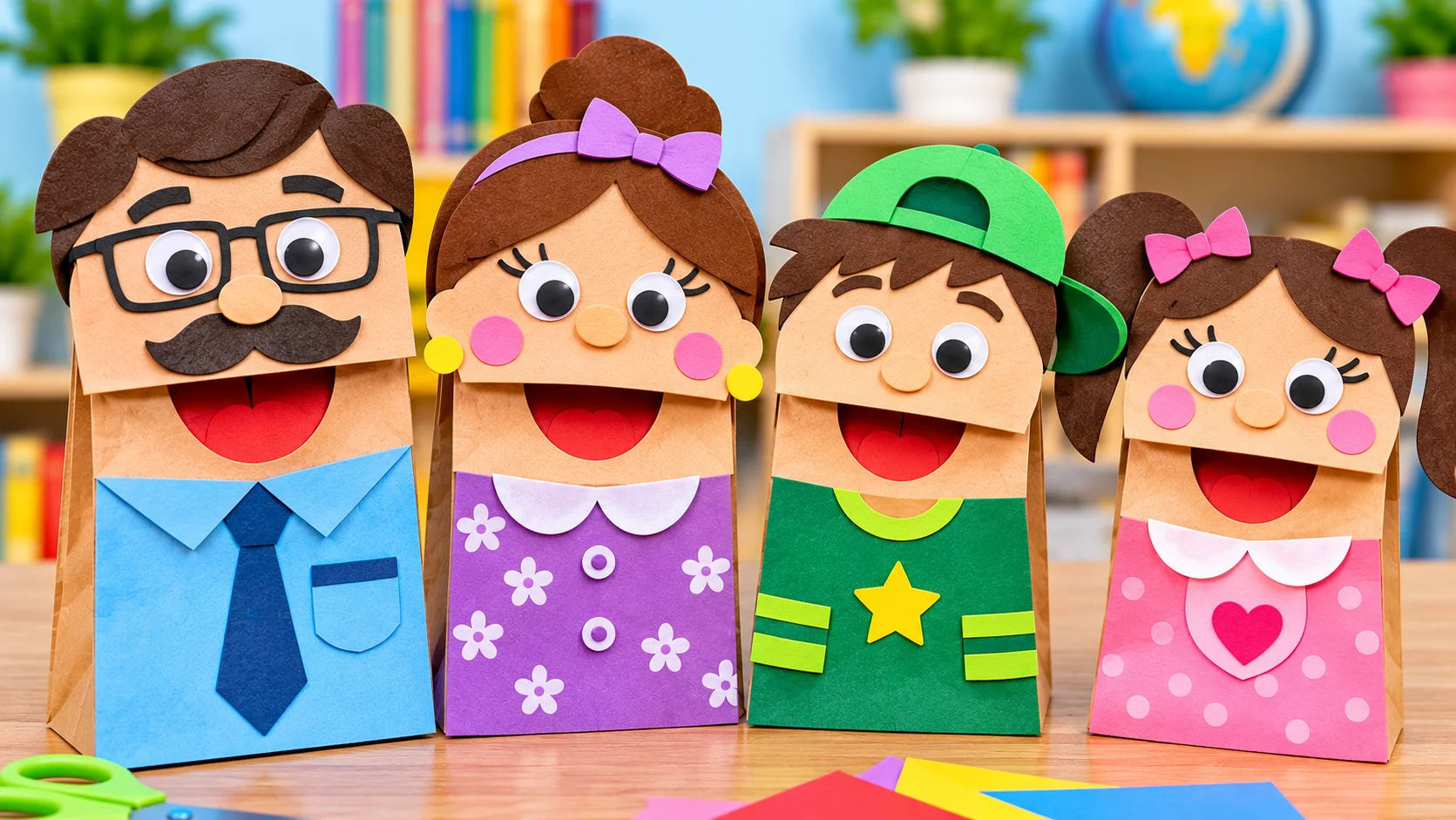
Children can design characters representing family members or important caregivers.
Add personalized clothing, hairstyles, and facial expressions.
PBS KIDS offers a family puppet activity that encourages children to explore empathy, compassion, and relationships through role-play.
Choosing Puppet Crafts by Age and Learning Goal
The following Character–Skill Matching Guide helps teachers select suitable projects.
| Age group | Recommended characters | Learning focus |
|---|---|---|
| Preschool | Bear, bunny, cat | Shapes and gluing |
| Kindergarten | Lion, frog, puppy | Cutting and creativity |
| Early elementary | Owl, dinosaur, elephant | Construction and details |
| Older elementary | Robot, pirate, monster | Planning and storytelling |
| Mixed-age groups | Family and community helpers | Communication and cooperation |
These are flexible recommendations. Adjust materials and assistance according to each child’s abilities.
The CREATE Framework for Classroom Puppet Storytelling
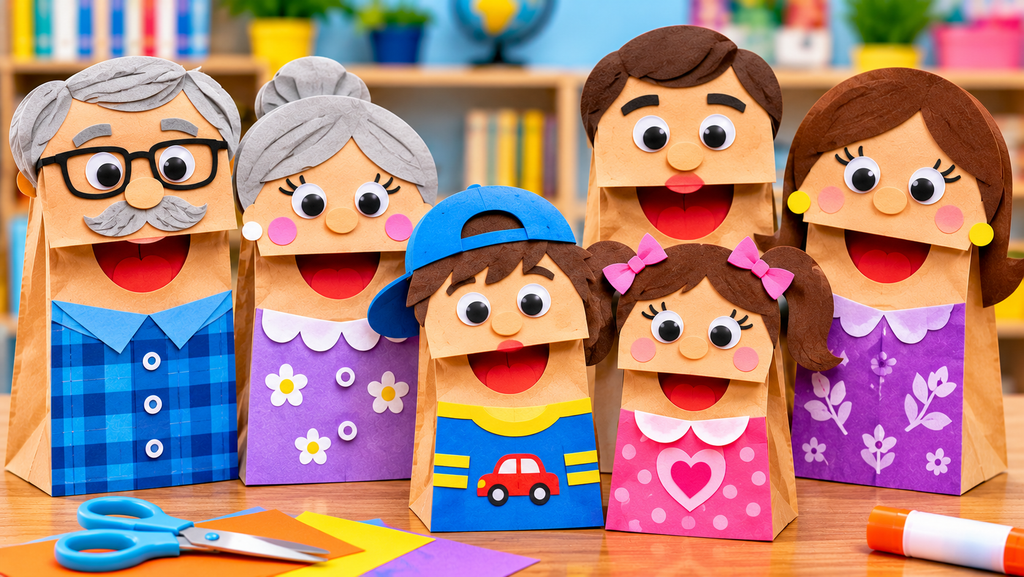
The CREATE Framework is a practical teaching model for turning simple crafts into meaningful learning experiences.
| Step | Classroom activity |
|---|---|
| C — Choose | Select a character |
| R — Recognize | Identify shapes and features |
| E — Express | Give the character emotions |
| A — Assemble | Construct and decorate |
| T — Tell | Create a short story |
| E — Explore | Perform with classmates |
For example, children could create a bear and a rabbit, then invent a story about how the two characters solve a problem together.
NAEYC describes dramatization as an opportunity for children to practice story comprehension, communication, and self-regulation.
Frequently Asked Questions
What Are Paper Bag Puppets?
They are simple handmade characters created by decorating lunch bags. The folded bottom forms a movable mouth that children can operate using their hands.
What Are the Easiest Characters for Preschoolers?
Bears, cats, rabbits, and friendly monsters are beginner-friendly because they use large shapes and straightforward decorations.
Can Puppet-Making Support Early Literacy?
Yes. Combining characters with storytelling offers opportunities to practice vocabulary, sequencing, dialogue, and oral communication.
What Glue Works Best for Paper Bag Crafts?
Glue sticks work well for lightweight construction paper. Small amounts of washable school glue can secure heavier decorations.
Conclusion
Creating paper bag puppets from ordinary lunch bags is an affordable way to combine art, storytelling, and imaginative learning.
Begin with familiar animals, introduce creative fantasy characters, and encourage children to invent original stories.
The greatest educational value comes not from making perfect crafts, but from giving children opportunities to design, communicate, collaborate, and bring their creations to life.