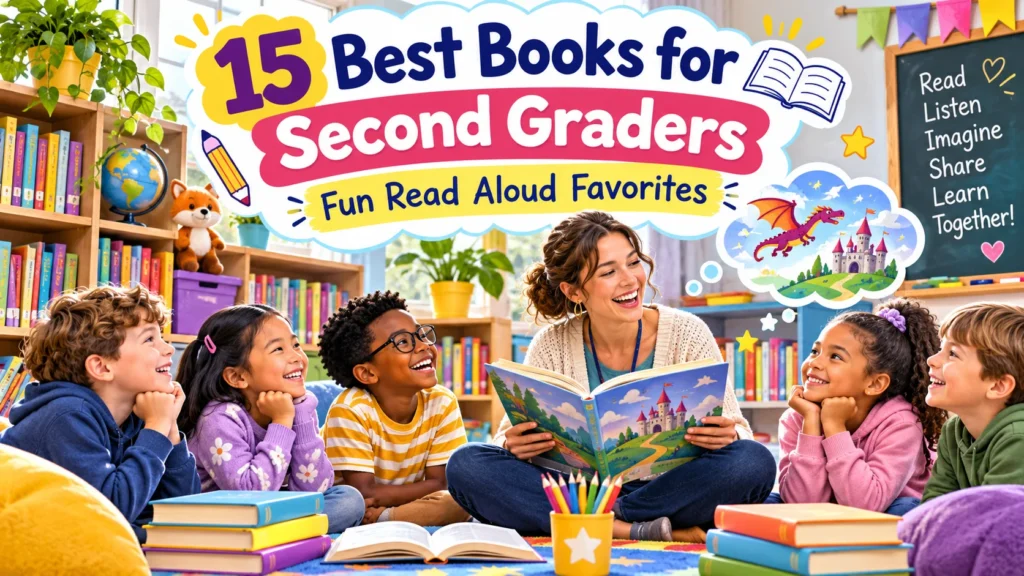
Finding the best books for second graders can make reading time more enjoyable for children, parents, and teachers. At ages 7 and 8, many children are becoming more confident readers, exploring longer stories, and developing stronger vocabulary and comprehension skills.
Whether you need a Thanksgiving story, a book about friendship, or an exciting chapter book, choosing the right story can turn an ordinary reading session into a meaningful learning experience.
In this guide, you’ll discover 20 engaging second-grade books and read alouds, including classroom favorites such as Turkey Trouble, Crankenstein, Stellaluna, and Too Many Carrots. You’ll also find discussion questions, simple reading activities, and helpful advice for choosing books that match children’s interests and reading abilities.
Best Books for Second Graders at a Glance
Not sure which book to choose? Start with this quick comparison.
| Book | Best for | Reading format |
|---|---|---|
| Turkey Trouble | Thanksgiving and problem-solving | Picture book |
| Crankenstein | Understanding emotions | Picture book |
| Too Many Carrots | Sharing and friendship | Picture book |
| Stellaluna | Friendship and animal science | Picture book |
| Apples for Everyone | Fall nonfiction | Picture book |
| The Day You Begin | Belonging and confidence | Picture book |
| The Invisible Boy | Kindness and inclusion | Picture book |
| The Name Jar | Identity and acceptance | Picture book |
| Dragons Love Tacos | Humor and cause and effect | Picture book |
| The Book With No Pictures | Interactive reading | Picture book |
| The Day the Crayons Quit | Persuasive writing | Picture book |
| Owl Moon | Descriptive language and nature | Picture book |
| Those Shoes | Empathy and generosity | Picture book |
| After the Fall | Courage and perseverance | Picture book |
| Mercy Watson to the Rescue | Beginning chapter books | Illustrated chapter book |
| The Princess in Black | Adventure and confidence | Illustrated chapter book |
| Dinosaurs Before Dark | Adventure and sequencing | Early chapter book |
| Rise of the Earth Dragon | Fantasy and prediction | Illustrated chapter book |
| The Miraculous Journey of Edward Tulane | Empathy and character growth | Longer class read-aloud |
| The Wild Robot | Nature, friendship, and survival | Longer class read-aloud |
The picture books are useful for shared reading and discussion, while the chapter books offer opportunities to develop listening stamina or independent reading confidence. A child’s ability to listen to a story may be more advanced than their ability to read the same text independently.
Best Read Aloud Books for Second Grade
These picture books offer engaging stories, memorable characters, and opportunities for meaningful classroom conversations.
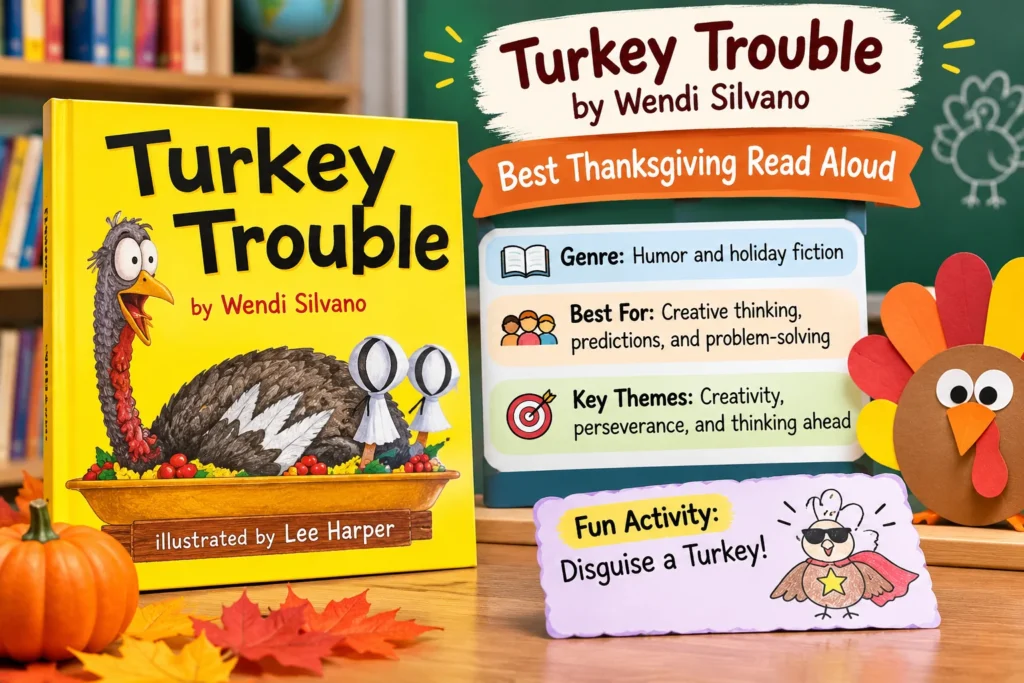
1. Turkey Trouble by Wendi Silvano – Best Thanksgiving Read Aloud
Turkey Trouble, written by Wendi Silvano and illustrated by Lee Harper, is a humorous Thanksgiving story about a turkey determined to avoid becoming the holiday dinner.
As Thanksgiving approaches, Turkey tries disguising himself as different farm animals. Unfortunately, his costumes aren’t quite convincing, and he must keep developing new ideas.
Second graders can enjoy predicting which disguise Turkey will try next and discussing whether each plan is likely to succeed.
Why it’s great for second graders:
- Encourages predicting and making inferences.
- Introduces creative problem-solving.
- Supports story sequencing and retelling.
- Creates opportunities for imaginative writing.
Discussion question: Why does Turkey keep changing his disguise, and what would you suggest he try?
Classroom activity — Disguise a Turkey: Give students a turkey outline and ask them to create an original disguise. Have each child write three sentences explaining how the costume works.
Best time to read: November or during a fall-themed unit.
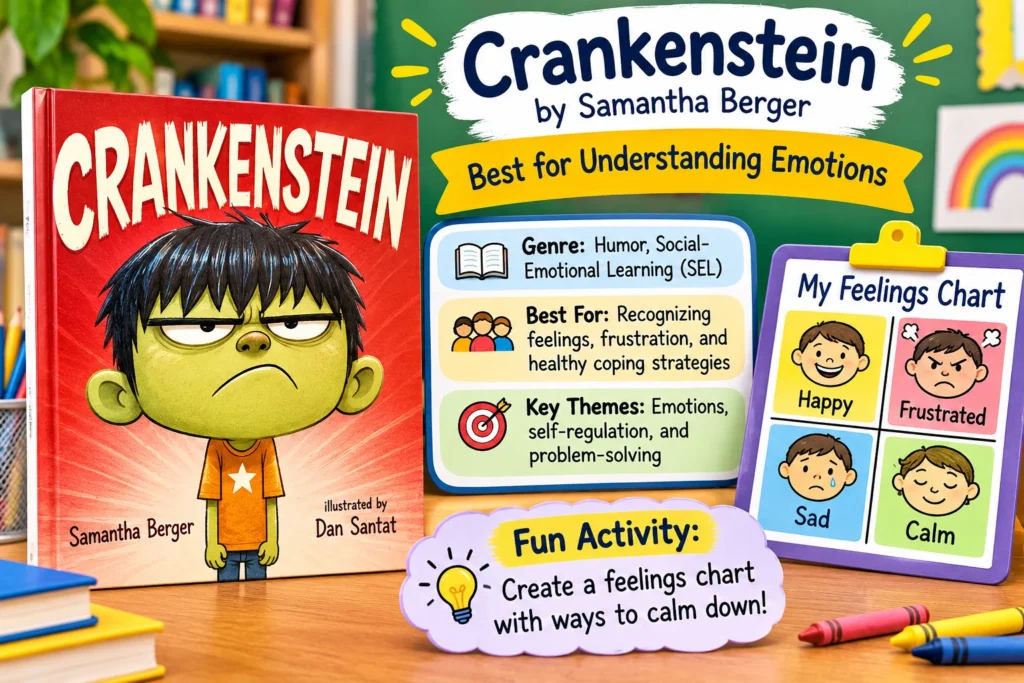
2. Crankenstein by Samantha Berger — Best for Understanding Emotions
Crankenstein, written by Samantha Berger and illustrated by Dan Santat, follows a child who transforms into a grumpy monster whenever something frustrating happens.
A rainy day, a disappointing treat, or an early bedtime can bring out the character’s cranky side.
The exaggerated expressions and humorous situations make this a useful story for helping children recognize their emotions without making them feel embarrassed about having difficult days.
Why it’s great for second graders:
- Encourages identifying feelings.
- Supports character analysis.
- Helps students discuss frustration.
- Introduces healthy emotional responses.
Discussion question: What makes Crankenstein upset, and what could help him feel better?
Classroom activity — My Crankenstein Feelings Chart: Ask students to draw a situation that makes them frustrated. Then have them write one helpful strategy, such as asking for support or taking a short break.
Best time to read: Beginning of the school year or during social-emotional learning lessons.
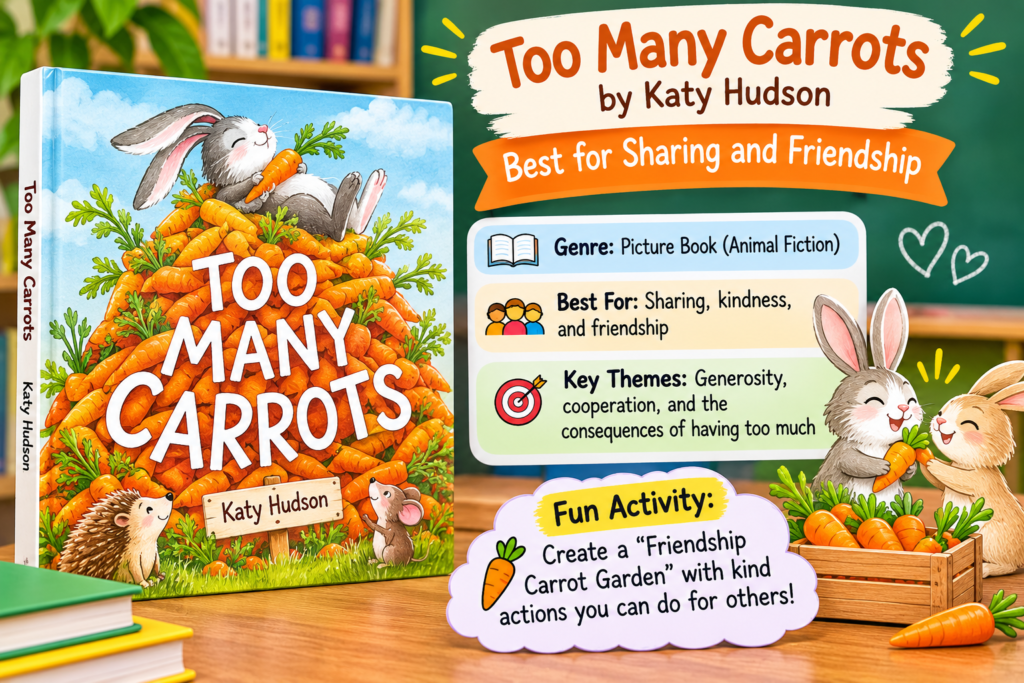
3. Too Many Carrots by Katy Hudson — Best for Sharing and Friendship
Rabbit loves collecting carrots in Too Many Carrots, written and illustrated by Katy Hudson.
His collection becomes so enormous that he can no longer fit comfortably into his own home. When his friends try to help, Rabbit’s carrots create more trouble.
The story provides an entertaining way to discuss generosity, friendship, and the difference between having something and needing it.
Why it’s great for second graders:
- Encourages discussion about sharing.
- Supports cause-and-effect thinking.
- Helps children examine character choices.
- Offers opportunities for predicting consequences.
Discussion question: How do Rabbit’s choices affect his friends?
Classroom activity — Friendship Carrot Garden: Give students paper carrot shapes. Ask them to write one way they can help or show kindness to a classmate. Display the carrots together in a classroom garden.
Best time to read: Spring, friendship lessons, or classroom community activities.
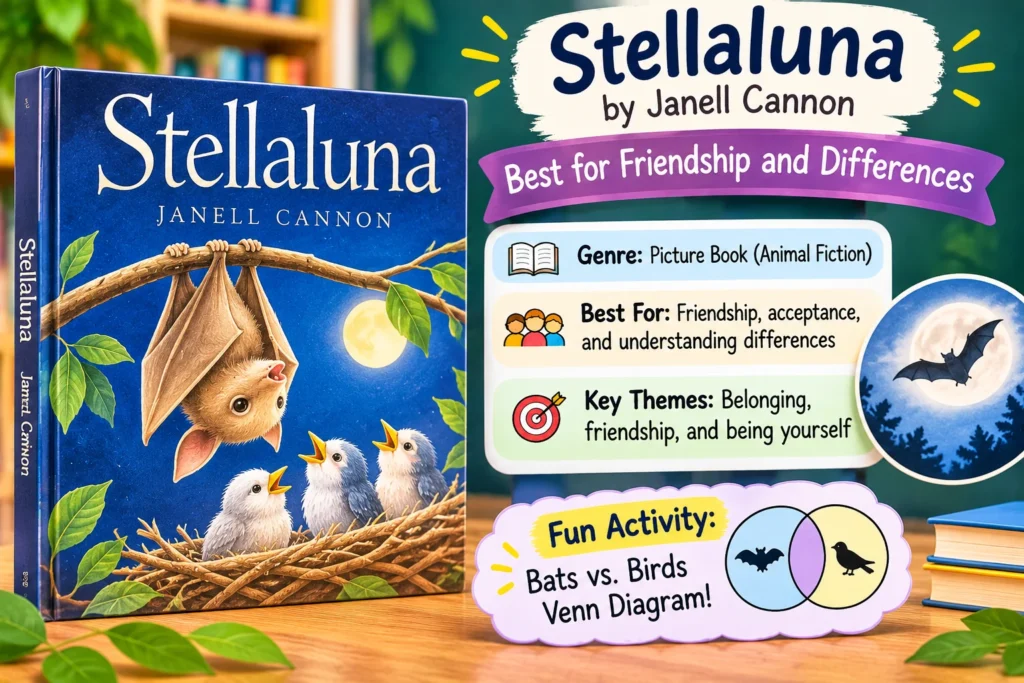
4. Stellaluna by Janell Cannon — Best for Friendship and Differences
Stellaluna, written and illustrated by Janell Cannon, tells the story of a young fruit bat who becomes separated from her mother.
She finds herself living with a family of birds and tries to follow their habits, even though bats and birds behave differently.
Through her experiences, Stellaluna learns about friendship, acceptance, and the importance of being herself.
The story also creates an opportunity to explore animal science and compare the characteristics of bats and birds.
Why it’s great for second graders:
- Introduces comparing and contrasting.
- Encourages empathy and acceptance.
- Supports discussions about animal adaptations.
- Develops reading comprehension through character experiences.
Discussion question: How are Stellaluna and her bird friends alike, and how are they different?
Classroom activity — Bats vs. Birds Venn Diagram: Ask students to compare bats and birds using details from the story and verified animal facts.
Book-to-screen extension: After reading, students can compare the original story with the animated Stellaluna adaptation, discussing similarities, differences, and added characters.
Best time to read: Fall, animal science units, or friendship lessons.
5. Apples for Everyone by Jill Esbaum — Best Fall Nonfiction Read Aloud
Apples for Everyone by Jill Esbaum introduces children to apples and the traditions associated with autumn.
Published by National Geographic Kids, the book features photographs that can encourage curiosity about orchards, seasonal foods, and the natural world.
Although the publisher primarily recommends this book for younger children, second-grade teachers can use its photographs as a starting point for deeper nonfiction vocabulary, observation, and science discussions.
Why it’s useful for second graders:
- Introduces informational text.
- Encourages careful observation.
- Supports seasonal vocabulary.
- Connects reading with science and everyday experiences.
Discussion question: What new facts did you learn about apples?
Classroom activity — Apple Investigation: Have students observe different apple varieties, describe their colors and textures, and record their findings in a simple chart.
Best time to read: September, October, or during fall nonfiction lessons.
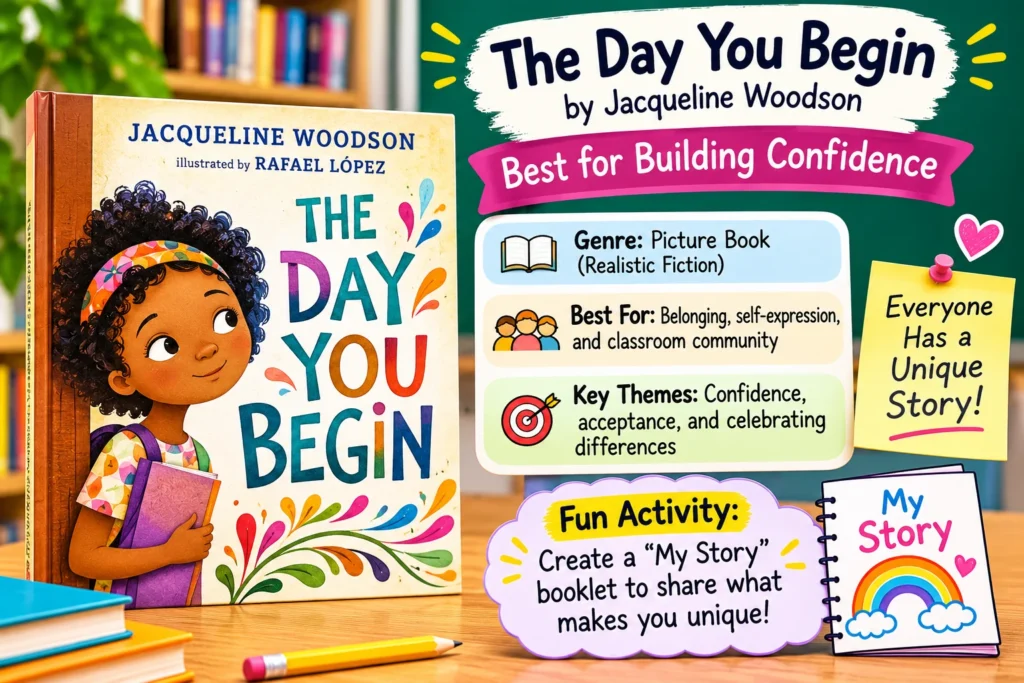
6. The Day You Begin by Jacqueline Woodson — Best for Building Confidence
The Day You Begin, written by Jacqueline Woodson and illustrated by Rafael López, explores the experience of feeling different from the people around you.
The story follows children who discover that sharing their experiences can help them connect with others.
It is especially useful during the first weeks of school, when students are meeting classmates and developing a sense of belonging.
Why it’s great for second graders:
- Supports classroom community.
- Encourages self-expression.
- Builds empathy and respect.
- Introduces personal narrative discussions.
Discussion question: How can sharing something about yourself help you make a friend?
Classroom activity — My Story, My Voice: Students draw a picture representing something special about themselves and write a few sentences explaining it.
Best time to read: Back-to-school season.
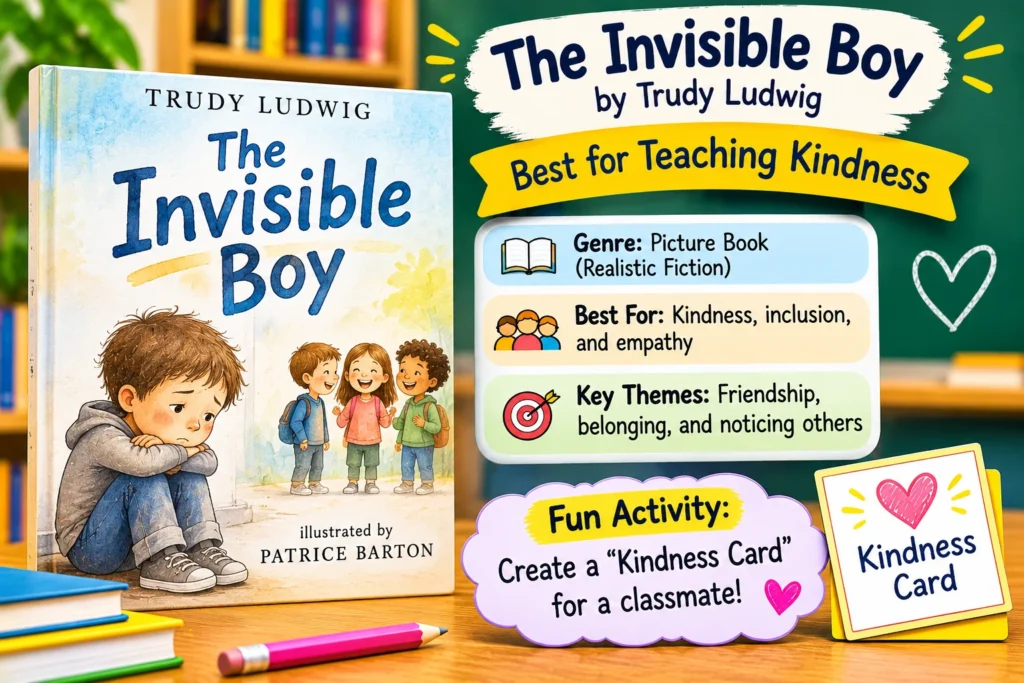
7. The Invisible Boy by Trudy Ludwig — Best for Teaching Kindness
Brian often feels unnoticed by his classmates in The Invisible Boy, written by Trudy Ludwig and illustrated by Patrice Barton.
Things begin to change when a new student joins the class and Brian has an opportunity to show kindness.
The book encourages children to notice classmates who might feel left out and think about the impact of small, welcoming actions.
Why it’s great for second graders:
- Develops empathy.
- Encourages inclusive behavior.
- Supports character-trait discussions.
- Promotes positive classroom relationships.
Discussion question: What could Brian’s classmates have done to make him feel included?
Classroom activity — Kindness Challenge: Invite children to suggest welcoming actions, such as inviting someone to join a game or including a classmate in a group activity.
Best time to read: Beginning of the year or during friendship lessons.
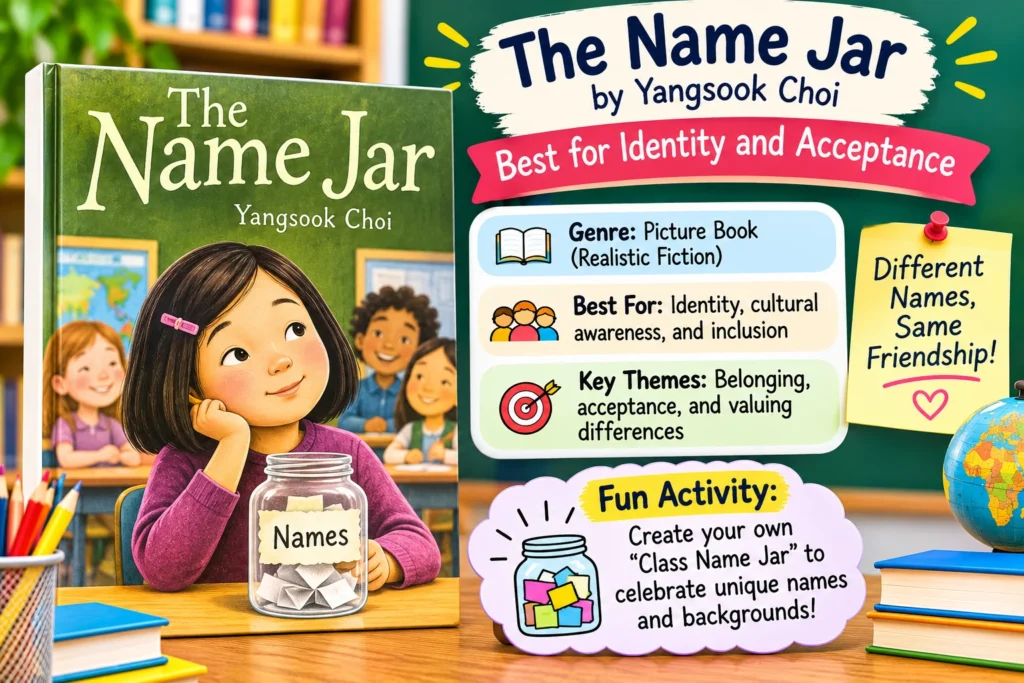
8. The Name Jar by Yangsook Choi — Best for Identity and Acceptance
The Name Jar, written and illustrated by Yangsook Choi, follows Unhei, a young girl who moves from Korea to the United States.
Worried that her classmates may struggle to pronounce her name, she considers choosing a different one.
Through friendship and encouragement, Unhei begins to appreciate the name and identity she already has.
Why it’s great for second graders:
- Encourages cultural understanding.
- Supports identity and belonging.
- Builds empathy.
- Promotes respectful communication.
Discussion question: Why is it important to learn and respect someone’s name?
Classroom activity — Our Names Matter: Invite children to share the story, pronunciation, or meaning of their name if they feel comfortable doing so. Students can also decorate their names using colorful lettering.
Best time to read: Back-to-school or community-building lessons.
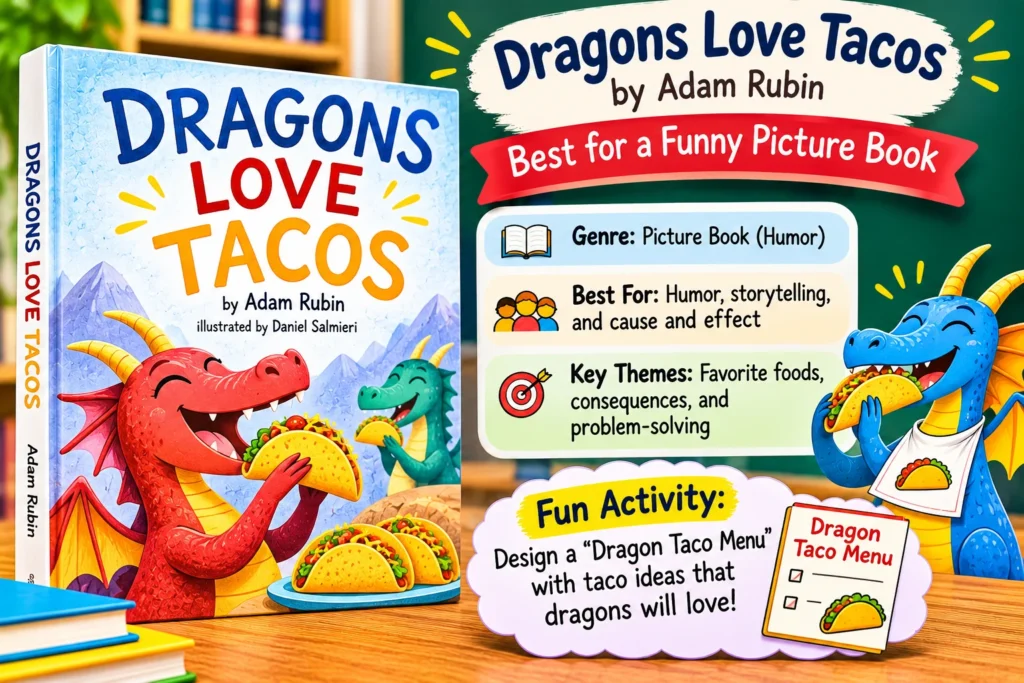
9. Dragons Love Tacos by Adam Rubin — Best Funny Picture Book
What happens when dragons attend a taco party but accidentally encounter spicy salsa?
That’s the funny problem at the center of Dragons LoTacosve , written by Adam Rubin and illustrated by Daniel Salmieri.
The imaginative story gives teachers an entertaining opportunity to practice predictions and cause-and-effect reasoning.
Why it’s great for second graders:
- Encourages creative thinking.
- Supports cause-and-effect skills.
- Makes reading aloud entertaining.
- Provides opportunities for sequencing events.
Discussion question: What causes trouble at the dragon party, and how could the characters prevent it?
Classroom activity — Plan a Dragon Party: Students design a party invitation and create three rules that would help make their imaginary celebration successful.
Best time to read: Anytime students need an entertaining read-aloud.
10. The Book With No Pictures by B. J. Novak — Best Interactive Read Aloud
Can a book without pictures make children laugh?
The Book With No Pictures by B. J. Novak proves that funny words, expressive voices, and surprising sounds can be entertaining even without illustrations.
The adult reader must perform the words on the page, making the story especially engaging when read aloud.
Why it’s great for second graders:
- Encourages attentive listening.
- Demonstrates expressive oral reading.
- Introduces playful language.
- Shows how words alone can create humor.
Discussion question: How did the reader’s voice change the way the story sounded?
Classroom activity — Silly Sentence Challenge: Invite students to invent a short, funny sentence and read it aloud using different expressions.
Best time to read: Fun Friday, classroom celebrations, or expressive reading lessons.
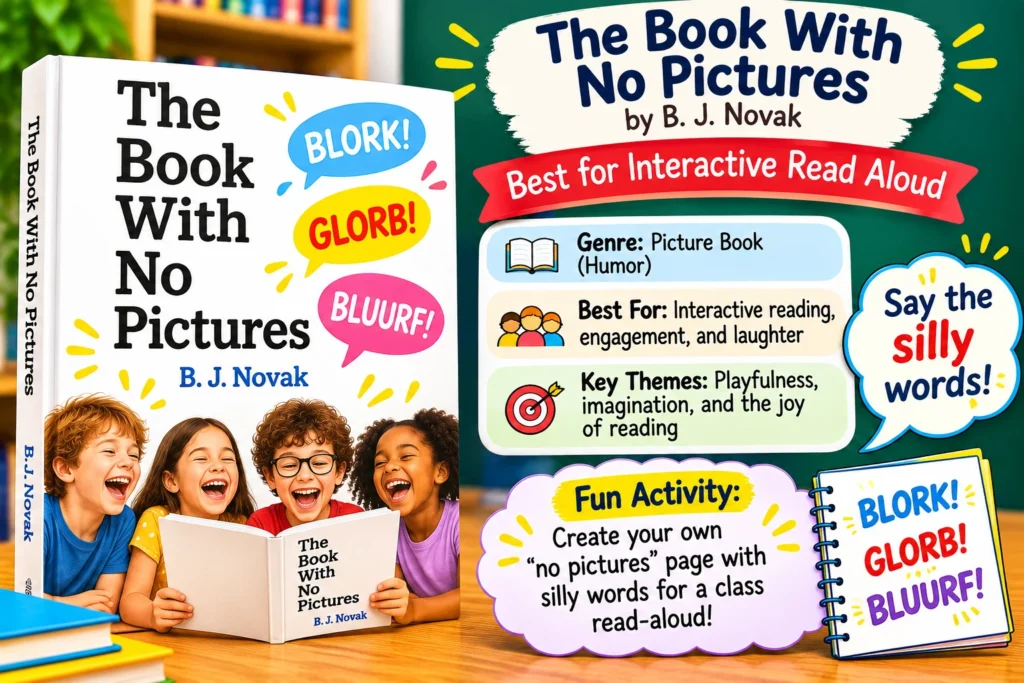
11. The Day the Crayons Quit by Drew Daywalt — Best for Persuasive Writing
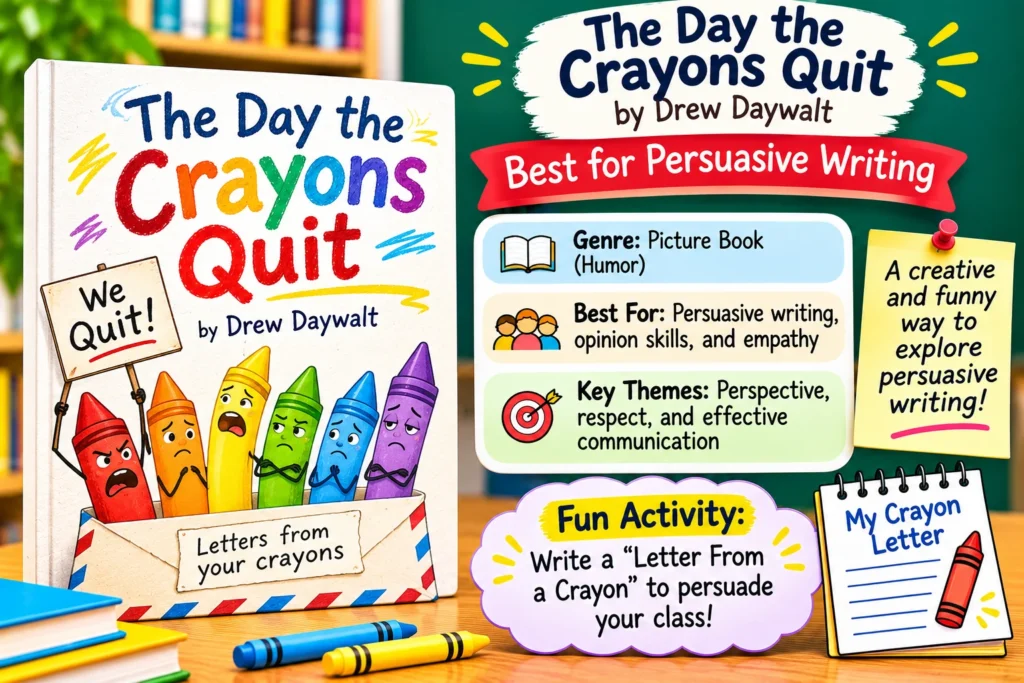
Duncan opens his crayon box expecting to color, but instead discovers letters from his unhappy crayons.
In The Day the Crayons Quit, written by Drew Daywalt and illustrated by Oliver Jeffers, each crayon explains why it has had enough.
The different complaints and personalities offer an imaginative way to discuss opinions, perspectives, and persuasive writing.
Why it’s great for second graders:
- Introduces persuasive language.
- Encourages point-of-view discussions.
- Supports creative writing.
- Helps students identify a character’s reasons.
Discussion question: Which crayon has the strongest argument, and why?
Classroom activity — Letter From a School Supply: Ask children to imagine they are a pencil, eraser, or ruler. Have them write a short letter explaining one problem they experience at school.
Best time to read: Writing workshop or opinion-writing lessons.
12. Owl Moon by Jane Yolen — Best Winter Read Aloud
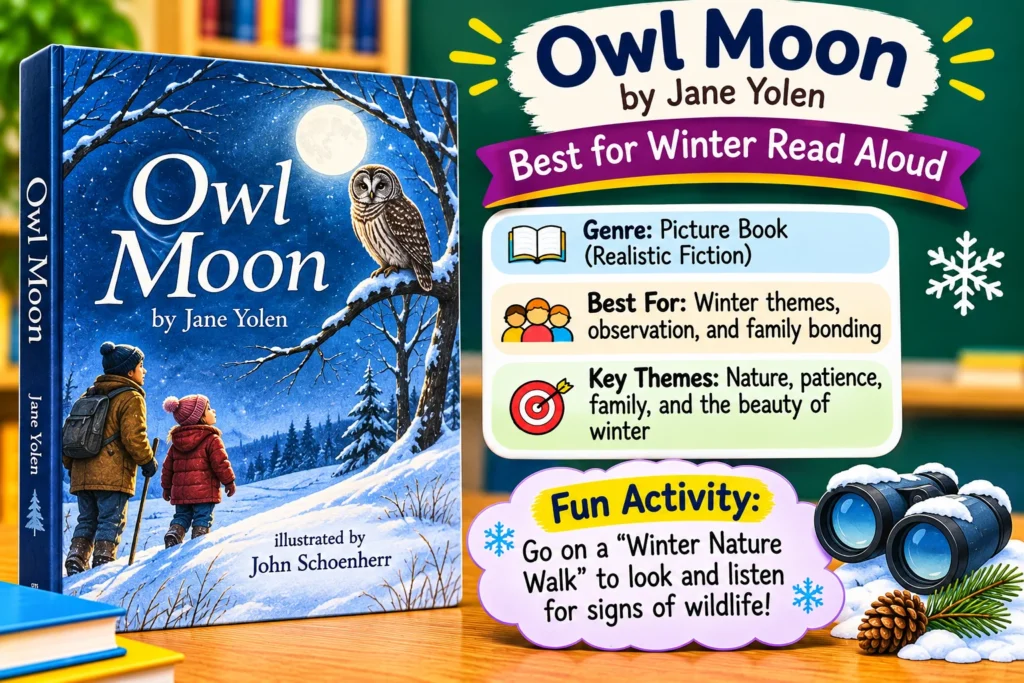
Owl Moon, written by Jane Yolen and illustrated by John Schoenherr, follows a child and father on a quiet winter-night journey to look for an owl.
Unlike fast-paced humorous books, this story uses peaceful moments and vivid language to create a memorable atmosphere.
It is particularly useful for teaching children how authors describe settings and sensory experiences.
Why it’s great for second graders:
- Introduces descriptive language.
- Supports visualization.
- Encourages noticing sensory details.
- Connects literature with nature.
Discussion question: What words or details help you imagine the winter forest?
Classroom activity — Five Senses Winter Writing: Students describe what they might see, hear, and feel during a winter walk.
Best time to read: Winter or descriptive writing lessons.
13. Those Shoes by Maribeth Boelts — Best for Empathy and Generosity
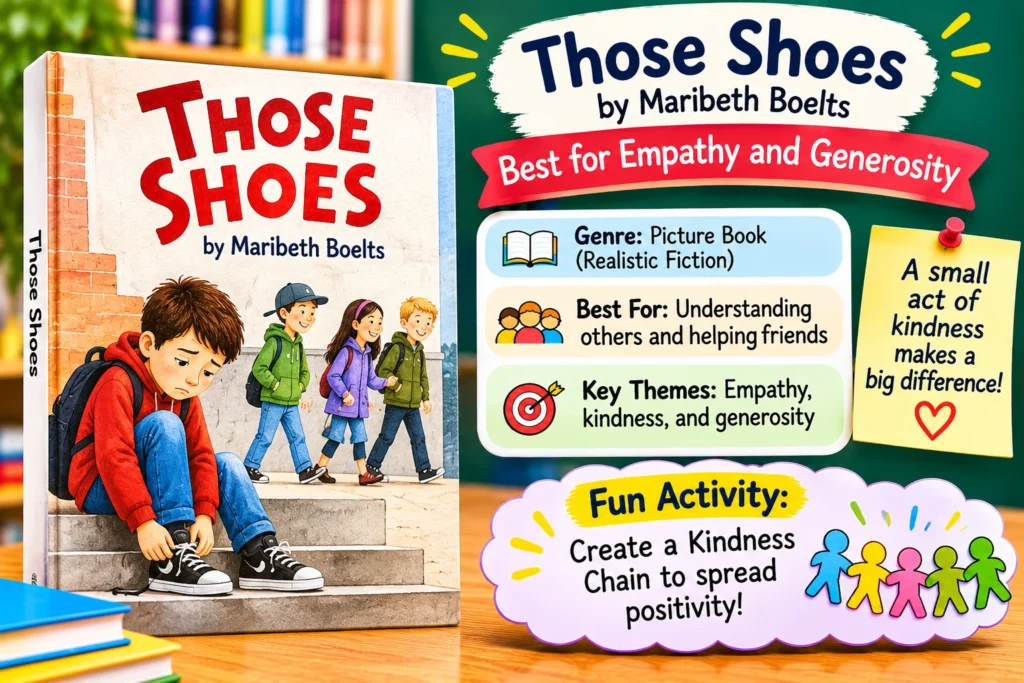
Jeremy wants the fashionable shoes that other children at school are wearing in Those Shoes, written by Maribeth Boelts and illustrated by Noah Z. Jones.
However, his grandmother must prioritize the things he needs over the things he wants.
As the story develops, Jeremy begins to recognize the value of friendship and generosity.
Why it’s great for second graders:
- Encourages empathy.
- Helps children distinguish wants from needs.
- Supports discussions about kindness.
- Introduces realistic character decisions.
Discussion question: How do Jeremy’s priorities change during the story?
Classroom activity – Wants and Needs Sort: Give students picture cards showing different objects and ask them to discuss whether each item is a want, a need, or something that depends on the situation.
Best time to read: Social studies, character education, or financial literacy introductions.
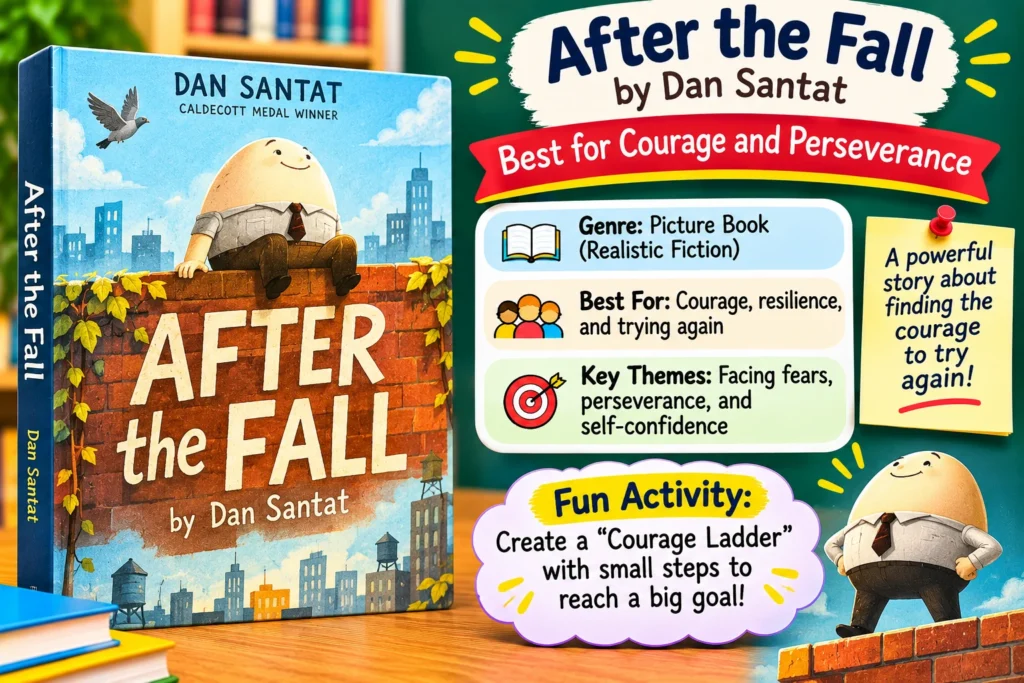
14. After the Fall by Dan Santat — Best for Courage and Perseverance
What happens to Humpty Dumpty after his famous fall?
After the Fall: How Humpty Dumpty Got Back Up Again, written and illustrated by Dan Santat, imagines how Humpty deals with his fear of heights after an accident.
His experiences provide a thoughtful way to talk about confidence, recovery, and taking manageable steps toward a goal.
Why it’s great for second graders:
- Encourages perseverance.
- Supports discussions about fear and confidence.
- Helps students understand character growth.
- Introduces the idea of trying again after setbacks.
Discussion question: What helps Humpty begin facing his fear?
Classroom activity — My Brave Steps: Students choose a small challenge they would like to work on and write two or three realistic steps they could take.
Best time to read: Beginning of the year or growth-mindset lessons.
Best Chapter Books for Second Graders
As children develop their reading abilities, illustrated chapter books can introduce longer plots, recurring characters, and more detailed storytelling.
These books work well for independent readers who are ready for them, partner reading, or teacher-led chapter read-alouds.
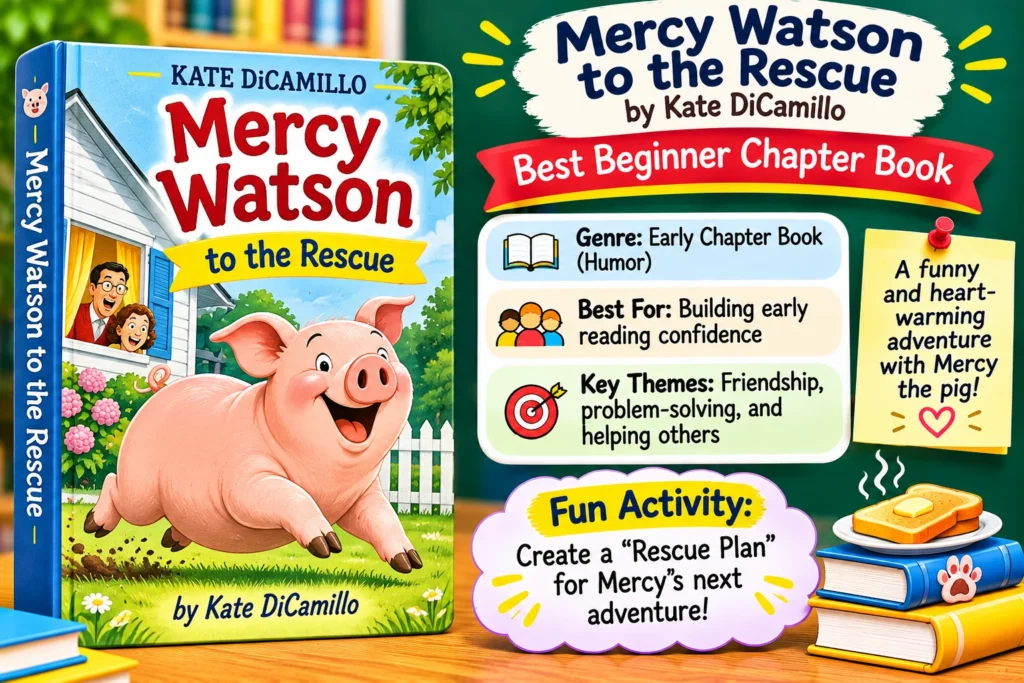
15. Mercy Watson to the Rescue by Kate DiCamillo — Best Beginner Chapter Book
Mercy Watson to the Rescue, written by Kate DiCamillo and illustrated by Chris Van Dusen, introduces Mercy, a lovable pig who lives with Mr. and Mrs. Watson.
Mercy’s enthusiasm for buttered toast and her unexpected adventures create an entertaining story filled with misunderstandings.
The short chapters, humor, and colorful illustrations make it an appealing introduction to chapter books.
Why it’s great for second graders:
- Introduces longer stories in manageable sections.
- Supports sequencing events.
- Encourages predictions.
- Provides illustrations that help children follow the action.
Discussion question: What do Mercy’s actions reveal about her personality?
Classroom activity – Mercy’s Adventure Map: Students draw three important events from the story and explain what happened first, next, and last.
Best for: Beginning chapter-book readers.Best Longer Chapter Book Read Alouds for Second Grade
Some excellent children’s novels are more complex than typical beginning chapter books.
These two selections are better suited to extended teacher-led read-alouds, particularly when students are ready for longer plots and deeper conversations.
Best Second Grade Read Alouds by Learning Goal
The best book for a class depends on what students are learning and discussing.
| Learning goal | Recommended books |
|---|---|
| Friendship and kindness | Too Many Carrots, The Invisible Boy, Stellaluna |
| Emotional awareness | Crankenstein, After the Fall |
| Creative writing | Turkey Trouble, The Day the Crayons Quit |
| Science and nature | Apples for Everyone, Owl Moon, The Wild Robot |
| Belonging and identity | The Day You Begin, The Name Jar |
| Funny read-alouds | Dragons Love Tacos, The Book With No Pictures |
| Early chapter-book confidence | Mercy Watson to the Rescue, The Princess in Black |
| Adventure and imagination | Dinosaurs Before Dark, Rise of the Earth Dragon |
What Makes a Good Book for Second Graders?
A good second-grade book should capture a child’s interest while offering appropriate language, themes, and opportunities to develop reading skills.
Not every second grader reads at the same level, so it helps to think about both independent-reading ability and listening comprehension.
1. Engaging Characters
Children often connect with characters who experience recognizable feelings, face challenges, or make surprising decisions.
For example, the characters in Crankenstein and Too Many Carrots provide opportunities to discuss emotions and consequences.
2. Interesting Illustrations
Illustrations help students follow events, identify characters, and gather information that may not be stated directly in the words.
Picture books remain valuable even as children become stronger independent readers.
3. Opportunities for Discussion
Choose stories that encourage questions about character motivation, cause and effect, prediction, or the main message.
Open-ended questions help students explain their thinking rather than simply recall facts.
4. Suitable Reading Difficulty
Some books are appropriate for children to read independently, while others work better when an adult reads them aloud.
A complex chapter book can still be valuable if children can follow the story and understand its central ideas with appropriate support.
5. Different Genres and Experiences
Offer a mixture of realistic fiction, fantasy, humor, informational books, and stories featuring a variety of characters and experiences.
This helps children discover new interests and develop a broader appreciation for reading.
7 Fun Activities to Try After a Second Grade Read Aloud
Reading aloud is more meaningful when children have opportunities to respond to the story.
These simple activities can be adapted for many second-grade books.
1. Story Sequencing Cards
Have children draw or arrange three to five important events in the correct order. Ask them to explain how each event connects to the next.
2. Character Feelings Chart
Choose a character and record how they feel at the beginning, middle, and end of the story. Encourage students to identify evidence from the text or illustrations.
3. Predict the Ending
Pause before a major event and ask children what they think will happen. After reading, compare their predictions with the story.
4. Draw a New Book Cover
Students create an alternative cover showing an important character, setting, or event. Ask them to explain their design choices.
5. Write a Different Ending
Invite students to imagine another possible ending while keeping the characters and central problem consistent with the story.
6. Partner Discussion
Give students a question to think about independently, then let them discuss their answers with a partner before sharing with the class.
7. Book Recommendation Card
After reading, students write the title, author, favorite moment, and one reason they would or would not recommend the book.
These cards can form a classroom recommendation wall.
A Simple 15-Minute Read Aloud Routine for Second Grade
Teachers don’t need a complicated lesson plan for every story.
A simple three-part routine can make reading time more purposeful.
| Stage | Time | Activity |
|---|---|---|
| Before reading | 3 minutes | Preview the cover, introduce a useful word, and make a prediction |
| During reading | 8 minutes | Read expressively and pause for one or two questions |
| After reading | 4 minutes | Discuss the story and complete a brief response |
This is a flexible example rather than a requirement. Longer books may need several sessions, and some classes may benefit from more or less discussion time.
For chapter books, begin each new session with a short recap. Encourage students to remember important events and predict what might happen next.
How Parents Can Encourage Second Graders to Read at Home
Reading at home doesn’t have to involve long lessons or complicated activities.
Parents can encourage reading through simple, enjoyable routines.
Create a comfortable reading space. Keep a small selection of interesting books where children can reach them easily.
Let children choose books. A child who enjoys dinosaurs, animals, or funny stories may be more motivated to read when those interests are represented.
Read together regularly. Shared reading and listening to an adult read aloud remain valuable even when a child is learning to read independently.
Talk about the story. Ask questions such as “What surprised you?” or “Why do you think the character did that?”
Celebrate progress. Focus on curiosity, effort, understanding, and enjoyment rather than comparing one child’s progress with another’s.
Most importantly, make room for reading to feel enjoyable.
Frequently Asked Questions About Second Grade Books
What are the best books for second graders?
Some engaging options include Turkey Trouble, Crankenstein, Stellaluna, Too Many Carrots, The Day You Begin, and Mercy Watson to the Rescue. The best choice depends on a child’s interests, reading development, and whether the book will be read independently or aloud.
What books should a second grader be able to read?
Many second graders begin exploring early chapter books, illustrated fiction, and age-appropriate nonfiction. However, reading development varies. Books such as Mercy Watson to the Rescue and Dinosaurs Before Dark can be suitable choices for some developing readers, while others may need more support.
Are picture books too easy for second graders?
No. Picture books can contain sophisticated vocabulary, meaningful themes, and opportunities for inference and discussion. They are valuable for introducing reading strategies and exploring ideas beyond a child’s independent reading level.
What are good read-aloud books for second grade?
Turkey Trouble, Crankenstein, The Day the Crayons Quit, The Invisible Boy, and Stellaluna are useful picture-book options. For longer read-alouds, teachers may consider Gooney Bird Greene, The Wild Robot, or The Miraculous Journey of Edward Tulane, depending on classroom readiness.
What are the best funny books for second graders?
Dragons Love Tacos, The Book With No Pictures, Crankenstein, and Turkey Trouble provide plenty of opportunities for humor and expressive storytelling.
What are the best chapter books for second graders?
Consider Mercy Watson to the Rescue, The Princess in Black, Dinosaurs Before Dark, and Rise of the Earth Dragon. These books offer illustrated stories and recurring characters that can appeal to developing independent readers.
How long should a second-grade read-aloud session last?
A short read-aloud might take 10–15 minutes, while longer lessons or chapter-book sessions may last 20 minutes or more. The best duration depends on the story, students’ attention, and the learning activity.
Is Turkey Trouble a good Thanksgiving read aloud?
Yes. Turkey Trouble is a humorous Thanksgiving-themed picture book that works well for prediction, sequencing, and creative writing activities. Teachers can adapt its use to their classroom’s holiday practices.
What does Crankenstein teach children?
Crankenstein offers an opportunity to discuss frustration, emotional awareness, and how people respond when things don’t go their way.
What is the lesson in Too Many Carrots?
The story encourages readers to think about generosity, friendship, the consequences of collecting too much, and the importance of considering other people’s needs.
Is The Wild Robot suitable for second graders?
The Wild Robot may work well as a teacher-led chapter-book read-aloud, especially for children who enjoy nature and adventure. Its length and complexity make it more challenging than typical beginning chapter books.
Final Thoughts on Choosing the Best Books for Second Graders
The best books for second graders are not necessarily the longest or most challenging ones. They are the stories that capture children’s attention, encourage curiosity, and create meaningful opportunities to learn.
Funny favorites such as Turkey Trouble and Crankenstein can make reading time entertaining, while stories such as Stellaluna and The Invisible Boy offer opportunities to explore friendship and empathy.
As students gain confidence, illustrated chapter books and longer shared stories can help them discover new characters, genres, and ideas.
Whether you’re a teacher planning tomorrow’s read-aloud or a parent building a home library, start with a book that matches your child’s interests and enjoy discovering the story together.