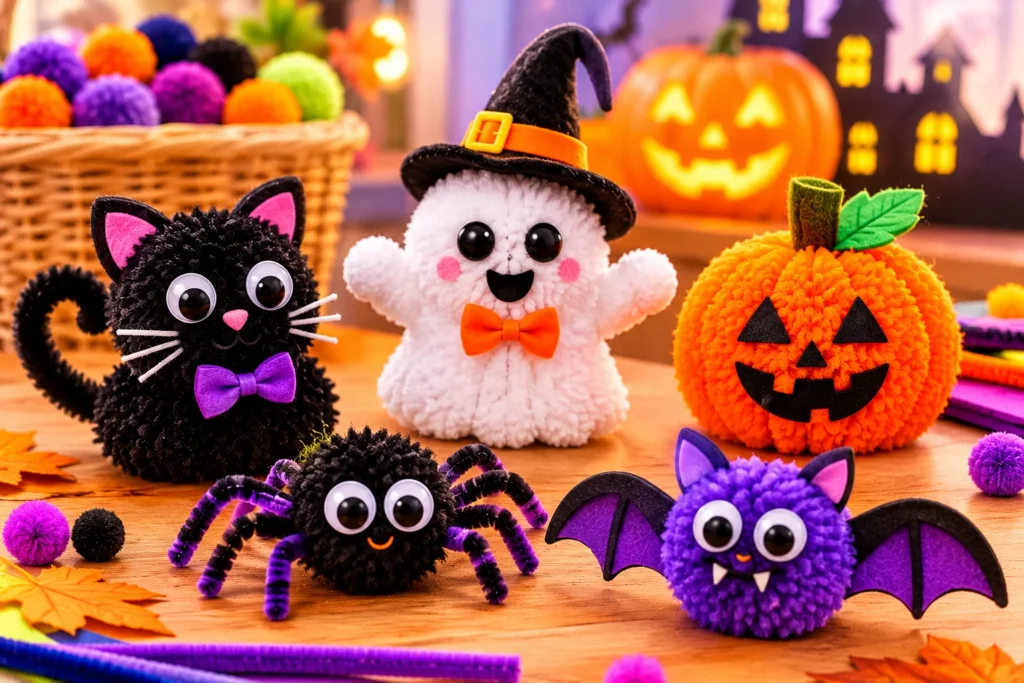
Pom poms are soft, colorful, and cheap, which makes them one of the easiest craft supplies to keep in a drawer. They are also useful. Squeezing, sorting, and gluing them works the small muscles in a child’s hand. This guide to pom pom crafts covers what to try at each age, a simple three-part project formula, and a comparison of projects by mess, prep, and skill so you can choose the right one for your day.
Quick answer: For pom pom crafts, match the project to the child’s age, offer one base (paper, cardboard, or a paper plate), one glue, and one small handful of pom poms. Start with sticking and sorting for toddlers, then move to animals, collages, and handmade pom poms for older children.
Why Pom Poms Work So Well for Young Crafters
Pom poms are forgiving. They are soft, light, and hard to ruin, so children can experiment without worrying about getting it wrong. A pom pom stuck in the wrong place can simply be moved.
They also support several skills at once. Picking up a small pom pom builds the pincer grasp children use to hold a pencil. Sorting by color and size introduces early math. Arranging them into a face or a pattern builds planning and creativity.
Match the Craft to the Child
Children do not need the same projects at every stage. Tiny pieces frustrate toddlers, and simple sorting bores older kids. Use this table as a starting point, then adjust to the individual child.
| Age range | Best pom pom size | Starter project | Adult role |
| 2 to 3 | Large (about 1 inch) | Sticky paper collage or color sorting | Close supervision, help with glue |
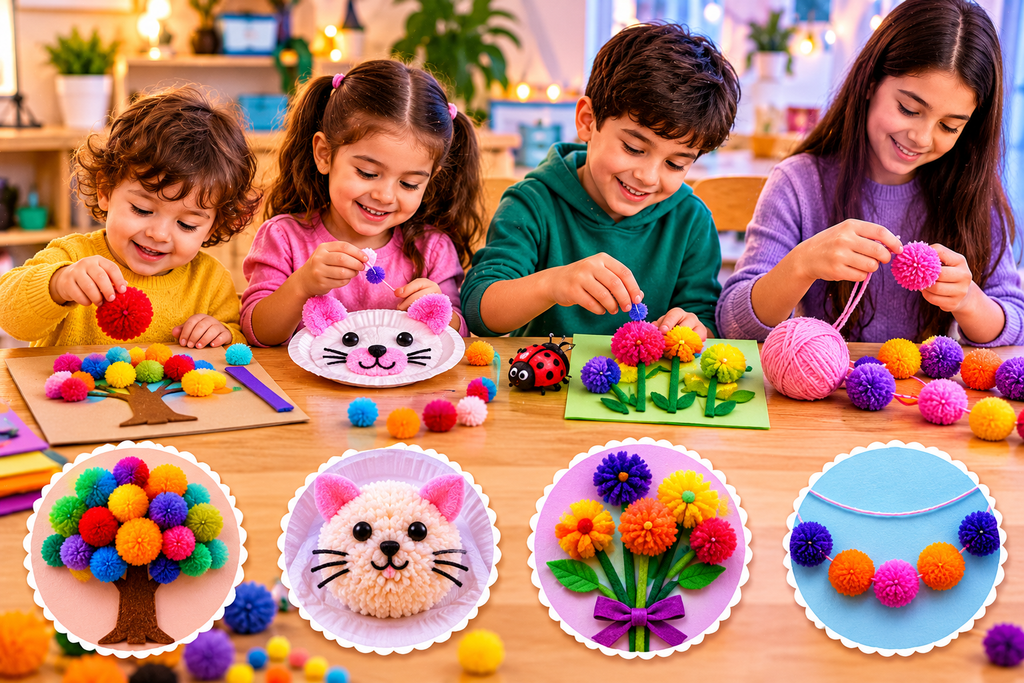
| 4 to 5 | Medium to large | Pom pom animals on paper plates | Show once, then step back |
| 6 to 8 | Mixed sizes | Pom pom flowers and critter magnets | Help only when asked |
| 9 and up | Small to medium, or yarn to make their own | Handmade pom poms and garlands | Safety checks, then independence |
Safety note: Pom poms are small enough to be a choking risk for children under three. Use the larger sizes only, and stay close while they play.
If a child seems stuck, choose a simpler project. If they finish in a few minutes and ask for more, move up one row.
The Base, Stick, Add Formula
Most pom pom craft stress comes from not knowing where to start. This quick framework turns almost any pom pom craft into three steps, so children can create their own ideas.
Base
Choose one surface: a paper plate, a sheet of cardstock, a cardboard tube, or a cut-out shape. A simple outline, such as a flower or a fish, gives younger children a clear starting point.
Stick
Pick one way to attach the pom poms. White glue works well for older children, while a glue stick or contact paper is easier for toddlers. Taping a sheet of clear contact paper sticky side up makes a no-glue option that is quick to clean.
Add
Offer a small set of extras, such as googly eyes, pipe cleaners, and felt scraps. Limit the choices to three. Fewer options help children decide faster and usually produce more original results.
Start any session by asking the child to name what they want to make. The formula does the rest.
Pom Pom Crafts Compared by Mess, Prep, and Skill
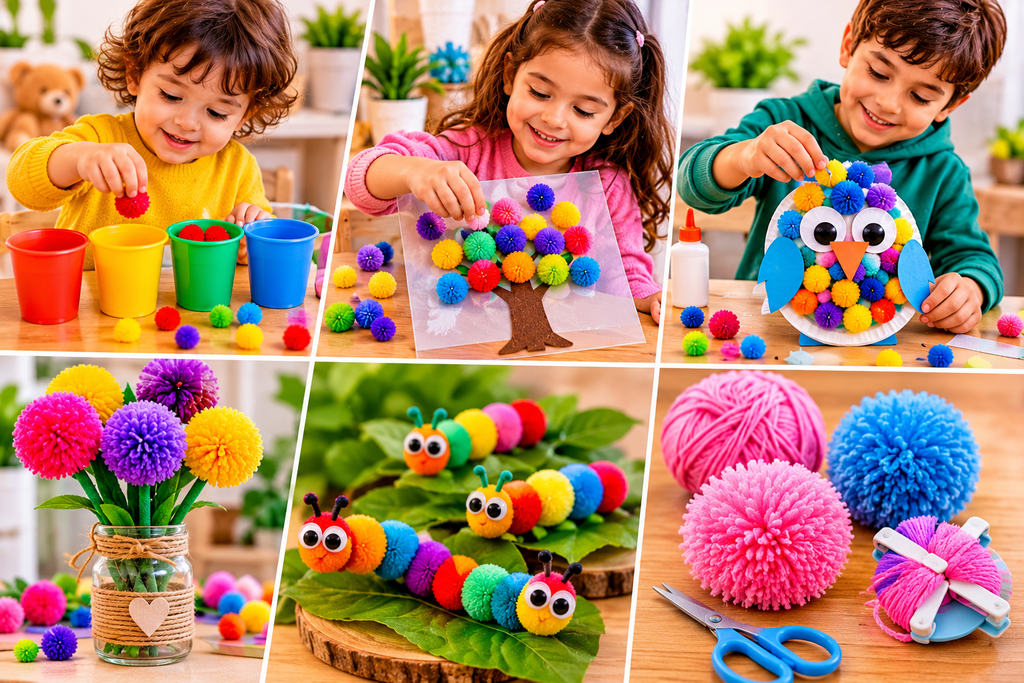
Not every project suits every day. Use this comparison to match an activity to your energy level.
| Project | Mess level | Prep time | Skills practiced |
| Color sorting with cups | Very low | Very short | Sorting, counting |
| Sticky contact paper collage | Low | Short | Pincer grasp, design |
| Paper plate animals | Medium | Short | Planning, gluing |
| Pom pom flowers | Medium | Medium | Pattern, color choice |
| Pom pom caterpillars | Medium | Medium | Sequencing, creativity |
| Handmade yarn pom poms | Medium | Longer | Patience, fine motor control |
On a busy afternoon, choose sorting or a sticky collage. On a relaxed weekend, try animals, flowers, or yarn pom poms.
Easy Pom Pom Craft Ideas to Try
You do not need elaborate supplies. These ideas use common materials:
- Pom pom rainbow: Draw arcs on paper and glue pom poms in color order.
- Pom pom caterpillar: Glue pom poms in a curved line, then add eyes and pipe cleaner antennae.
- Paper plate sheep: Cover a plate with white pom poms and add a paper face.
- Pom pom flowers: Glue pom poms in a circle for petals, then add a stem and leaf.
- Counting trays: Use an egg carton and ask children to place one, two, or three pom poms in each cup.
- Pom pom painting: Clip a pom pom in a clothespin, dip it in paint, and stamp it onto paper.
Rotate ideas through the week so children can compare how each tool feels. For seasonal themes, browse our holiday activities and crafts for kindergarteners.
How to Make Your Own Pom Poms
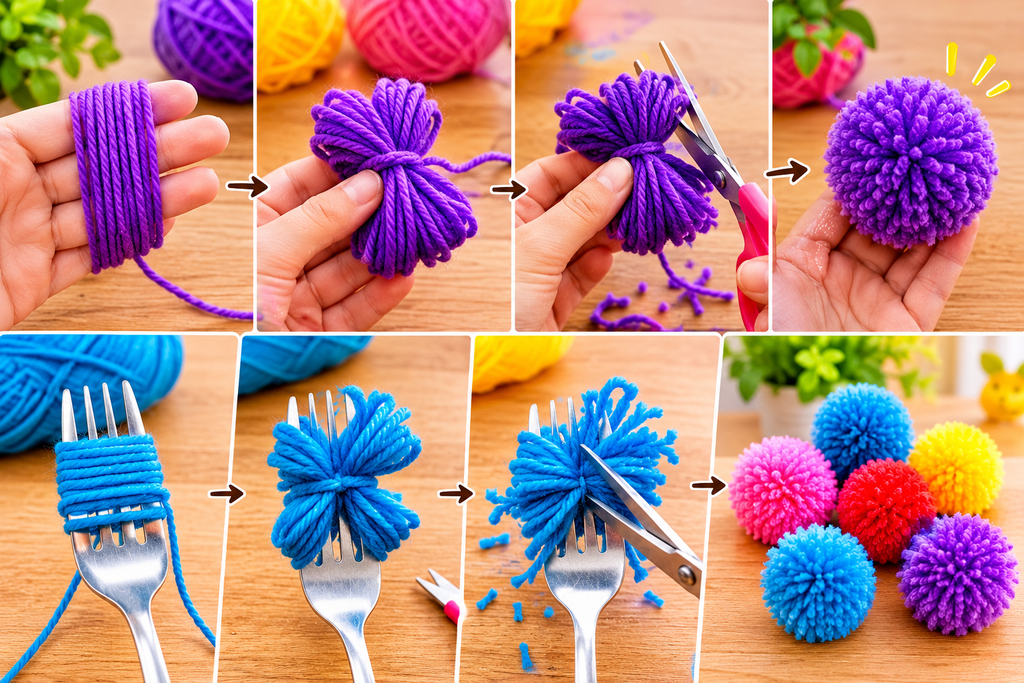
Handmade pom poms are a good project for ages eight and up, and they cost almost nothing.
- Wrap yarn around three or four fingers about 40 times.
- Slide the loops off carefully and tie the middle tightly with a separate piece of yarn.
- Cut the loops on both sides.
- Fluff the ball and trim any uneven strands.
A fork also works: wrap the yarn around the middle prongs, tie it between them, and cut the loops. This version is easier for smaller hands.
Skills Hidden Inside the Fluff
What looks like play is full of learning. Here is what children practice during pom pom crafts:
- Fine motor control: Picking up, squeezing, and placing small items builds hand strength.
- Early math: Counting, sorting, and making patterns come up naturally.
- Color knowledge: Mixing and matching colors builds vocabulary.
- Creativity: Open-ended projects show children that there is more than one answer.
- Language: Describing what they made grows vocabulary and confidence.
Craft Session Checklist
Copy this list onto your fridge for smoother sessions.
- The pom pom size matches the child’s age
- A base, a glue, and a small set of extras are ready
- Larger pom poms are used for children under three
- The workspace is covered
- Wipes or a damp cloth are within reach
- A drying spot is set aside
- Finished crafts have a place to be displayed
Fluff Up the Fun
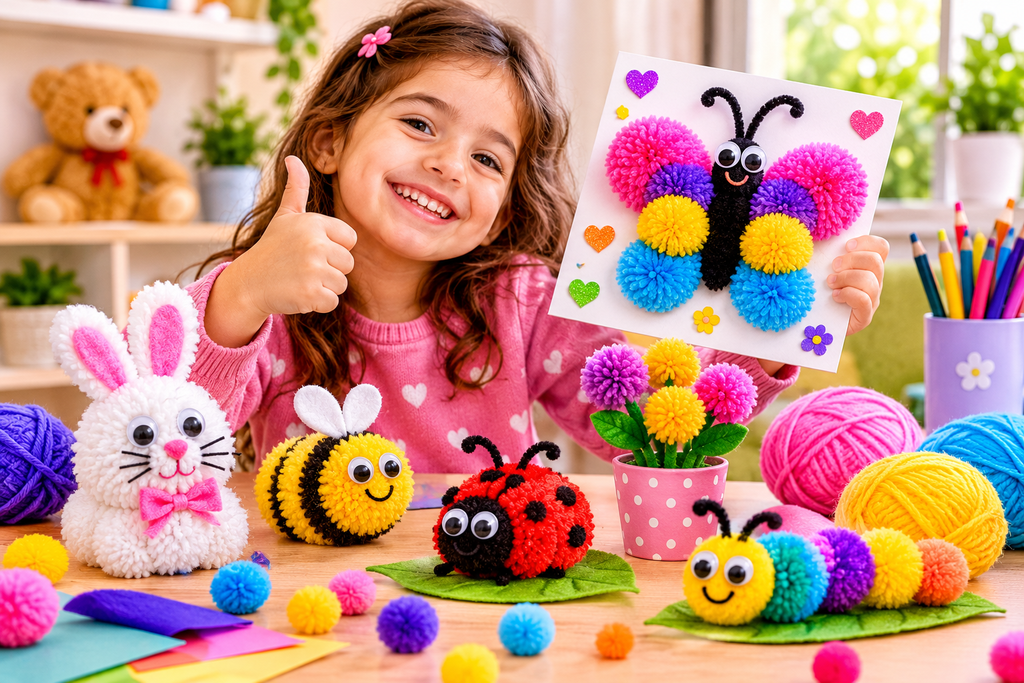
Pom poms turn a plain sheet of paper into something soft, silly, and personal. A handful of colors, a simple base, and a relaxed attitude are enough for children to make something they are proud to show off. Praise effort, ask open questions, and let each finished piece spark the next idea.
This week, pick one project from this guide, set out three materials, and let your child lead. Pom pom crafts get easier and more creative every time you repeat the routine.