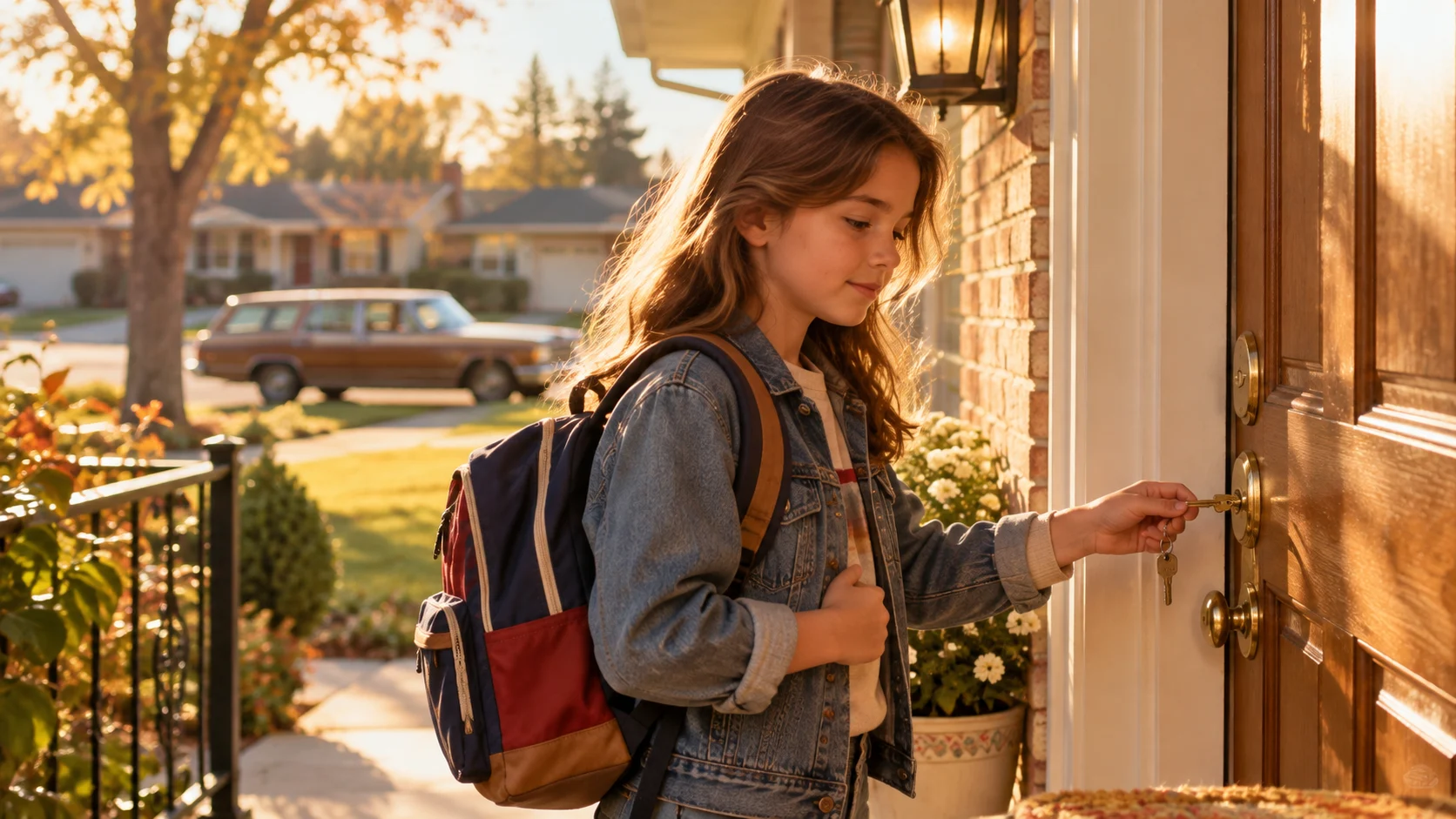

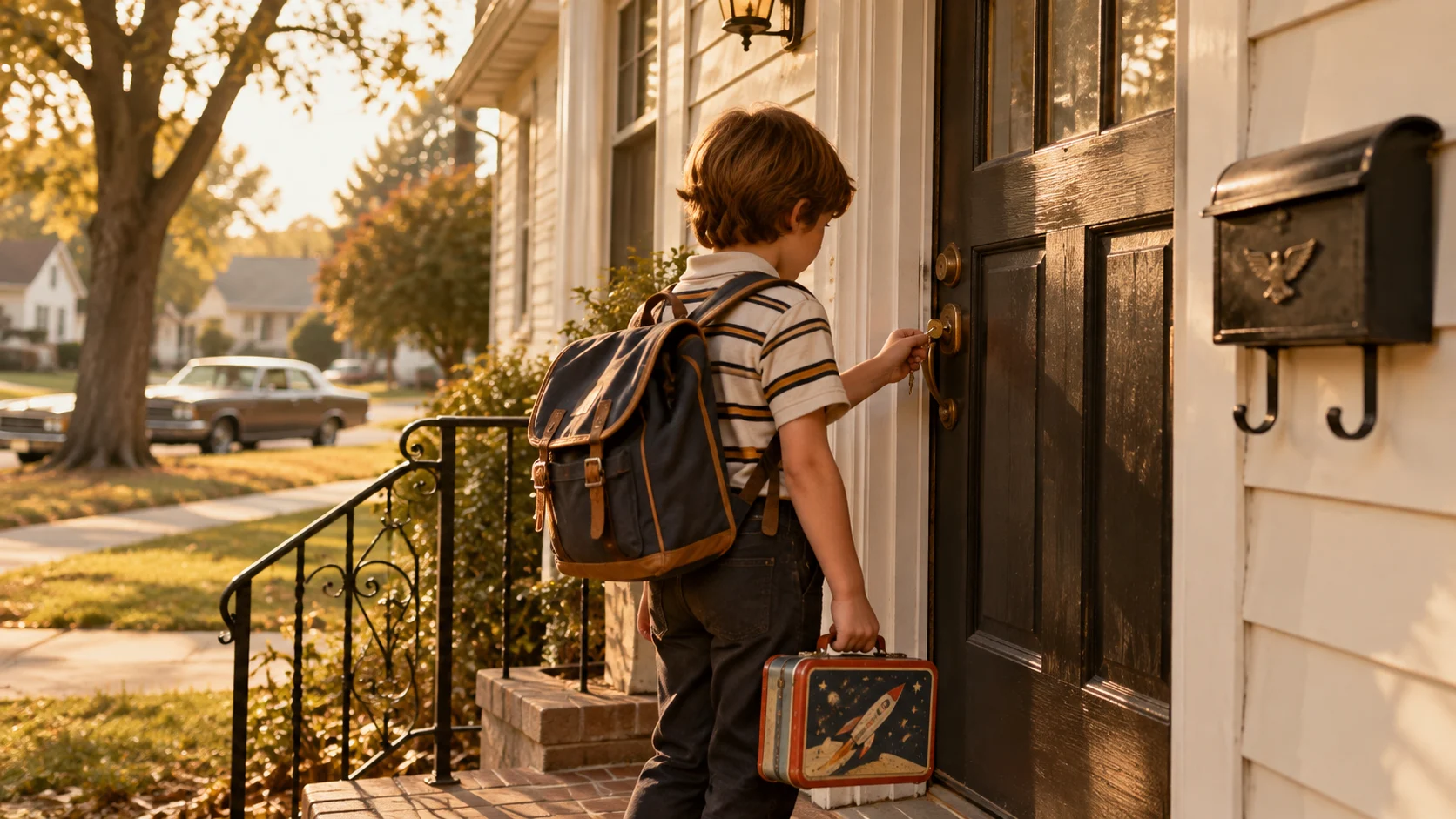
Imagine a ten-year-old arriving home from school in 1982. They pull a house key from their pocket, unlock the front door, put their backpack down, and grab an afternoon snack. Their parents are still at work, so they spend the next hour or two at home without an adult present.
That child would commonly be described as a latchkey kid.
For many Americans who grew up during the 1970s and 1980s, this routine brings back familiar memories. For younger generations, however, the expression can sound unusual.
So, what is a latchkey kid, why did the term become associated with Generation X, and what can modern parents learn from latchkey childhood?
This guide explains the meaning, origins, history, and experiences of latchkey kids. It also explores childhood independence and offers practical guidance for families considering when a child may be ready to stay home alone.
A latchkey kid is a school-age child who regularly spends time at home without direct adult supervision, usually after school while a parent or guardian is working or otherwise away.
What Is a Latchkey Kid?
A latchkey kid is a child who spends part of the day at home without direct adult supervision, most often because their parents or caregivers have not yet returned from work.
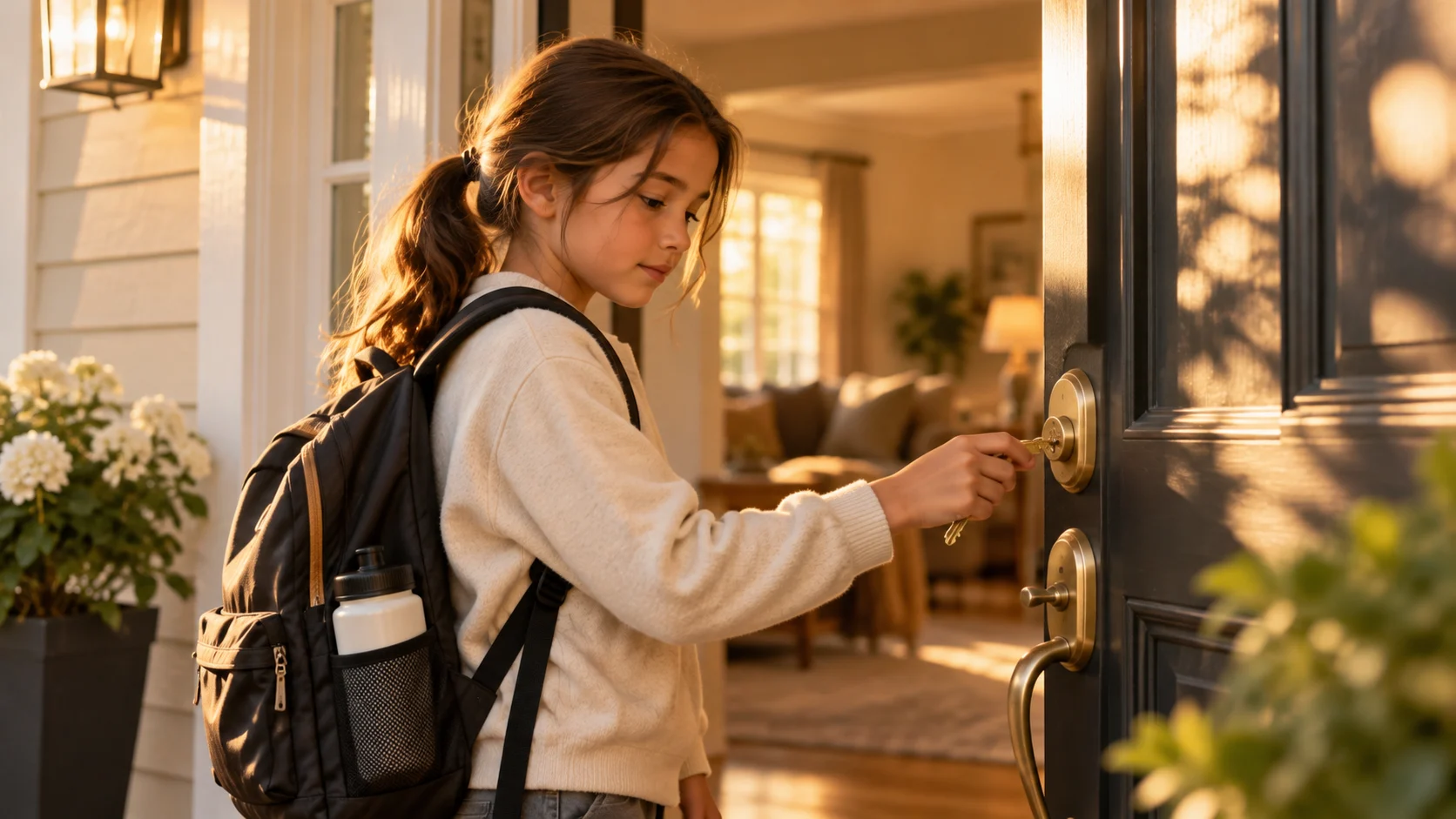
The term refers to a family supervision arrangement rather than a child’s personality or a particular generation.
For example, imagine a student who finishes school at 3:00 p.m., arrives home at 3:30 p.m., and waits until 5:30 p.m. for a parent to return.
That child would fit the traditional latchkey kid definition.
However, being a latchkey child does not automatically mean a child is neglected, unusually mature, lonely, or independent. Experiences depend on the individual circumstances.
| Question | Quick Answer |
|---|---|
| What is a latchkey kid? | A school-age child who spends time at home without adult supervision |
| Why is the term used? | Children traditionally carried keys to enter their homes |
| When was it especially discussed? | During the 1970s and 1980s |
| Which generation is associated with it? | Generation X |
| Do latchkey kids still exist? | Yes, although supervision and communication arrangements vary |
| Is latchkey childhood always harmful? | No. Outcomes and experiences vary with circumstances |
What Does Latchkey Kid Mean in Everyday Life?
Instead of being welcomed home by a parent, grandparent, babysitter, or another responsible adult, a latchkey child arrives home and manages some of their afternoon independently.
Depending on age, maturity, and family rules, the child might:
- Unlock the front door with a personal key.
- Call a parent to confirm they arrived home.
- Prepare a simple, approved snack.
- Begin homework or reading.
- Watch television or enjoy a hobby.
- Wait until a caregiver returns.
A Simple Example of a Latchkey Child
Consider a fictional child named Michael, age 11.
Michael’s school finishes at 3:15 p.m., while his mother works until 5:00 p.m. After school, he walks home, unlocks the door, calls his mother, eats a prepared snack, and begins homework.
His family has clear rules about visitors, cooking, and emergencies. A trusted neighbor is available if he needs immediate help.
Important distinction: This is an illustrative example of a structured arrangement, not a recommendation that every 11-year-old should stay home alone.
Some latchkey children spent only a short period alone; others waited much longer. These differences are essential when discussing latchkey childhood.
Why Are They Called Latchkey Kids?
The name comes from an older word for a house key.
A latchkey was a key used to open a door fitted with a latch. Over time, the expression became associated with schoolchildren who carried keys because no adult was home to let them inside.
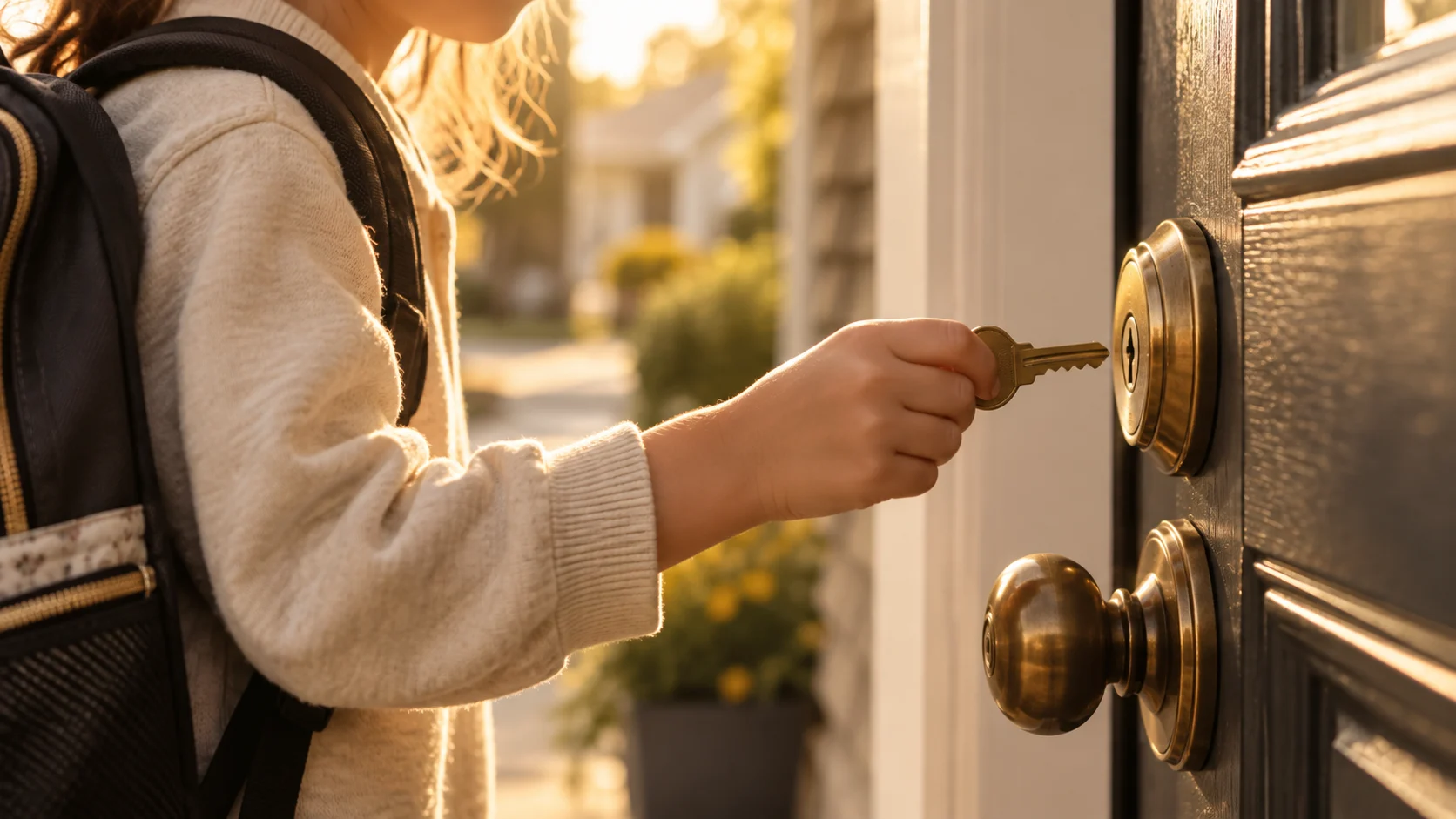
The imagery is simple: a child arrives after school, opens the front door, and enters a home without a parent waiting inside.
When Was the Term First Used?
According to the Online Etymology Dictionary, the term latchkey child is documented in American English by 1944.
That means the expression existed long before Generation X became associated with it.
Although latchkey childhood became especially prominent in conversations about the 1970s and 1980s, the idea of children spending time at home without direct supervision was already recognized in earlier generations.
The History of Latchkey Childhood in America
Latchkey childhood reflects changes in American work patterns, family structures, after-school care, and expectations about childhood independence.
Early Recognition of Latchkey Children
During World War II and its surrounding years, employment demands, military service, and family responsibilities affected how children were cared for. The expression “latchkey child” was documented in American educational writing by 1944.
Different Family Routines
Popular images of mid-century family life often showed a parent waiting at home after school. In reality, single-parent households, working mothers, relatives, and informal care arrangements meant that children’s daily experiences varied considerably.
Changing Work and Family Patterns
As women’s participation in paid employment grew and family schedules changed, some households had a gap between school dismissal and an adult returning home. Families responded through child-care programs, relatives, neighbors, and arrangements for some older children to spend time alone.
The Latchkey Kid Becomes a Cultural Symbol
Newspapers, educators, researchers, and parents increasingly discussed after-school supervision. The image of a child arriving home with a key became closely associated with this decade and with Generation X.
New Technology, Similar Questions
Some children still return home before adults. Mobile phones, digital locks, and check-in systems offer new ways to communicate, but the central questions of readiness, supervision, and safety remain.
How Common Were Latchkey Kids in the 1980s?
According to U.S. Census Bureau research concerning after-school care in December 1984, approximately 2.1 million children ages 5–13, or about 7.2% of that age group, spent time without adult supervision after school.
The findings show that latchkey childhood was a significant family and policy issue without implying that every child in the 1980s experienced it.
Historical context: The 1984 estimate applies to the studied population and period. It should not be interpreted as a current national statistic.
Why Is Generation X Called the Latchkey Generation?
Generation X is sometimes called the latchkey generation because many people growing up during the 1970s, 1980s, and early 1990s experienced changing household schedules and expectations about independence.
Generation X is commonly described as people born approximately between 1965 and 1980.
Several social circumstances help explain the association:
- Growth in families where both parents worked outside the home.
- Single parents balancing paid employment and child care.
- Different levels of access to affordable after-school supervision.
- Expectations that some older children could manage limited time independently.
- Greater public attention to children’s unsupervised afternoons.
Did All Gen X Children Grow Up as Latchkey Kids?
No. Being part of Generation X does not automatically make someone a latchkey kid.
Many Gen X children had parents, grandparents, relatives, babysitters, or other adults available when they returned from school.
The term is a broad cultural description, not a precise account of every person’s upbringing.
Why Do Gen X Adults Remember Latchkey Childhood Differently?
Some remember freedom, confidence, and time to explore their interests. Others remember boredom, loneliness, or responsibility that felt overwhelming.
Both perspectives deserve recognition because family circumstances, maturity, emotional comfort, and available support varied considerably.
What Was Latchkey Childhood Really Like?
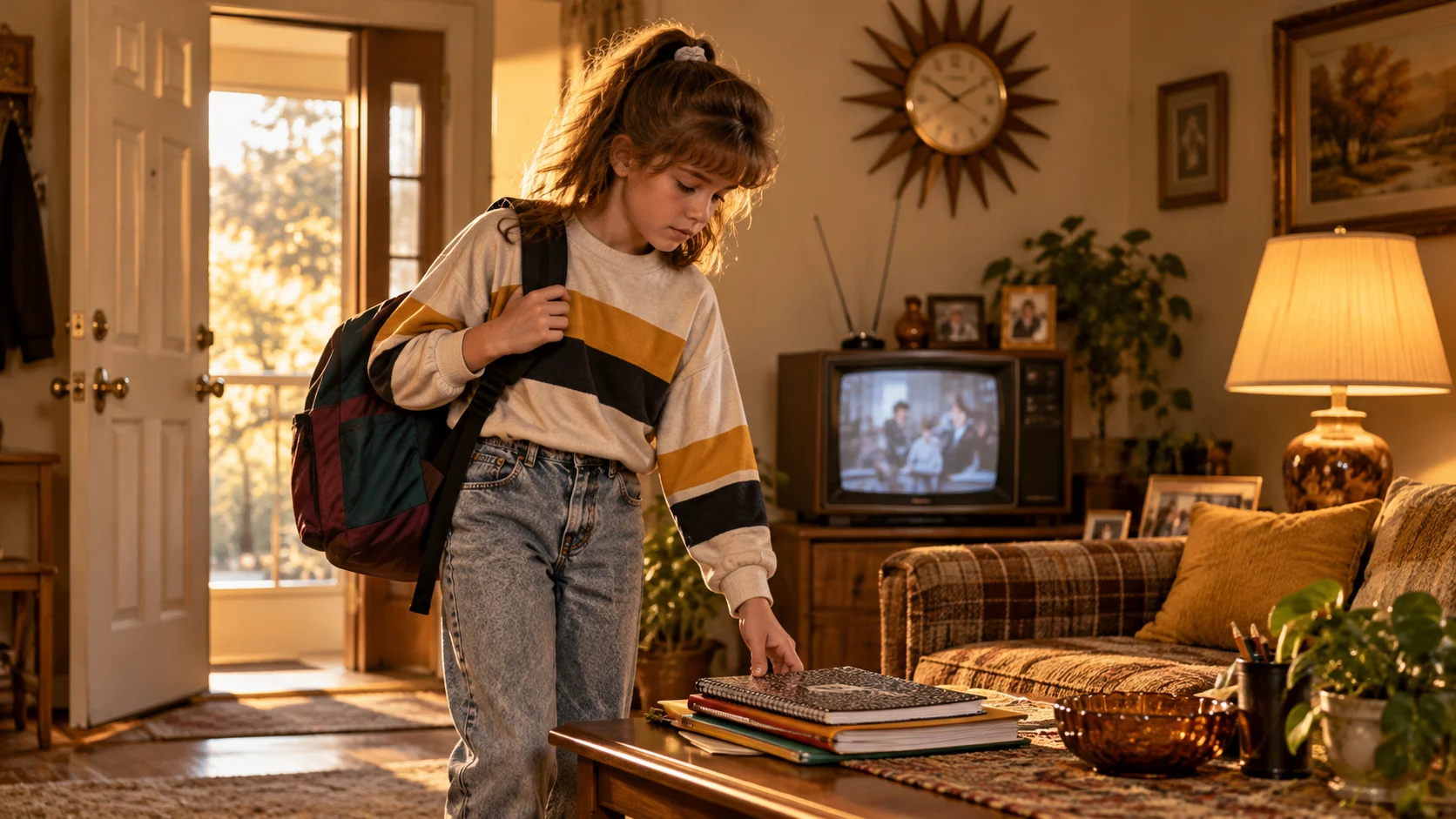
Picture an ordinary afternoon in the early 1980s. A student arrives home, puts down a backpack, turns on the television, and finds something to eat.
There might be homework to finish, a sibling arriving shortly, or a parent expected home in an hour.

Having a Personal House Key
A personal key represented access to home as well as responsibility. Children needed to keep it safe, remember to carry it, and know what to do if it was lost.
Managing After-School Time
Some children could decide when to complete homework, read, enjoy hobbies, or watch television. Others followed carefully structured household rules.
Learning Household Responsibilities
Responsibilities might include feeding pets, organizing school supplies, tidying up, or preparing approved snacks. The tasks varied considerably from one family to another.
Finding Entertainment
Television, books, board games, music, drawing, and personal hobbies helped occupy some afternoons. For many adults remembering the 1980s, after-school cartoons form part of this nostalgia.
Experiencing Independence and Uncertainty
Time alone could feel empowering to a child who was ready and comfortable. For a child who was not ready, the same arrangement could feel stressful.
Takeaway: There was no single latchkey childhood experience. Age, duration, family support, and individual feelings made a meaningful difference.
Possible Benefits and Challenges of Latchkey Childhood
People often discuss latchkey childhood as either a source of independence or an example of insufficient supervision.
Neither description applies to every child.
Age-appropriate responsibility may help some children practice independence, but time without a responsible adult can create safety and emotional concerns when the arrangement does not fit the child’s needs.
Potential Opportunities
- Decision-making: Following simple routines and organizing activities.
- Responsibility: Keeping track of keys, supplies, or agreed tasks.
- Time management: Balancing homework with appropriate leisure activities.
- Confidence: Successfully managing responsibilities that match the child’s readiness.
Potential Challenges
- Loneliness: Feeling isolated during extended time alone.
- Anxiety: Worrying about unexpected events or being without an adult.
- Emergencies: Difficulty responding to an accident or unsafe situation.
- Excessive responsibility: Managing tasks beyond a child’s age or maturity.
Children can develop responsibility in many supervised environments, including family chores, organized activities, and ordinary decision-making.
Leaving a child alone is not a necessary step toward developing independence.
Are There Still Latchkey Kids Today?
Yes. Although the phrase is strongly associated with previous generations, some school-age children still spend time at home without an adult present.
The way families communicate may look very different today.
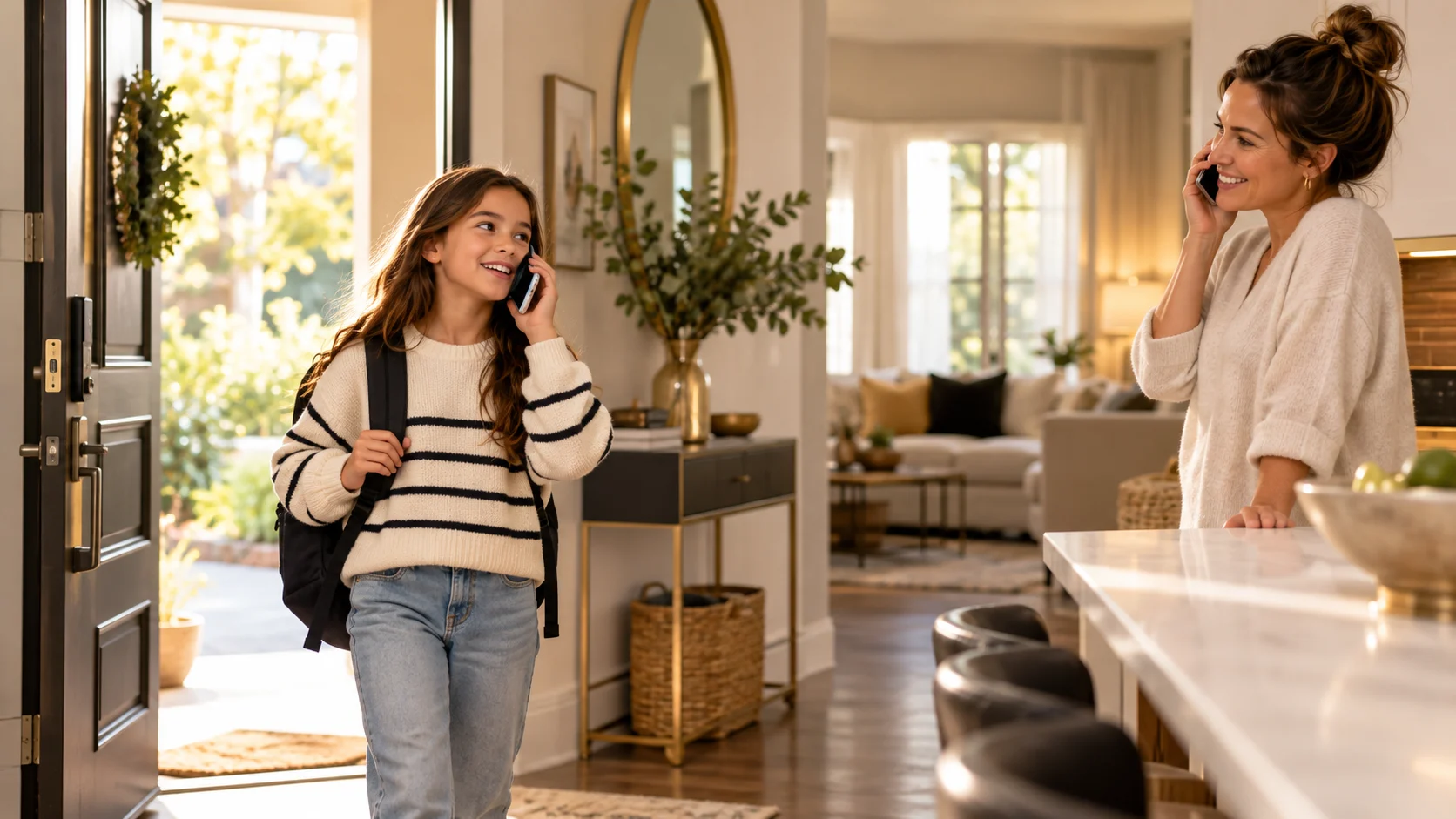
A child may use a digital door lock, call a parent through a mobile phone, or send a message when they arrive home.
However, having technology available does not automatically mean the child is prepared to handle emergencies or spend time alone safely.
| Aspect | Traditional Latchkey Experience | Possible Modern Experience |
|---|---|---|
| Home entry | Physical house key | House key or digital lock |
| Communication | Landline telephone | Phone calls, texts, or video calls |
| Entertainment | Books, television, hobbies | Books, television, hobbies, digital media |
| Emergency support | Neighbors, relatives, telephone contacts | Trusted adults and communication tools |
| Main consideration | Readiness and safety | Readiness and safety |
These comparisons are general illustrations rather than descriptions of every family.
When Is a Child Ready to Stay Home Alone?
There is no single age at which every child becomes ready to stay home alone.
The American Academy of Pediatrics notes that around age 11 or 12 may be appropriate for some children to remain home alone for a few hours, but readiness varies depending on maturity, circumstances, support, and comfort.
That guidance is not a universal legal permission or a recommendation for every child of that age.
Factors Parents Should Consider
- Does the child consistently follow important household rules?
- Can the child reliably contact a responsible adult?
- Does the child know how to respond to emergencies?
- Is a trusted adult nearby and available if needed?
- Does the child feel emotionally comfortable with the idea?
- Is the length of time appropriate?
- Does the home environment have manageable risks?
- Are there applicable laws or local requirements?
What Age Can a Child Legally Stay Home Alone?
In the United States, there is no single nationwide minimum age applicable in every jurisdiction.
State and local rules, child-neglect standards, and agency guidance may vary. Parents should check the requirements that apply where they live.
Important: Even where a specific minimum age is not stated, an unsafe arrangement may still raise child welfare concerns. Contact relevant local authorities or child welfare agencies for jurisdiction-specific guidance.
Essential Home-Alone Safety Tips for Parents
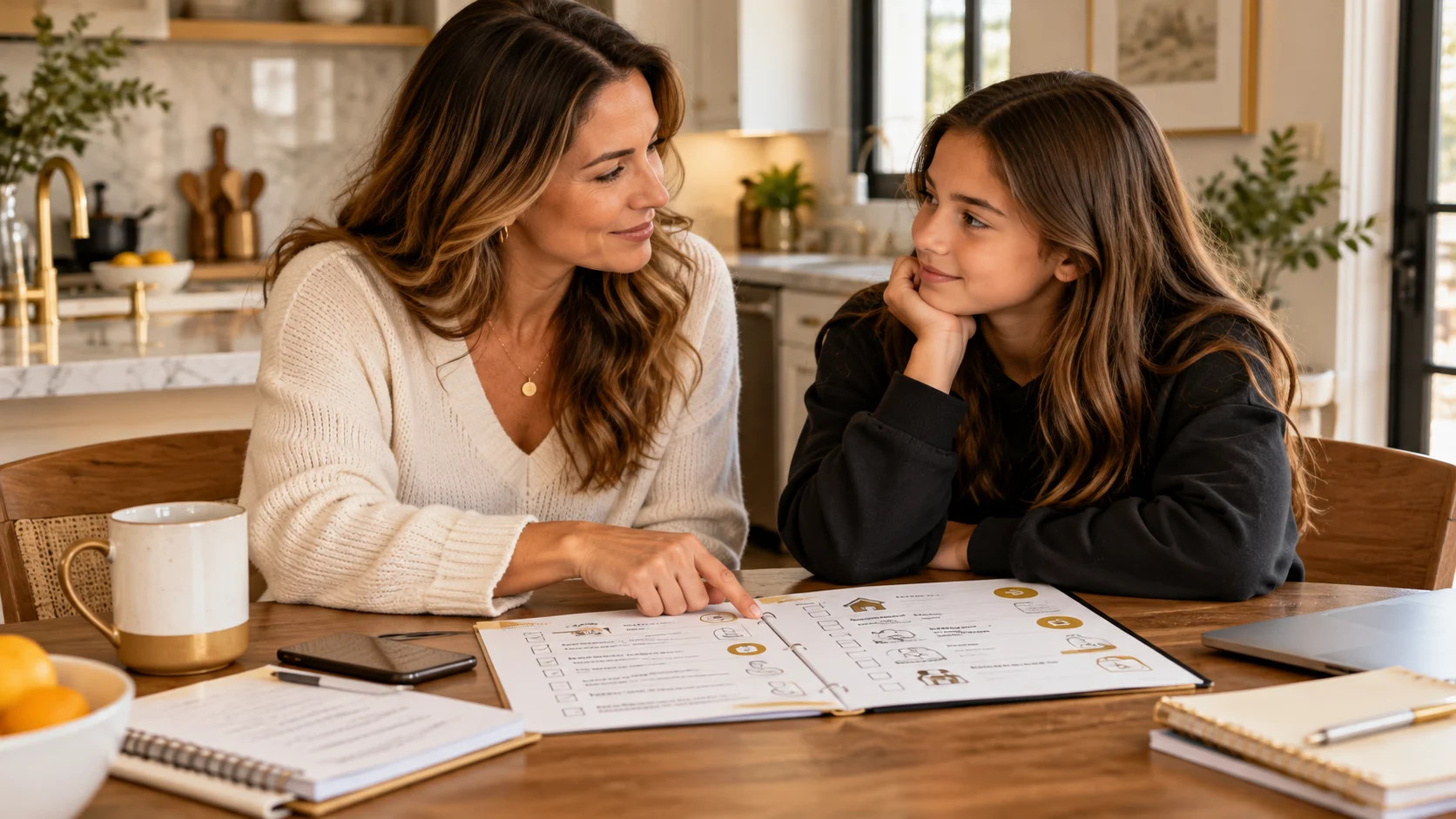
When a child is legally permitted and genuinely prepared for limited time alone, families should establish clear safety rules and reliable support.
Create an After-School Routine
Agree on what the child should do after arriving home, including checking in, storing belongings, eating a prepared snack, and starting homework.
Practice Emergency Responses
Discuss what to do during a fire alarm, injury, power outage, or unexpected visitor. Practice calmly and revisit the plan.
Keep Emergency Contacts Visible
Provide updated parent, guardian, and trusted adult contact numbers. Make sure the child understands when to contact emergency services.
Set Clear Door and Visitor Rules
Discuss whether to answer the door, admit visitors, or communicate with unknown callers. Use simple, consistent rules.
Discuss Kitchen Safety
Set boundaries around cooking, appliances, medicines, sharp objects, and other hazards. Prepare suitable snacks in advance.
Agree on Check-In Times
Establish when the child will contact a parent and what they should do if that adult does not respond.
Use Short Practice Periods
When legally and developmentally appropriate, begin with a short supported trial and discuss how the experience felt afterward.
Respect the Child’s Feelings
If the child is frightened or uncomfortable, reconsider the arrangement. Independence should not require tolerating distress without support.
Home-Alone Readiness Checklist for Parents
Use this checklist to identify topics your family has discussed before considering a home-alone arrangement.
Family Preparation Checklist
Check each item after discussing it. The progress indicator tracks completed discussions only; it does not determine whether your child is safe or legally ready to stay home alone.
Completing this checklist does not establish legal compliance or child readiness. Seek individualized advice if you have safety or developmental concerns.
Alternatives to Leaving Children Home Alone After School
Families who are not comfortable with a latchkey arrangement may have other supervision choices.
School-Based After-School Programs
Some schools offer supervised activities after regular dismissal. Programs may include homework support, recreation, and organized enrichment.
Community and Youth Programs
Community centers, recreation departments, YMCAs, and youth organizations may provide structured after-school activities. Ask about staffing, safety policies, schedules, and transportation.
Relatives and Trusted Caregivers
Grandparents, relatives, and responsible caregivers sometimes help bridge the gap between school dismissal and a parent’s return from work.
Professional Child-Care Arrangements
Some families choose a babysitter or an established child-care program. Check references, supervision standards, and the child’s individual needs.
Flexible Work and Shared Supervision
Where possible, parents may adjust work schedules or coordinate reliable supervision with another responsible adult.
The right choice depends on safety, availability, cost, family circumstances, and the child’s needs.
Frequently Asked Questions About Latchkey Kids
What is a latchkey kid in simple terms?
A latchkey kid is a school-age child who regularly returns home without an adult present and spends some time alone until a parent or caregiver returns.
What does latchkey childhood mean?
Latchkey childhood refers to the experience of regularly spending time without direct adult supervision during childhood, commonly after school.
Why are they called latchkey kids?
The name comes from the house keys children carried to unlock their doors because an adult was not home to let them inside.
Is latchkey one word or two?
Latchkey is normally written as one word when describing a latchkey child or latchkey kid. The phrase “latch key kid” is a common search variation.
When did latchkey kids become common?
The term was documented by the 1940s and became especially prominent in American discussions about after-school supervision during the 1970s and 1980s.
Which generation is known as the latchkey generation?
Generation X is often called the latchkey generation, although not every member of that generation experienced unsupervised afternoons.
Were all latchkey kids neglected?
No. Latchkey is a description of a supervision arrangement, not an automatic determination of neglect. Safety and appropriateness depend on the child’s needs, maturity, support, circumstances, and relevant law.
Did latchkey kids become more independent?
Some adults recall gaining practical skills and confidence. Others remember loneliness or excessive responsibility. Experiences varied and should not be generalized.
Are there still latchkey kids today?
Yes. Some older children still spend limited time at home without direct adult supervision, although modern communication and supervision options may differ.
At what age can a child stay home alone?
No one age applies to every child or jurisdiction. Parents should consider relevant laws, maturity, comfort, safety skills, duration, and access to adult support.
What is the difference between a latchkey kid and an independent child?
A latchkey kid spends time without direct adult supervision. An independent child may show responsibility and decision-making skills while still receiving appropriate supervision.
Final Thoughts: Understanding Latchkey Childhood
The phrase latchkey kid tells a story about a house key, an empty home, and the changing routines of American childhood.
For some people, latchkey childhood brings back memories of freedom, cartoons, afternoon snacks, and learning to manage time independently.
For others, it recalls loneliness, anxiety, or responsibilities they were not ready to handle.
Neither experience represents every latchkey child.
The history of latchkey kids helps explain why Generation X is often associated with childhood independence, but it also reminds us that family circumstances have always varied.
For modern parents, the most useful lesson is not that children should be left alone earlier or supervised forever.
Childhood independence works best when responsibilities match a child’s maturity, emotional comfort, safety needs, and available adult support.