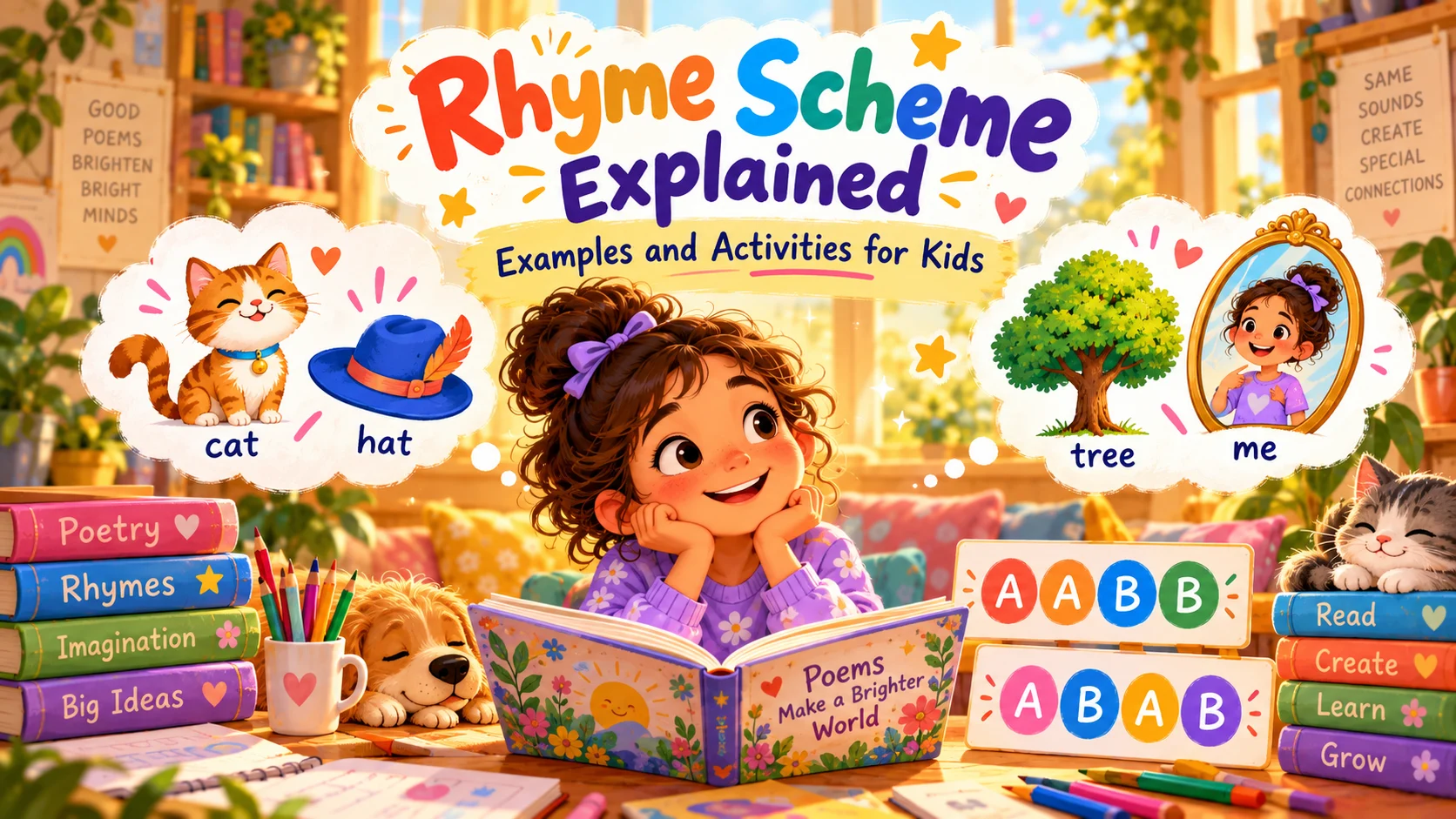

Have you ever noticed how some poems sound like songs? Words such as cat and hat, or day and play, make poetry fun to read and easy to remember.
These matching sounds are called rhymes. The way rhyming sounds are arranged at the ends of a poem’s lines creates its rhyme scheme.
Discover common rhyme schemes, clear poetry examples, rhyming word lists, and creative activities for children at home or in school.
What Is a Rhyme Scheme?
A rhyme scheme is the pattern of rhyming sounds at the ends of lines in a poem. Letters such as A, B, and C show which lines rhyme.
Lines that end with matching rhyme sounds receive the same letter. A different ending sound receives the next new letter.
Rhyme schemes give poetry recognizable sound patterns and can make poems easier to remember.
How Do Rhyme Schemes Work?
You can identify a rhyme scheme by following four simple steps.
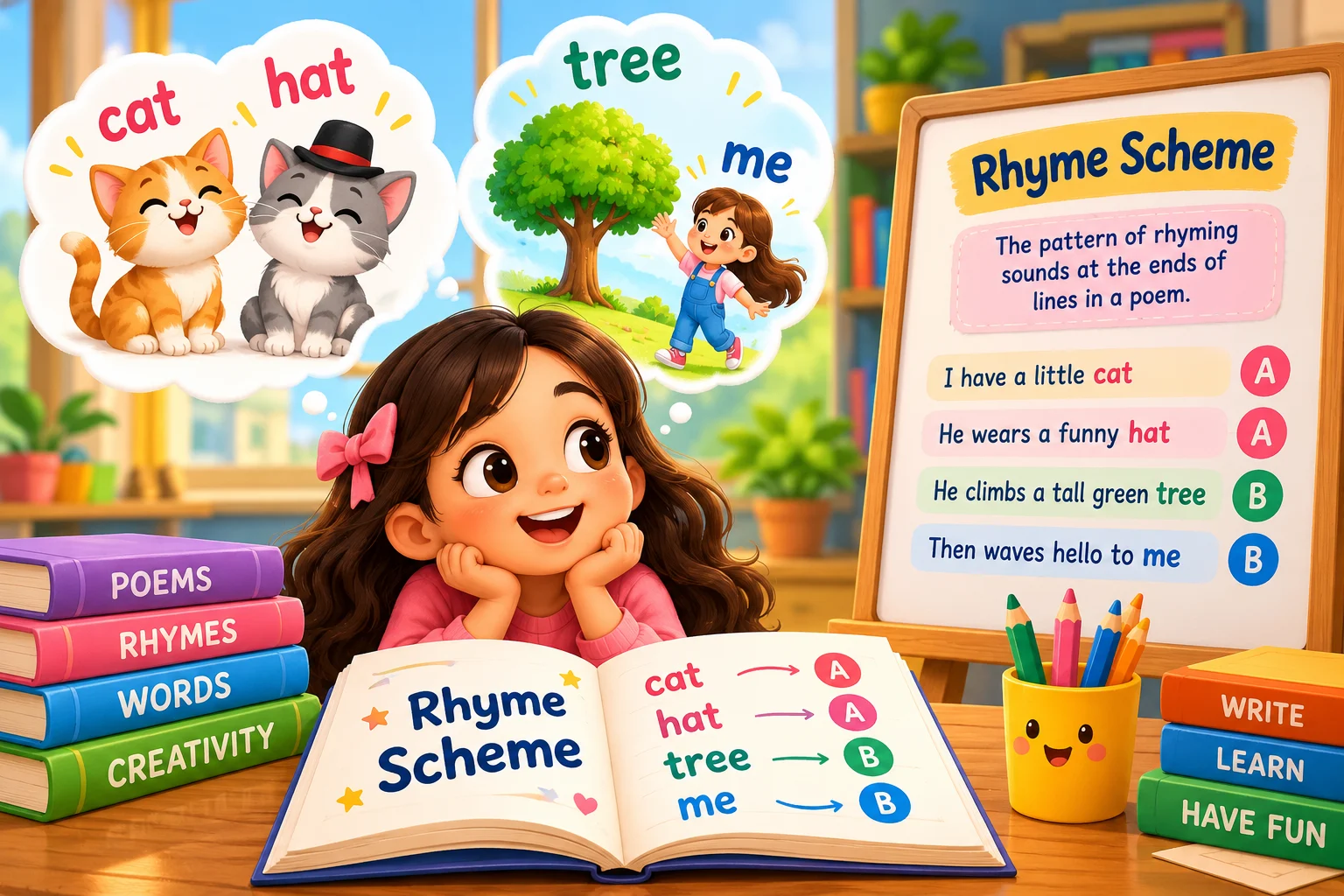
Listen to the words at the ends of the lines.
Look at the final word of each line.
Words that rhyme belong to the same sound group.
Use A for the first sound and new letters for different sounds.
Let’s Try an Example
Helpful tip: Rhyming depends on pronunciation, not identical spelling. Blue and shoe rhyme even though their spellings are different.
Common Types of Rhyme Schemes
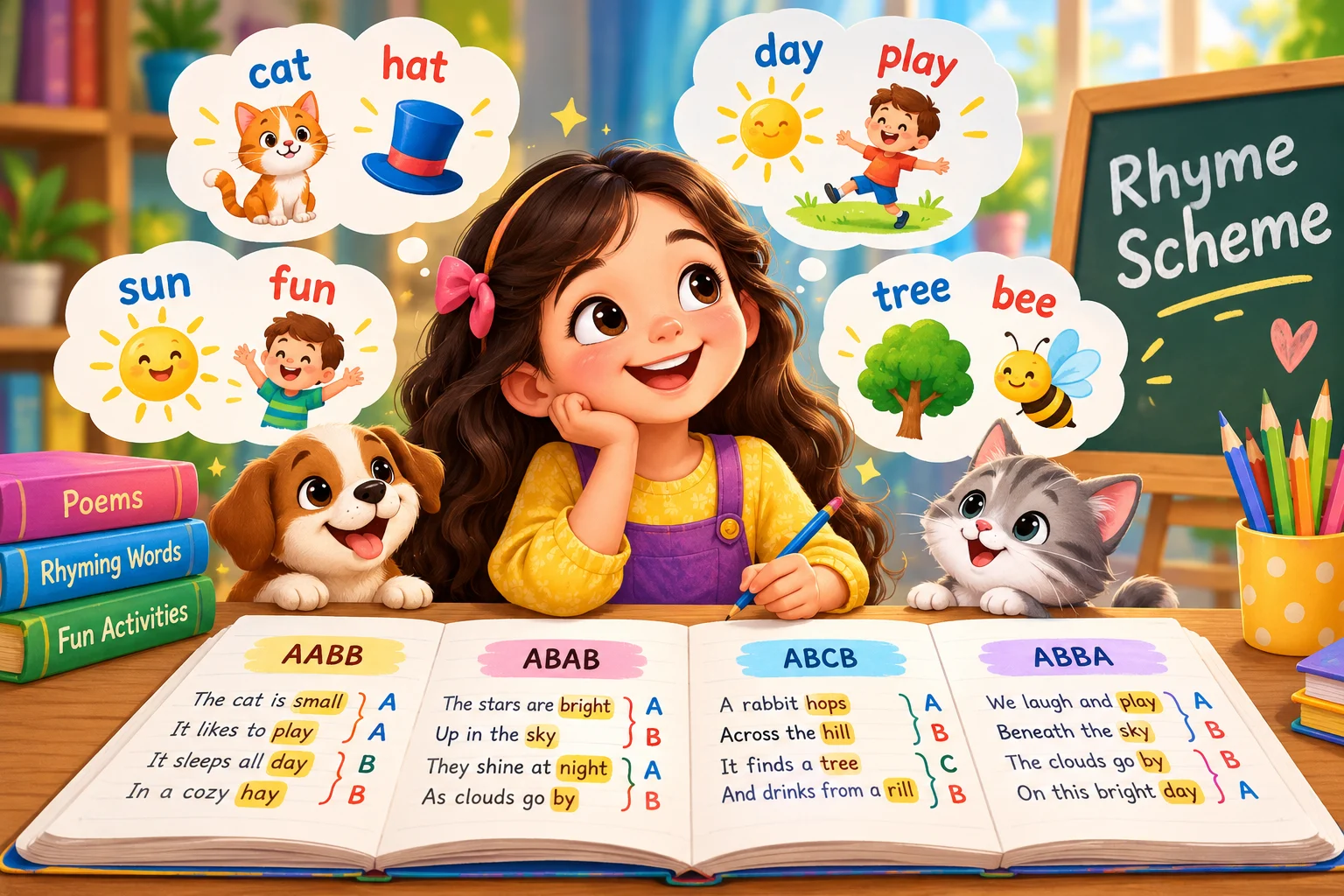
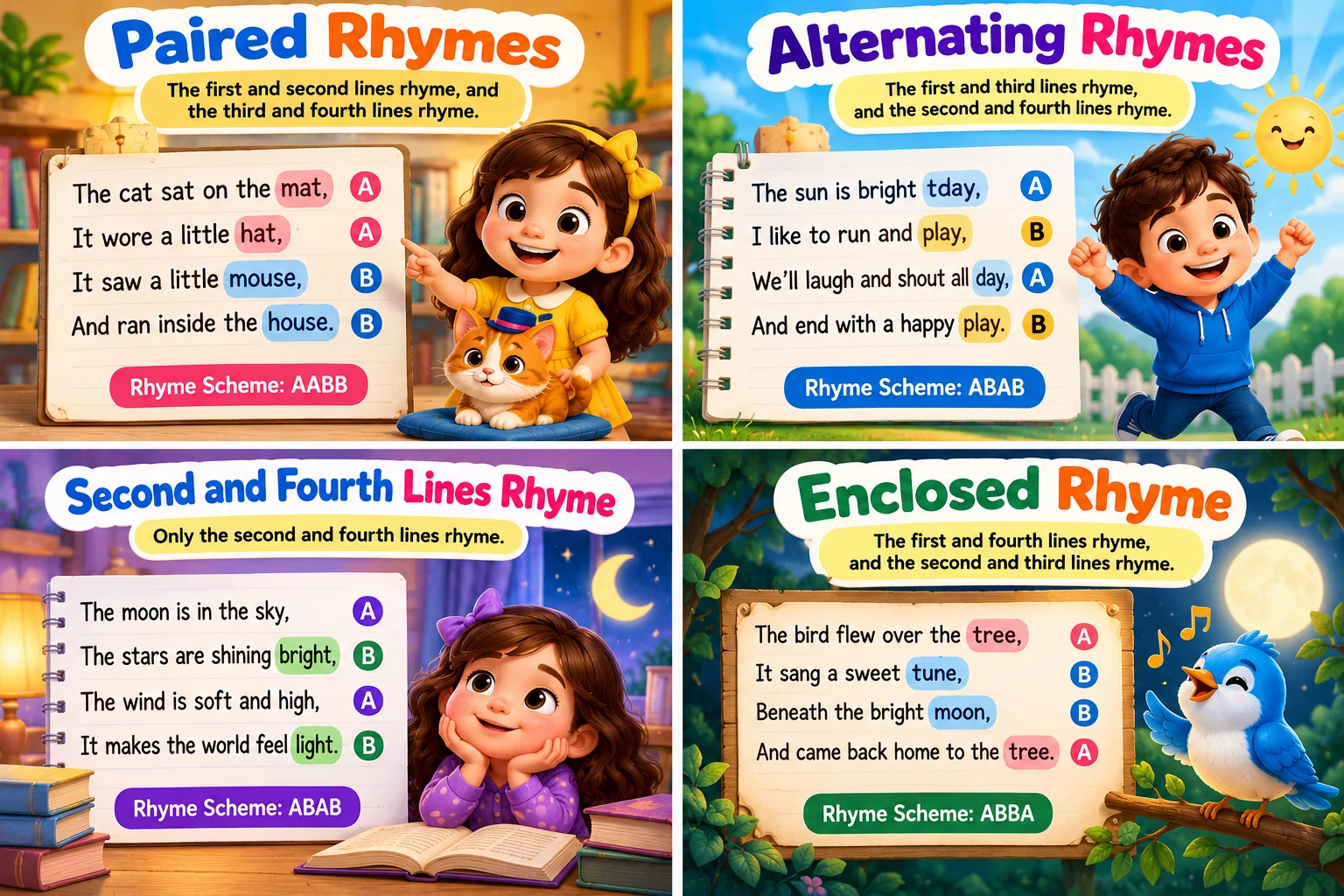
Poems can follow different rhyming patterns. Here are four common rhyme schemes with simple examples.
1. Paired Rhymes
The first two lines rhyme, and the next two lines form another rhyming pair.
Pattern: AABB
2. Alternating Rhymes
The first and third lines rhyme, while the second and fourth lines rhyme.
Pattern: ABAB
3. Second and Fourth Lines Rhyme
The second and fourth lines rhyme. The other two lines end with different sounds.
Pattern: ABCB
4. Enclosed Rhyme
The first and fourth lines rhyme, while the middle two lines rhyme.
Pattern: ABBA
Quick Rhyme Scheme Comparison
| Pattern | Rhyming Lines | Example Words |
|---|---|---|
| AABB | 1 & 2, 3 & 4 | Cat, hat, tree, me |
| ABAB | 1 & 3, 2 & 4 | Light, day, night, play |
| ABCB | 2 & 4 | Hill, glow, tree, snow |
| ABBA | 1 & 4, 2 & 3 | Day, bright, night, play |
Easy Rhyming Examples in Poetry
Short poems about animals, school, and nature make rhyme patterns easier for children to understand.
The Happy Puppy — AABB
Play/day and bed/head create an AABB pattern.
A Day at School — ABAB
Day/play and bright/delight alternate to create ABAB.
The Snowy Morning — ABCB
White/light rhyme while ground and gate introduce different sounds.
Did you know? Not every poem has a regular rhyme scheme. Free verse does not follow a fixed rhyme or meter pattern.
Easy Rhyming Words for Kids
Rhyming words share the same final stressed vowel sound and the sounds that follow it. Practicing word families helps children recognize rhymes.
Words That Rhyme With Life
Example: A story about wildlife can celebrate the wonders of life.
Words That Rhyme With Say
Let’s go outside and play
On this bright and sunny day.
More Rhyming Word Families
| Word | Rhyming Words |
|---|---|
| Cat | Hat, bat, mat, rat |
| Sun | Fun, run, bun, done |
| Tree | Bee, see, free, three |
| Light | Night, bright, sight, flight |
| Blue | Shoe, true, glue, flew |
| Book | Look, cook, hook, took |
| Cake | Make, lake, bake, shake |
Teaching tip: Ask children to say the words aloud and listen for matching ending sounds.
Rhyme Scheme vs. Rhyming Words: What’s the Difference?
Rhyming words are individual words with matching ending sounds. A rhyme scheme describes how those sounds are arranged across poem lines.
| Rhyming Words | Rhyme Scheme |
|---|---|
| Words with matching ending sounds | Arrangement of ending sounds across lines |
| Example: Cat and hat | Example: AABB |
| Focuses on word sounds | Focuses on the pattern of lines |
Remember: Rhyming words are the building blocks. A rhyme scheme is the pattern created from those words.
5 Fun Rhyme Scheme Activities for Kids
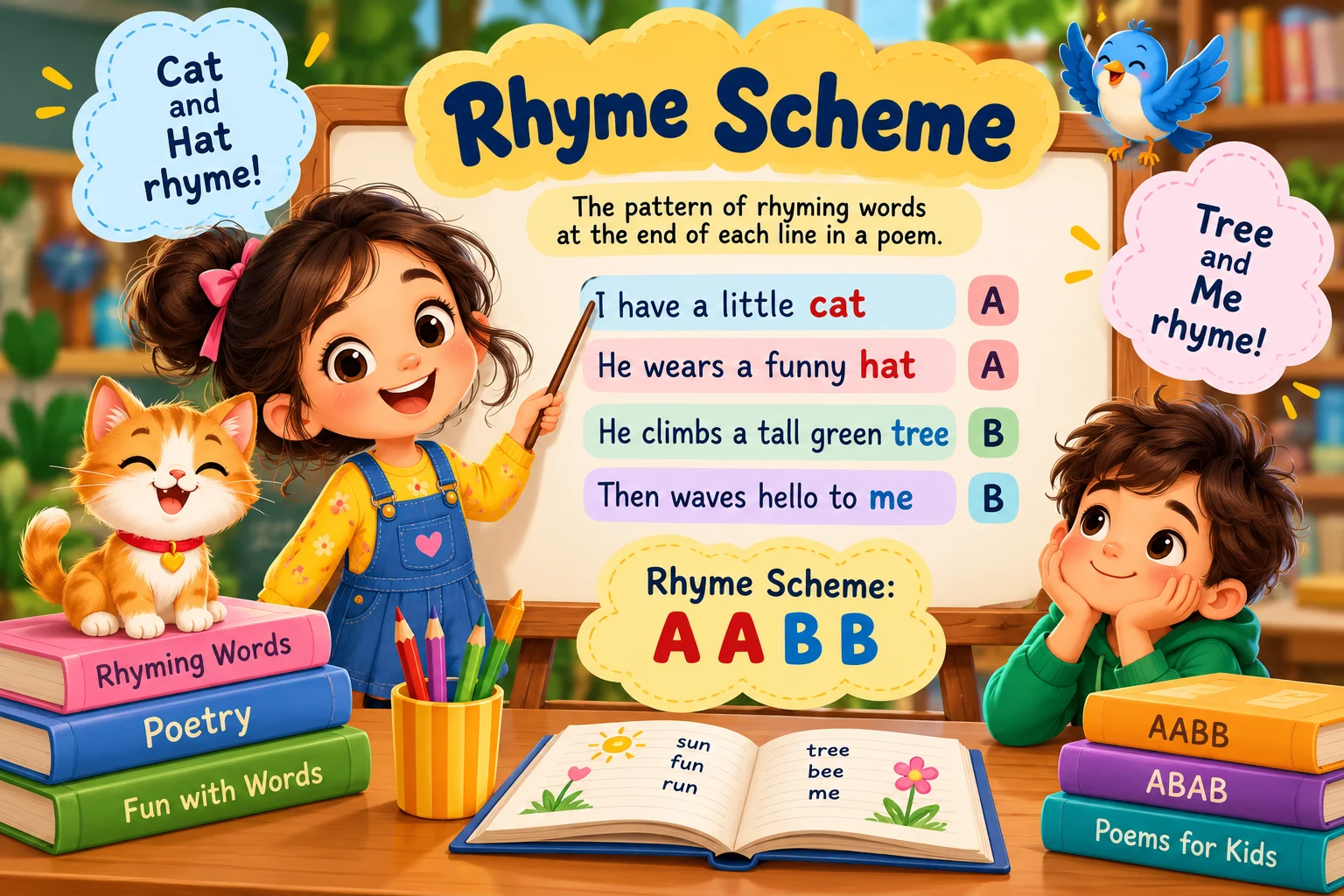
Children learn rhyming sounds through listening, matching, and creative play. These activities work at home or in the classroom.
1. Rhyme Detective
Materials: Short poem and colored markers.
- Read a four-line poem.
- Circle the last word of each line.
- Highlight words with matching rhyming sounds.
- Assign letters to the rhyme groups.
- Identify the complete rhyme scheme.
Learning goal: Identify and label rhyme patterns.
2. Rhyming Word Matching
Write these words on separate cards and ask children to match the rhyming pairs.
Answers: Cat/hat, day/play, sun/fun, tree/bee.
Learning goal: Build rhyming vocabulary.
3. Nonsense-Word Rhyme Race
Nonsense words are invented words that follow familiar sound patterns. The made-up word zat, for example, rhymes with cat and hat.
- Say a simple word such as cat.
- Ask children to invent funny rhyming words.
- Give them one minute.
- Read the suggestions aloud.
- Check which words rhyme.
Learning goal: Develop sound awareness.
4. Finish the Rhyming Poem
Complete the missing words to create an AABB rhyme scheme.
The sun is shining in the sky
I watch a little bird fly ______
A kitten sleeps beside the door
Then wakes and runs across the ______
Possible answers: High and floor.
Learning goal: Complete rhyming lines.
5. The Poetry Pattern Challenge
- Choose a topic such as animals or school.
- Pick AABB or ABAB.
- Find two rhyming word pairs.
- Write four lines using those words.
- Read the finished poem aloud.
Learning goal: Create an original rhyming poem.
How to Write Your Own Rhyming Poem in 5 Easy Steps
Choose a topic and plan your ending words before you begin.
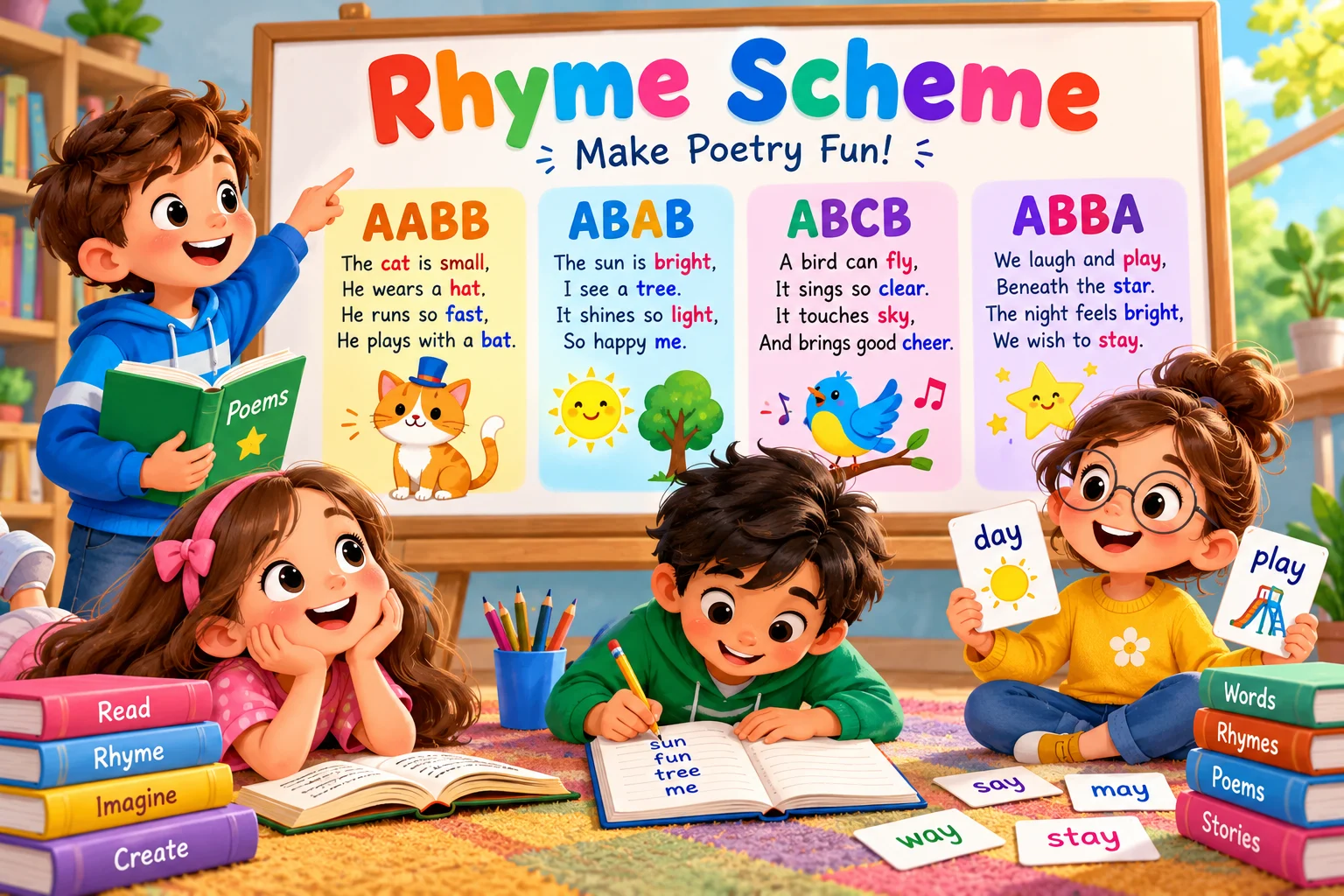
Try a puppy, butterfly, or sunny day.
Start with AABB.
For example, sun/fun and tree/me.
End each line with a planned rhyming word.
Check that the poem rhymes and makes sense.
Creative challenge: Write another four-line poem using ABAB instead of AABB.
Common Rhyme Scheme Mistakes to Avoid
| Common Mistake | Better Approach |
|---|---|
| Matching words that only look alike | Listen to pronunciation. |
| Using a different letter for every line | Reuse letters for matching rhymes. |
| Confusing AABB and ABAB | Check the order of rhyming lines. |
| Looking only at rhymes inside lines | Check line endings for end-rhyme patterns. |
| Thinking every poem must rhyme | Some poems have no regular rhyme scheme. |
| Forcing unusual words into poems | Choose words that fit the meaning. |
For example, love and move look similar but do not rhyme in standard English pronunciation.
Tip: Read the poem aloud to recognize its ending rhyme sounds.
Rhyme Scheme Practice Quiz for Kids
Answer these five questions to test your understanding of rhyme schemes.
Your Score
Frequently Asked Questions About Rhyme Schemes
What is a rhyme scheme in simple words?
A rhyme scheme is the pattern of matching ending sounds across lines of poetry. Letters such as A and B show which lines rhyme.
What is an AABB rhyme scheme?
In AABB, the first two lines rhyme, and the next two lines form another rhyming pair.
What is the difference between AABB and ABAB?
AABB uses consecutive rhyming pairs. ABAB alternates between two different rhyming sounds.
How do you identify a rhyme scheme in poetry?
Read the last words of the lines aloud, compare their sounds, and assign the same letter to words that rhyme.
What words rhyme with life?
Wife, knife, strife, rife, midwife, and wildlife rhyme with life.
What words rhyme with say?
Day, play, way, stay, may, away, today, and hooray rhyme with say.
Do all poems have rhyme schemes?
No. Some poems, including free verse, do not follow a fixed end-rhyme pattern.
Keep Practicing and Have Fun With Rhymes!
Rhyme schemes help children discover musical patterns in poetry. By listening to ending sounds and matching them with letters, young readers can recognize AABB, ABAB, ABCB, and ABBA.
Practice with short poems, rhyming word families, and classroom activities. As children grow more confident, encourage them to write their own poems.
Your next poetry challenge: Choose four rhyming words and turn them into an original poem!