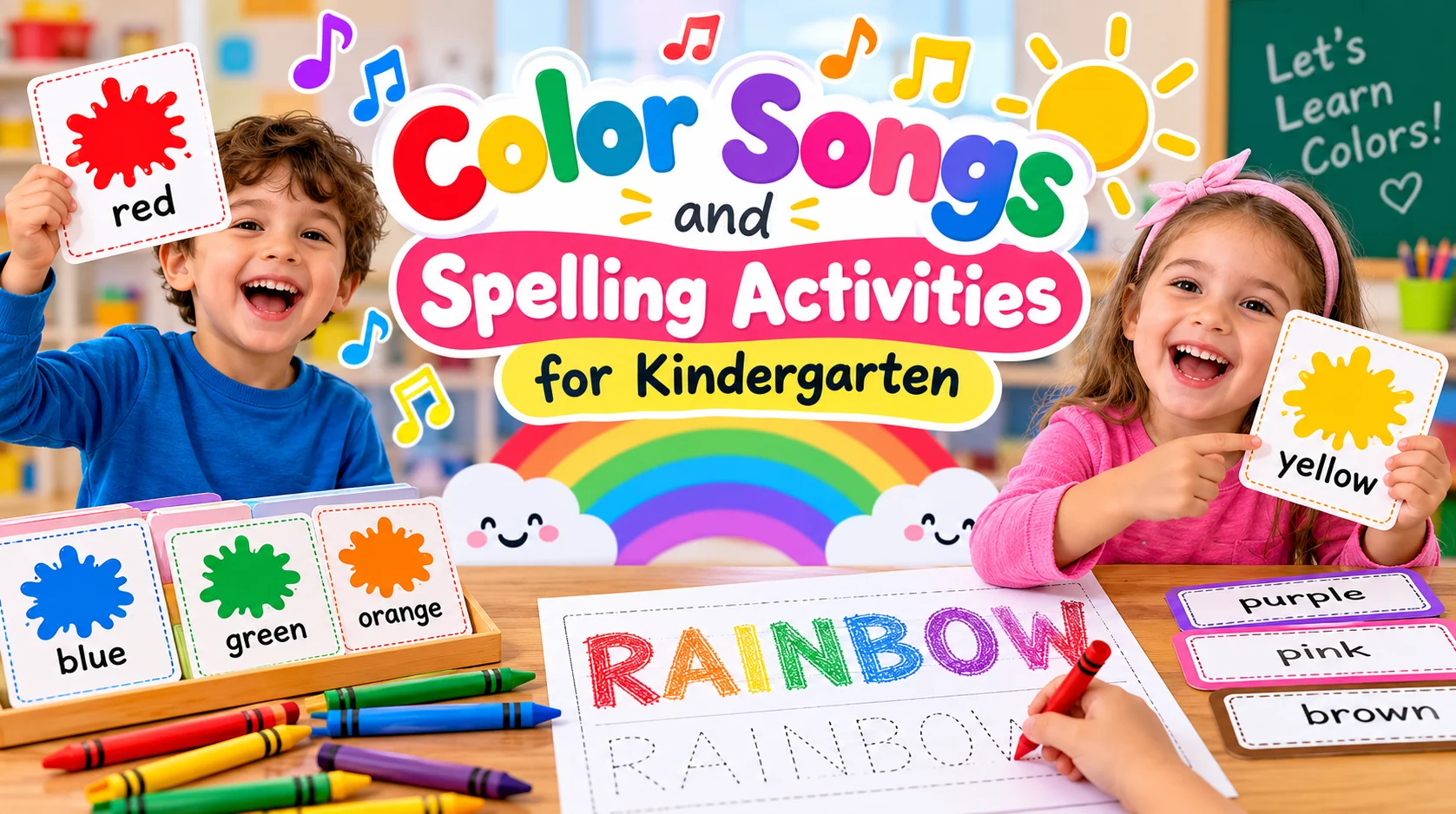

What happens when you combine a catchy tune, a box of crayons, and a room full of curious kindergarteners? You get a playful opportunity to explore colors, build vocabulary, and introduce early spelling skills.
Color songs make everyday learning more interactive. Children can sing about a red apple, point to a blue backpack, or hunt for something yellow while practicing the words they hear. Adding simple spelling activities helps children begin connecting spoken color names with printed letters.
In this guide, you’ll discover 10 fun color songs, 10 easy spelling colors activities, printable-style practice ideas, movement games, and a ready-to-use 15-minute lesson plan. Whether you’re teaching a kindergarten class or learning at home, most of these activities need only paper, crayons, and a little imagination.
Why Color Songs Help Kindergarten Kids Learn
Young children often learn best when a new idea is connected to something familiar. A song about colorful objects gives them opportunities to listen, speak, observe, and move while exploring color vocabulary.
Music isn’t a replacement for hands-on teaching, but it can make repetition more enjoyable. Children may hear the same color name several times in a song without feeling that they’re completing a repetitive drill.
10 Fun Color Songs for Kindergarten
These simple color songs are designed for short classroom and home activities. The original mini-verses below can be sung or chanted with a steady beat. You don’t need special equipment or a perfect singing voice.
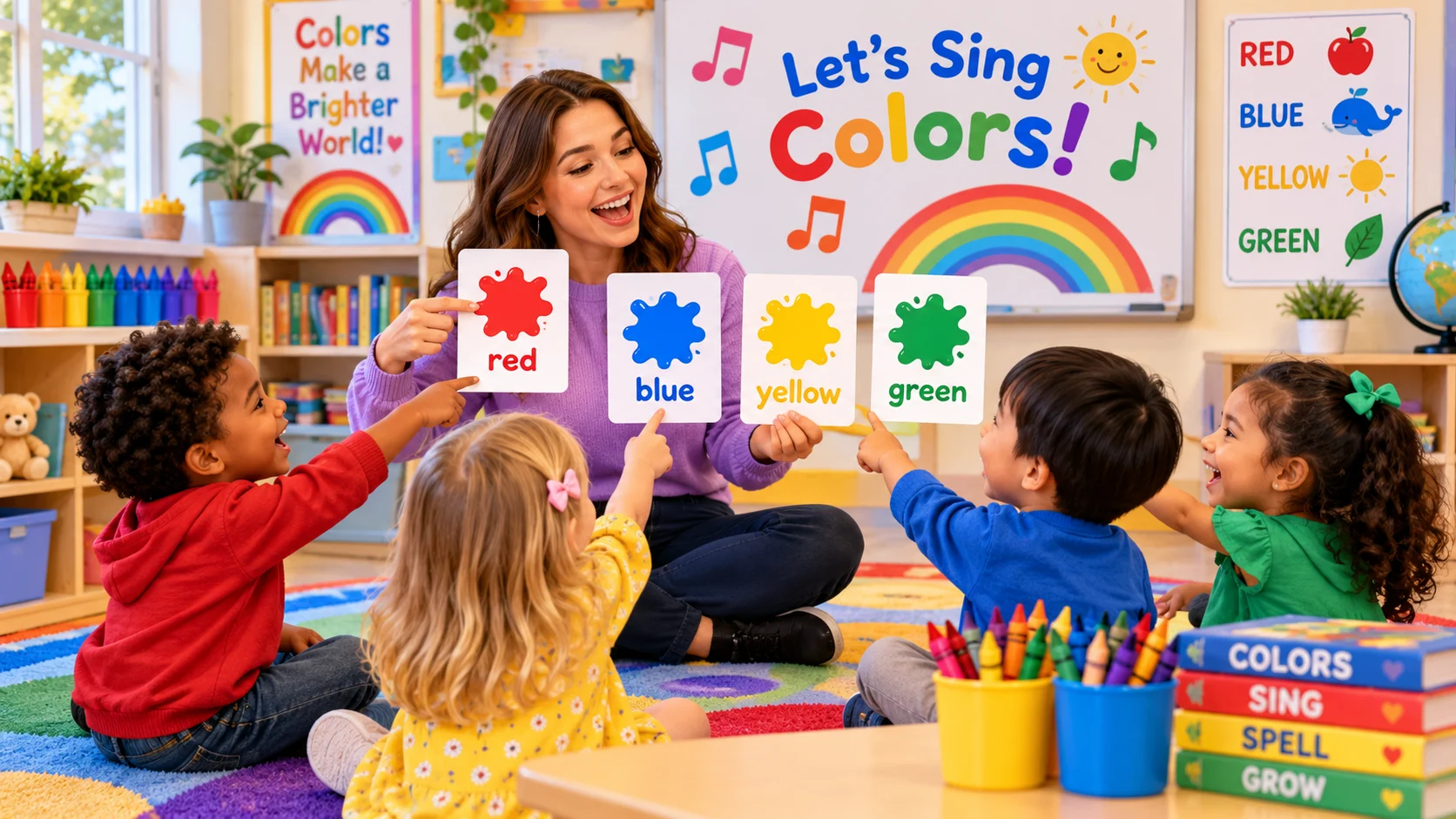
Encourage children to repeat color names, point to matching objects, and use actions. Start with two or three songs instead of teaching all ten in one session.
R-E-D, red is what I say, B-L-U-E, blue is here today. G-R-E-E-N, green is what I see, Let’s spell these colors, you and me!
Color Names and Spelling Chart for Kindergarten
Once children can identify familiar colors, start introducing written color names. A colorful word chart can make the connection between a color and its printed word easier to see.
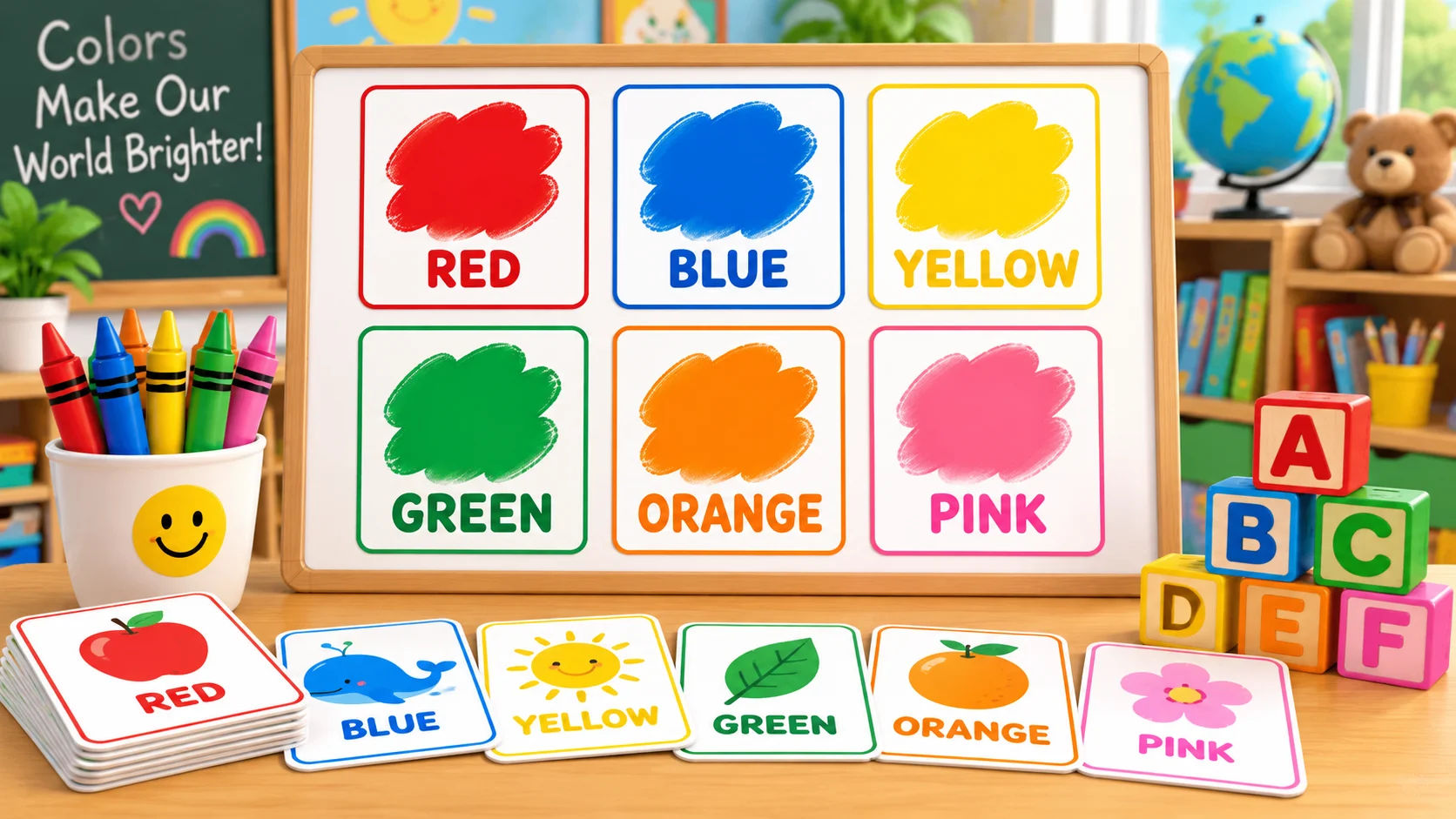
These ten words provide a useful starting point. The order doesn’t have to be fixed, but shorter words such as red and pink may be more manageable for children beginning to build words with letter cards.
| Color | Spelling | Letters | Example |
|---|---|---|---|
| Red | R-E-D | 3 | Strawberry |
| Blue | B-L-U-E | 4 | Blueberry |
| Yellow | Y-E-L-L-O-W | 6 | Banana |
| Green | G-R-E-E-N | 5 | Leaf |
| Orange | O-R-A-N-G-E | 6 | Carrot |
| Purple | P-U-R-P-L-E | 6 | Grapes |
| Pink | P-I-N-K | 4 | Pink flower |
| Brown | B-R-O-W-N | 5 | Tree trunk |
| Black | B-L-A-C-K | 5 | Black cat |
| White | W-H-I-T-E | 5 | Snow |
10 Easy Spelling Colors Activities for Kids
Spelling colors becomes more meaningful when children can touch, move, arrange, and recognize the letters. These activities begin with supported word matching and progress toward more independent practice.
Rainbow Writing
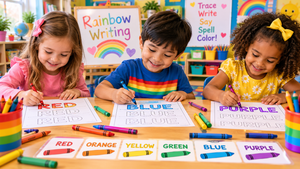
Materials: Paper and crayons.
- Write RED, BLUE, or another color word in large letters.
- Ask children to trace over the letters using a crayon.
- Repeat with another color while saying the word aloud.
Why try it? Repeated tracing creates opportunities to notice letter shapes and order.
Build the Color With Letter Tiles
Materials: Alphabet tiles or paper letter cards.
- Show a color card with the word GREEN.
- Provide G, R, E, E, and N letter tiles.
- Ask children to arrange the tiles to copy the word.
- Read the completed word together.
Make it easier: Keep the model word visible and provide only the required letters.
Match the Color and Word
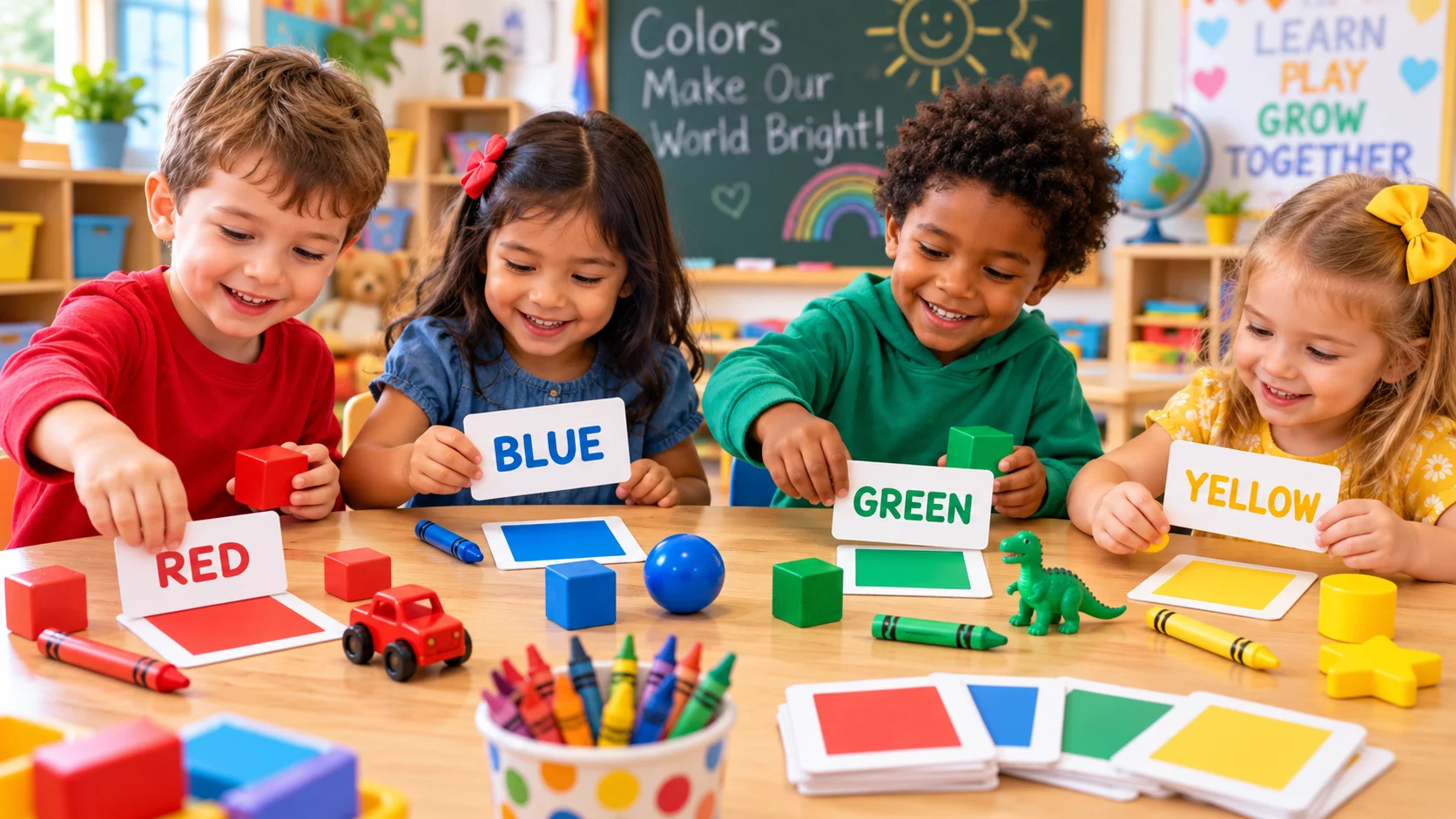
Prepare separate cards containing color names and solid-color circles. Spread the cards on a table and invite children to find the matching pairs.
Learning goal: Recognize the appearance of printed color words before independent spelling.
Fill in the Missing Letters
Write color names with one or two missing letters. Children use a word chart to complete them.
R _ D → RED
B L _ E → BLUE
P _ N K → PINK
G R E _ N → GREEN
Y E L L _ W → YELLOW
Start with short, familiar words and increase the challenge gradually.
Color Word Bingo
Create a simple bingo grid using printed color words. Show a color card or say a color name, and ask children to cover the matching written word.
Variation: For beginners, include a small colored dot beside each word as a visual clue.
Color Letter Hunt
Hide alphabet cards around a safe classroom area. Display the word PINK and ask children to find P, I, N, and K. Bring the letters together and arrange them in order.
Teaching goal: Practice letter identification, sequencing, and teamwork.
Playdough Color Words
Provide child-safe playdough and a large printed color word. Children roll the dough into short pieces and use them to form letters.
Teaching goal: Develop letter-shape familiarity through hands-on practice.
Color Word Puzzles
Write a color word on cardstock, leaving space between the letters. Cut it into individual letter pieces. Children reassemble the word while referring to a model.
Beginner option: Use RED or BLUE before trying longer words.
Color Spelling Hopscotch
Place large letter cards on the floor to form a word such as BLUE. Children step or hop beside each letter while naming it in order.
Use nonslip materials, keep the walking area clear, and adapt the activity for children with different movement needs.
Draw, Color, and Label
Invite children to draw an object, color it, and label the drawing with its color name. For example, they can draw a red balloon and copy the word RED underneath.
Why it helps: The activity links color recognition, vocabulary, visual representation, and emerging writing skills.
Color Songs With Movement and Classroom Games
Movement games can help children participate in color lessons without sitting for long periods. These activities work well after a short song or as a transition between classroom tasks.
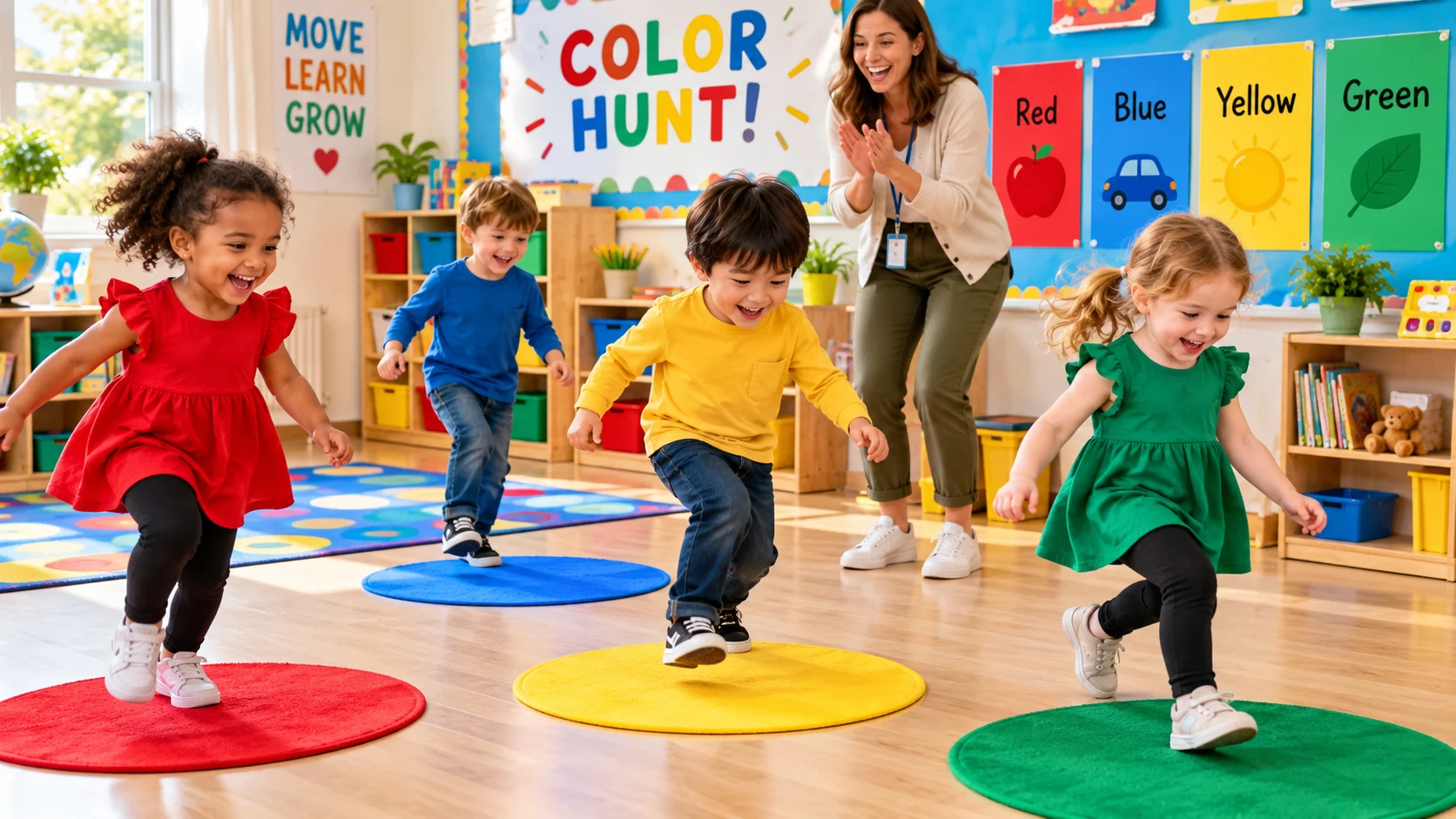
Color Hunt
Give students a color name and ask them to point out an object matching that color. For example, “Find something orange!”
Color Corners
Place four large colored cards around the classroom. Call out a color and have children move calmly toward the matching card.
Rainbow Freeze Dance
Children move to music. When the music stops, hold up a color card and ask them to say the color name.
Pass the Color Card
Pass a color card around a circle while chanting a rhyme. Pause and ask the child holding it to name the color.
Inclusive activity option: Children who prefer to stay seated can participate by pointing to a matching card, raising a colored paper, or saying the color name.
Color Spelling Worksheets and Printable Activity Ideas
Worksheets can give children additional opportunities to practice recognizing and writing color words. They work best when paired with songs, games, real objects, and teacher guidance.
Worksheet 1: Trace the Color Words
Print or write the words RED, BLUE, GREEN, and PINK using large outlined letters. Ask children to trace each word with a matching colored crayon.
Learning focus: Letter formation, left-to-right tracking, and word familiarity.
Worksheet 2: Match the Word
Draw colored circles in one column and write color names in another. Children draw lines to connect each color to its printed name.
Learning focus: Color-to-word association.
Worksheet 3: Color by Word
Create a simple picture divided into large shapes. Write RED, BLUE, or YELLOW inside the sections. Children use the corresponding crayons to color the areas.
Learning focus: Applying word recognition during an art activity.
Worksheet 4: Finish the Spelling
Provide words such as R_D, BL_E, and GR_EN with a color-word reference chart. Children fill in the missing letters.
Learning focus: Letter order and supported spelling.
15-Minute Color Songs and Spelling Lesson Plan
You don’t need an hour-long lesson to practice color recognition and early spelling. A focused 15-minute session can combine listening, movement, word recognition, and review.
| Time | Activity | Learning Goal |
|---|---|---|
| 0–3 min | Show red, blue, and yellow cards | Recognize familiar colors |
| 3–6 min | Sing the Red Apple or Blue Sky song | Practice color vocabulary |
| 6–10 min | Play a color matching game | Connect names with visual examples |
| 10–13 min | Build or trace RED and BLUE | Explore letter order |
| 13–15 min | Review and praise effort | Check understanding |
How to Adapt the Lesson
- For preschool beginners: Focus on naming and matching two or three colors. Skip independent spelling.
- For developing readers: Introduce color-word cards and letter matching.
- For children ready for more: Invite them to build a short color word without looking at the model, then check their work.
Helpful Tips for Teaching Colors at Home and in School
Start With Familiar Colors
Introduce a small group of colors before adding more. Red, blue, and yellow are convenient starting options, but use colors children already encounter.
Use Real Objects
Compare toy cars, crayons, clothing, fruit pictures, and classroom supplies. Naming real objects helps children connect words with everyday situations.
Keep Practice Short
Use brief, engaging activities that match the child’s attention and interest. Several enjoyable sessions can be more manageable than one long lesson.
Celebrate Small Steps
Praise trying, participating, and recognizing a new word. Children should feel comfortable making mistakes and practicing again.
It can also help to use consistent color-word cards across songs, crafts, and matching games. When children see the same printed word in different activities, they have repeated opportunities to recognize it.
Common Mistakes When Teaching Color Spelling
Even enjoyable activities can become frustrating when expectations are too advanced or instructions are unclear. Here are common challenges and practical alternatives.
| Common Mistake | Try This Instead |
|---|---|
| Teaching every color word at once | Introduce a few familiar colors and build gradually. |
| Expecting children to spell before recognizing colors | Begin with identifying, sorting, and naming objects. |
| Relying only on songs | Combine singing with hands-on matching and letter activities. |
| Using lengthy writing worksheets | Offer short tracing and word-building activities. |
| Correcting every mistake immediately | Model the correct answer gently and allow another attempt. |
| Assuming all children progress equally | Adjust support and challenge to individual readiness. |
Remember that learning color names, reading the words, and writing them correctly may require different amounts of practice. The goal is to build understanding and confidence rather than rush children through a fixed sequence.
Frequently Asked Questions About Color Songs and Spelling
What are the best color songs for kindergarten?
Useful kindergarten color songs include simple rainbow rhymes, songs about red and blue objects, color-finding chants, and movement songs. The best choices are easy to repeat, use familiar vocabulary, and invite children to participate with actions or color cards.
How can I teach kindergarten children to spell colors?
Begin with color recognition, then show printed color-word cards. Use letter tiles, tracing, matching games, and missing-letter activities. Start with short words such as RED and PINK, and provide visual support until children are ready for more independent spelling.
What are some easy color songs for preschoolers?
Preschoolers can enjoy short songs about red apples, blue skies, yellow sunshine, and green leaves. Use just one or two colors in the first sessions and include pointing, clapping, or holding up matching objects.
Which colors should kindergarten students learn first?
Red, blue, and yellow are common starting colors because teachers can use them in familiar examples and basic color-mixing activities. However, there is no universal requirement to learn these in a particular order. Begin with colors that are familiar and meaningful to the child.
How do you make spelling colors fun?
Try rainbow writing, building words with alphabet tiles, color-word bingo, matching cards, letter hunts, and drawing-and-labeling activities. Alternate spelling practice with movement and songs so lessons remain varied.
Can color songs help children remember color words?
Songs can provide useful repetition and memorable associations. Combining music with pictures, spoken vocabulary, real objects, and printed word cards gives children different ways to practice. Songs alone do not guarantee that children will independently read or spell color names.
What are some no-prep color learning activities?
Ask children to find something red, sort nearby crayons, name clothing colors, clap when they hear a target color, or play a quick color guessing game. These activities need little or no advance preparation.
Make Every Color a Learning Adventure
Learning colors can be a joyful part of early childhood education. A simple song, a familiar object, and a playful spelling game can turn everyday moments into opportunities to explore language and early literacy.
Start with a few easy color songs, repeat them regularly, and gradually introduce word cards, letter matching, and spelling practice as children become ready. Keep activities encouraging, hands-on, and flexible enough to suit different learners.
Try this today: Sing the Red Apple Song, find three red objects, and build the word RED with paper letters. It’s a simple way to connect singing, color recognition, and early spelling in one enjoyable activity.