
Learning to use scissors is an exciting milestone for young children. The best scissor skills activities for preschool and kindergarten make cutting practice feel like play while building coordination, control, and confidence. From simple paper snips to pretend haircuts and scissor salad, these activities are easy to use in classrooms or at home with adult supervision.
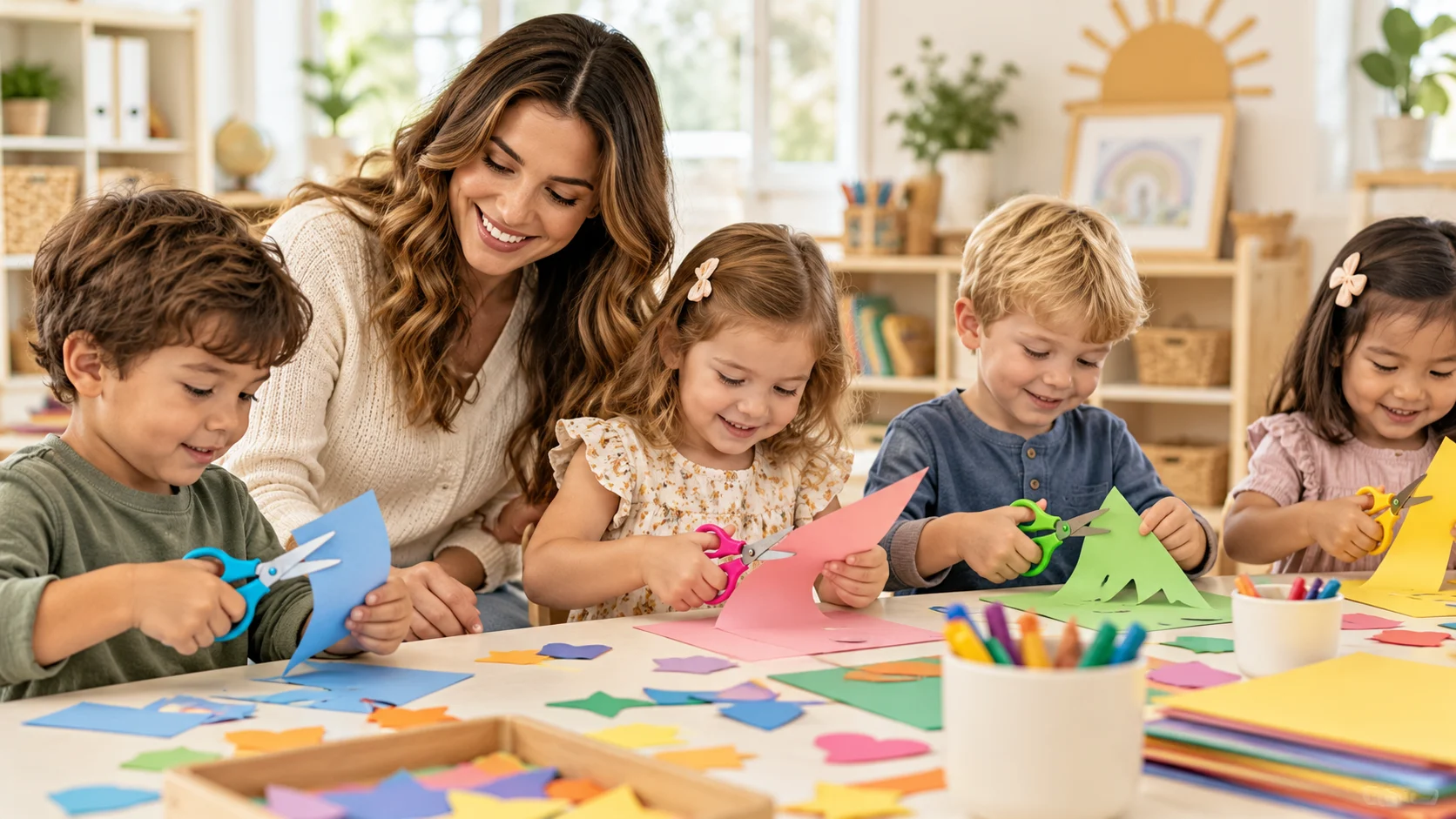
Why Scissor Skills Matter
Scissor use involves opening and closing the cutting hand, watching a path, and using the other hand to position paper. Cutting practice encourages fine motor control, hand-eye coordination, bilateral coordination, concentration, and independence.
Practice controlling small hand and finger movements.
Coordinate visual attention with cutting movements.
Use one hand to cut and the other to turn paper.
Build independence through achievable creative projects.
When Are Children Ready to Use Scissors?
Many children explore basic snipping in the preschool years, but readiness varies. Choose activities according to the child’s ability to handle scissors safely and follow simple directions—not just their age.
| Approximate Age | Practice Focus | Suggested Activities |
|---|---|---|
| 2–3 | Opening, closing and first snips | Assisted paper snips, playdough |
| 3–4 | Single snips and simple lines | Paper strips, scissor salad |
| 4–5 | Lines, corners and curves | Zigzags, shapes |
| 5–6 | Increasing cutting accuracy | Paper chains, collages and crafts |
Essential Scissor Activity Supplies
Keep child-sized scissors, construction paper, slightly firmer cardstock, playdough, washable markers, shallow bowls, collection trays, and glue sticks available. Choose scissors appropriate for each child’s hand and cutting ability, including left-handed options where needed.
How to Teach Preschoolers to Use Scissors
Correct Scissor Grip
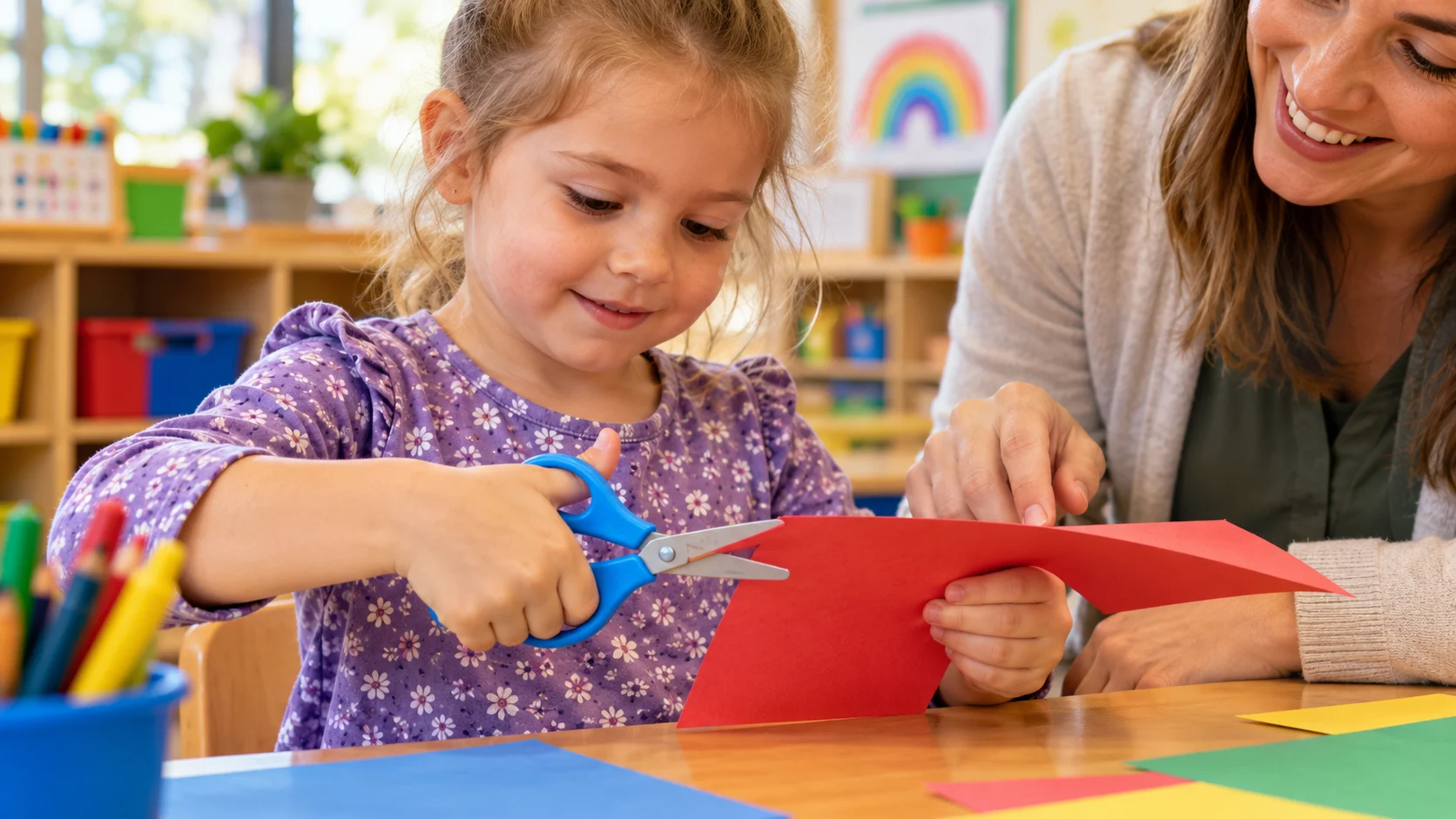
Demonstrate a comfortable grip with the thumb pointing upward and fingers resting naturally in the appropriate loops.
Practice Opening, Closing and Helping-Hand Control
Show children how to open and close the scissors and use their non-cutting hand to hold or turn the paper. Start with a single snip, then move to short marked lines. Keep practice relaxed and playful.
15 Fun Scissor Skills Activities for Preschool and Kindergarten
These activities progress from basic snipping to more detailed crafts. Adjust difficulty to each child’s ability.
1. Paper Strip Snipping
Cut construction paper into short, narrow strips. Show children how to hold a strip with the helping hand and snip small pieces into a tray. Invite them to sort the pieces by color.
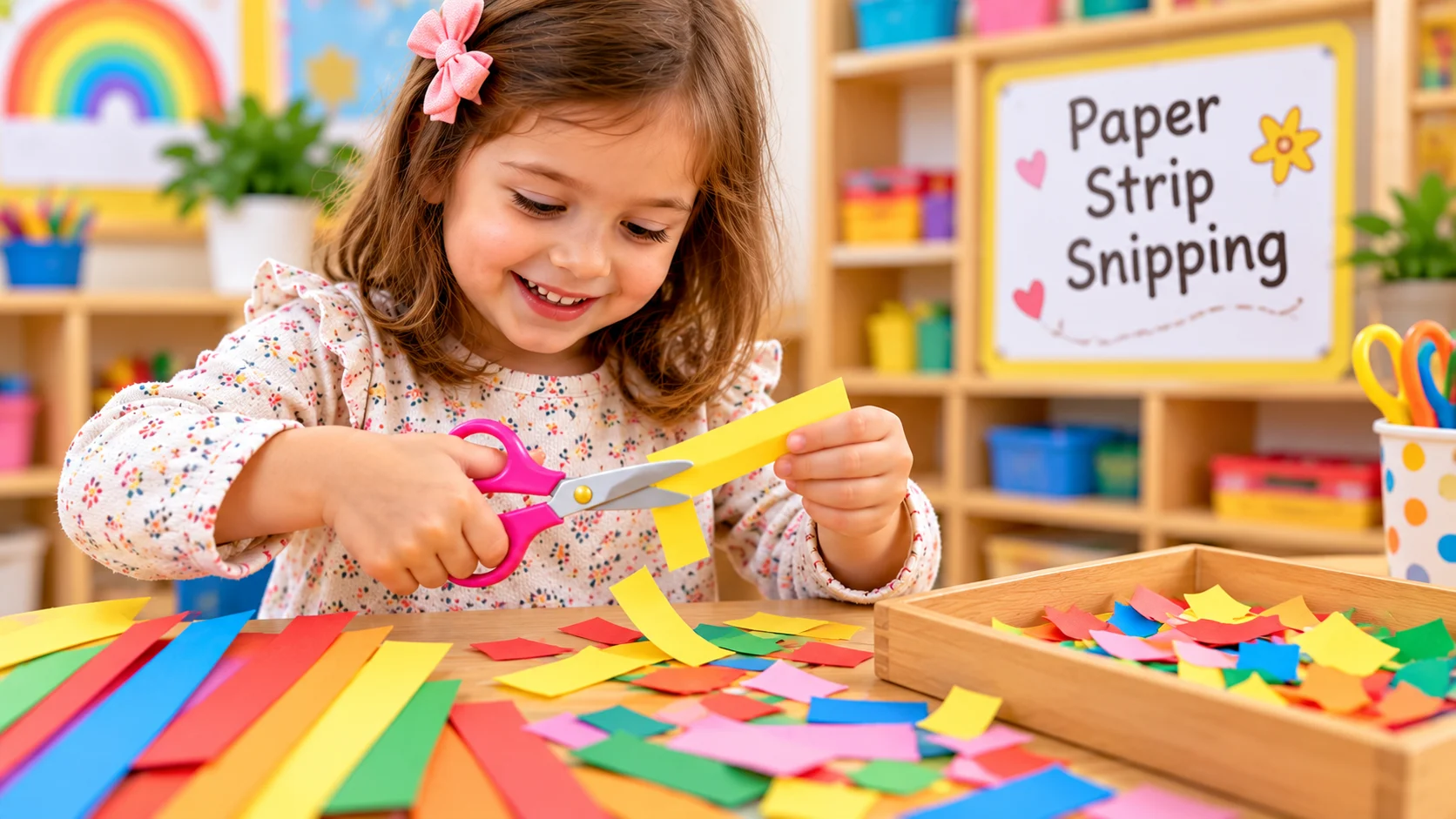
Skills practiced: Grip, first snips, and bilateral coordination.
2. Scissor Salad Cutting Activity
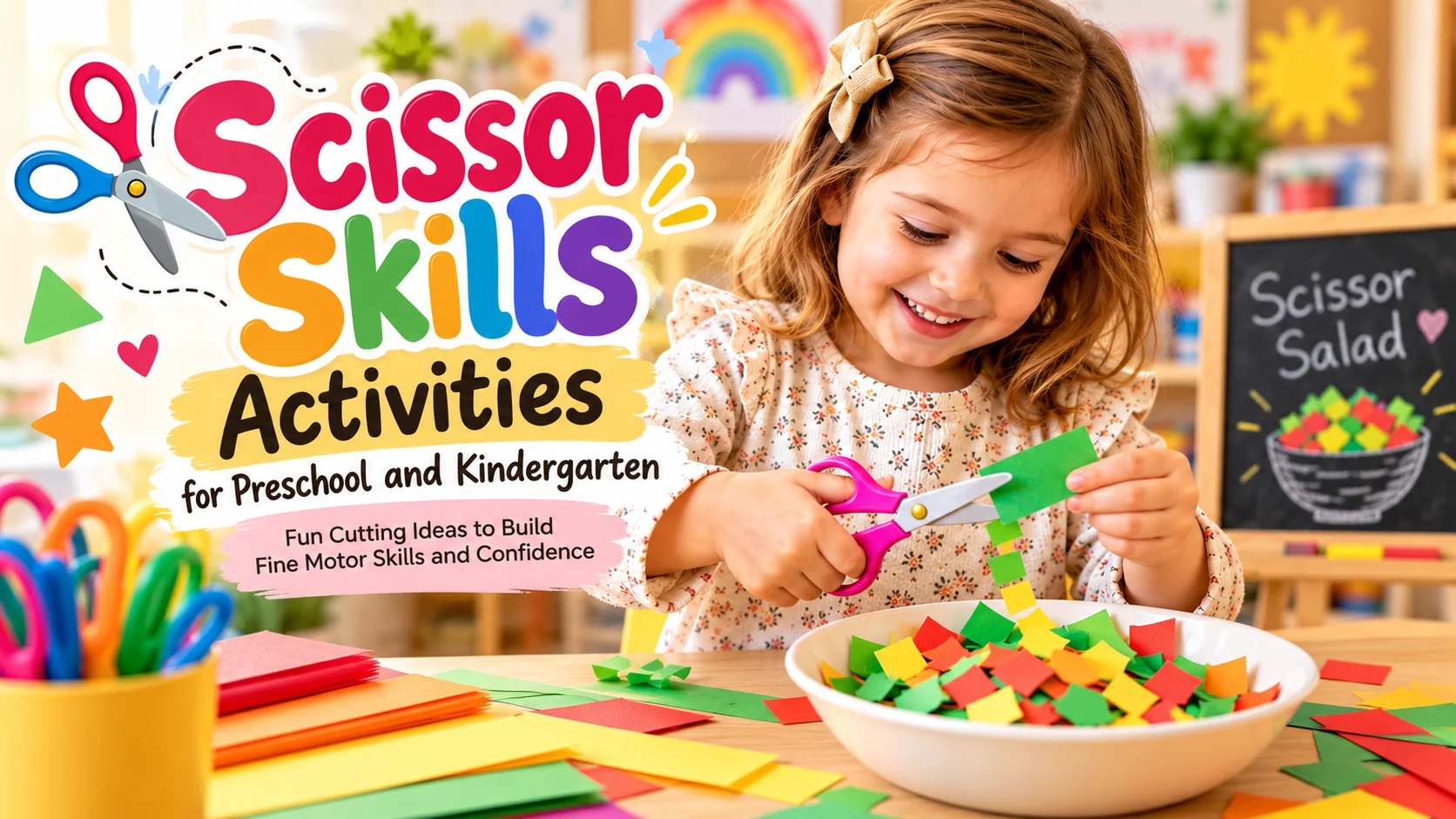
Make pretend salad by snipping strips of green, red, yellow and orange paper into a bowl. Name colors and count a few pieces while children play at being chefs.
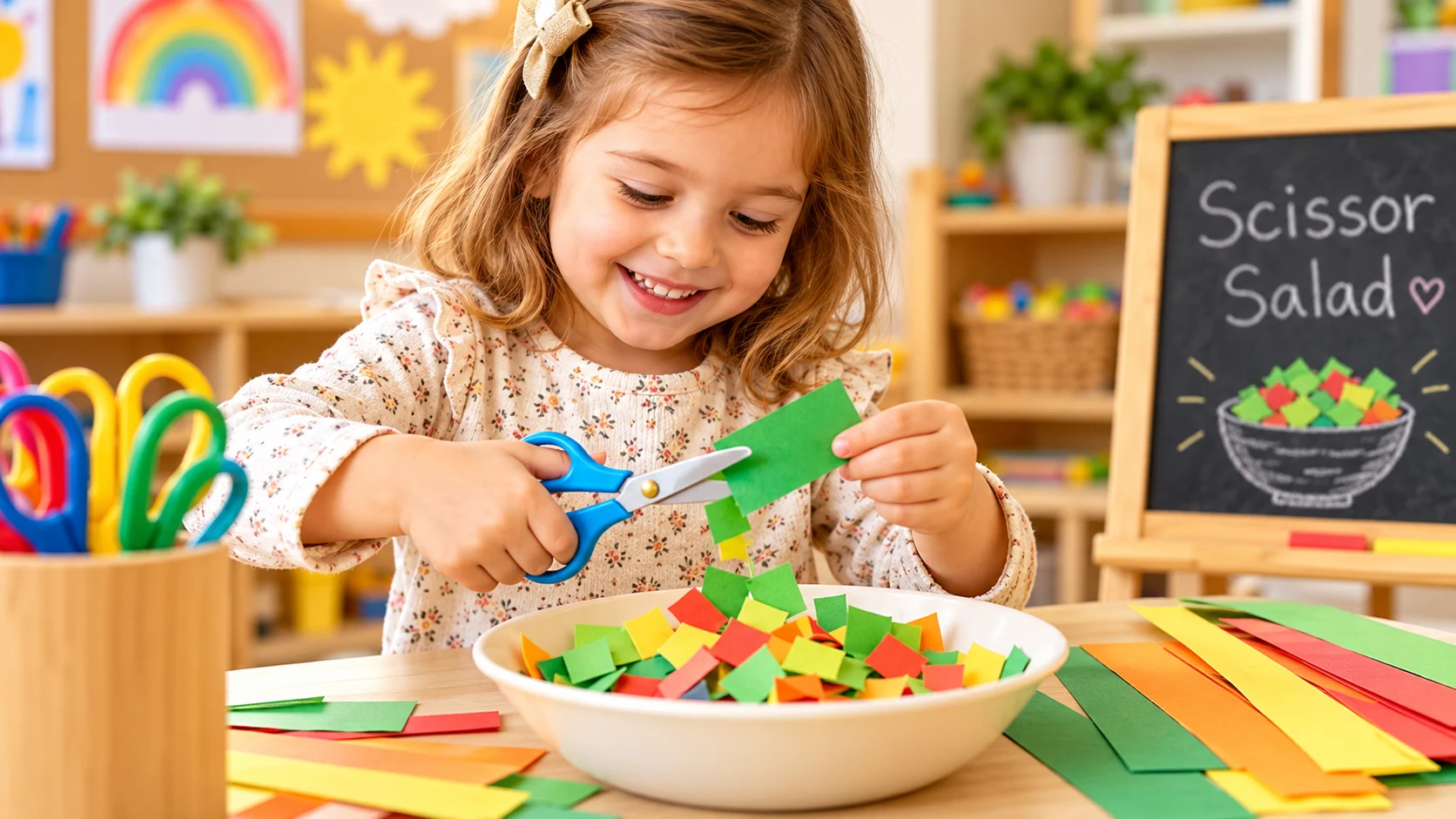
Skills practiced: Repeated snipping, sorting and coordination. This is pretend food and must never be eaten.
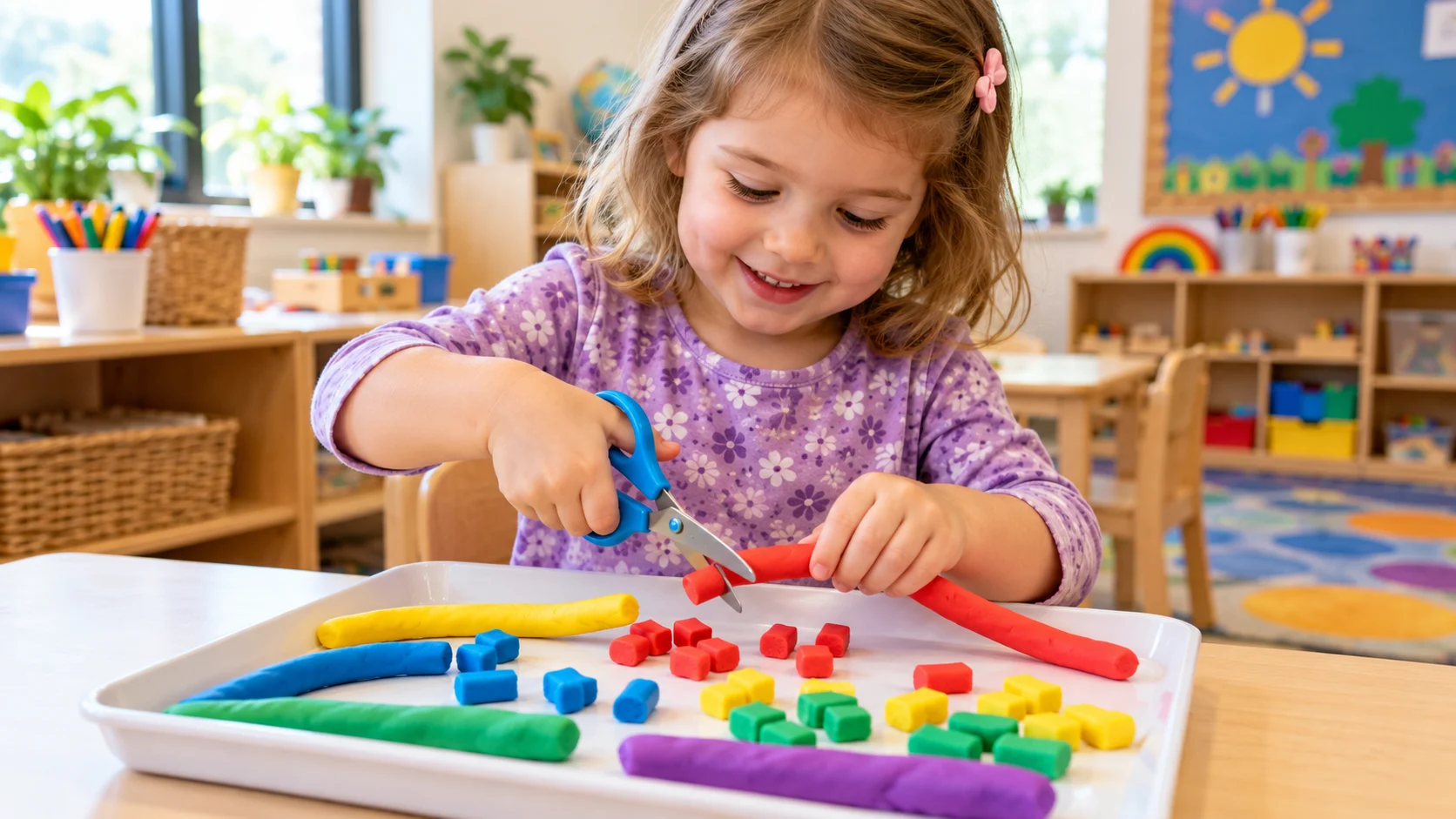
3. Playdough Snipping
Roll soft playdough into thin ropes and let children snip them into pieces with suitable scissors. Turn the pieces into pretend noodles.
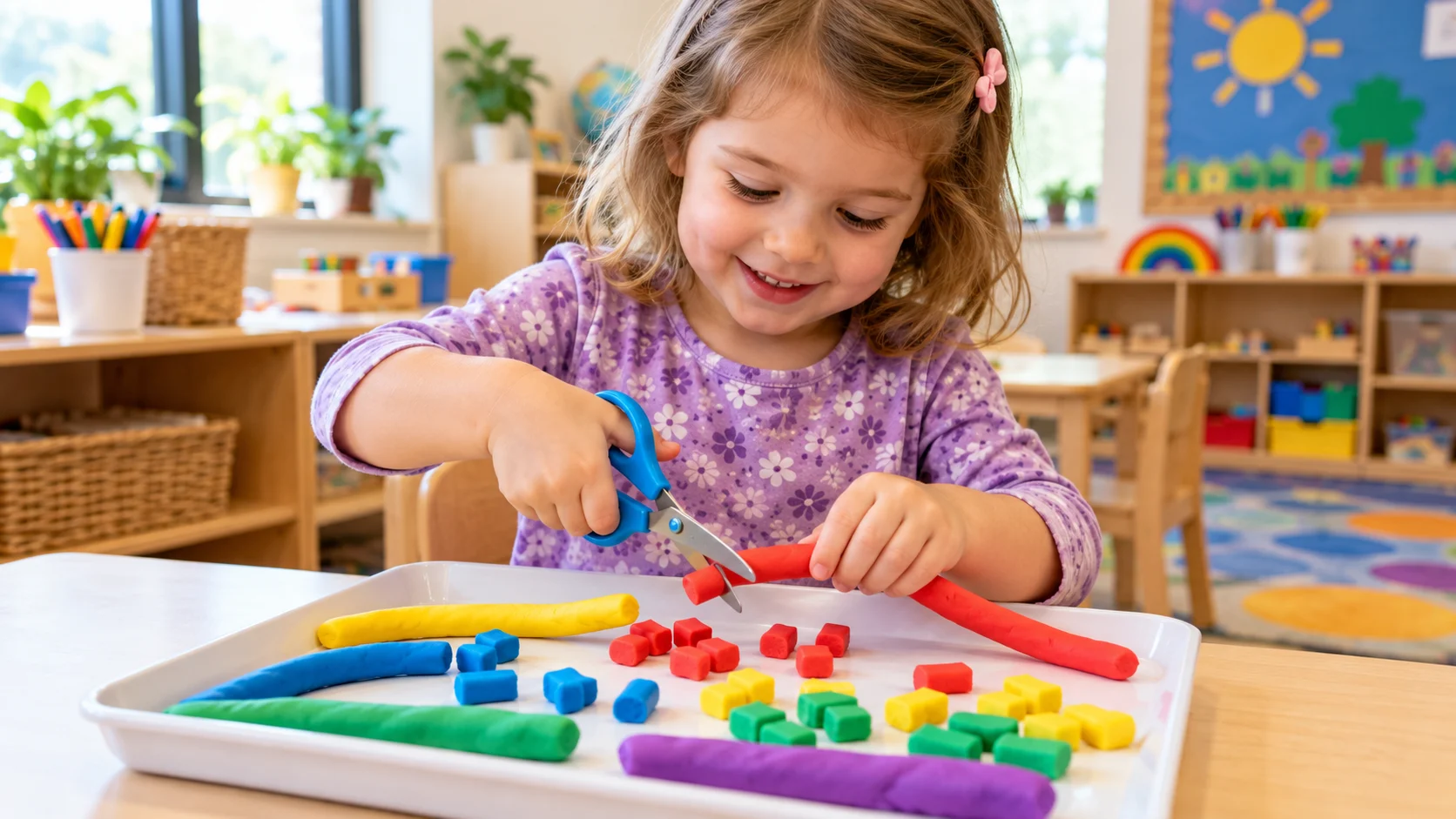
Skills practiced: Opening and closing scissors and hand control.
4. Silly Paper Haircuts
Draw a friendly paper face with long paper fringe hair. Let children cut the fringe into different imaginary hairstyles. Explain that scissors are only for paper hair, not real hair.
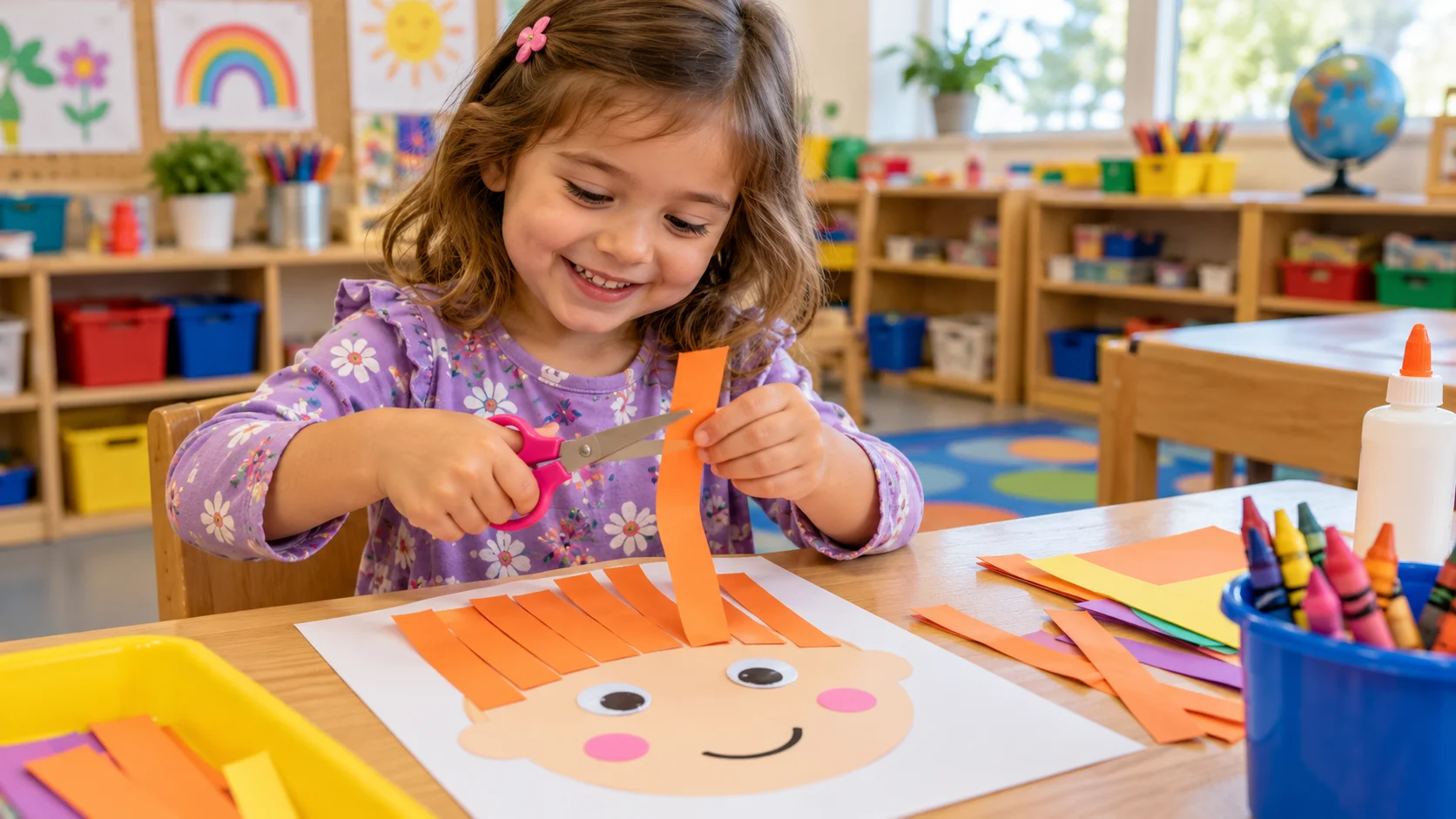
Skills practiced: Short cuts and stopping control.
5. Straight-Line Cutting Practice
Draw a bold straight line on a narrow paper strip. Demonstrate where to start and encourage slow, controlled cutting. Make lines longer as children gain confidence.
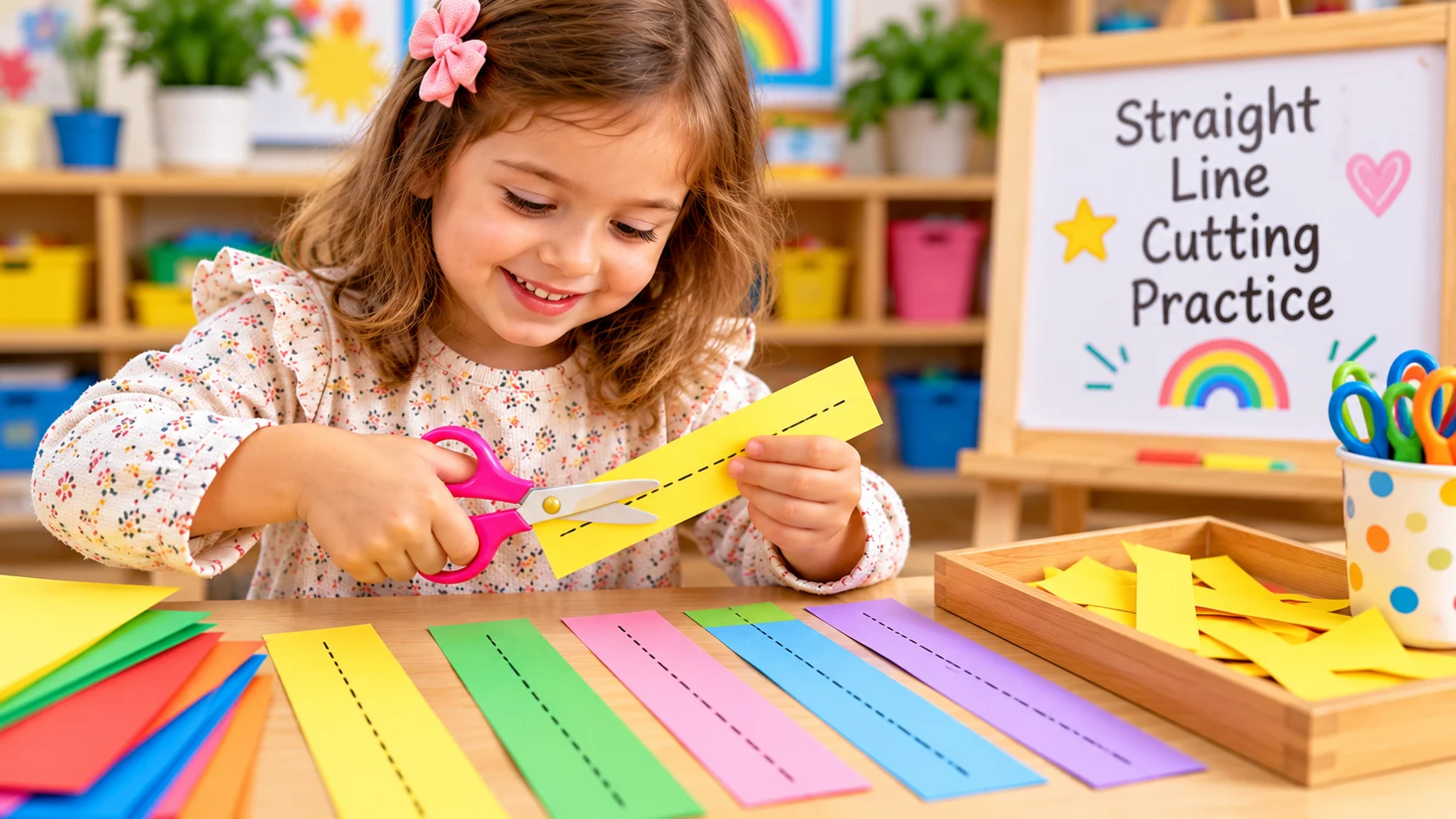
Skills practiced: Visual tracking and cutting accuracy.
6. Zigzag Cutting Paths
Draw a wide zigzag path. Encourage children to cut toward the first corner, pause, turn the paper with their helping hand, and continue along the next segment. Start with large corners before offering smaller zigzags.
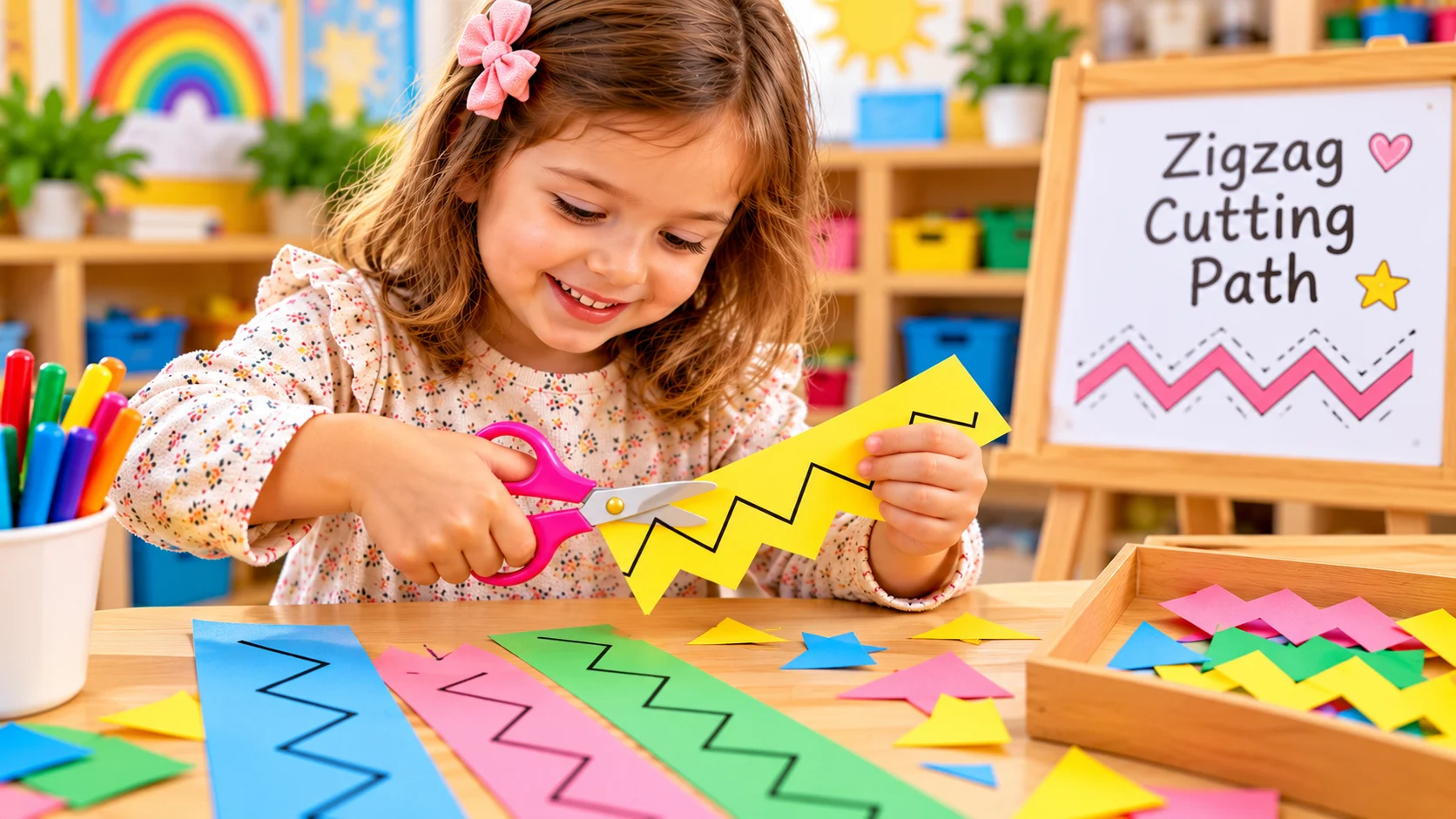
Skills practiced: Direction changes, bilateral coordination and precision.
7. Curved and Wavy Line Cutting
Draw a broad curved or wavy path and ask children to follow it slowly. Help them reposition the paper with their non-cutting hand as the cutting direction changes.
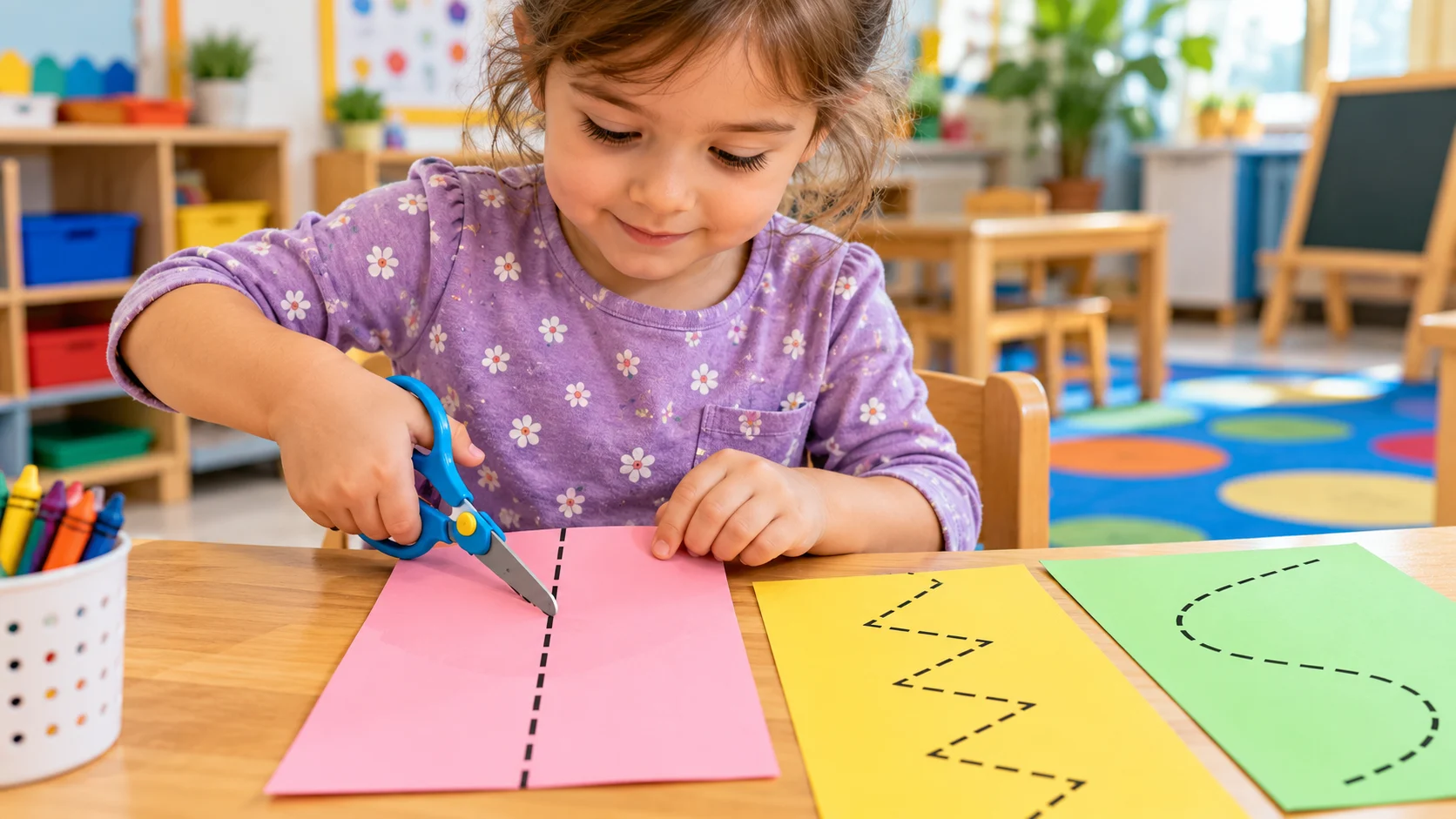
Skills practiced: Paper turning, smooth cutting movements and visual tracking.
8. Cutting Circles, Squares, and Triangles
Draw large geometric shapes with clear outlines. Encourage children to cut around each shape and use the finished pieces to make a simple picture or collage.
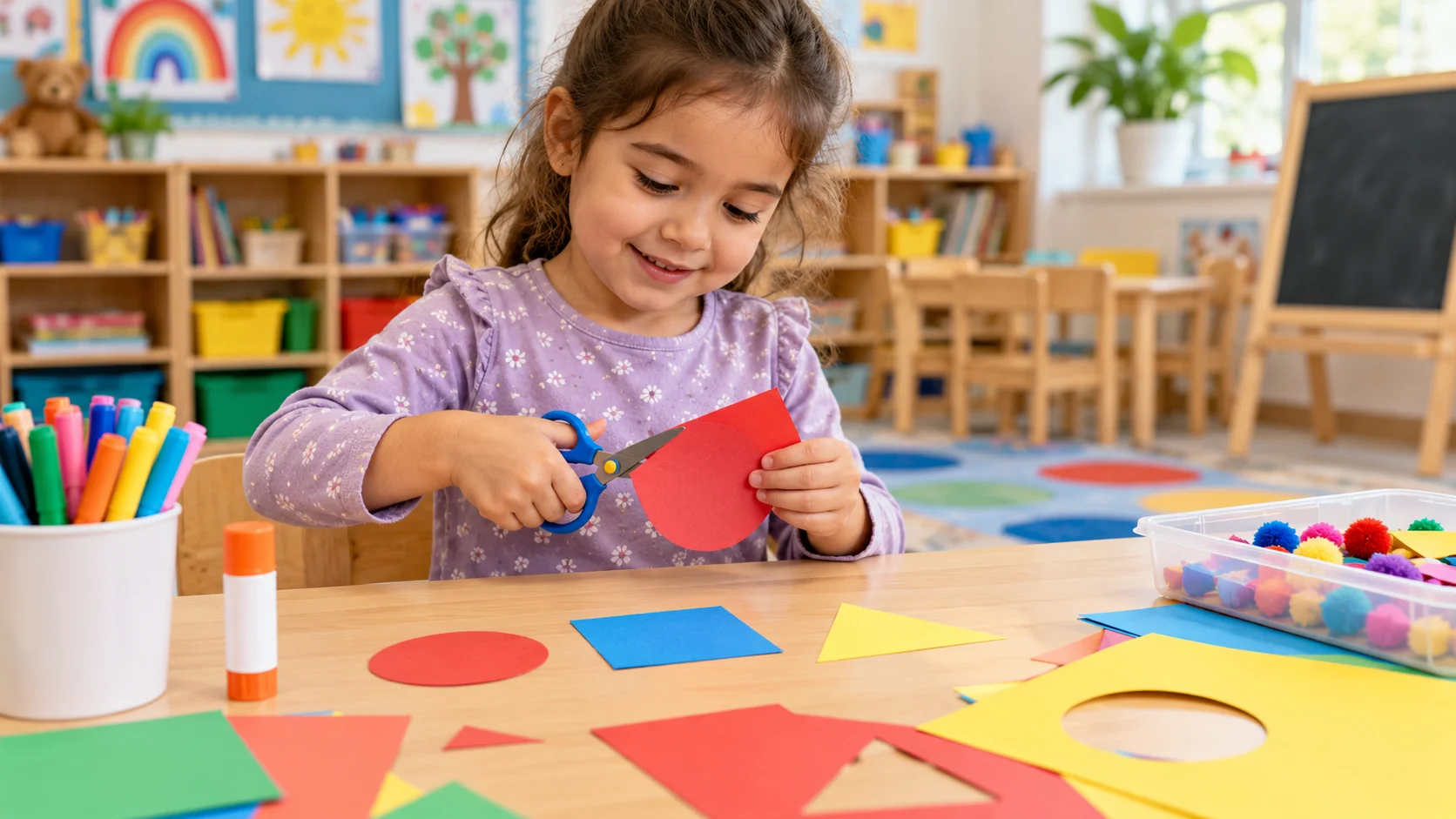
Skills practiced: Shape recognition and accuracy.
9. Paper Fringe Cutting
Draw short parallel lines along one edge of a paper rectangle, leaving an uncut band. Children snip toward the stopping line to create fringe for pretend grass or hair.
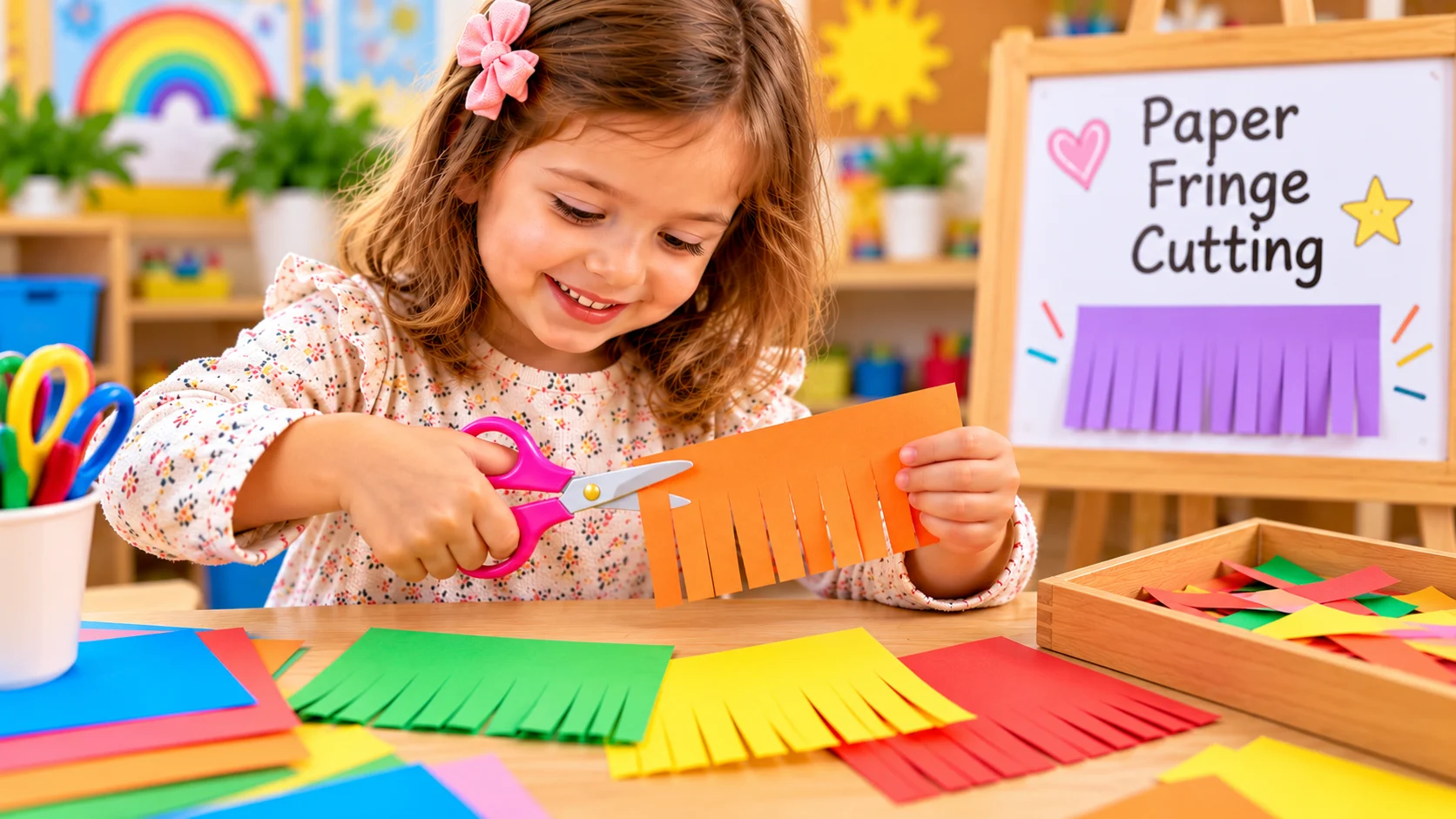
Skills practiced: Repeated cutting and stopping control.
10. Rainbow Paper Strip Cutting
Prepare strips of red, orange, yellow, green, blue and purple paper. Invite children to cut the strips into smaller pieces, sort them by color and glue them onto a rainbow outline.
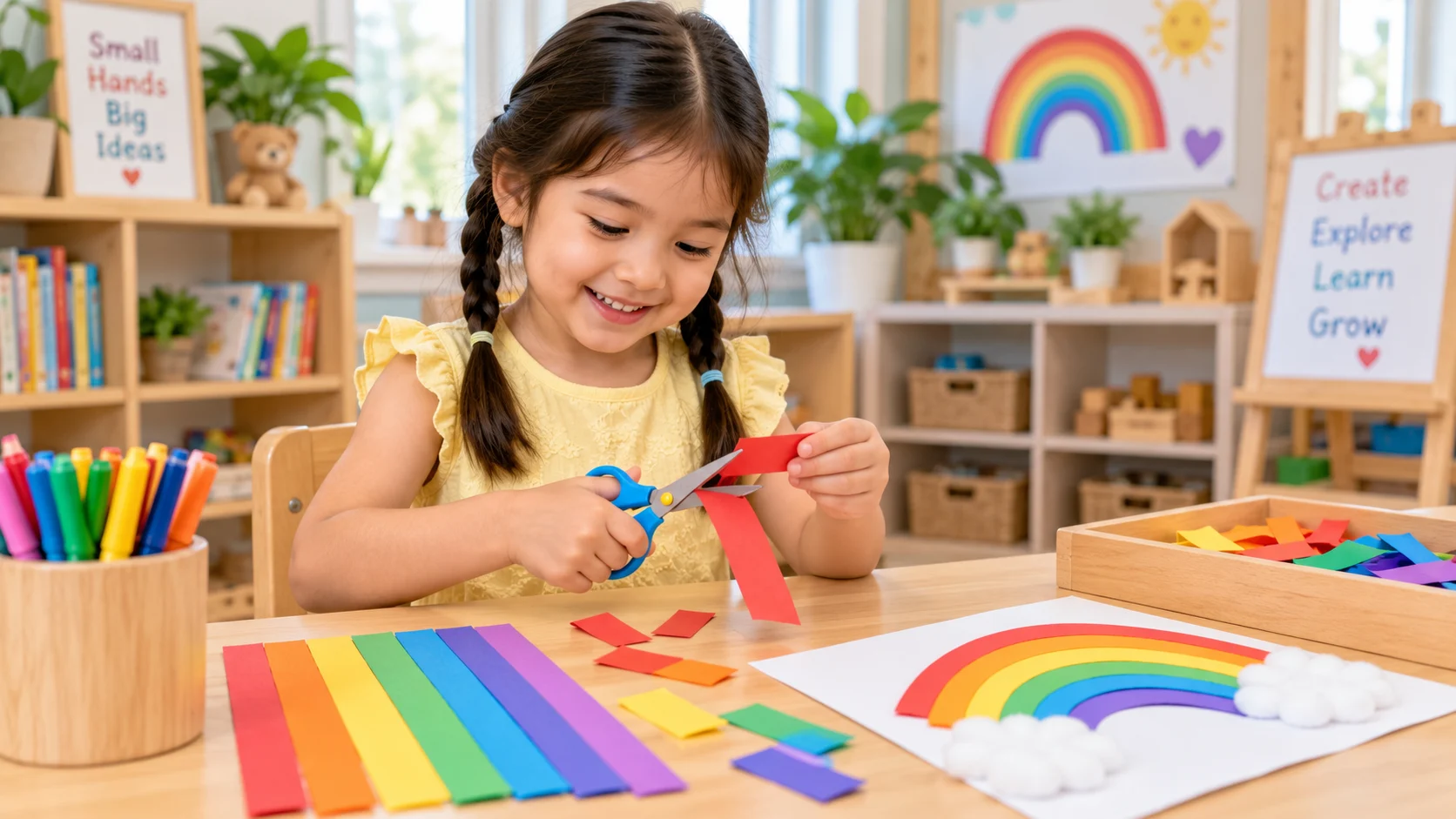
Skills practiced: Snipping and color sorting.
11. Colorful Paper Chains
Cut strips of paper along straight lines, form one strip into a loop with glue, and thread new strips through the loops. Make a long classroom decoration or repeat a color pattern.
Skills practiced: Straight cutting, sequencing and assembly.
12. Shape Collage Art
Draw and cut large circles, squares and triangles. Arrange the shapes into a house, animal or scene and glue them to a background sheet.
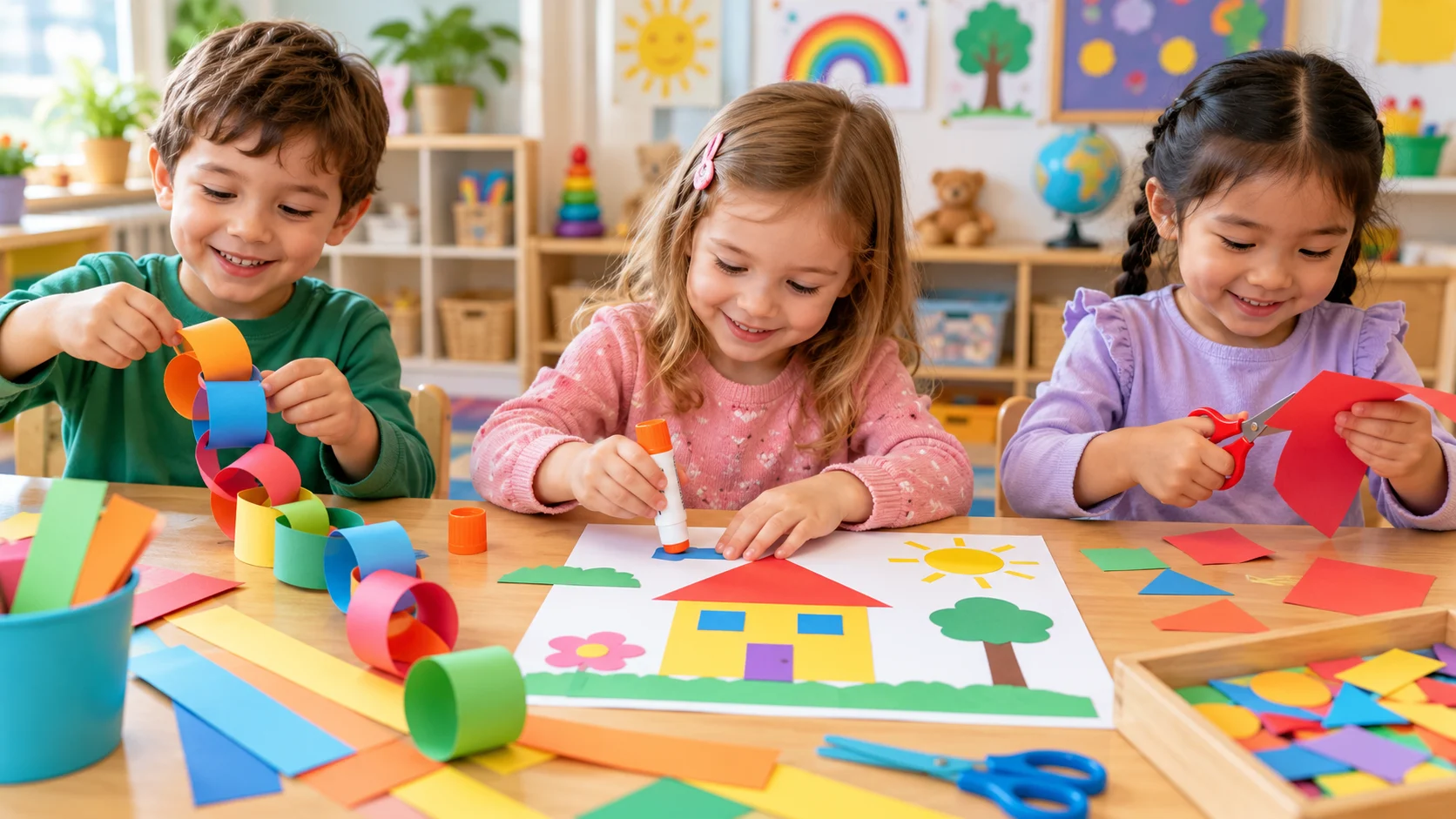
Skills practiced: Shape cutting and creative planning.
13. Scissor Skills Practice Cards
Prepare cardstock cards with short straight, zigzag and curved paths. Arrange them by difficulty and invite children to choose a suitable challenge.
Skills practiced: Visual tracking and cutting accuracy.
14. Paper Garden Craft
Draw large stems, leaves and flower petals on construction paper. Help children cut out the shapes and glue them together into a classroom garden.
Skills practiced: Shape cutting and coordination.
15. Seasonal Scissor Cutting Crafts
Try paper pumpkins in fall, snowflakes in winter, flowers in spring and sunshine crafts in summer. Provide simpler or more complex shapes based on each child’s readiness.
Skills practiced: Combining several cutting movements.
How to Make Scissor Salad: Step-by-Step Tutorial
Scissor salad is a pretend cooking activity where children turn short strips of colored paper into a bowl of colorful paper pieces. It is particularly helpful for beginners who are practicing single snips.
Materials: Construction paper in several colors, appropriate child-safe scissors, a shallow bowl and an activity tray.
Suggested activity time: 10–15 minutes, adjusted to the child.
- Prepare short colored paper strips.
- Explain that the strips represent pretend vegetables.
- Demonstrate a comfortable thumb-up scissor grip.
- Let children snip strips into small pieces.
- Collect the pieces in a bowl.
- Name, count or sort the paper pieces by color.
- Clean up and store scissors safely.
Scissor Salad Variations
- Beginners: Use strips that need only one snip.
- Color sorting: Make single-color salads.
- Counting: Count a small number of paper pieces.
- More challenge: Add marked snipping points to wider strips.
Important: Scissor salad is pretend food; paper pieces must not be eaten. Supervise closely.
Scissor Skills Progression
| Stage | Skill | Activity |
|---|---|---|
| 1 | Opening and closing | Playdough snipping |
| 2 | First snips | Paper strips and scissor salad |
| 3 | Stopping control | Paper fringe |
| 4 | Following straight lines | Line practice |
| 5 | Turning paper | Zigzag and curved paths |
| 6 | Complex shapes | Collages and crafts |
Preschool vs. Kindergarten Scissor Activities
Preschool Activities
Focus on short snips, playdough, scissor salad, paper fringe and easy straight lines. Use demonstrations and allow plenty of time.
Kindergarten Activities
Introduce zigzags, curved lines, circles, triangles, paper chains and creative cutting crafts as children become ready.
How to Help Children Who Struggle With Cutting
Try firmer paper, shorter cutting paths or playdough. Check that scissors fit well, including handedness. Remind children how to use their helping hand and celebrate small improvements. If difficulties remain significant or distressing, consult a pediatrician or pediatric occupational therapist.
Classroom Scissor Safety Rules
- Supervise every cutting activity.
- Choose age-appropriate scissors.
- Sit at a stable table while cutting.
- Keep fingers away from the blades.
- Point blades away from people.
- Carry scissors closed and with tips downward according to classroom guidance.
- Cut only approved materials.
- Never cut someone’s hair, clothing or skin.
- Return scissors to storage after use.
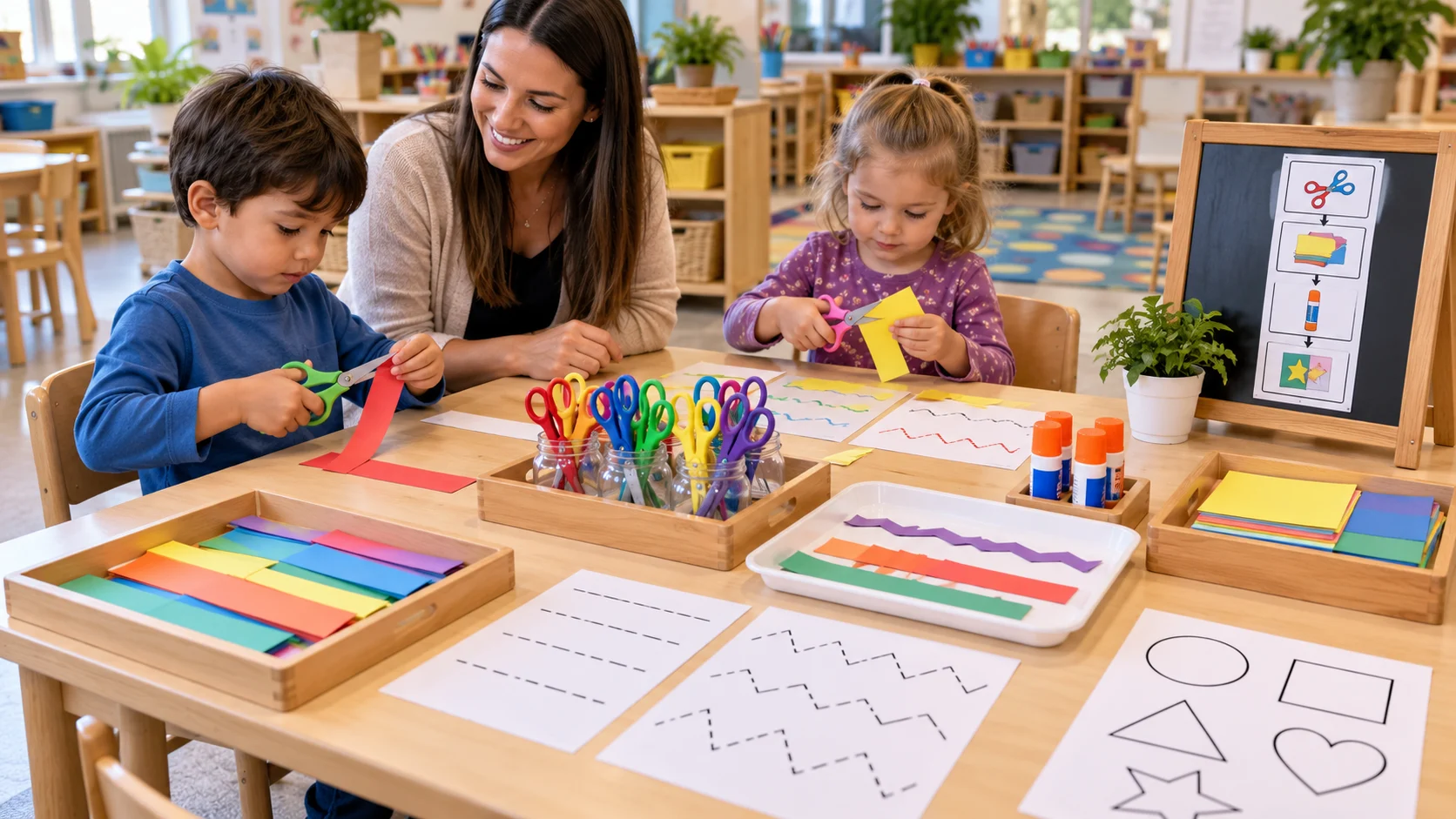
How to Set Up a Scissor Skills Learning Center
Provide a supervised table with scissors, strips of paper, practice cards, trays and glue sticks. Offer a choice of easy and more challenging tasks and rotate activities throughout the year.
How to Track Scissor Skill Progress
Observe whether children can hold scissors comfortably, open and close them, use their helping hand, make short snips, follow lines, stop at marked points and turn paper for shapes. Use observations to select future activities, not to compare children’s development.
Frequently Asked Questions About Scissor Skills
At what age should children start using scissors?
Some children begin supervised snipping around ages 2–3. Readiness varies, so adults should use suitable scissors and simple tasks.
What are the easiest cutting activities?
Paper strip snipping, playdough cutting, scissor salad and short paper fringe activities are useful beginner choices.
What is scissor salad?
It is a pretend cooking activity where children snip colored paper strips into a bowl to practice cutting and sorting.
How do I teach correct scissor grip?
Choose scissors that fit the child, demonstrate a comfortable thumb-up position, and practice opening and closing before cutting paper.
How can children improve cutting accuracy?
Begin with short, bold straight lines. Gradually introduce corners, curves and shapes while encouraging paper turning with the helping hand.
What if a child struggles to open and close scissors?
Try simpler hand activities, suitable or adapted scissors, and brief assisted practice. Seek professional guidance if difficulties persist.
How often should children practice?
Offer short, enjoyable opportunities several times a week, adjusting frequency and duration to the child’s comfort.
Final Thoughts
Scissor skills activities for preschool and kindergarten can be simple, colorful and fun. Start with basic snipping and scissor salad, then progress to lines, shapes and creative crafts. Celebrate each child’s growing confidence and keep every activity safe and supervised.