
What would your students do with $100 to plan a classroom party? Would they buy extra snacks, colorful decorations, or supplies for their favorite games? When children need to make choices with a fixed amount of pretend money, a simple class activity becomes a lesson about planning, saving, and spending.
These fun classroom projects that teach money and budgeting help elementary students connect math with everyday decisions. From a pretend grocery store to a classroom business, each activity makes financial literacy interactive, affordable, and practical. Most projects work especially well for grades 2–5 and can be adapted for younger students.
Why Teach Money and Budgeting Through Classroom Projects?
Children already encounter choices involving money when they visit stores, compare toys, or save up for something special. Classroom budgeting projects let them explore these situations safely before managing their own spending.
Hands-on activities can help students learn to count money, add expenses, subtract purchases from a starting budget, compare prices, and distinguish needs from wants. Group projects also encourage children to discuss priorities and explain their reasoning.
Start with whole-dollar amounts for students who are learning basic arithmetic. Introduce cents, discounts, multiplication, or unexpected expenses as their skills develop.
1. Class Project: Paying for the Party on a Budget
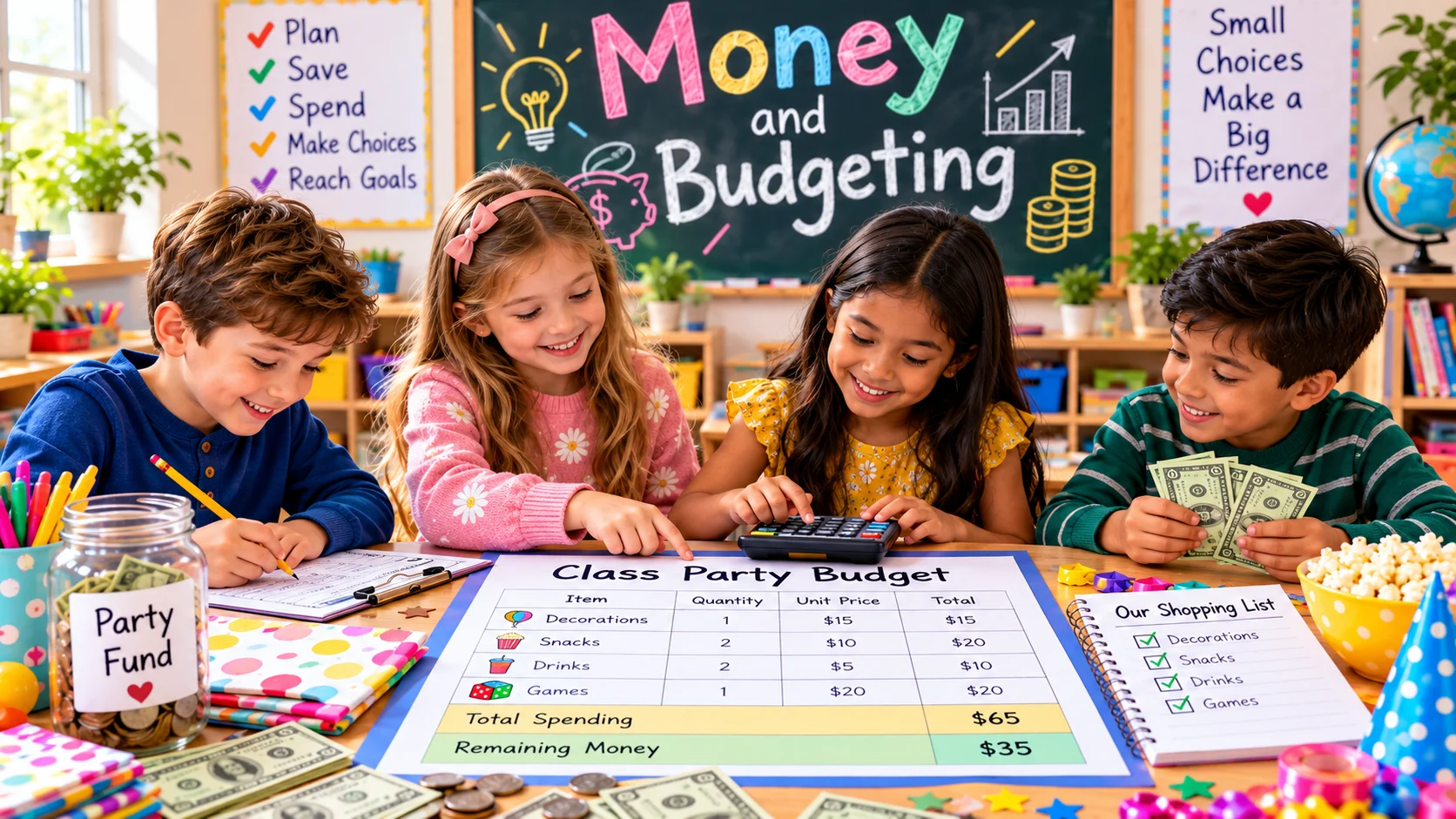
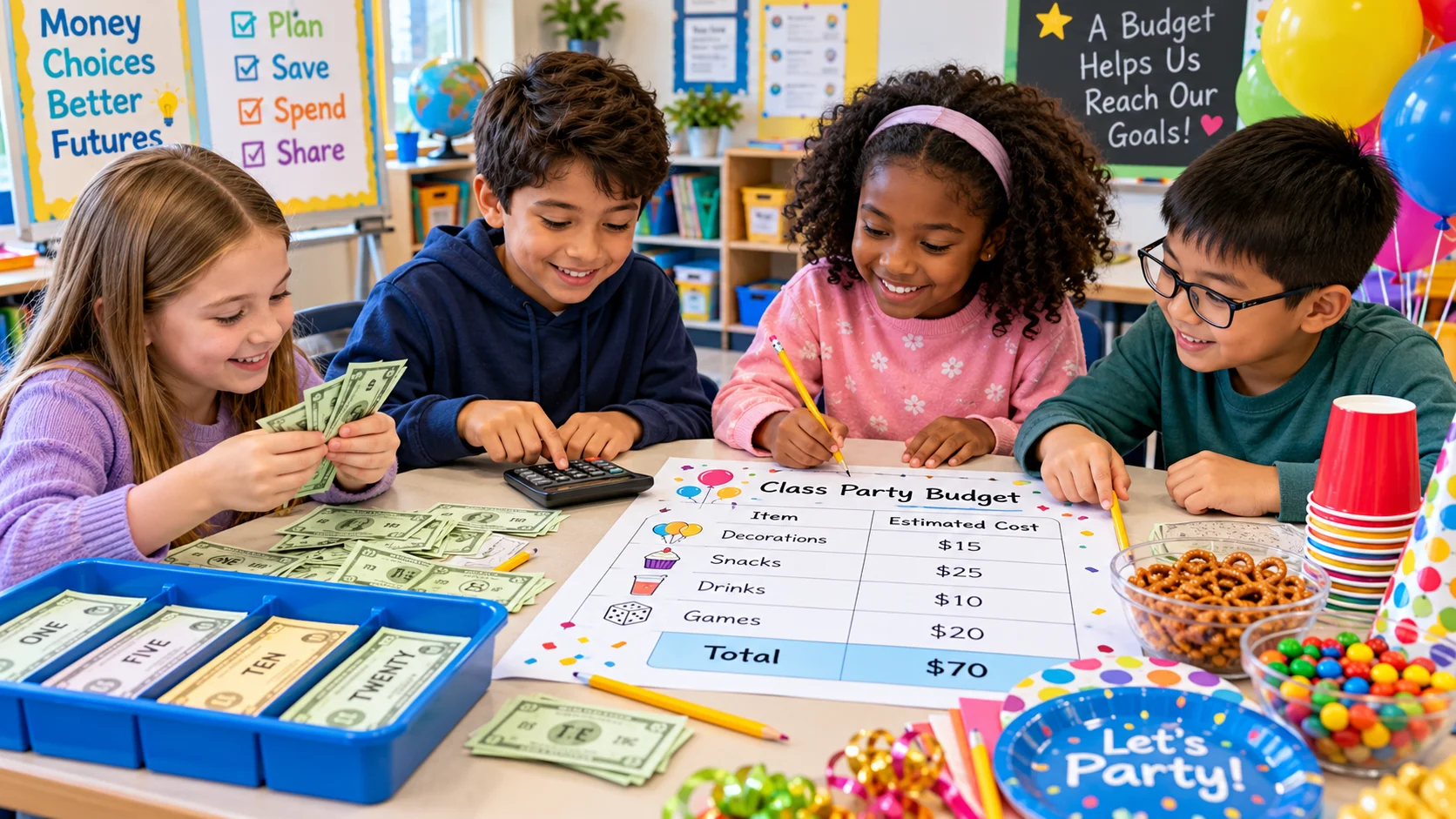
The class project paying for the party is an engaging introduction to budgeting. Each small group receives a fictional $100 budget and must choose decorations, snacks, drinks, and games without overspending.
Materials and Setup
Grades: 3–5 Time: 40–60 minutes
Provide play money, a party-shopping price list, pencils, calculators, and one budget sheet per team. Assign roles such as planner, shopper, calculator, and presenter.
How to Run the Activity
- Tell students the class has $100 in pretend money to plan a celebration.
- Ask teams to choose supplies and explain their priorities.
- Have each team calculate its total expenses and remaining balance.
- Introduce a surprise, such as an item becoming $10 more expensive.
- Invite groups to revise their budgets and present their decisions.
Sample $100 Party Budget
| Party Item | Cost |
|---|---|
| Decorations | $15 |
| Snacks | $25 |
| Drinks | $10 |
| Games | $20 |
| Total Planned Spending | $70 |
| Remaining Money | $30 |
Calculation: $15 + $25 + $10 + $20 = $70 spent. A $100 starting budget leaves $30 unspent.
Ask: Which item would you remove if the party budget dropped to $60? Why is it useful to save a little money for surprises?
2. Create a Classroom Grocery Store
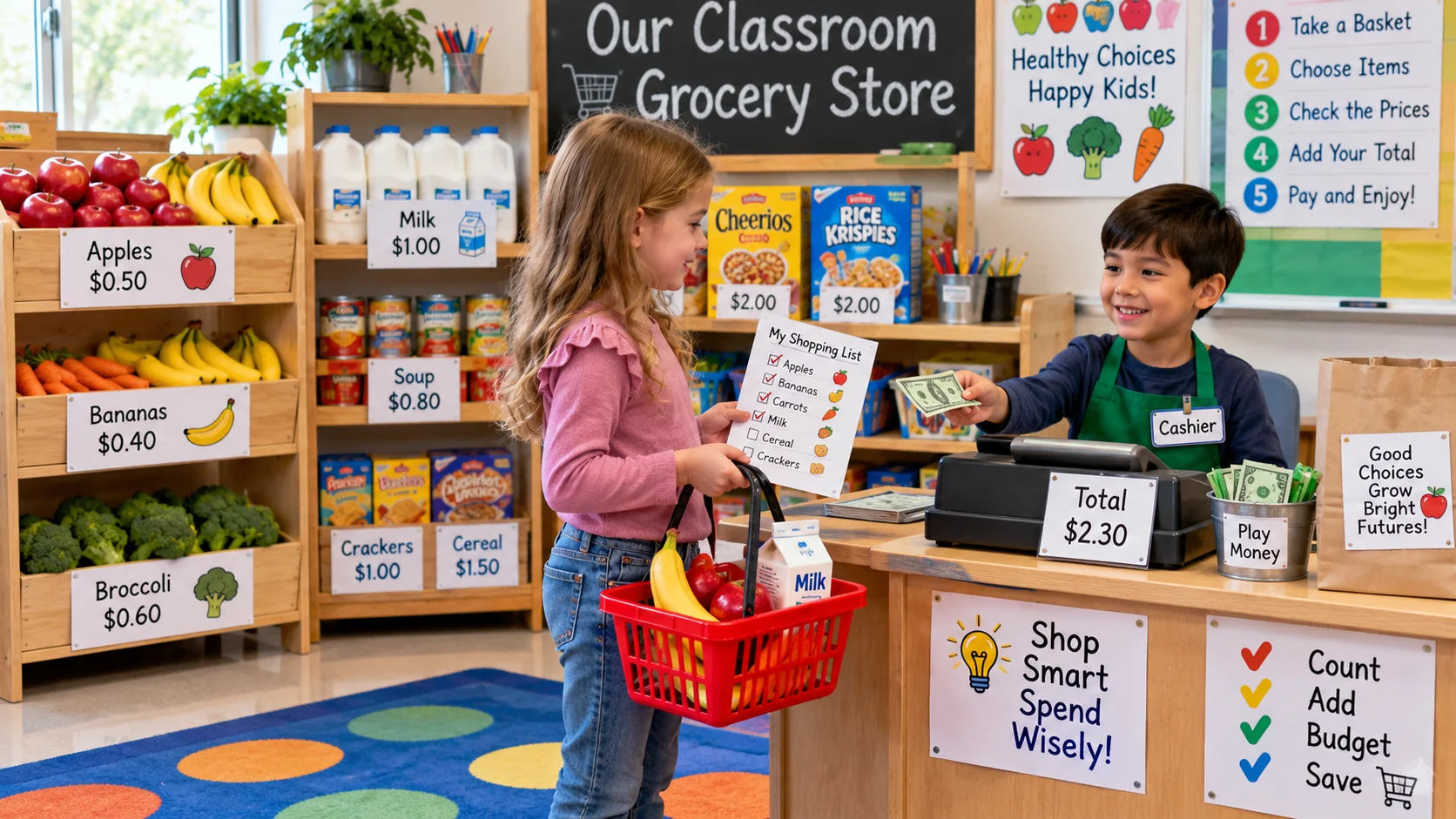
Turn a few desks into a pretend supermarket. Give students play money, shopping lists, and price tags so they can experience choosing products, paying a cashier, and calculating what remains in their budget.
Step-by-Step Instructions
- Arrange clean empty food boxes, plastic fruit, or product picture cards on tables.
- Attach simple price labels and provide pretend cash.
- Give each student a shopping budget and a list of items to purchase.
- Have shoppers calculate totals while cashiers practice giving change.
- Switch roles so that everyone has a chance to shop and manage the register.
For example, if apples cost $0.50, bananas cost $0.40, and milk costs $1.00, the total is $1.90. A shopper starting with $5.00 would have $3.10 left.
Extension: Display two versions of one product at different prices and ask students which provides better value.
3. Start a Mini Classroom Business
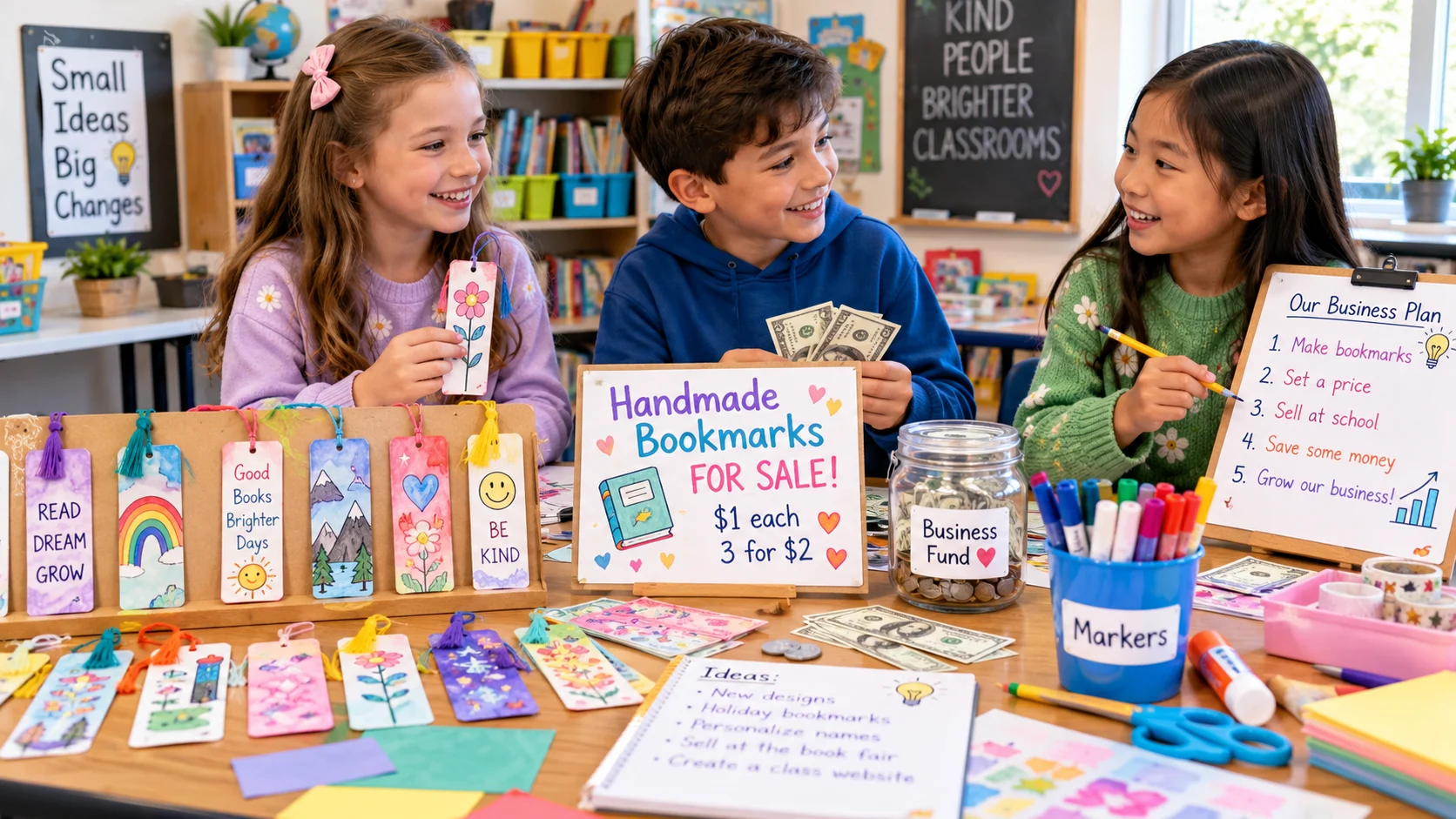
Let students design a fictional business selling handmade bookmarks, greeting cards, or paper crafts. This project shows the relationship between the cost of materials, sales revenue, and profit.
How to Organize the Project
- Have teams choose a simple product and sketch a design.
- Give them a fictional cost for their materials.
- Ask them to set a sale price and make price signs.
- Run a pretend classroom marketplace using play money.
- Compare sales revenue with material costs.
Suppose supplies for ten bookmarks cost $4 and students sell ten bookmarks at $1 each. Revenue is $10; subtracting the $4 material cost leaves $6 in profit.
For older students, discuss promotional offers such as three bookmarks for $2. Does a discount increase sales enough to make up for the lower price? Students can compare hypothetical outcomes.
4. Play the Needs vs. Wants Shopping Game
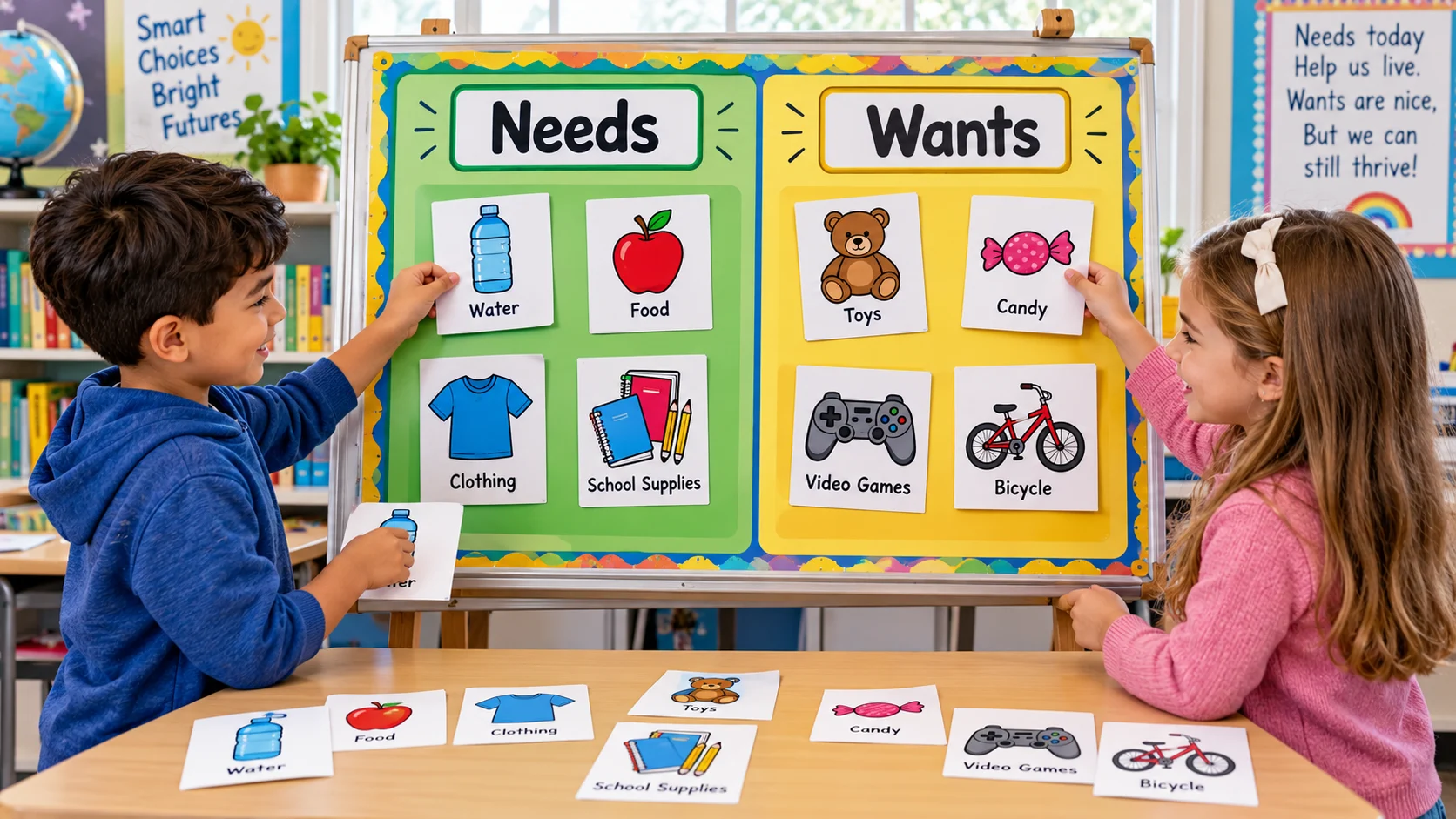
Money management starts with understanding which purchases are essential and which are optional. In this sorting activity, students talk about how everyday priorities influence a budget.
Classroom Activity
- Prepare cards with pictures of water, food, clothes, school supplies, toys, games, and other items.
- Create two labeled areas: Needs and Wants.
- Ask students to sort the cards and explain their choices.
- Give groups a fictional $50 spending limit and a simple price list.
- Challenge groups to prioritize essential items before choosing optional extras.
Explain that context matters. An item, such as a bicycle or computer, can be essential for one person or situation and optional in another.
5. Save for a Classroom Goal
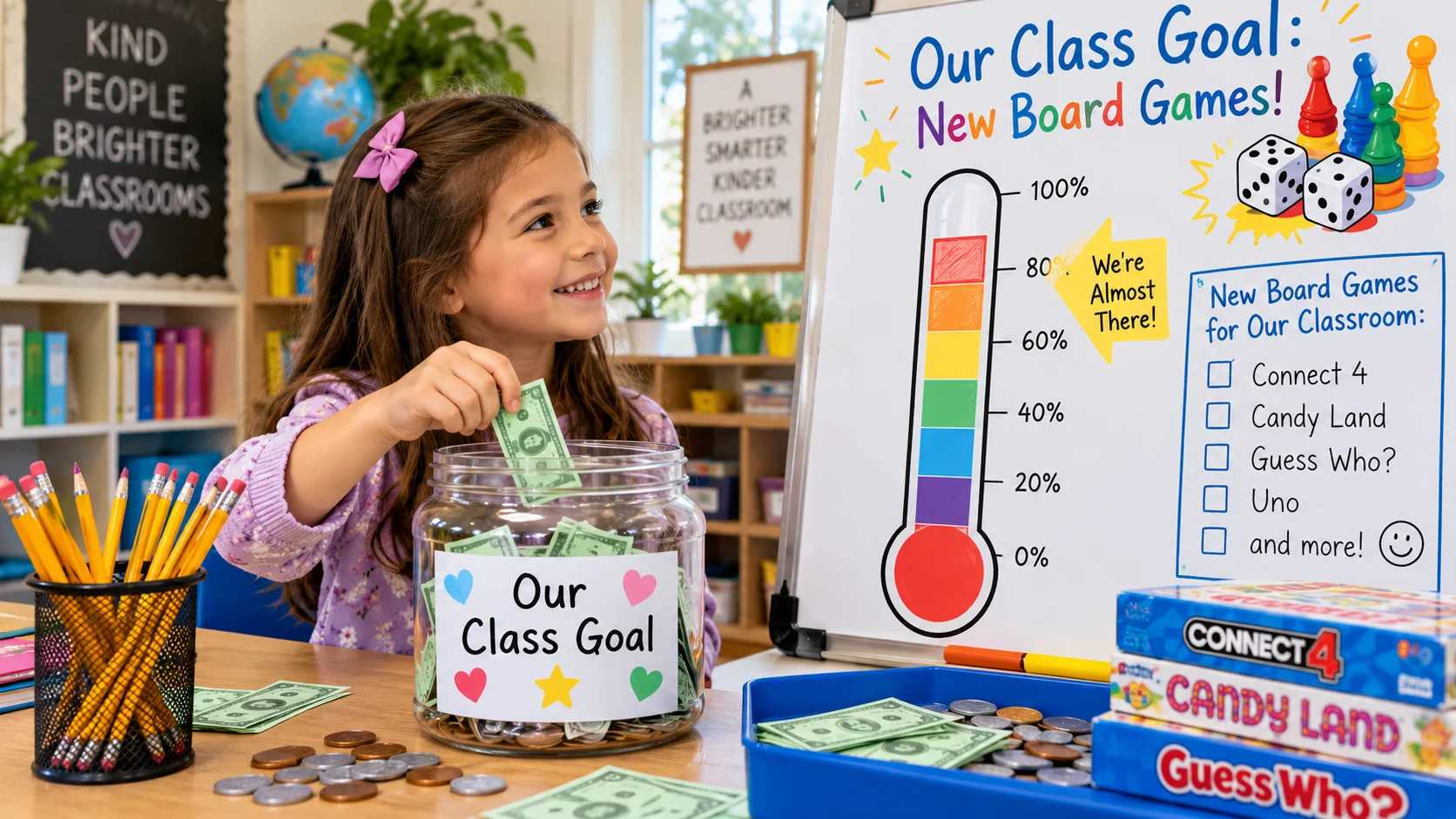
Saving is easier for children to understand when they can see progress. This project uses a pretend savings jar and a visual tracker to show how small regular amounts add up over time.
Try a Six-Week Savings Challenge
Imagine that the class wants a $60 set of board games. If students save a fictional $10 each week, they will reach their goal in six weeks.
Calculation: $60 ÷ $10 per week = 6 weeks.
Draw six sections on a progress chart and color one each pretend week. Ask how the timeline would change if the group could save only $5 per week or if it had already saved $20.
Use only simulated savings. Children should not be expected to contribute real money.
6. Design a Dream Bedroom on a Budget
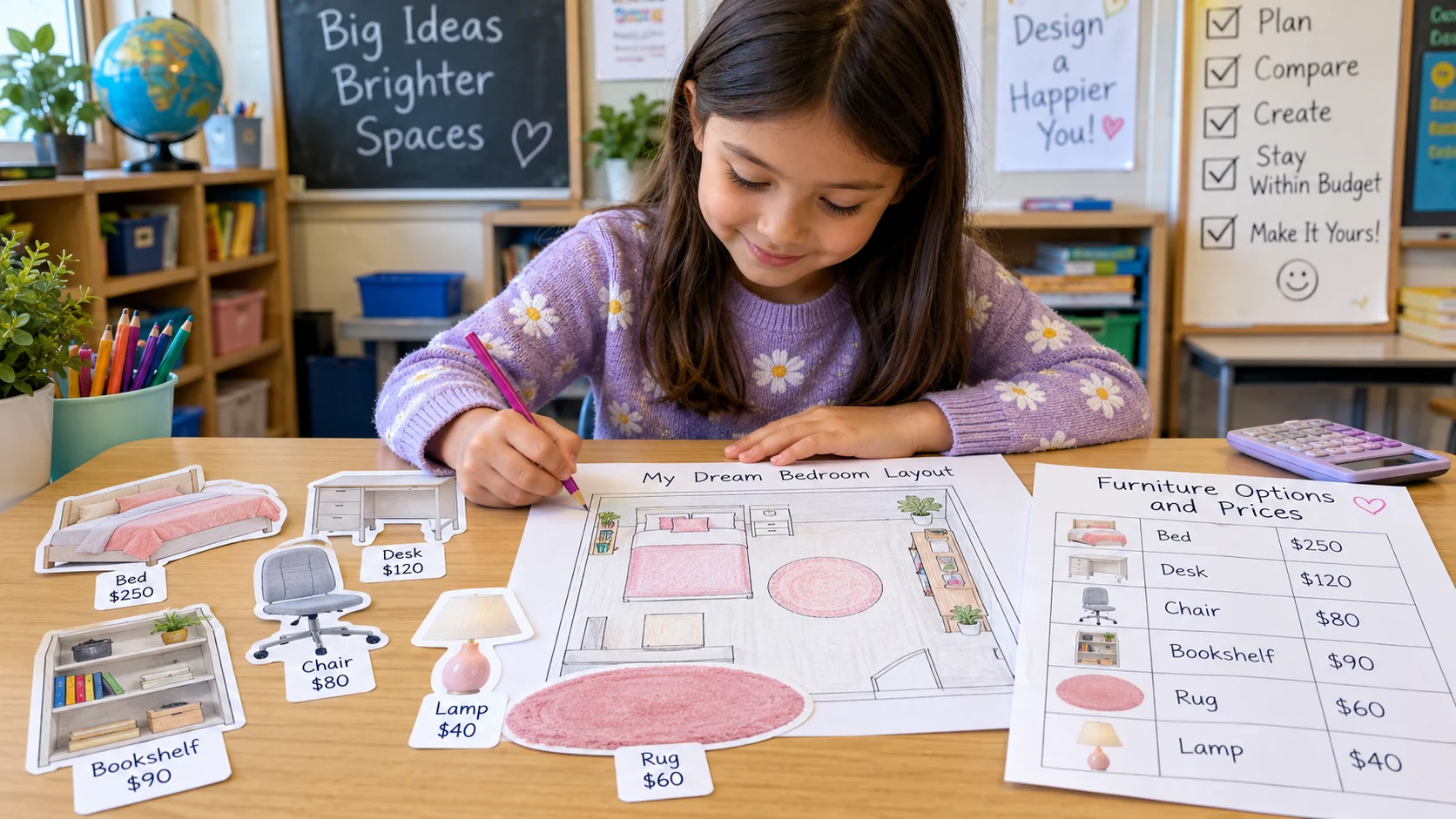
Combine creativity with financial planning by giving students an imaginary $500 budget to design a dream bedroom. They can draw their layout and choose items from a teacher-provided furniture price list.
Example Furniture Price List
| Item | Pretend Price |
|---|---|
| Bed | $250 |
| Desk | $120 |
| Chair | $80 |
| Bookshelf | $90 |
| Rug | $60 |
| Lamp | $40 |
A bed ($250), desk ($120), chair ($80), and lamp ($40) cost $490, leaving $10. Students can choose a different combination and explain why.
Extension: Ask pairs to compare their room designs. What did they prioritize, and what could they purchase later if they saved more money?
7. Run a Classroom Restaurant
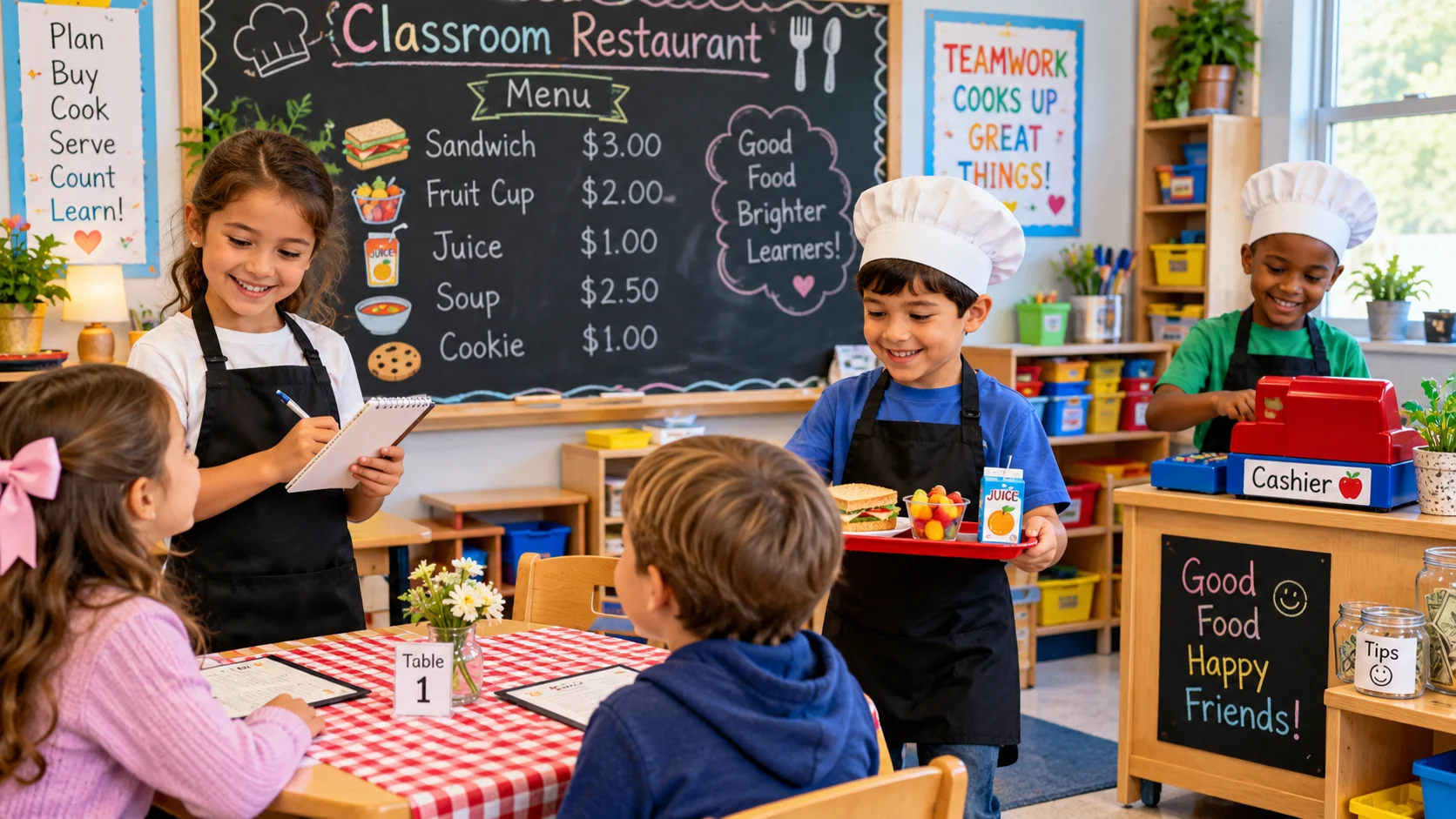
A pretend restaurant gives students a memorable way to practice adding menu prices, using play money, and giving change. It also creates roles for teamwork and communication.
How to Play
- Let groups create a small menu with fictional prices.
- Assign servers, customers, cooks, and cashiers.
- Give customers pretend cash and a spending limit.
- Have servers calculate totals and cashiers return the correct change.
- Rotate roles and discuss which meals fit within different budgets.
For example, a sandwich for $3.00, fruit cup for $2.00, and juice for $1.00 cost $6.00. If a customer gives the cashier $10.00, the change is $4.00.
Use pictures or toy food instead of real meals to keep the activity low-cost and avoid unnecessary food-related concerns.
How to Adapt the Activities by Grade Level
Different age groups need different levels of challenge. Use the following suggestions as flexible starting points rather than strict grade requirements.
- Kindergarten–grade 1: Recognize coins, sort pictures, and use teacher-supported whole-dollar purchases.
- Grade 2: Add and subtract small amounts and compare simple prices.
- Grade 3: Plan several purchases and calculate a remaining balance.
- Grade 4: Include cents, change, and unexpected expenses.
- Grade 5: Explore percentage discounts, simplified profit, and multi-step financial planning.
Simple Classroom Budget Worksheet
Use a budget planner to help students record purchases and calculate the remaining balance. The same format works for a party, store, bedroom, or classroom business.
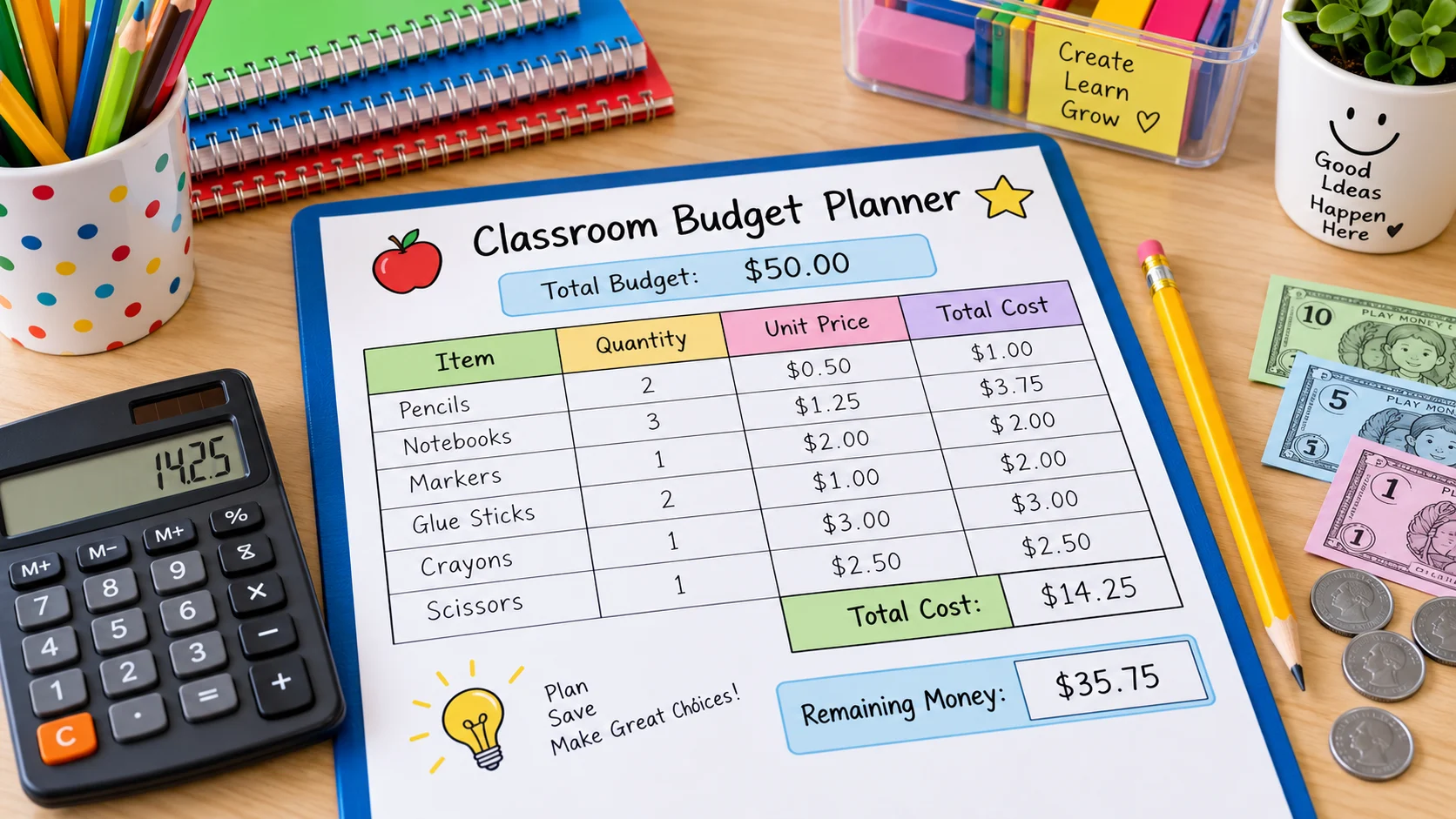
My Classroom Budget Planner
Project: ______________________
Starting Budget: $________
| Item | Quantity | Unit Price | Total |
|---|---|---|---|
| ________ | _____ | $_____ | $_____ |
| ________ | _____ | $_____ | $_____ |
| ________ | _____ | $_____ | $_____ |
| ________ | _____ | $_____ | $_____ |
Total Spending: $________
Money Remaining: $________
One thing I decided not to buy: _______________________
My reason: __________________________________________
Show students how to multiply quantity by unit price before adding the totals. For example, three notebooks at $1.25 each cost $3.75. Students can then subtract their total spending from the original budget.
How to Assess Students’ Money Skills
Focus on students’ decision-making as well as their arithmetic. After an activity, check whether they can:
- Calculate total spending accurately.
- Stay within a fixed budget.
- Explain why they chose certain purchases.
- Adjust their plans when a price or budget changes.
An easy exit-ticket question is: “What is one money decision you would change next time, and why?” Students can answer in writing, with drawings, or orally.
Tips for Successful Classroom Budgeting Projects
- Begin with simple numbers: Increase complexity only when students are ready.
- Use pretend money: Keep participation free and inclusive.
- Encourage explanations: Ask students to discuss the reasons behind purchases.
- Rotate classroom roles: Give everyone a chance to be planner, shopper, and cashier.
- Welcome mistakes: An overspent budget is an opportunity to revise a plan.
- Avoid financial comparisons: Never ask students to reveal personal family finances.
Frequently Asked Questions
What is the best way to teach budgeting to elementary students?
Start with realistic but fictional money choices, such as planning a class party or shopping in a pretend store. Keep spending limits clear and encourage children to explain their decisions.
How do you organize a class project paying for the party?
Give groups a fixed pretend budget and a menu of party supplies with prices. Ask them to choose items, calculate the total, check the remaining balance, and explain any trade-offs.
What are easy money activities for kids?
Try grocery-store role-play, coin counting, a needs-versus-wants card sort, a savings chart, or a classroom restaurant with simple prices and play money.
Can students learn budgeting without real money?
Yes. Play currency, picture cards, budget worksheets, and fictional prices let students practice spending and saving without actual purchases or contributions from families.
Which projects work best for second graders?
A pretend store, a simplified party-planning project, and a needs-versus-wants sorting game are good starting points. Choose whole-dollar prices if students are not yet comfortable with cents.
How can a teacher assess budgeting skills?
Review spending calculations, observe group discussions, and ask students to describe what they prioritized and how they changed a plan when necessary.
Final Thoughts
Teaching money management does not require complicated financial lessons. A party budget, pretend store, savings challenge, or classroom business can give students meaningful practice with numbers and financial choices.
Choose one activity that suits your class, use play money, and invite students to reflect on what they learned. A simple classroom decision today can become a useful money-management habit in the future.