
Imagine starting your school day without having to pass out every worksheet, organize every supply bin, or count every lunch choice yourself. That’s the beauty of classroom jobs for students. A few well-chosen responsibilities can help children become more independent while making everyday classroom routines easier to manage.
Whether you’re teaching kindergarten, second grade, or upper elementary students, classroom jobs offer practical ways to encourage teamwork, responsibility, and a sense of belonging. From paper passing to managing the lunch count, even small tasks give students opportunities to contribute.
In this guide, you’ll discover 25 classroom job ideas, age-appropriate responsibilities, simple classroom job chart tips, and an easy rotation system you can start using this week.
Start with five or six useful jobs, explain each responsibility, display a classroom jobs chart, and rotate assignments regularly.
What Are Classroom Jobs for Students?
Classroom jobs are simple tasks assigned to students to help their classroom stay organized and function smoothly. These responsibilities might include distributing papers, organizing books, caring for plants, or helping with morning routines.

Unlike ordinary classroom rules, class jobs give children specific opportunities to participate in maintaining their learning environment.
The most effective classroom jobs are:
- Age-appropriate: Students can complete them safely.
- Meaningful: Every task serves a genuine classroom need.
- Easy to understand: Instructions are clear and simple.
- Fairly assigned: All students receive opportunities to participate.
- Easy to manage: The tasks don’t require constant supervision.
Why Classroom Jobs Matter in Elementary School
Classroom responsibilities offer more than a way to organize materials. They give children opportunities to learn important everyday skills.
1. Encourage Responsibility
When a student becomes the classroom library helper, they learn that others depend on them to complete a task. Consistent responsibilities can encourage accountability and attention to detail.
2. Build Independence
Children gain confidence when they complete simple tasks independently. Organizing materials, distributing worksheets, and caring for classroom supplies provide opportunities to practice independence.
3. Support Teamwork
Some jobs require students to cooperate. Supply helpers may work together to organize materials, while clean-up helpers encourage classmates to keep shared spaces tidy.
4. Make Classroom Transitions Smoother
Established routines for paper passing, collecting assignments, and organizing supplies can reduce unnecessary interruptions during lessons.
5. Create a Sense of Belonging
Seeing their names on a classroom jobs chart reminds children that they have an important role in their classroom community.
25 Classroom Jobs for Students and Their Responsibilities
Choosing class jobs doesn’t mean creating a responsibility for every possible task. Start with the tasks your classroom needs most, then adjust the system as routines develop.
| Classroom Job | Responsibility | Grades |
|---|---|---|
| 1. Line Leader | Leads the class line. | K–5 |
| 2. Door Holder | Holds approved doors open. | K–5 |
| 3. Paper Passer | Distributes worksheets. | 1–5 |
| 4. Lunch Count Helper | Counts student lunch choices. | 2–5 |
| 5. Calendar Helper | Updates the classroom calendar. | K–3 |
| 6. Weather Reporter | Reports daily weather. | K–3 |
| 7. Library Helper | Organizes classroom books. | 1–5 |
| 8. Supply Manager | Organizes classroom supplies. | 2–5 |
| 9. Pencil Monitor | Maintains the pencil station. | 1–5 |
| 10. Board Helper | Cleans approved whiteboard sections. | 2–5 |
| 11. Technology Helper | Organizes classroom devices. | 3–5 |
| 12. Plant Caretaker | Waters classroom plants. | K–5 |
| 13. Chair Checker | Checks classroom chair placement. | K–3 |
| 14. Clean-Up Captain | Encourages classroom tidiness. | K–5 |
| 15. Attendance Helper | Assists with nonconfidential attendance routines. | 3–5 |
| 16. Homework Collector | Collects homework in a tray. | 2–5 |
| 17. Materials Distributor | Hands out classroom materials. | 1–5 |
| 18. Recycling Helper | Sorts clean recyclable materials. | 1–5 |
| 19. Messenger | Delivers teacher-approved messages. | 3–5 |
| 20. Light Monitor | Operates lights when instructed. | K–5 |
| 21. Class Greeter | Welcomes classmates and visitors. | K–5 |
| 22. Folder Helper | Organizes classroom folders. | 1–5 |
| 23. Art Supply Helper | Organizes art materials. | 1–5 |
| 24. Desk Organizer | Checks shared desk spaces. | 2–5 |
| 25. Substitute Helper | Covers suitable jobs during absences. | 2–5 |
Teacher Tip: You don’t need all 25 jobs. Choose the roles that genuinely help your students and match your classroom routines.
Paper Passing: How to Teach an Effective Classroom Routine
Paper passing is one of the most useful classroom jobs for elementary students. Instead of stopping a lesson to distribute every worksheet, you can teach a student to handle this responsibility.

What Does a Paper Passer Do?
A paper passer distributes worksheets, activity pages, and teacher-approved learning materials. Depending on the classroom system, the student may also help collect completed papers.
Four Steps for Smooth Paper Passing
- Prepare: Place worksheets in a designated tray.
- Distribute: Give papers to assigned tables or rows.
- Collect: Gather completed work when instructed.
- Return: Place unused sheets in the proper tray.
“Take the worksheets from the blue tray. Give one to each student at your table. Walk carefully and return the extra papers.”
For younger children, assign one table at a time. Keep private student documents and sensitive records under teacher control.
Lunch Count Helper: Making Morning Routines Easier
Taking the daily lunch count can be an important morning task. A clear lunch choice system helps teachers stay organized while students practice counting and following instructions.

What Does a Lunch Count Helper Do?
A lunch count helper counts the meal selections students have recorded on a teacher-approved classroom chart.
Students may move their name cards into categories such as School Lunch, Packed Lunch, or another approved meal option.
How to Organize Lunch Count
- Create a chart with the school’s meal categories.
- Ask students to record their choice each morning.
- Assign a helper to count each category.
- Have the helper report totals to the teacher.
- Verify the selections before submitting the official count.
Supply Manager: Keeping Classroom Materials Organized
A supply manager helps students find pencils, crayons, markers, folders, and other shared learning materials.

Set up clearly labeled storage containers so students know where each item belongs. A supply manager can check these containers before or after lessons and let the teacher know when materials need replenishing.
This job works especially well in classrooms with shared supplies and frequent group activities.
Library Helper: Teaching Book Care and Organization
A classroom library helper maintains the reading corner and encourages students to return books to their designated shelves.

Library Helper Responsibilities
- Return books to labeled shelves.
- Arrange books neatly in storage baskets.
- Check for misplaced reading materials.
- Help maintain an inviting reading corner.
- Report damaged books to the teacher.
Use picture labels or colored categories for younger students who are still developing reading skills.
Plant Caretaker: A Classroom Job That Encourages Care
Plant caretaker is a simple responsibility that can help children practice consistency, observation, and caring for living things.

The plant caretaker checks classroom plants and waters them according to the teacher’s instructions. Students can also observe changes in leaves and growth during the week.
Use child-safe plants, lightweight watering containers, and a clear watering schedule. This helps prevent overwatering and keeps the activity manageable.
Calendar Helper: Building Daily Classroom Routines
A calendar helper updates the classroom calendar and supports familiar morning activities.

Calendar Helper Responsibilities
- Identify the current day of the week.
- Update the date on the calendar.
- Help identify the current month.
- Assist with weather chart updates.
- Participate in teacher-guided calendar activities.
This job is particularly suitable for kindergarten through third-grade classrooms.
Clean-Up and Recycling Helpers
A clean, organized classroom makes it easier for children to locate materials and participate in lessons.

Clean-up helpers encourage classmates to put away materials, organize shared spaces, and sort clean recyclable items into appropriate containers.
Keep these responsibilities simple and safe. Students should not handle sharp objects, hazardous materials, cleaning chemicals, or unsafe waste.
Best Classroom Jobs by Grade Level
Students develop independence at different rates, so classroom job assignments should reflect their readiness and support needs.
Classroom Jobs for Kindergarten
Kindergarten students benefit from short tasks with visual instructions.
- Line leader
- Door holder
- Calendar helper
- Class greeter
- Clean-up helper
Classroom Jobs for Grades 1–2
Students may be ready for jobs involving short procedures and basic organization.
- Paper passer
- Library helper
- Pencil monitor
- Folder helper
- Materials distributor
Classroom Jobs for Grades 3–5
Older elementary students can often manage more detailed routines after clear demonstrations.
- Supply manager
- Lunch count helper
- Technology helper
- Homework collector
- Substitute helper
Remember: Grade levels are general suggestions. Consider individual readiness, accessibility, student support, and school policies.
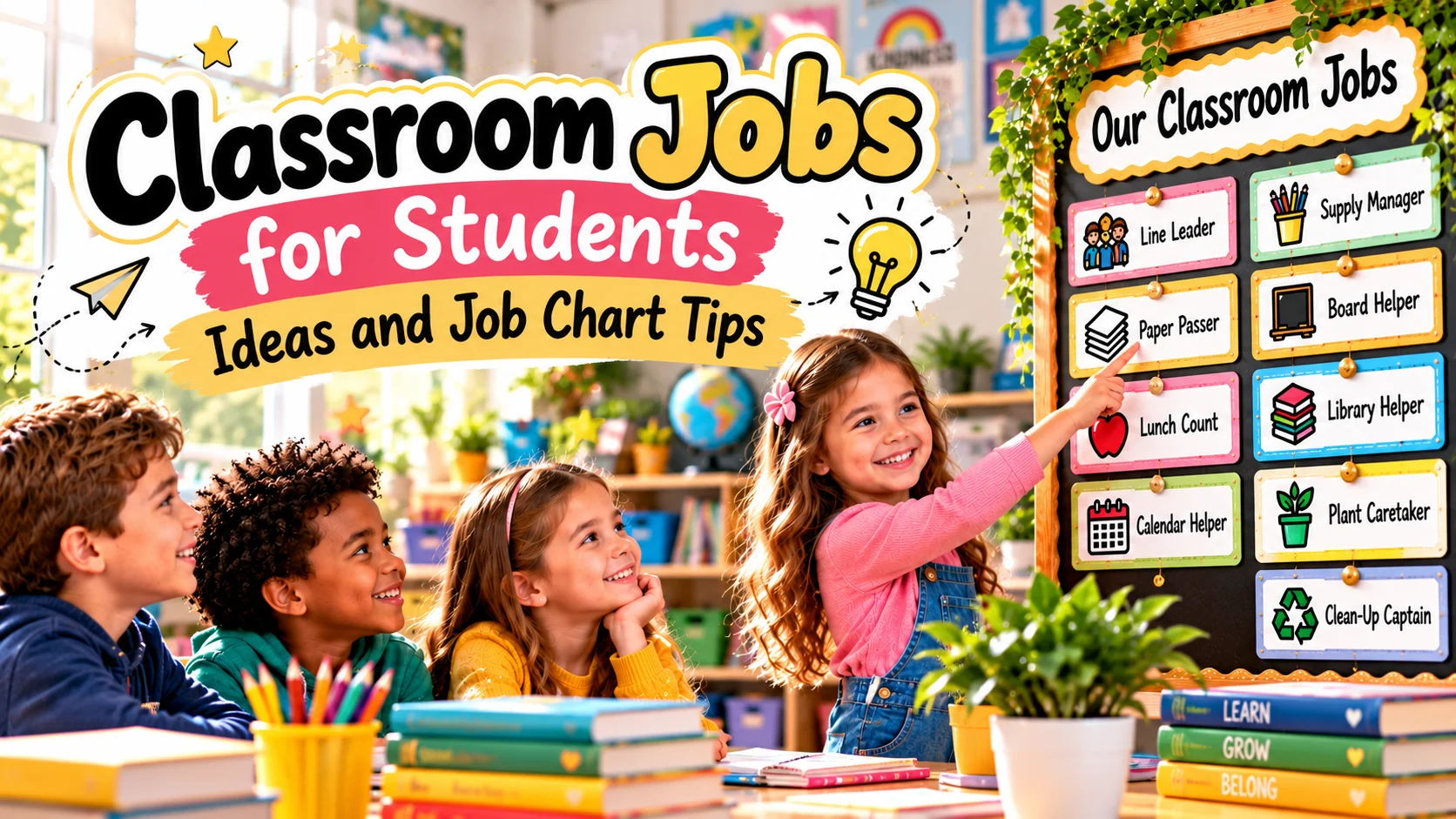
How to Create a Classroom Jobs Chart
A classroom jobs chart helps students identify their responsibilities and makes it easier for teachers to manage job assignments.
Step 1: Choose Your Jobs
Begin with five or six responsibilities that support your everyday classroom routines.
Step 2: Select a Chart Format
Use a pocket chart, magnetic board, laminated poster, or classroom bulletin board. Choose a format that students can read and teachers can update easily.
Step 3: Prepare Student Name Cards
Write student names on reusable cards. For younger students, add pictures or symbols to help them recognize each responsibility.
Step 4: Display Responsibilities
Arrange the classroom jobs in one column and place assigned students’ names beside them.
Step 5: Teach Each Job
Demonstrate how each task works before expecting students to complete it independently.
Step 6: Update the Chart Regularly
Choose a consistent rotation schedule and explain to students when their assignments will change.
Example Weekly Classroom Jobs Chart
| Classroom Job | Student |
|---|---|
| Line Leader | Ava |
| Paper Passer | Noah |
| Lunch Count Helper | Mia |
| Library Helper | Liam |
| Supply Manager | Emma |
| Clean-Up Captain | Ethan |
This sample shows six classroom responsibilities, but you can adjust the number of jobs according to your class size and daily needs.
How to Assign and Rotate Classroom Jobs Fairly
A good classroom job system allows students to experience different responsibilities without requiring constant changes.
Daily vs. Weekly Job Rotation
| Rotation | Benefits | Challenges |
|---|---|---|
| Daily | Students experience different jobs quickly. | Requires frequent updates. |
| Weekly | Gives students more time to practice. | Some students wait longer for preferred jobs. |
Weekly rotations are often a manageable starting point because students have several days to practice a responsibility before switching.
What If There Are More Students Than Jobs?
- Rotate students through available jobs.
- Use pairs when tasks genuinely require teamwork.
- Track participation to distribute opportunities fairly.
- Create a substitute helper role.
- Let students express preferences when appropriate.
Students who don’t have an assigned role during a particular week still contribute by following routines, helping classmates, and caring for their belongings.
Tips for Teaching Classroom Job Responsibilities
Model Each Responsibility
Show students exactly how to complete their tasks. A demonstration is often more effective than verbal instructions alone.
Keep Instructions Short
Give students two or three simple steps whenever possible. Add picture reminders for younger learners.
Allow Practice Time
Let students rehearse their duties before expecting them to perform the jobs independently.
Recognize Student Effort
Provide specific encouragement when students complete responsibilities carefully and consistently.
Adjust Jobs When Needed
If a responsibility is difficult, simplify the task or provide additional support.
Common Classroom Job Chart Mistakes to Avoid
| Mistake | Solution |
|---|---|
| Too many jobs | Start with a few meaningful responsibilities. |
| Unclear instructions | Demonstrate each task. |
| Inconsistent rotations | Set a regular schedule. |
| Difficult responsibilities | Choose age-appropriate tasks. |
| Unfair assignments | Track student participation. |
| Using jobs as punishment | Present classroom jobs positively. |
A Simple Five-Day Plan to Introduce Classroom Jobs
Monday – Introduce: Explain classroom jobs and introduce five or six responsibilities.
Tuesday – Demonstrate: Model the tasks and let students practice.
Wednesday – Assign: Introduce the job chart and assign responsibilities.
Thursday – Practice: Offer reminders and encouragement.
Friday – Reflect: Discuss what worked and prepare for the next rotation.
Frequently Asked Questions About Classroom Jobs
How many classroom jobs should I have?
Start with five or six meaningful responsibilities. Add more jobs when your classroom needs them and students are comfortable with the existing system.
Should every student have a classroom job?
Not necessarily every day or every week. The important goal is to give every student fair opportunities to participate over time.
How often should classroom jobs rotate?
Daily and weekly rotations both work. Weekly schedules are often easier to manage and provide more time for practice.
What are easy classroom jobs for kindergarten?
Line leader, door holder, calendar helper, weather reporter, class greeter, and clean-up helper are useful starting choices.
What does a paper passer do?
A paper passer distributes worksheets and teacher-approved materials to classmates. They may also help collect completed assignments.
How can students help with lunch count?
Students can record their meal choices on a chart. A lunch count helper can tally the selections while the teacher checks and submits the official count.
How can I create an inexpensive classroom jobs chart?
Use poster board, index cards, magnetic labels, or a classroom bulletin board. Display the job names and assigned students clearly.
Make Classroom Jobs Part of Your Daily Routine
Classroom jobs for students don’t need to be complicated to make a positive difference. A clear paper passing routine, a simple lunch count system, and a well-organized classroom jobs chart can help students participate more actively in their learning environment.
Start small, demonstrate each responsibility clearly, and give children time to build confidence. As students become familiar with their roles, classroom jobs can become a natural part of your daily schedule.
Most importantly, classroom responsibilities are opportunities for students to develop cooperation, independence, and the satisfaction of contributing to their classroom community.
Choose five useful jobs, introduce them to your students, and create a simple job chart this week. Observe what works, provide guidance when necessary, and adjust the system together.