
Classroom jobs for students are simple responsibilities that help children practice independence, teamwork, and organization. From paper passing to lunch count, these daily tasks allow students to contribute to the classroom while helping teachers manage routines more efficiently.
Whether you teach kindergarten or fifth grade, a classroom job chart can make responsibilities clear and easy to rotate. Below are 30 age-appropriate class jobs, practical routines, chart ideas, and a printable template to help you get started.
What Are Classroom Jobs for Students?
Classroom jobs are responsibilities assigned to students to help maintain an organized learning environment. Common examples include line leader, paper passer, library helper, and supply organizer.
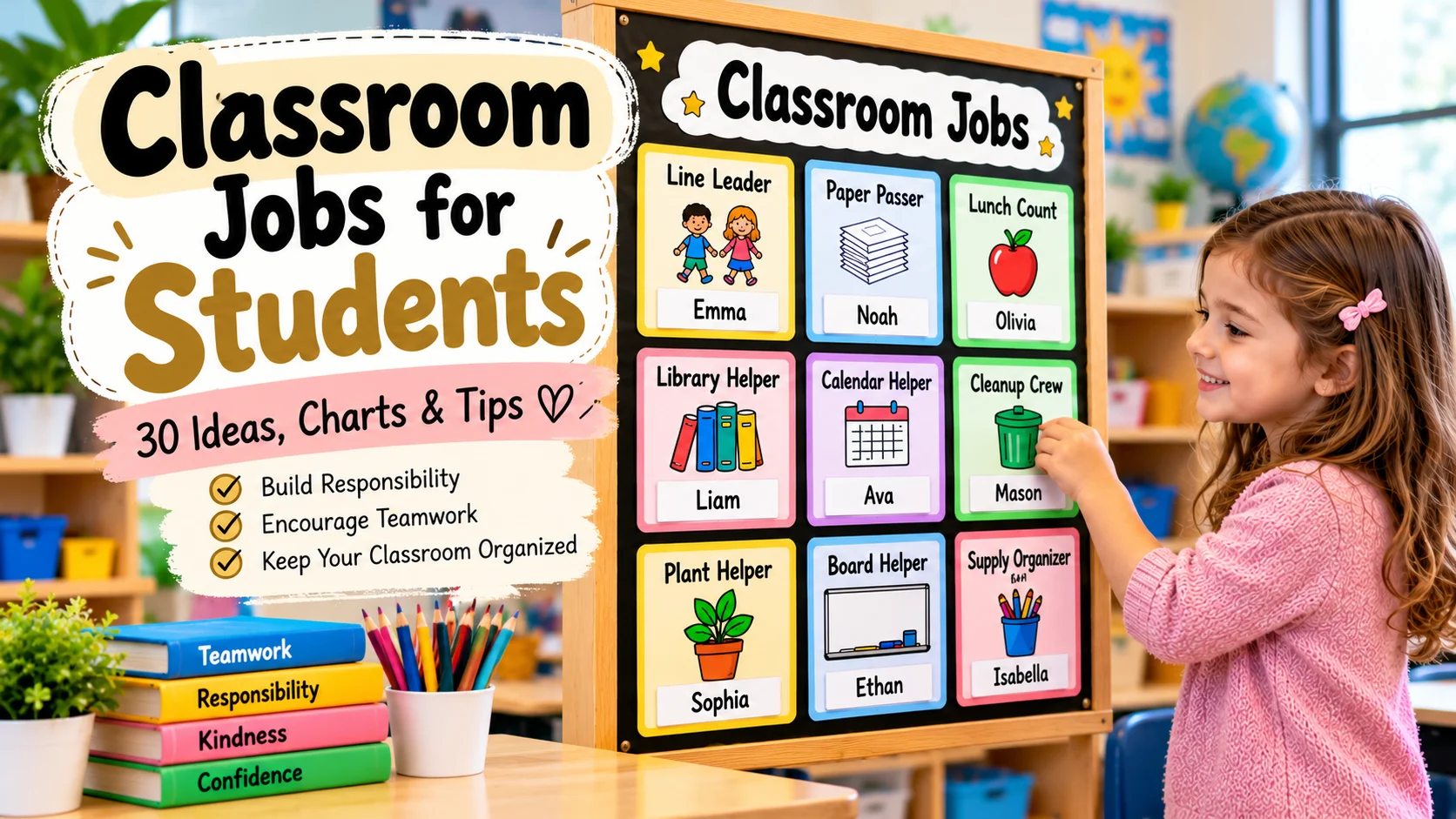
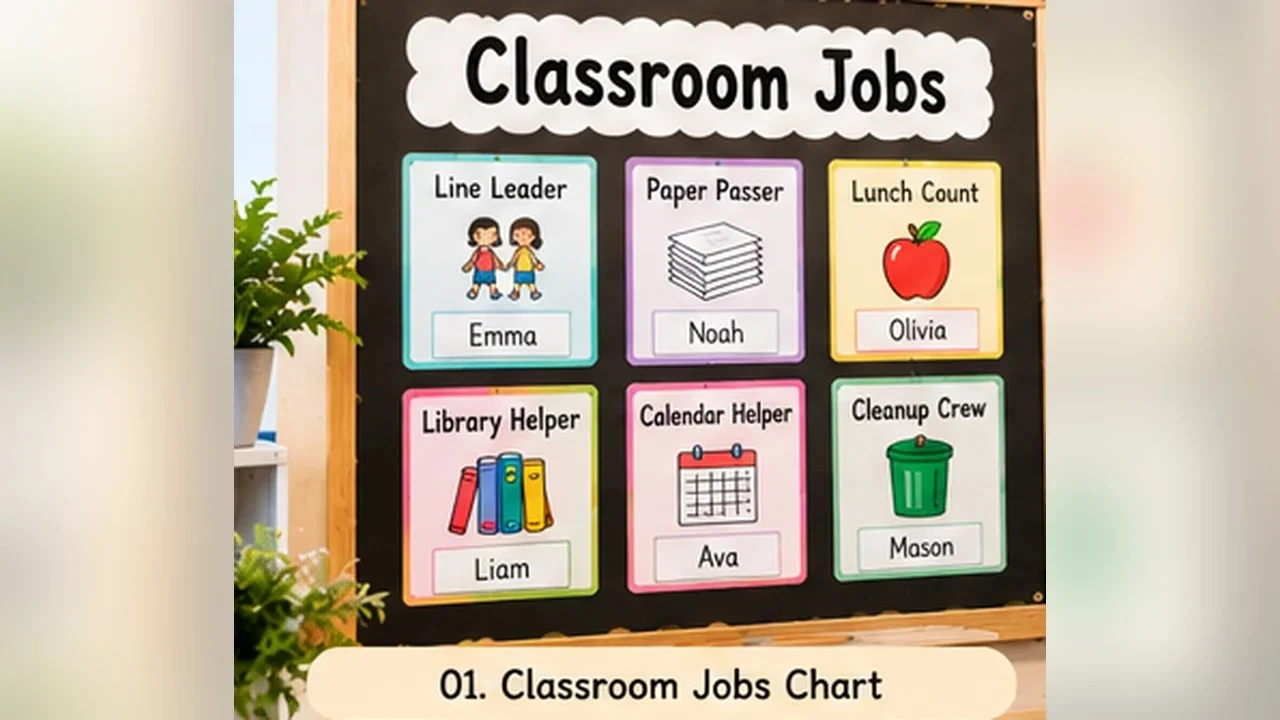
Teachers often display these assignments on a classroom job chart with student names and job descriptions. This helps children understand what they need to do and when they should do it.
For example, a paper passer distributes worksheets, while a lunch count helper assists with tracking students’ meal choices.
The purpose is to encourage responsibility and classroom participation, not to give students unnecessary work.
Why Are Classroom Jobs Important?
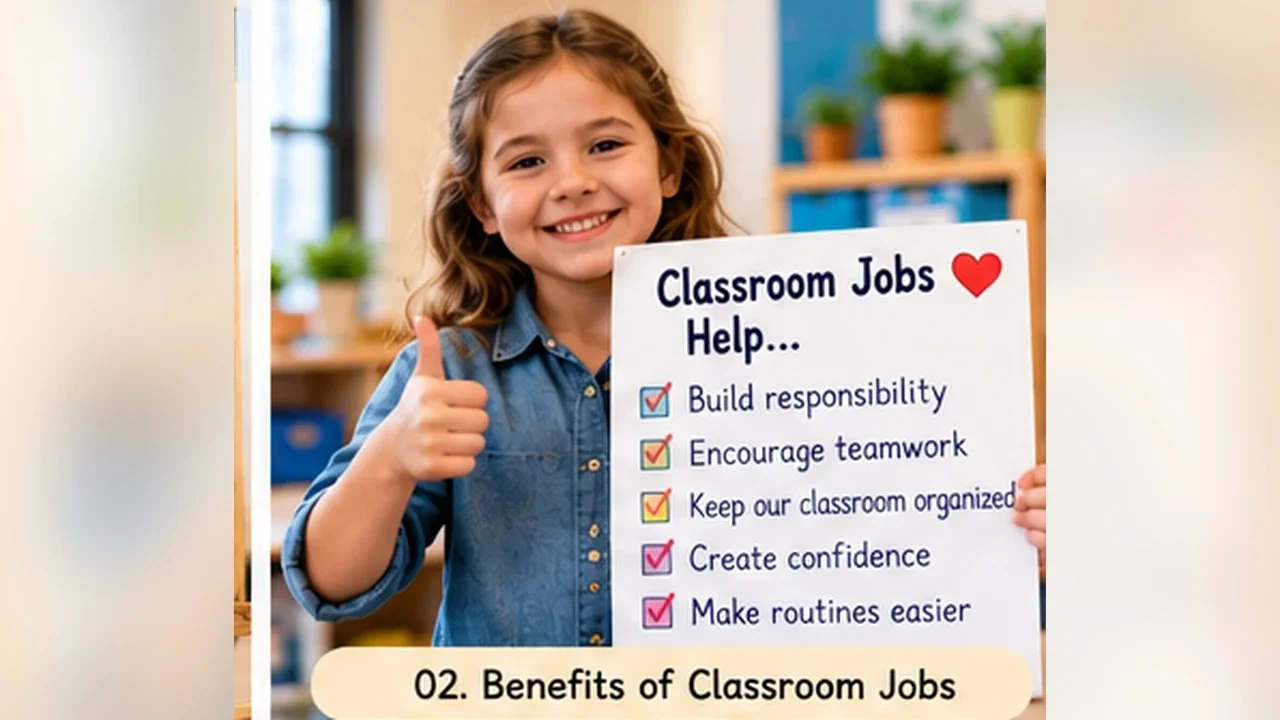
Meaningful classroom responsibilities can encourage students to take an active role in caring for their learning environment.
- Responsibility: Students practice completing assigned tasks.
- Independence: Children learn to follow simple routines.
- Teamwork: Everyone has opportunities to contribute.
- Organization: Classroom materials stay in designated places.
- Confidence: Students experience success through manageable tasks.
- Time management: Routine jobs can reduce interruptions during lessons.
These benefits are most likely when teachers provide clear instructions and choose jobs suited to students’ ages and abilities.
30 Classroom Jobs for Students by Grade Level
Choose class jobs that meet your classroom’s actual needs. The grade recommendations below are flexible starting points rather than strict rules.
| Classroom Job | Suggested Grade | Responsibility |
|---|---|---|
| 1. Line Leader | K–2 | Leads the class during transitions. |
| 2. Door Holder | K–3 | Holds the door safely for classmates. |
| 3. Library Helper | K–5 | Organizes classroom books. |
| 4. Chair Checker | K–2 | Checks that chairs are arranged properly. |
| 5. Supply Organizer | 1–5 | Keeps classroom supplies organized. |
| 6. Desk Inspector | 1–5 | Reminds students to tidy desks. |
| 7. Paper Passer | 1–5 | Distributes worksheets and activity papers. |
| 8. Paper Collector | 1–5 | Collects completed nonsensitive worksheets. |
| 9. Pencil Helper | K–3 | Organizes shared pencils. |
| 10. Folder Organizer | 1–5 | Sorts classroom folders. |
| 11. Book Distributor | K–4 | Passes out learning books. |
| 12. Materials Manager | 2–5 | Prepares supplies for lessons. |
| 13. Lunch Count Helper | 1–5 | Helps count daily meal selections. |
| 14. Calendar Helper | K–2 | Updates the classroom calendar. |
| 15. Weather Reporter | K–3 | Shares daily weather observations. |
| 16. Attendance Helper | 2–5 | Supports a teacher-approved routine without handling private records. |
| 17. Schedule Assistant | 2–5 | Updates the classroom schedule. |
| 18. Morning Greeter | K–5 | Welcomes classmates. |
| 19. Plant Helper | K–5 | Waters plants when instructed. |
| 20. Recycling Monitor | 1–5 | Sorts safe recyclable materials. |
| 21. Board Helper | 2–5 | Cleans the board with permission. |
| 22. Art Supply Helper | K–5 | Organizes crayons, markers, and paper. |
| 23. Floor Checker | K–3 | Checks for safe classroom litter. |
| 24. Cleanup Captain | 1–5 | Helps coordinate cleanup time. |
| 25. Technology Helper | 3–5 | Assists with approved classroom devices. |
| 26. Equipment Organizer | 2–5 | Returns materials to storage. |
| 27. Class Messenger | 3–5 | Delivers approved messages when school rules permit. |
| 28. Partner Helper | 1–5 | Supports a partner during assigned activities. |
| 29. Display Board Helper | 2–5 | Assists with bulletin board materials. |
| 30. End-of-Day Checker | 2–5 | Helps check that materials are put away. |
Classroom Jobs for Kindergarten Students
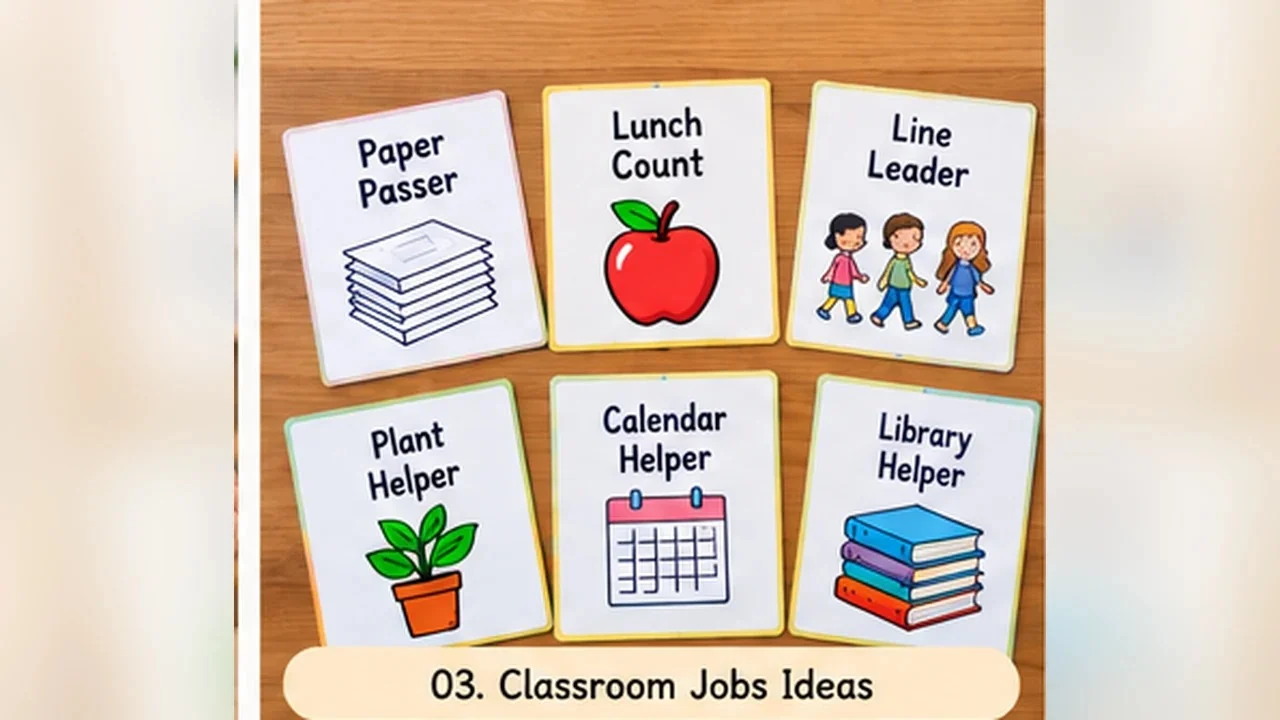
Kindergarten classroom jobs should be short, visual, and easy to demonstrate.
- Line Leader
- Door Holder
- Book Helper
- Calendar Helper
- Plant Helper
- Pencil Organizer
- Cleanup Helper
- Weather Reporter
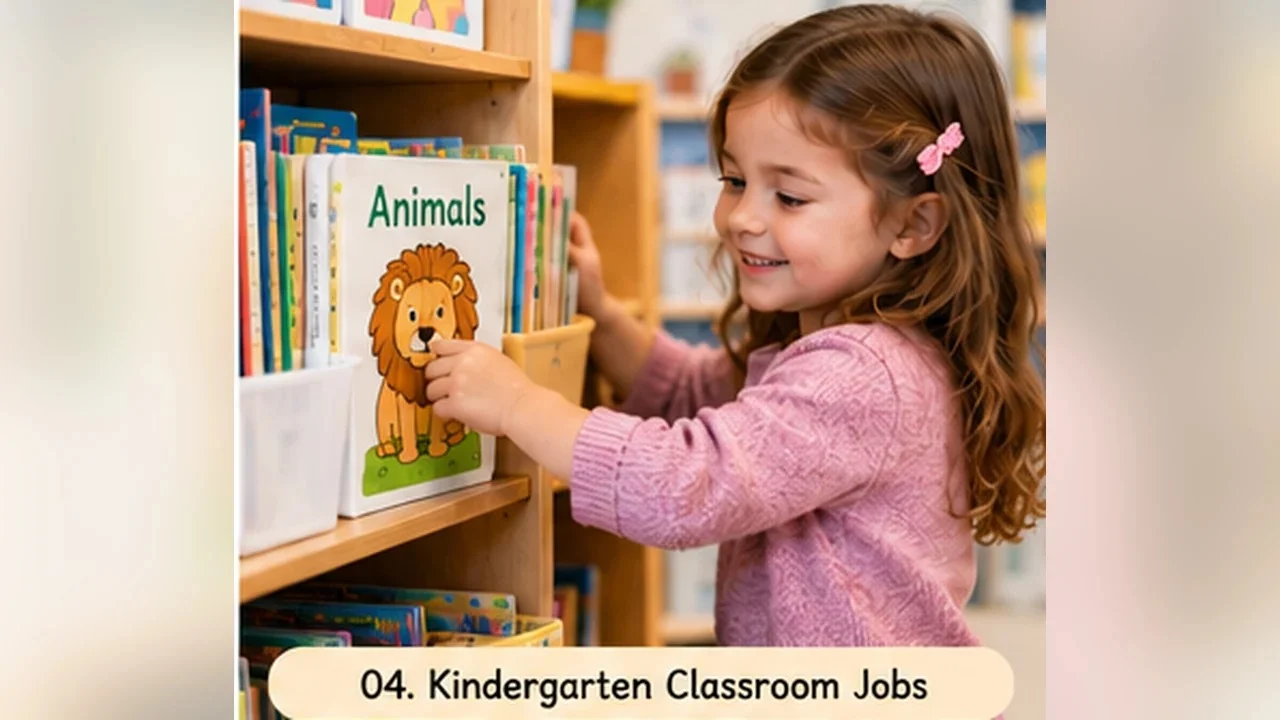
For example, a kindergarten book helper can return picture books to a labeled shelf after reading time.
Use picture symbols beside job titles and demonstrate each task before assigning it. Young students may need reminders until the routine becomes familiar.
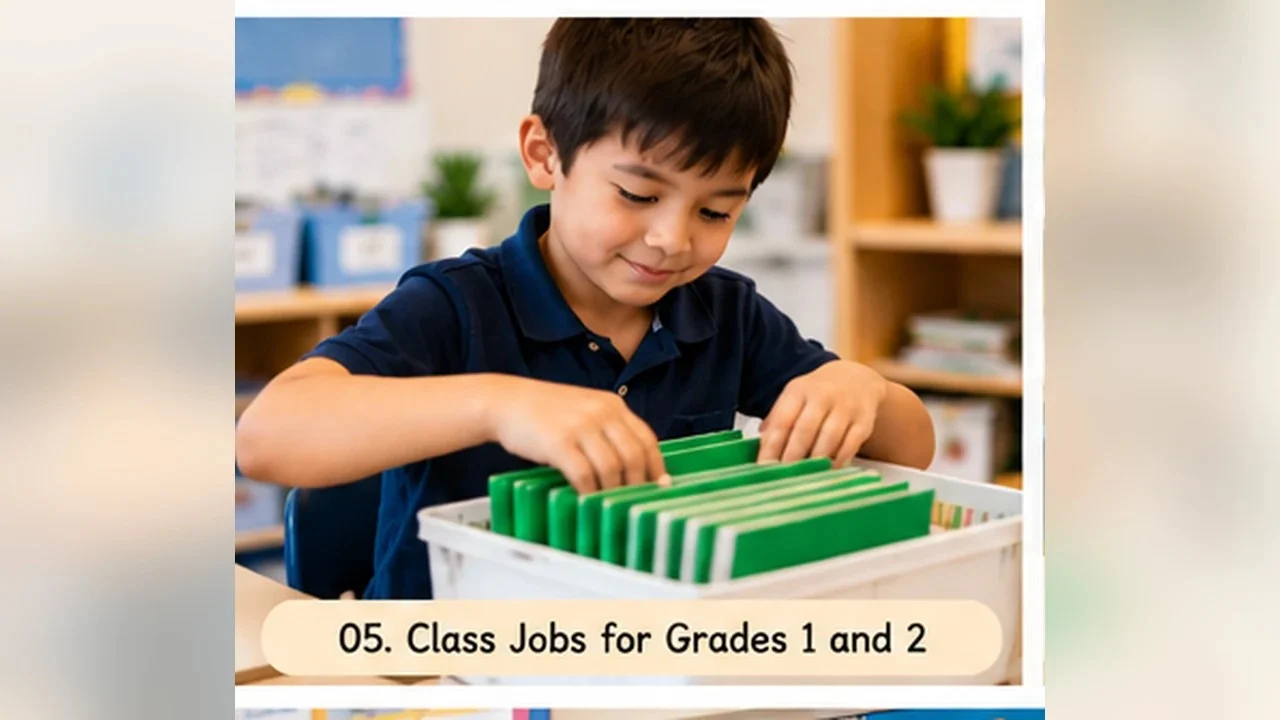
Class Jobs for First and Second Graders
First and second graders can practice responsibilities that involve two or three steps.
Suitable jobs include paper passer, paper collector, folder organizer, classroom librarian, supply manager, and lunch count helper.
A second-grade paper passer might collect a prepared stack of worksheets, distribute them by table, and return extra copies to the teacher.
Provide clear instructions and check that tasks are completed correctly.
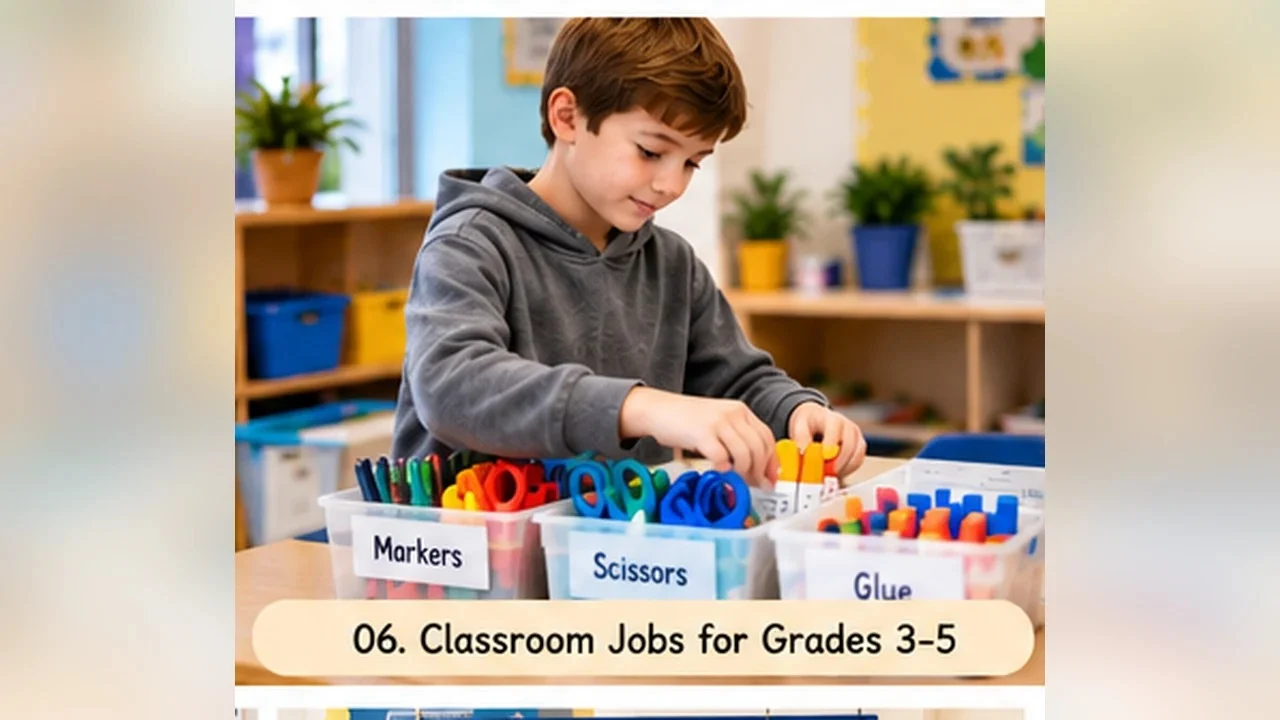
Classroom Jobs for Grades 3–5
Older elementary students may be ready for more detailed organizational responsibilities.
- Classroom Library Assistant
- Equipment Organizer
- Recycling Monitor
- Materials Manager
- Display Board Helper
- Technology Helper
- Classroom Supply Checker
For example, a fourth-grade materials manager can prepare notebooks and supplies before a lesson.
Technology and equipment-related tasks should always follow school rules and teacher supervision.
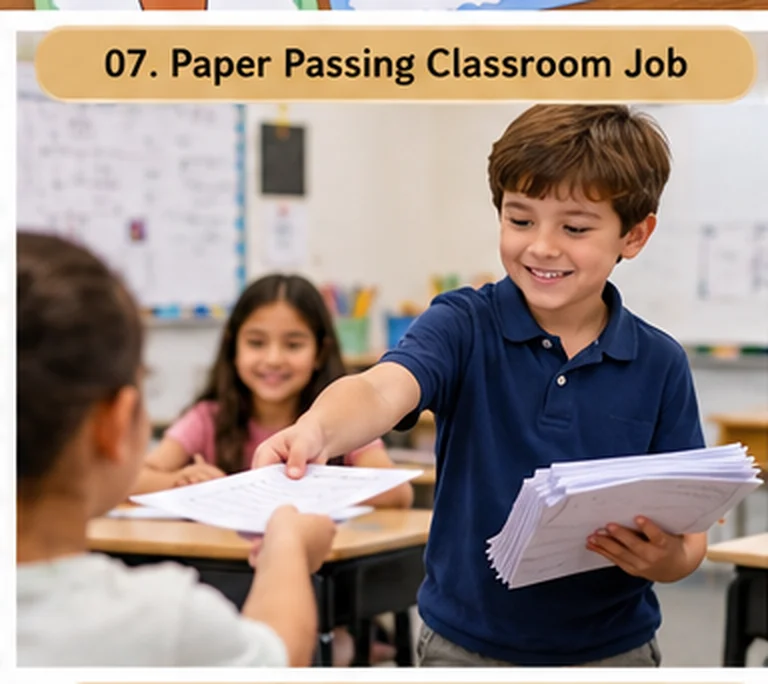
Paper Passing: How to Organize This Classroom Job
Paper passing is a practical classroom job that helps teachers distribute worksheets, activity sheets, and learning materials.
An effective paper-passing routine should be simple enough to complete without interrupting lessons.
How Paper Passing Works
- The teacher places worksheets in a designated location.
- The paper passer collects the prepared stack.
- The student distributes papers by table or row.
- Extra worksheets are returned to the teacher.
- The student returns to their seat.
Paper Passing Tips
Prepare worksheets before class whenever possible. For larger classrooms, assign one paper passer to each section or use table captains.
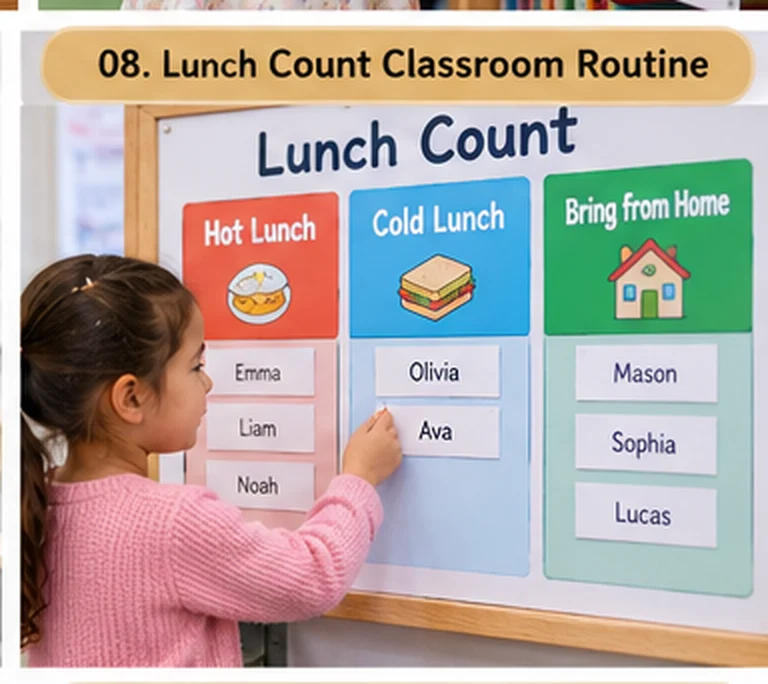
Lunch Count: A Simple Daily Classroom Job
Lunch count is a useful morning routine in elementary classrooms where students select school meals or bring lunch from home.
A lunch count helper can assist with counting student choices while the teacher verifies the final totals.
How to Set Up a Lunch Count System
- Display lunch choices on a classroom board.
- Ask students to select an option using a card or magnet.
- Have the helper count the selections.
- The teacher checks and submits the final lunch count.
Tips for Accurate Lunch Counts
Use pictures and clear labels for younger students. Complete the routine at the same time each morning.
Have a process for missing selections and absences. The teacher remains responsible for checking meal orders and following school requirements.
How to Create a Classroom Job Chart
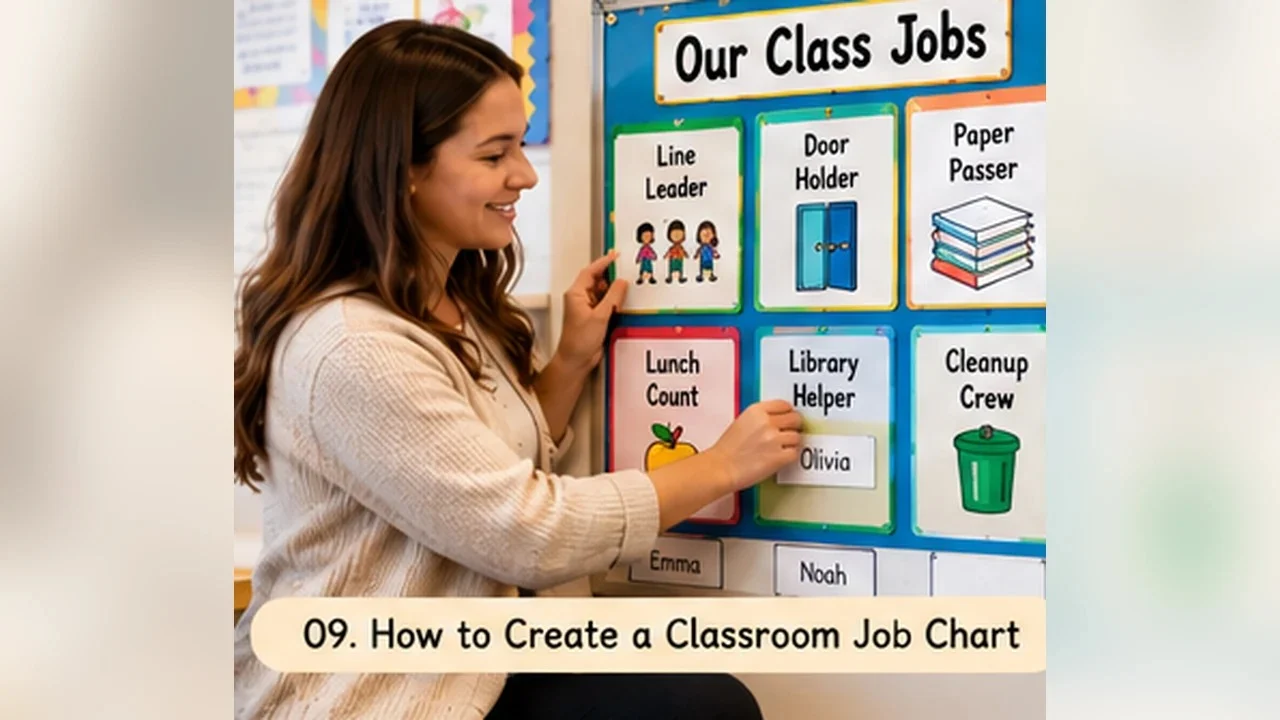
A classroom job chart shows which students are responsible for different classroom tasks. It can be made using a pocket chart, bulletin board, magnetic board, or poster.
- Choose Useful Jobs Select responsibilities that support actual classroom routines.
- Prepare Your Chart Use clearly labeled cards with large, readable text.
- Add Student Names Use movable name cards or pictures for younger children.
- Explain Every Job Demonstrate each task and explain where supplies belong.
- Set a Rotation Schedule Choose daily or weekly assignments based on your classroom.
- Review and Adjust Observe which jobs work well and simplify confusing routines.
Classroom Job Chart Ideas
Choose a classroom job chart format that suits your students’ ages, classroom space, and available materials.
| Job Chart Type | Best Use |
|---|---|
| Pocket Chart | Movable student names and job cards. |
| Magnetic Board | Quickly changing assignments. |
| Printable Chart | A simple low-cost classroom system. |
| Picture-Based Chart | Kindergarten and early elementary students. |
| Digital Chart | Classrooms with existing digital displays. |
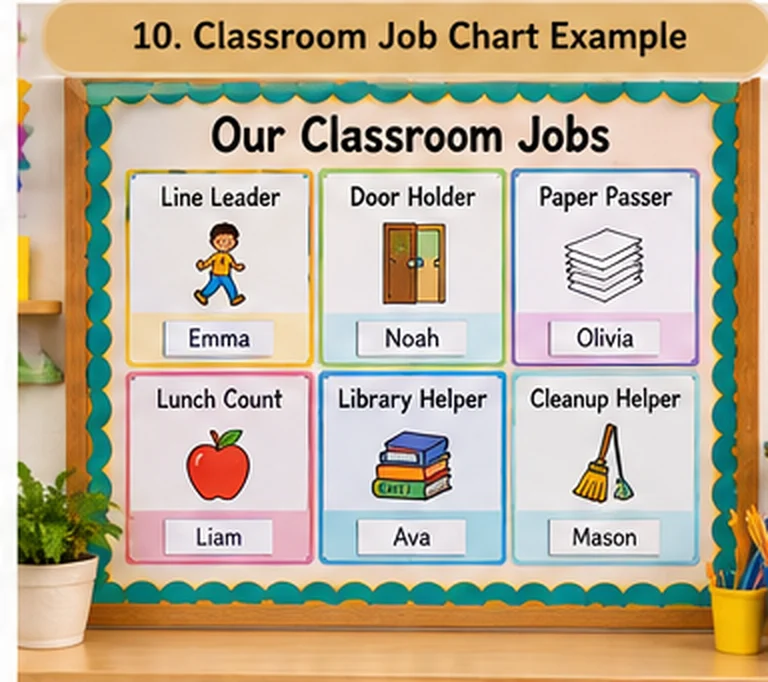
A picture-based pocket chart is particularly useful for young learners because the visual reminders help students recognize their assigned tasks.
Free Printable Classroom Job Chart Template
You can use the simple template below as a starting point for assigning classroom jobs. Fill in student names before printing, or print a blank copy and complete it by hand.
Our Classroom Jobs
Class: __________________ Week: __________________
| Classroom Job | Student Name | Completed |
|---|---|---|
| Line Leader | □ | |
| Door Holder | □ | |
| Paper Passer | □ | |
| Paper Collector | □ | |
| Library Helper | □ | |
| Lunch Count Helper | □ | |
| Supply Organizer | □ | |
| Calendar Helper | □ | |
| Cleanup Helper | □ | |
| Materials Manager | □ |
Be responsible. Be kind. Help our classroom.
Use your browser’s print option to print the template, or save the printout as a PDF. For the cleanest result, open the browser print dialog and choose only the template page if your WordPress theme also includes other page elements.
How to Rotate Classroom Jobs Fairly
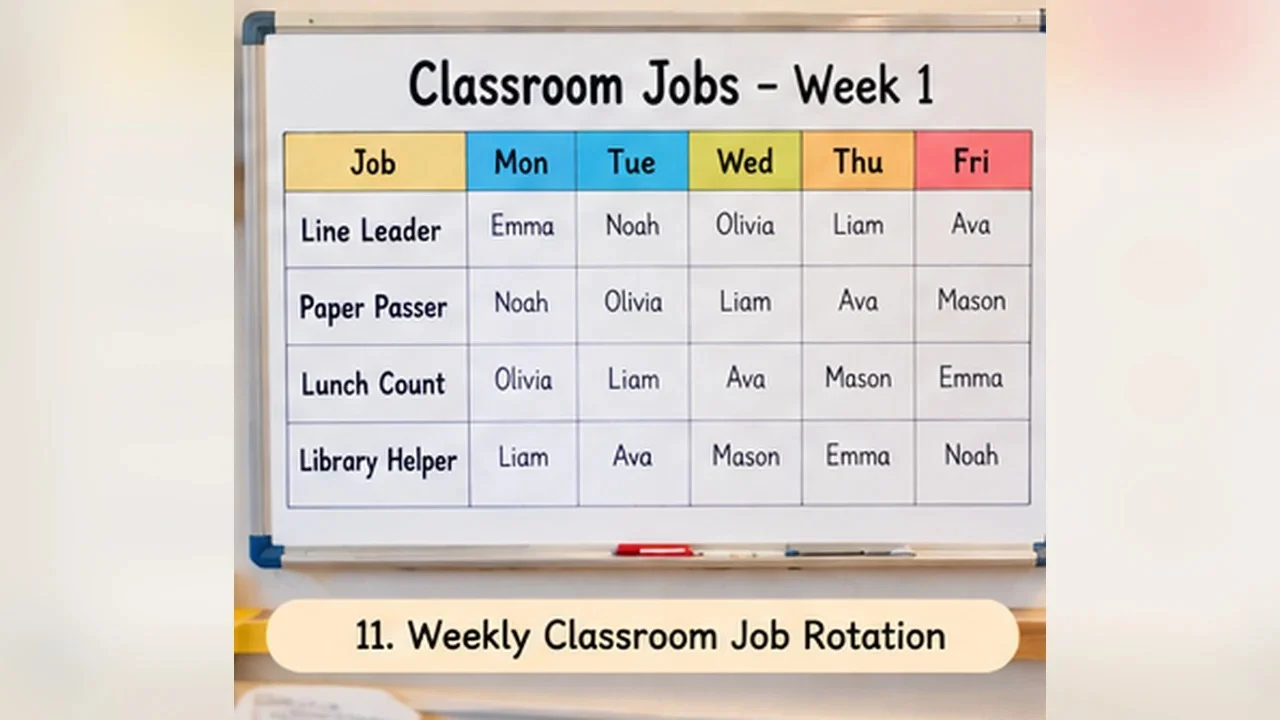
A classroom job rotation gives students opportunities to practice different responsibilities.
Weekly rotation is often easier to manage because students have time to learn and complete their jobs.
Example Weekly Classroom Job Rotation
| Classroom Job | Week 1 | Week 2 | Week 3 |
|---|---|---|---|
| Line Leader | Emma | Noah | Olivia |
| Paper Passer | Noah | Olivia | Liam |
| Lunch Count Helper | Olivia | Liam | Emma |
| Library Helper | Liam | Emma | Noah |
A full classroom rotation should account for all students, including those who do not have a job during a particular week. Track assignments to ensure popular jobs are shared fairly.
Example: Setting Up Classroom Jobs for 24 Students
Imagine an elementary classroom with 24 students and eight useful daily classroom jobs.
The teacher divides the class into three groups of eight students. Each group receives one week of classroom job assignments.
| Week | Assigned Group | Students with Jobs |
|---|---|---|
| Week 1 | Group A | Students 1–8 |
| Week 2 | Group B | Students 9–16 |
| Week 3 | Group C | Students 17–24 |
| Week 4 | Group A | Students 1–8, with different roles |
During their assigned week, each student receives one job. The following week, a different group takes over. When a group returns, students rotate into new roles.
This system avoids creating unnecessary jobs just so every child has a responsibility at the same time.
How to Handle Unpopular Classroom Jobs
Some students may prefer being line leader or paper passer, while fewer may volunteer for organizing supplies or checking classroom materials.
A fair system should not depend entirely on which students volunteer first.
- Rotate popular and less popular jobs.
- Explain why every responsibility matters.
- Allow students to share preferences when possible.
- Use short assignments for difficult or repetitive tasks.
- Provide alternatives for students with different abilities and needs.
Teachers should also avoid using classroom jobs as punishments. Responsibilities are most useful when they are presented as contributions to the classroom community.
Common Classroom Job Mistakes to Avoid
Assigning Too Many Jobs
Too many responsibilities make the system difficult to maintain. Begin with essential tasks.
Failing to Explain Responsibilities
Demonstrate every task and provide clear instructions.
Unfair Job Assignments
Use a consistent rotation so students have opportunities to try different jobs.
Making the Chart Too Complicated
Choose readable labels, simple pictures, and a chart students can understand.
Expecting Students to Work Without Supervision
Teachers remain responsible for student safety, private information, meal counts, and official records.
Frequently Asked Questions
How many classroom jobs should I have?
There is no fixed number. Starting with five to ten useful jobs is manageable for many classrooms.
Should every student have a classroom job?
Not necessarily every day. A rotation system can ensure students receive opportunities without creating unnecessary tasks.
How often should classroom jobs rotate?
Weekly rotation is practical for many classrooms. Very simple responsibilities may rotate daily.
What are the easiest classroom jobs for kindergarten?
Line leader, door holder, book helper, calendar helper, and cleanup helper are simple starting points.
What does a paper passer do?
A paper passer distributes worksheets and learning materials to classmates and returns extra copies to the teacher.
How can students help with lunch count?
Students can organize lunch choice cards and count the selections. Teachers verify the final numbers.
What is the best classroom job chart?
A simple, clearly labeled chart is usually best. Picture-based pocket charts work especially well for younger students.
How do you make classroom jobs fair?
Use a visible rotation system, track assignments, and allow students to try different responsibilities.
Final Thoughts
Classroom jobs for students provide a simple way to encourage independence, responsibility, and teamwork while supporting daily routines.
Tasks such as paper passing, lunch count, and organizing supplies can help students contribute meaningfully to their classroom.
Start with a few useful jobs, create a clear classroom job chart, and rotate responsibilities fairly. Adjust the system as students become more confident.
The best classroom job system is not the most complicated one. It is the one your students can understand and your classroom can use consistently.