
Choosing the best baby books can feel surprisingly overwhelming. Shelves are full of board books, bedtime stories, first-word titles, lift-the-flap books, and sensory options—yet the right choice depends less on a “best” list than on your child’s age, attention span, interests, and how you plan to read together.
This guide is for parents, new parents, grandparents, caregivers, and gift buyers choosing books from newborn through about age 3. It focuses on practical fit, safe construction, reread ability, and opportunities for warm, responsive interaction rather than unsupported rankings or promises.
Quick answer: What makes a good baby book?
| Look for a good match, not a perfect book. A strong choice usually has sturdy construction, short or repetitive text, clear or high-contrast illustrations, interactive features used appropriately, and a length that fits the child’s attention span. The best book is often the one your child wants to hear again—and that gives you both an easy reason to connect. |
Trust and editorial note
Author expertise: This is practical, evidence-aware consumer guidance, not a report of personal testing or professional clinical evaluation. Examples are included because their formats, themes, or reading patterns are recognizable—not because every child or family will prefer them.
Editorial disclosure: Recommendations are organized around age suitability, durability, readability, engagement, reread ability, and usefulness for bonding and early learning. Always check the current edition, age guidance, construction, and product safety information before buying. Developmental benefits are potential supports, not guarantees; discuss individual concerns with a pediatrician or qualified professional.
Age-by-age guide to books for babies and toddlers
Children do not all develop on the same timetable. Use these age ranges as flexible starting points, then follow the child in front of you: some babies enjoy a long lap read, while others prefer a few pages and a song.
Newborns: faces, contrast, and your voice
What to look for: Books with simple, high-contrast images, uncluttered pages, large faces, gentle patterns, and very short text can be easier for a young baby to notice. Sturdy cloth books and well-made board books for babies are practical choices.
How to read together: Hold the book close enough for comfortable viewing, name what you see, pause, and let the baby look or listen. Your voice, facial expressions, and calm repetition matter more than finishing every page.
Formats and themes: Faces, animals, black-and-white patterns, family routines, lullaby-like language, and simple photographs tend to offer accessible starting points.
6–12 months: repetition, movement, and participation
What to look for: Choose thick pages, clear pictures, predictable phrases, and sturdy flaps or textures that are securely attached. Simple cause-and-effect features can invite participation when used with supervision.
How to read together: Let the baby grab, pat, point, turn pages, or babble. Name familiar people and objects, copy sounds, and pause before a repeated phrase so the child can respond in their own way.
Formats and themes: Peekaboo books, animal sounds, body parts, nursery rhymes, daily routines, and first concept books often work well at this stage.
1-year-olds: first books with recognizable meaning
What to look for: Pick board books with one clear idea per spread, familiar objects, rhythmic language, and manageable amounts of detail. Books that tolerate repeated handling are especially useful.
How to read together: Ask simple questions, point and label, then accept gestures or sounds as answers. Follow the child’s lead instead of turning reading into a test.
Formats and themes: First-word books, lift-the-flap titles, animal stories, food, vehicles, emotions, and books about everyday routines can connect with a 1-year-old’s world.
2-year-olds: stories, choices, and growing language
What to look for: Look for slightly longer plots, repeated refrains, expressive characters, humor, and illustrations that reward looking closely. A mix of board books and carefully handled picture books can work.
How to read together: Invite predictions, let the child finish a familiar phrase, and connect the story to real life: “That dog is wet, like our dog after the rain.” Re-reading favorites is useful, not a setback.
Formats and themes: Bedtime routines, friendship, feelings, pretend play, problem-solving, animals, and simple counting or color stories tend to offer many conversation openings.
3-year-olds: fuller stories and favorite subjects
What to look for: Consider picture books with a beginning, middle, and end, richer vocabulary, playful repetition, and illustrations that support story comprehension. Keep durable favorites in the rotation.
How to read together: Ask open-ended questions, notice details, invite the child to retell parts, and make space for independent page-turning. Stop before reading becomes tiring.
Formats and themes: Longer bedtime stories, imaginative adventures, nonfiction about animals or vehicles, rhyming stories, and books reflecting the child’s family or interests can all be good fits.
Best baby books by reading goa
These categories are useful ways to shop, not rankings. A single title may fit several categories, and the most engaging choice will vary by child and family.
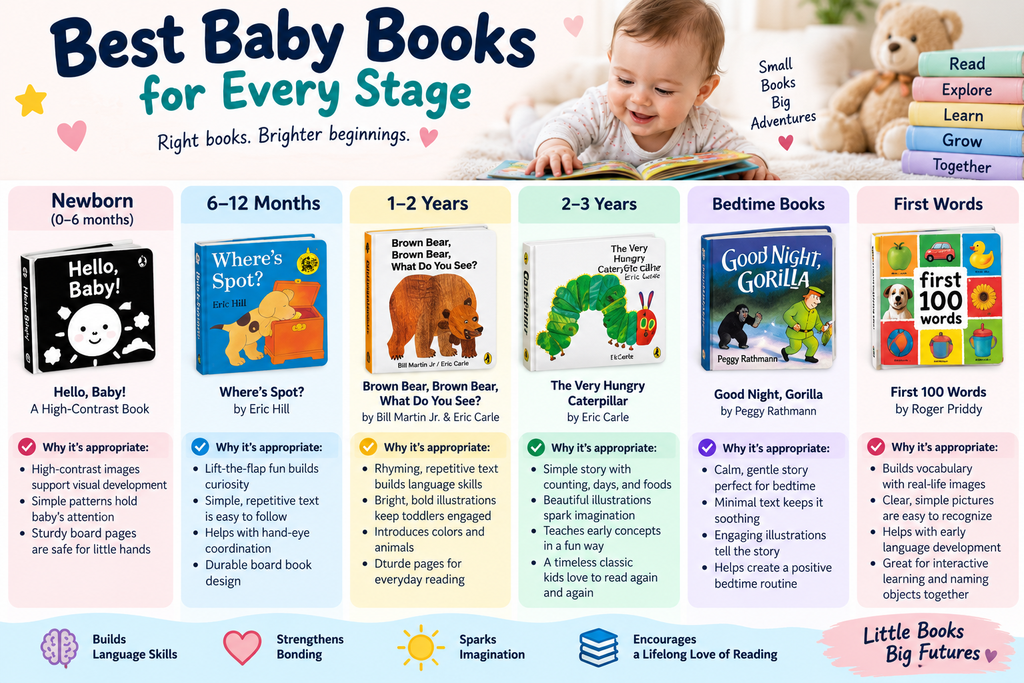
Choose thick pages, rounded or smoothly finished edges, strong binding, and clear illustrations. Representative examples include board-book editions of Brown Bear, Brown Bear, What Do You See? for predictable color-and-animal language, The Very Hungry Caterpillar for bold images and simple sequencing, and Dear Zoo for repeated language and lift-the-flap participation. Check the current edition and construction rather than assuming every format is equally durable.
Best bedtime stories
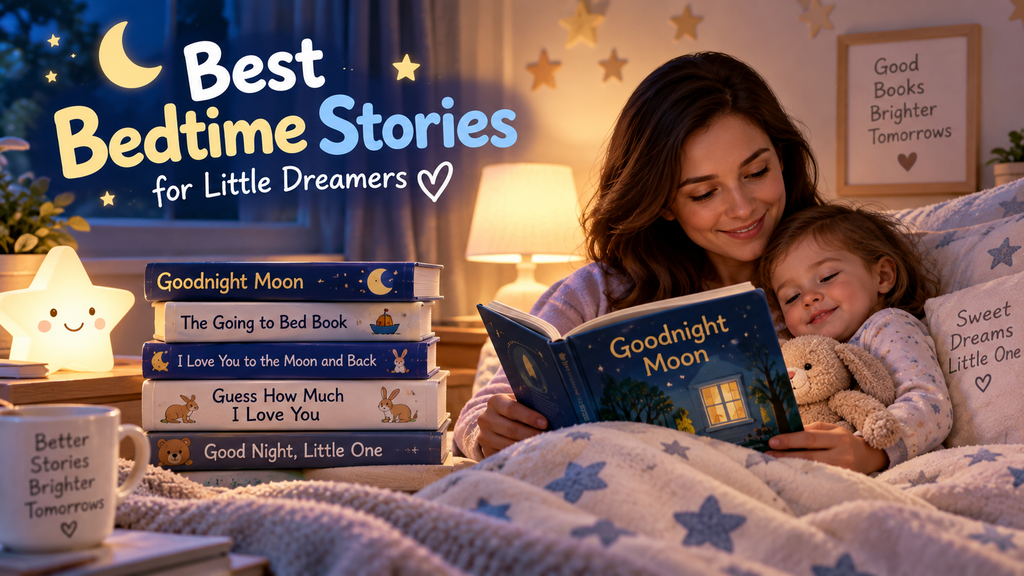
Look for a calm pace, reassuring repetition, warm imagery, and a length that does not overstimulate your child. Goodnight Moon and The Going to Bed Book are representative examples of books built around nighttime language and rhythmic reading. Family routines matter as much as the title.
Select books with large, uncluttered pictures and familiar categories such as people, food, animals, clothing, vehicles, and body parts. A well-organized first-words board book or a photo-based vocabulary book can work; choose one that gives you reasons to point, name, pause, and connect words to the child’s day.
Lift-the-flap, touch-and-feel, peekaboo, and sound-based formats can make shared reading
active. Pat the Bunny, Where Is the Green Sheep? and tactile concept books such as the Touch Think Learn series are representative options to investigate. Supervise interactive books and check that components are firmly attached and appropriate for the child’s age.
Best books for language-building
Prioritize rhyme, repetition, clear story sequences, expressive words, and opportunities to answer or imitate. Brown Bear, Brown Bear, What Do You See? and Chicka Chicka Boom Boom offer memorable repeated language, while simple storybooks create room for conversation. These books may support listening and vocabulary exposure; they do not guarantee a particular language outcome.
Best baby-shower gifts
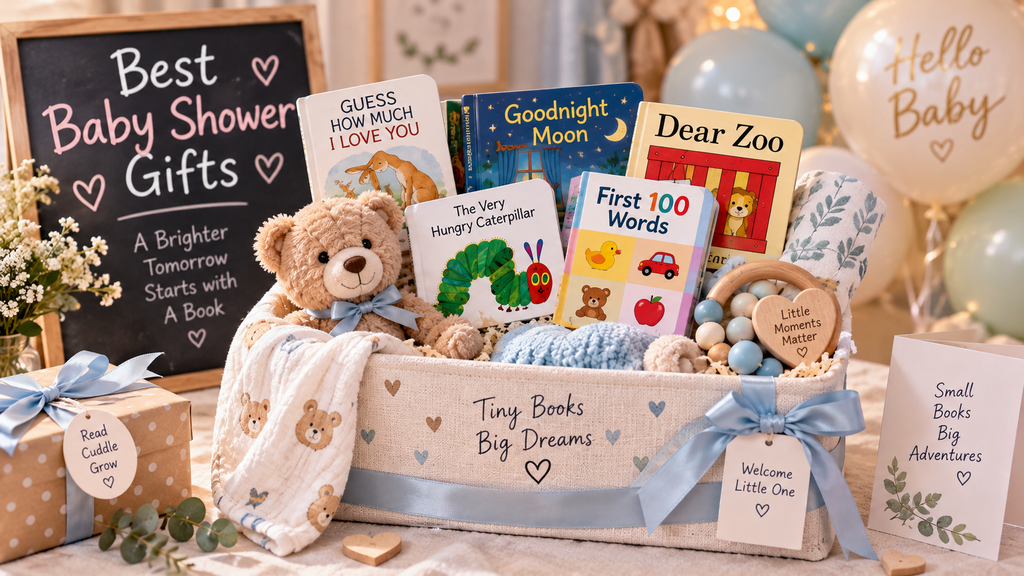
For a gift, choose a durable bedtime favorite, a high-contrast book for a newborn, a sturdy first-word title, or a small set that covers different reading experiences. A personal inscription can make the gift memorable, but avoid writing inside a book if the family may need to exchange it for safety, format, or preference reasons.
Before buying any example: Confirm the current edition, recommended age range, page and binding quality, attached-feature safety, and manufacturer information. These examples are representative formats to explore, not claims of personal review or universal preference.
Book-type comparison
| Book type | Best for | Key features | What to check before buying |
| Board book | Babies and toddlers who handle books actively | Thick pages, simple pictures, short text | Binding, edges, finish, and age guidance |
| Bedtime story | Calm evening routines | Gentle pace, repetition, reassuring themes | Length, tone, and whether the child finds it soothing |
| First-word book | Pointing, naming, and everyday vocabulary | Clear images and familiar categories | Readable layout and inclusive, recognizable images |
| Interactive or sensory book | Hands-on participation | Flaps, textures, peekaboo, or sound features | Secure components, supervision needs, and noise level |
| Picture storybook | Toddlers ready for connected plots | Characters, sequence, rhythm, and richer vocabulary | Story length, page durability, and subject fit |
Baby-book safety and durability checklist
Books are everyday objects, but babies explore them with their mouths and hands. Before giving a book to a child, consider:
- Thick pages and secure binding — Look for pages that resist tearing and a spine that does not loosen with normal handling.
- Securely attached components — Flaps, tabs, mirrors, ribbons, textures, and sound components should not be loose or easy to pull away.
- Age labels — Use the manufacturer’s age guidance as one input, especially for books with interactive parts or detachable pieces.
- No loose small parts for babies — Avoid books with pieces that could become a choking hazard, and keep removable accessories away from babies and young toddlers.
- Supervision for interactive books — Stay nearby when a book includes textures, mirrors, batteries, sound buttons, or parts that can be tugged.
- Regular condition checks — Retire or repair books with torn pages, peeling laminate, exposed components, sharp edges, or damaged sound compartments.
| Safety reminder: A board book is durable, not indestructible. If a child is chewing, tearing, or pulling at a feature, put the book aside and offer a safer alternative. |
Choosing books for a reluctant or easily distracted baby
- Keep sessions short — A few engaged minutes count. Stop while the experience still feels positive.
- Let the child participate — Offer the page, let them turn it, point, pat, or choose between two books.
- Follow interests — A child fascinated by dogs, buses, faces, or food may be more willing to read about that subject.
- Repeat favorites — Familiar words and pictures can make joining in easier. Repetition is a feature, not a lack of variety.
- Change the setting — Try reading on the floor, during a quiet cuddle, or alongside a familiar routine rather than insisting on one formal reading time.
- Stop when interest fades — Closing the book calmly helps keep reading associated with comfort instead of pressure.
How to build a simple daily reading routine
- Choose a reliable moment — Pair one short book with waking, after a meal, bath time, or bedtime.
- Start with one familiar title — Keep a favorite within reach and add variety when your child is receptive.
- Read responsively — Point, name, pause, imitate sounds, and follow the child’s gaze or gestures.
- Let the routine flex — A book may take two minutes one day and ten minutes another. Both can count as shared reading.
Shared reading can support bonding, listening, vocabulary exposure, and positive book habits because it gives adults and children repeated opportunities to attend to the same words, pictures, sounds, and emotions together. These are potential supports, not guarantees. If you have concerns about hearing, communication, attention, or development, discuss them with a pediatrician or qualified professional.
Baby-book gift guide by age
For a newborn
Build a small bundle with one high-contrast or face-focused book, one soft or cloth book made for the age range, and one gentle board-book bedtime story. Add a washable book bag or a handwritten note suggesting short, relaxed lap reading. Keep the selection simple so caregivers can easily reach for it during cuddles.
For a first birthday
Combine a sturdy first-word or animal book, a peekaboo or lift-the-flap title with securely attached parts, and a rhythmic story for rereading. Choose subjects the child already enjoys—such as vehicles, animals, food, or familiar routines—and verify that interactive features match the child’s age.
For ages 2–3
Create a bundle with one connected picture story, one bedtime favorite, and one book about a current interest or everyday experience. Add a simple nonfiction title about animals, nature, or vehicles if the child enjoys looking closely and asking questions. Durable board editions can still be useful for enthusiastic page-turners.
Gift-bundle principle: Pair different reading experiences rather than buying several books that all do the same job. Durability, family fit, and rereadability are usually more useful than quantity.
Baby-book FAQ
What are the best books for newborns? Books with high-contrast or clear images, faces, simple patterns, and short text are practical starting points. The caregiver’s voice and closeness matter more than completing a story.
Are board books safe for babies? Board books are designed to be more durable than paper pages, but they are not automatically safe for every situation. Check age guidance, avoid loose pieces, supervise chewing and interactive features, and remove books with peeling or damaged parts.
How many books does a baby need? There is no required number. A small, varied selection that includes a favorite, a simple concept book, and a calming story can be enough to establish a routine. Libraries can provide variety without requiring a large home collection.
When should parents start reading to a baby? Parents can begin from birth, including with short periods of talking, singing, and looking at pictures. Starting later is also fine; the goal is a warm, repeatable habit rather than a performance standard.
What makes a good bedtime book? Look for a calm tone, predictable rhythm, reassuring subject matter, and a length that fits your child’s evening attention span. The same book can become a useful cue when it is part of a consistent routine.
Are interactive books worth buying? They can be worthwhile when the feature supports shared attention and is durable, age-appropriate, and easy to supervise. Choose them as one part of a collection, not as a replacement for quiet stories and conversation.
Conclusion: choosing the best baby books with confidence
The best baby books are not necessarily the newest, longest, or most elaborate. Start with a durable format, clear and engaging pictures, language your child can enjoy hearing repeatedly, and a theme that fits your family’s everyday life. Then let your child’s reactions guide the next choice.
Quick checklist:
- Does the book match the child’s approximate age and current interests?
- Are the pages, binding, and interactive parts durable and secure?
- Is the text short, rhythmic, repetitive, or otherwise easy to share?
- Can the book support pointing, naming, cuddling, laughing, or conversation?
- Have you checked the current edition, age guidance, and product safety information?
Choose one durable, enjoyable book and read it together regularly—even if “regularly” means a few pages at a time. Those small, pressure-free moments can help make books a familiar part of your child’s day.