

A practical low-shed guide
Hypoallergenic Dogs That Don’t Shed: Best Breeds to Consider
Comparing four larger, low-shedding dogs—so you can choose for your home, your schedule, and the real work behind a beautiful coat.
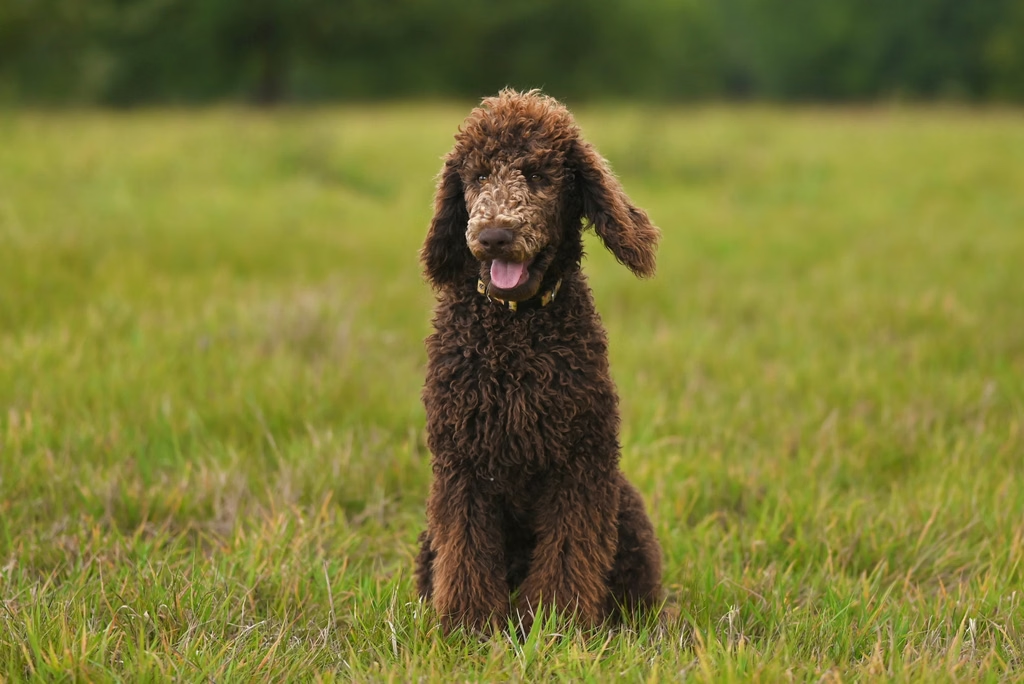
First, a necessary reality check about “hypoallergenic.”
No dog breed is guaranteed to be allergy-safe. People may react to dander, saliva, skin proteins, urine, or allergens carried on the coat. Low shedding can mean less loose hair in your home, but it does not mean zero allergens. If allergies are significant, spend time with the individual dog before committing.
The short answer
The best no-shed large breed dog depends on what you can give back.
For many households, the Standard Poodle offers the broadest balance of size, trainability, family compatibility, and low shedding. The Giant Schnauzer suits experienced, active owners who want a protective working dog. The Portuguese Water Dog is a lively, medium-large companion for people who enjoy activity and regular coat care. The Airedale Terrier brings a more independent terrier personality with a wiry, low-shedding coat. The shared trade-off: hair that does not fall out freely still needs brushing, detangling, and professional clipping or hand-stripping.
At a glance
Large low-shedding breeds compared
Adult weights are typical ranges; individual dogs can vary by sex, breeding, diet, and health.
| Breed | Adult size | Coat & grooming | Exercise | Best suited for |
|---|---|---|---|---|
| Standard Poodle | 40–70 lb | Curly; clip every 4–8 weeks | Moderate to high | Trainable family companion |
| Giant Schnauzer | 55–85 lb | Wiry; groom every 6–8 weeks | High | Experienced active homes |
| Portuguese Water Dog | 35–60 lb | Wavy or curly; every 6–8 weeks | High | Engaged, outdoorsy households |
| Airedale Terrier | 50–70 lb | Wiry; clipping or stripping | Moderate to high | Confident owners who enjoy terriers |
Find your likely match
Filter breeds by the life you actually live.
Choose one priority to focus the profiles below. Treat this as a starting point, not a promise: training, socialization, the individual dog, and your daily routine all matter.
Breed profiles
The trade-offs behind four low-shedding favorites
These dogs shed relatively little, but each has a distinctly different relationship with grooming, training, strangers, children, and daily exercise.
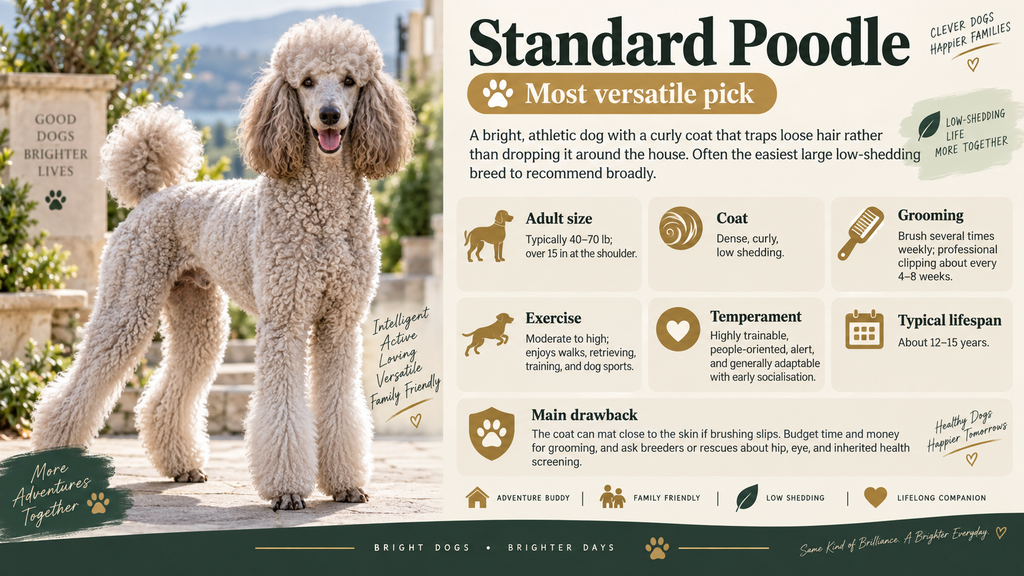
Most versatile pick
Standard Poodle
A bright, athletic dog with a curly coat that traps loose hair rather than dropping it around the house. Often the easiest large low-shedding breed to recommend broadly.
| Adult size | Typically 35–60 lb; medium-large rather than giant. |
| Coat | Wavy or curly single coat; low shedding. |
| Grooming | Brush at least weekly; schedule a professional groom around every 6–8 weeks. |
| Exercise | High; thrives with swimming, hiking, games, and training. |
| Temperament | Affectionate, playful, smart, and enthusiastic; many are good family dogs with guidance. |
| Typical lifespan | About 11–13 years. |
Main drawback: the coat can mat close to the skin if brushing slips. Budget time and money for grooming, and ask breeders or rescues about hip, eye, and inherited health screening.
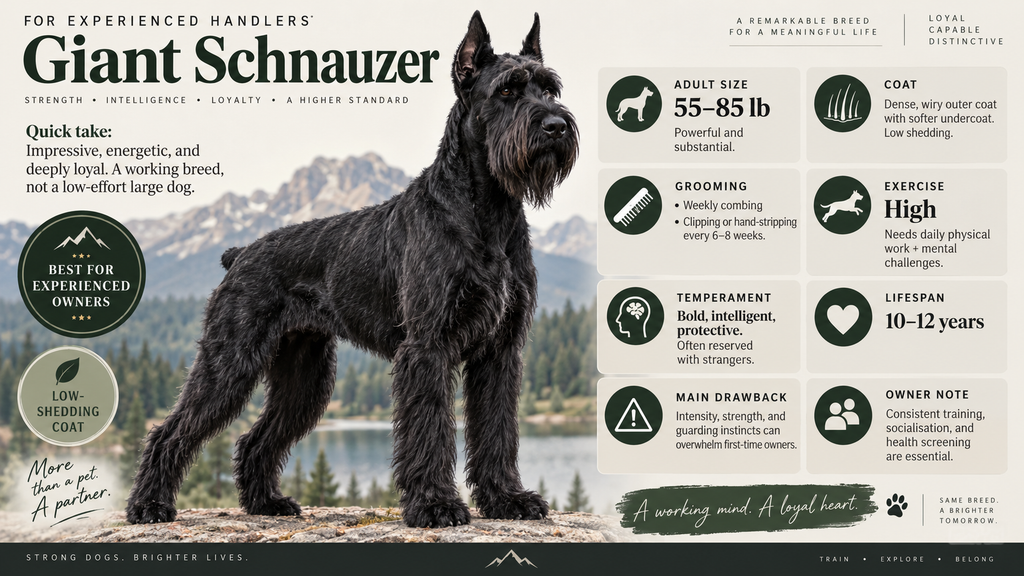
For experienced handlers
Giant Schnauzer
Impressive, energetic, and deeply loyal, with a harsh low-shedding coat. This is a working breed, not a low-effort large dog.
| Adult size | Typically 55–85 lb; powerful and substantial. |
| Coat | Dense, wiry outer coat with a softer undercoat; low shedding. |
| Grooming | Weekly combing; clipping or hand-stripping every 6–8 weeks. |
| Exercise | High; needs daily physical work plus structured mental challenges. |
| Temperament | Bold, intelligent, protective, and often reserved with strangers; consistent training is essential. |
| Typical lifespan | About 10–12 years. |
Main drawback: their intensity, strength, and guarding tendencies can overwhelm first-time owners. Seek thoughtful socialization and discuss orthopedic and eye screening with a responsible breeder or rescue.
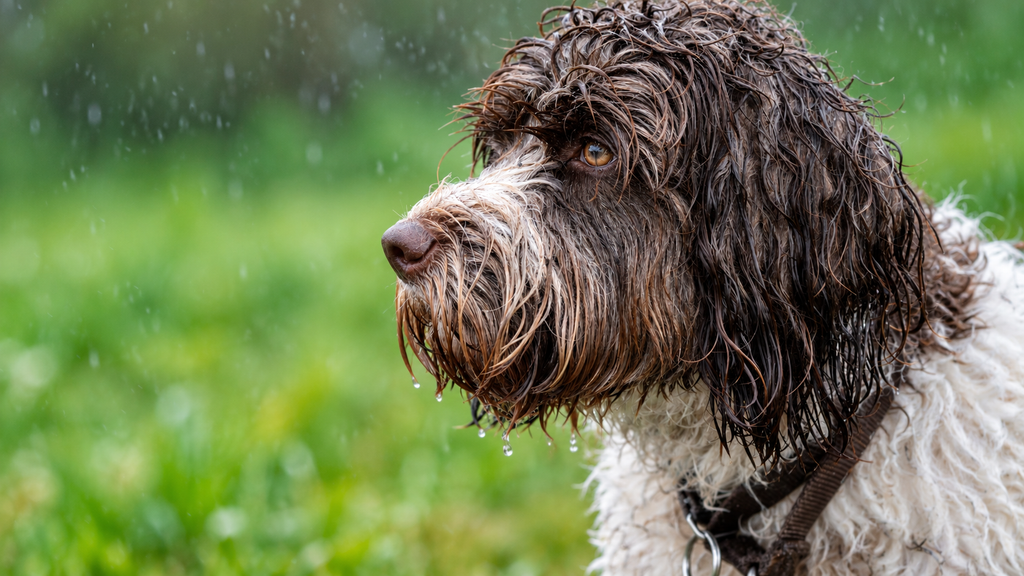
The active companion
Portuguese Water Dog
A spirited, affectionate working dog with a wavy or curly coat. Slightly smaller than the others here, but still sturdy enough for people seeking a substantial companion.
| Adult size | Typically 35–60 lb; medium-large rather than giant. |
| Coat | Wavy or curly single coat; low shedding. |
| Grooming | Brush at least weekly; schedule a professional groom around every 6–8 weeks. |
| Exercise | High; thrives with swimming, hiking, games, and training. |
| Temperament | Affectionate, playful, smart, and enthusiastic; many are good family dogs with guidance. |
| Typical lifespan | About 11–13 years. |
Main drawback: a bored Portuguese Water Dog can become noisy or mischievous. It may work in an apartment only when owners can reliably meet its daily activity and training needs.
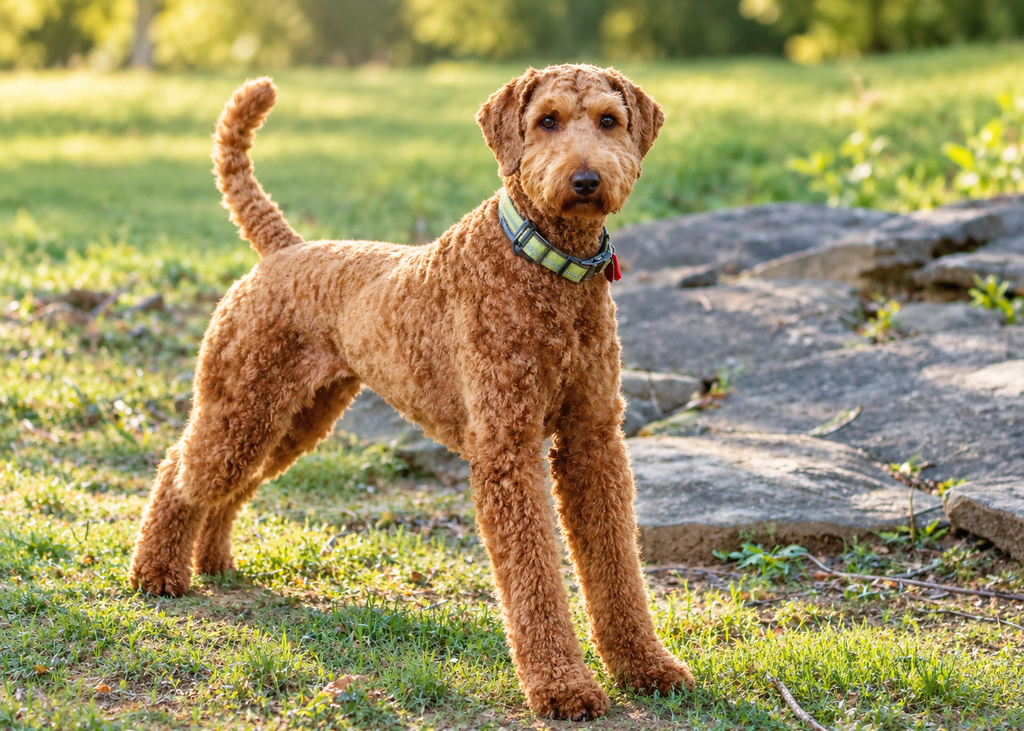
The independent thinker
Airedale Terrier
Known as the “King of Terriers,” the Airedale is a large, alert dog with a low-shedding wiry coat and a notable independent streak.
| Adult size | Typically 50–70 lb; tall and athletic. |
| Coat | Dense, harsh, wiry coat; comparatively low shedding. |
| Grooming | Comb weekly; clipping or hand-stripping several times each year. |
| Exercise | Moderate to high; needs daily walks, play, and jobs for its brain. |
| Temperament | Confident, playful, and affectionate with its people, but often more independent than a Poodle. |
| Typical lifespan | About 10–13 years. |
Main drawback: terrier instincts can mean chasing, digging, and selective listening. Early training, secure fencing, and realistic expectations are important—especially around smaller pets.
Before you adopt or buy
A better way to choose your low-shedding dog
- Meet adult dogs of the breed, not only puppies. Adult energy, barking, coat care, and strength are what you will live with.
- For allergy concerns, arrange more than one visit indoors if possible. An allergist can help you understand your triggers.
- Price the full grooming routine before committing: bathing, brushing tools, clipping, and coat-maintenance appointments.
- Ask about health testing, temperament history, and return policies. A responsible breeder or rescue should welcome practical questions.
How this guide was researched
Trusted next reads
Breed standards, health guidance, and allergy information should be checked with reputable organizations and your own veterinarian or allergy specialist.
Expert-reviewed pet guidance