
Little Days, Big Discoveries
SCREEN-FREE PLAY, MADE SIMPLE
Easy activities for curious 2-year-olds
A friendly collection of low-prep ideas for busy days at home, in care, or out in the fresh air. Pick one, play for a few minutes, and follow your child’s lead.
Small moments count.
At age two, a few engaged minutes can be a win. Repeating a favorite activity is learning—not a lack of imagination.
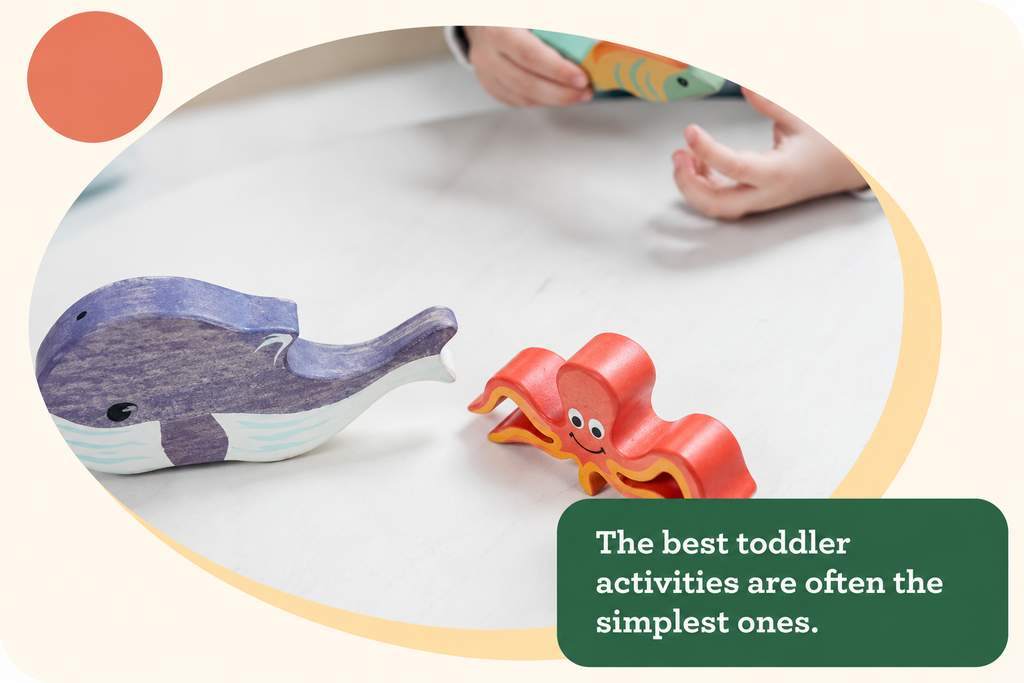
Safety first: Stay close for water play, art materials, food-based activities, climbing, and any item that could fit through a toilet-paper roll. Choose large, sturdy materials and follow your child’s cues.
PICK A PLAY PROMPT
Nine low-prep toddler activities
Sort the Laundry
Need: clean socks or washcloths and two baskets. Invite your child to match colors or put “soft things” in one basket. Supports: sorting, vocabulary, helping skills. Supervision: nearby adult.
Sticker Trail
Need: large stickers and paper. Draw a simple path, then let your child place stickers along it. Name colors and celebrate every peel. Supports: finger control and color words. Supervision: close—stickers are not for mouths.
Water Pour Station
Need: a shallow tray, cups, spoons, and a little water. Scoop, pour, and talk about full and empty. Supports: hand-eye coordination and early science language. Supervision: constant and within arm’s reach.
Taste-Safe Dough Press
Need: homemade taste-safe dough or toddler-safe dough, plus large tools. Squash, roll, and press. Supports: hand strength, imagination, and descriptive words. Supervision: close; dough is not a snack.
Cushion Path
Need: firm cushions or folded blankets on the floor. Make a short route to step over and around. Supports: balance, body awareness, and confidence. Supervision: constant; keep away from furniture edges.
Bubble Chase
Need: bubbles and an open space. Blow a few at a time and use action words: pop, reach, high, low, fast. Supports: running, reaching, listening, and shared joy. Supervision: close; avoid slippery surfaces.
Picture Book Hunt
Need: any sturdy picture book. Ask, “Can you find the dog?” Pause, point, and add one extra word: “big dog.” Supports: vocabulary, attention, and turn-taking. Supervision: relaxed shared reading.
Mystery Bag Words
Need: a fabric bag and 3–4 familiar, large objects. Let your child pull one out, name it, and say what it does. Supports: naming, memory, and pretend play. Supervision: close; use only safe, oversized objects.
Nature Treasure Basket
Need: a basket and a safe outdoor spot. Collect big leaves, smooth sticks, or flowers already on the ground. Supports: noticing, describing, and gentle care. Supervision: constant; avoid unknown plants and small items
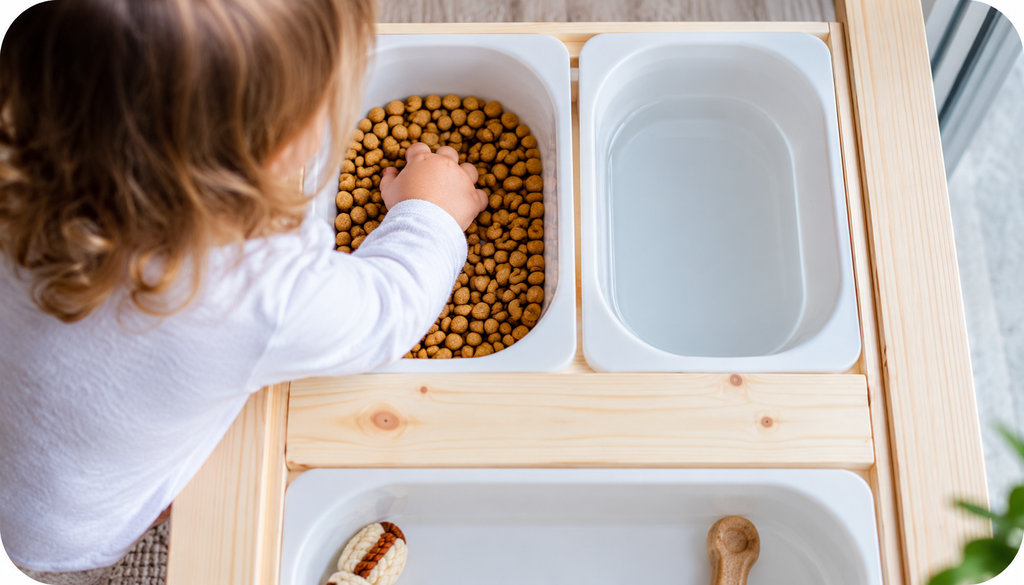
A gentle reminder about sensory play
Messy can be manageable
Use a tray, towel, or easy-clean floor space. Offer just one material at a time, keep sessions short, and let your child stop when they are finished. There is no need to turn every activity into a lesson
Outdoor ideas need very little gear
A change of scenery is an activity, too
Try a slow “look and point” walk, chase shadows, carry a small watering can, or watch a bird together. Toddlers learn through repetition, movement, and your simple language: “You found a tiny leaf!”

Built around real toddler life
Play is practice—not a performance.
These ideas are designed for typical 24–36 month development and support everyday opportunities for connection, communication, movement, and exploration. Every child develops at their own pace. If you have questions about your child’s development, speak with a qualified health or early-childhood professional.
Explore trusted early-childhood guidance: