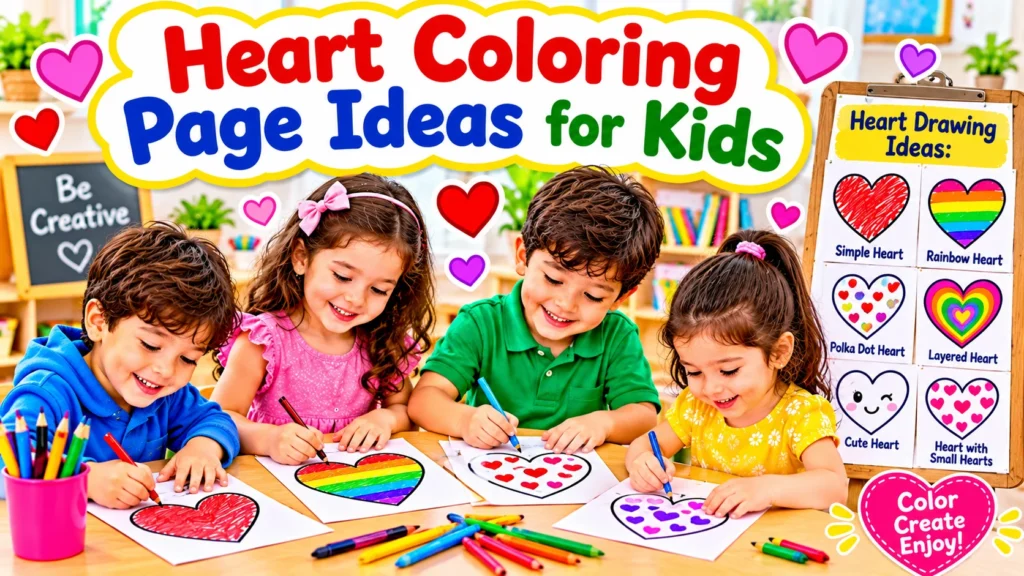
Hearts are one of the first shapes children learn to recognize, and they show up in every season, from Valentine’s Day cards to kindness projects in the classroom. A simple heart coloring page gives young children a friendly way to practice grip, color choice, and focus. This guide shows how to match a page to a child’s age, a short challenge you can run in any room, and ideas for turning one sheet into a full learning activity.
Quick answer: To use a well, pick a heart size that fits the child’s age, give them a small set of colors, and add one simple goal such as a pattern or a feelings word. Finish by displaying the work.
Why Hearts Work So Well for Young Colorers
A heart has smooth curves, a clear center, and a shape children already know. That makes it less intimidating than a detailed scene with many small parts. Children can color inside the lines on the first try, which builds confidence.
Hearts also invite creative choices. A child can fill one heart with a single color, split it into sections, or cover it with dots and stripes. There is no wrong answer, so even a hesitant child can join in.
Match the Heart to the Child
Not every child needs the same page. A heart that is too detailed frustrates beginners, and one that is too plain bores older children. Use this quick guide to choose.
| Age range | Best type of heart | What it builds |
| 2 to 3 | One large, bold heart with thick lines | Grip, scribbling control, color recognition |
| 4 to 5 | Medium heart with a simple border or inner shape | Staying inside lines, color choice |
| 6 to 7 | Heart split into sections or patterns | Planning, patterns, fine motor control |
| 8 and up | Heart with detailed designs to fill in | Patience, shading, creative design |
If a child struggles, move one step down. If they finish in two minutes, move one step up. The goal is a page that feels challenging but doable.
The 4-Step Heart Color Challenge
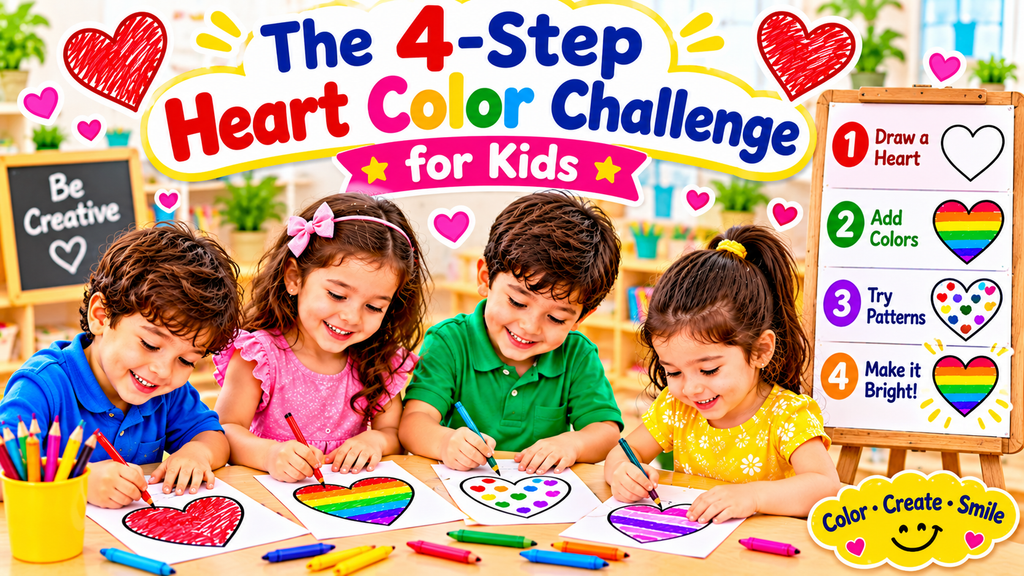
Free coloring is fun, but a small goal keeps attention longer. This quick framework takes about ten minutes and works for a group or a single child.
Step 1: Pick Three Colors
Limit the choices to three crayons or markers. Fewer options help children decide faster and often lead to more creative combinations.
Step 2: Choose a Pattern
Ask the child to pick one pattern for the heart, such as stripes, dots, zigzags, or checks. Younger children can simply color one half in one color and the other half in another.
Step 3: Add a Feeling Word
Have the child write or dictate a word for the center, such as kind, happy, brave, or calm. Teachers can post these words on a wall and discuss them.
Step 4: Share the Heart
Each child shows their heart to a partner and says one thing about their color choices. This turns a quiet activity into a speaking and listening exercise.
Learning Ideas Hidden Inside the Page
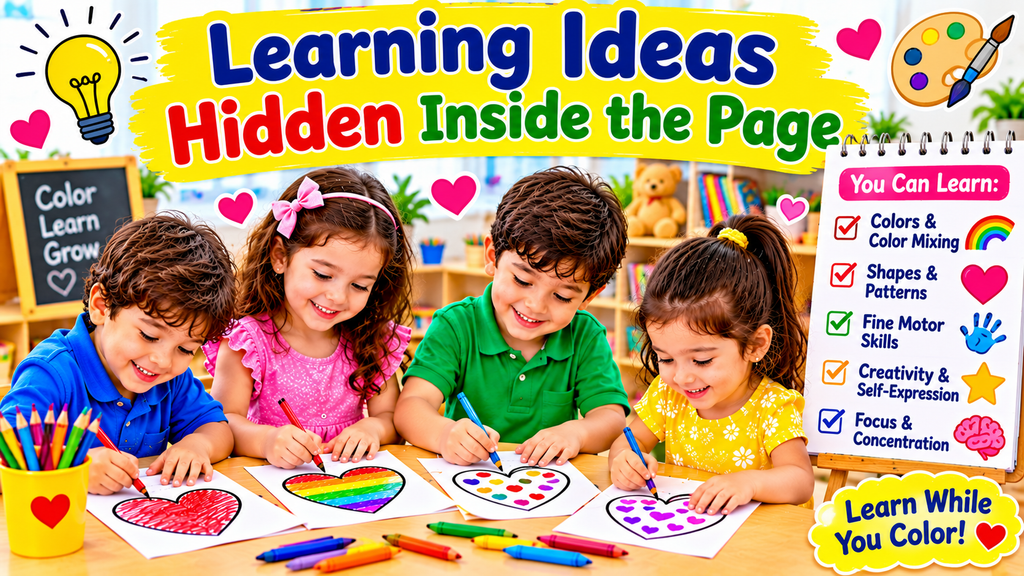
One sheet can support several skills without feeling like a worksheet.
Counting and Shapes
Ask children to draw a set number of small hearts inside the big one, such as seven dots or five tiny hearts. You can also combine this with other number games from our kindergarten math activities.
Letters and Names
Write the child’s first letter in the middle and have them decorate around it. This builds letter recognition while keeping the focus on color.
Talking About Feelings
Use the finished heart as a conversation starter. Ask, “What color feels happy to you?” or “Which color feels calm?” Young children often explain emotions more easily when they have a picture in front of them.
Story Connection
After reading a picture book about friendship or kindness, ask children to color a heart for a character and tell why. This pairs nicely with the ideas in how to teach story retelling.
Easy Ways to Make It Special
A few small changes can make the same page feel brand new.
- Mix the materials: Use crayons for the base, then add watercolor over the top for a soft background.
- Add texture: Glue on torn tissue paper, yarn, or small paper scraps for a collage heart.
- Try the resist method: Draw with a white crayon first, then paint over it so the pattern appears.
- Make cards: Fold a colored heart into a card for a friend, grandparent, or neighbor.
- Create a garland: Cut out finished hearts and string them across a window or bulletin board.
For seasonal inspiration, check our list of holiday activities and crafts for kindergarteners, which pairs well with heart projects in winter.
Quick Checklist Before You Print
Run through this list so the activity goes smoothly.
- The heart is large enough for the child’s age
- Crayons or markers are sorted and ready
- Each child has a clear workspace
- A short goal is explained, such as a pattern or a feeling word
- There is a place to display the finished pages
- Extra sheets are available for children who want to try again
Color On, Little Artists
Hearts are simple, but they offer plenty of room for creativity, conversation, and early learning. Choose the right level, keep the goal small, and let children make their own choices. A wobbly heart filled with bright stripes and one proud smile is a success.
This week, print a single heart coloring page, set out three colors, and watch what your young artists create.