Painting is one of the most rewarding art activities for young kids. It builds hand control, color knowledge, and confidence, and it needs only a few supplies. This guide covers painting for childrens by age, a simple three-step routine, and a comparison of paint types so you can choose the right one for your space.
Quick answer: For painting for childrens, start with washable tempera or finger paint, a small set of colors, and a large sheet of paper. Keep sessions short, cover the table, and focus on the process instead of the final picture.
Why Painting Matters in Early Learning
Painting gives children freedom that pencils and crayons often do not. Colors blend, brushes make bold marks, and mistakes turn into new shapes. That makes it easier for hesitant children to join in without fear of getting it wrong.
It also supports several skills at once. Holding a brush strengthens the small muscles of the hand. Mixing colors builds vocabulary and curiosity. Talking about a finished piece helps children describe ideas and feelings in their own words.
Match the Activity to the Age
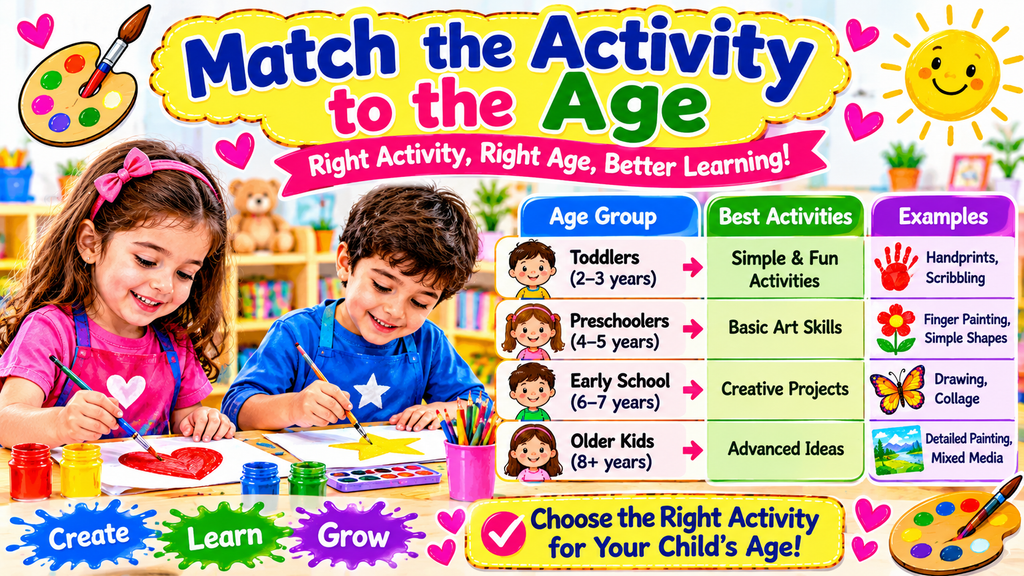
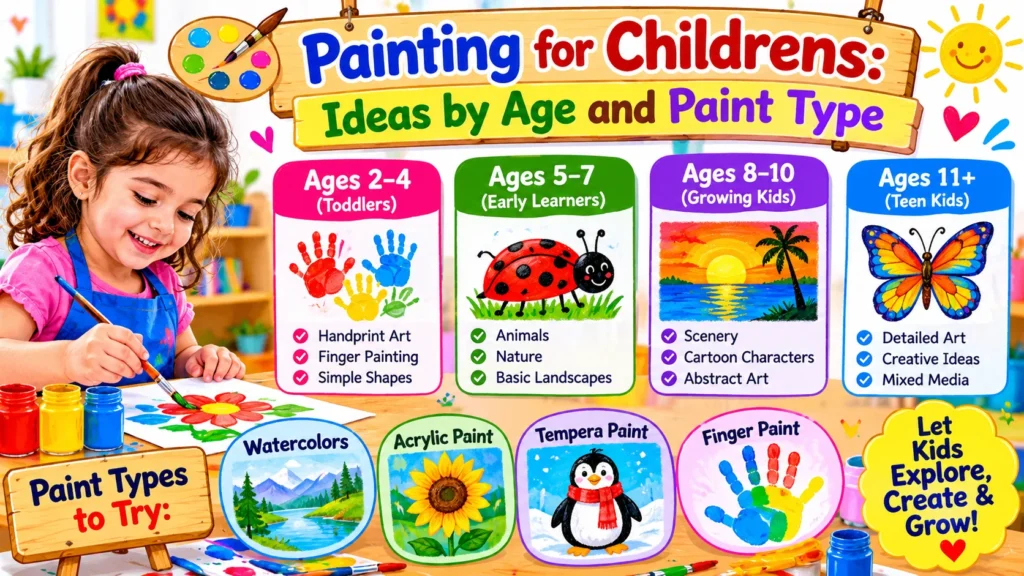
Children do not need the same tools at every stage. A brush that is too thin frustrates toddlers, and plain finger painting can bore older kids. Use this table as a guide.
| Age range | Best tools | Good starter idea |
| 1 to 2 | Finger paint, hands, sponges | Handprints on large paper |
| 3 to 4 | Chunky brushes, washable tempera | Painting with three colors |
| 5 to 6 | Medium brushes, watercolor sets | Simple scenes like a sky or garden |
| 7 and up | Fine brushes, acrylics with supervision | Layered landscapes and patterns |
If a child seems stuck, move one step down. If they finish in a minute, move one step up. The right level feels challenging but doable.
The Set, Splash, Share Routine
A tiny structure keeps a painting session calm and productive. This routine takes about twenty minutes and works at home or in a classroom.
Set
Cover the table, put on old shirts, and place a cup of water and a rag within reach. Offer only three or four colors. Fewer choices lead to faster decisions and often more creative results.
Splash
Let children paint without telling them what to make. Give one gentle prompt, such as “paint a feeling” or “paint what you saw today.” Avoid fixing their work, because even messy strokes build skill.
Share
When the paint is dry, ask the child to tell you about the piece. Simple questions like “What happened here?” or “Which color is your favorite?” encourage speaking and give you a window into their thinking.
Paint Types Compared by Mess and Difficulty
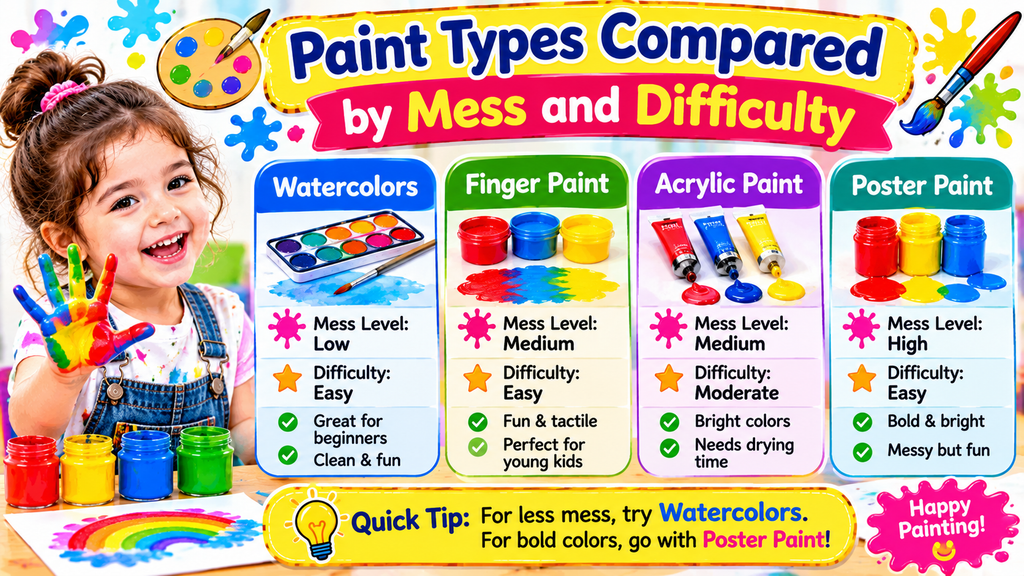
Choosing the right paint saves time and stress. Here is a quick comparison of the most common options.
| Paint type | Mess level | Best for | Cleanup |
| Finger paint | High | Toddlers and sensory play | Wash hands and wipe the table |
| Washable tempera | Medium | Preschool and kindergarten | Mild soap and water |
| Watercolor | Low | Ages 4 and up, travel kits | Rinse brushes, wipe palette |
| Acrylic | Medium to high | Older kids with supervision | Needs quick washing before it dries |
For most families, washable tempera is the easiest starting point. Watercolors are a great second choice when you want a cleaner activity.
Simple Painting Ideas That Work
You do not need elaborate plans. A few easy prompts keep children interested over many sessions:
- Sponge shapes: Cut sponges into circles and squares and stamp them onto paper.
- Salt painting: Sprinkle salt on wet watercolor to create soft, starry textures.
- Bubble painting: Blow through a straw into soapy paint, then press paper on top.
- Nature prints: Dip leaves or flowers into paint and press them on a page.
- Resist art: Draw with a white crayon, then paint over it so the picture appears.
Rotate ideas through the week so children can compare how each tool feels.
Skills Hidden Inside the Mess
What looks like play is full of learning. Here is what children practice during painting for childrens:
- Fine motor control: Brush grip and stroke direction prepare hands for writing.
- Color understanding: Mixing red and yellow teaches cause and effect.
- Patience: Waiting for paint to dry builds self-control.
- Self-expression: Choosing colors and shapes gives children a voice.
- Language: Describing a finished piece strengthens vocabulary.
Mess Control Checklist
A little prep keeps the activity enjoyable for adults too.
- Cover tables and floors with newspaper or a plastic sheet
- Dress children in old clothes or an apron
- Use paper that is thick enough to avoid tearing
- Keep wipes or a damp cloth within reach
- Set aside a drying spot, such as a shelf or clothesline
- Let children help with cleanup so it becomes part of the routine
Brushes Up, Mess Welcome
Painting for childrens does not have to be perfect to be valuable. A few colors, a big sheet of paper, and a relaxed attitude are enough for children to explore and grow. Celebrate effort, display their work, and let each new piece lead to the next question.
This week, set out three colors and try one simple idea. You may be surprised how much a short painting session can teach.