An organized classroom does more than look welcoming. It helps students find materials, follow routines, and move between activities without constantly asking for directions.
But planning a classroom setup can feel overwhelming, especially when you have limited space, a small budget, and dozens of supplies to organize.
The good news? You don’t need expensive furniture or elaborate decorations. Start with a layout that supports teaching, create easy-to-use storage, and establish simple classroom routines.
These practical ideas will help you prepare a functional, comfortable learning space before the first day of school.
How to Plan Your Classroom Setup
Before moving desks or decorating walls, think about how your classroom will work during a typical school day.
Students need space to enter, sit, collect supplies, participate in lessons, and move between activities. Your arrangement should make these everyday tasks straightforward.
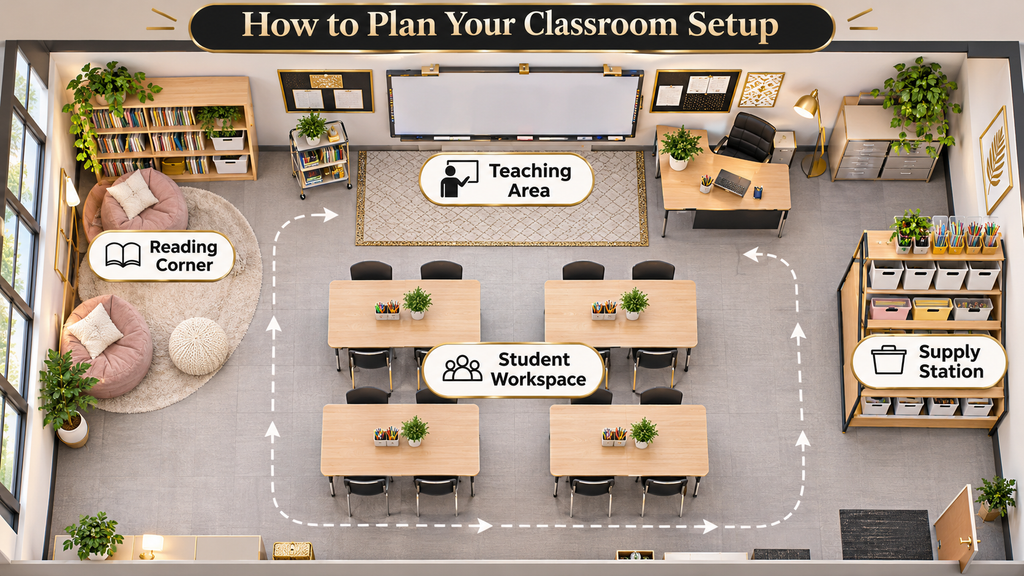
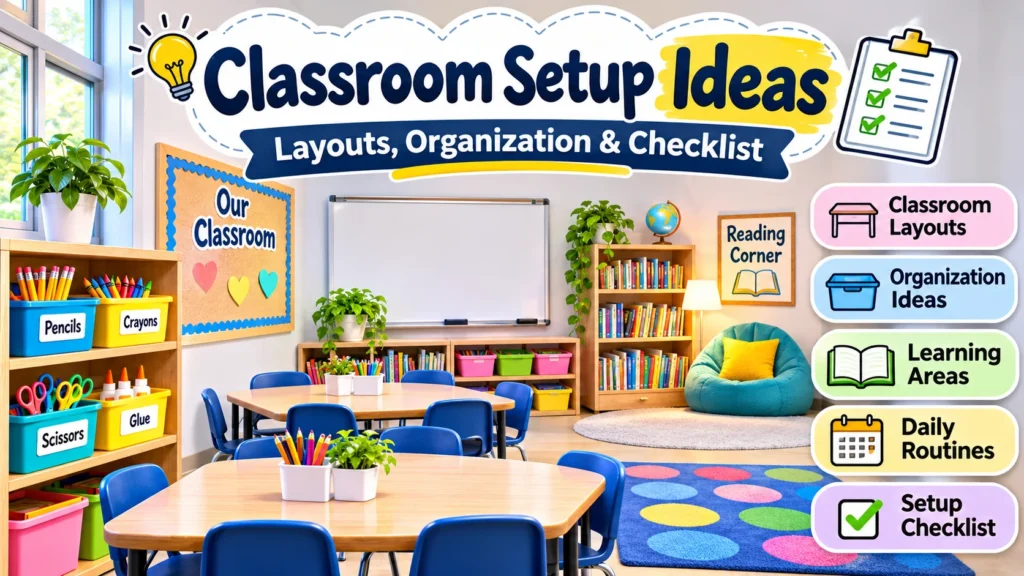
Start by identifying four essential areas:
- Teaching area: A whiteboard or display where students can see demonstrations and instructions.
- Student workspace: Desks or tables for individual and group activities.
- Learning area: A reading corner, classroom library, or small-group teaching space.
- Supply station: An accessible location for frequently used classroom materials.
You don’t need a separate area for every activity. In smaller classrooms, a table can serve several purposes throughout the day.
Try the Three-Walk Test
Before finalizing your arrangement, imagine moving through the classroom as a student.
First, walk from the entrance to a student desk. Next, move from the desk to the supply station. Finally, walk from the desk to the group learning area.
Pull chairs out as if students were seated. Check for crowded corners, blocked pathways, and places where children might bump into furniture.
Also sit at different student desks. Make sure the board is visible, materials are reachable, and the teacher can move around to assist students.
Consider students who use mobility aids or need additional space. Keep exits and required access routes clear, and follow your school’s safety and accessibility requirements.
Classroom Layout Ideas for Different Spaces
There isn’t one perfect classroom arrangement. The right layout depends on student age, available furniture, room size, and the activities you teach most often.
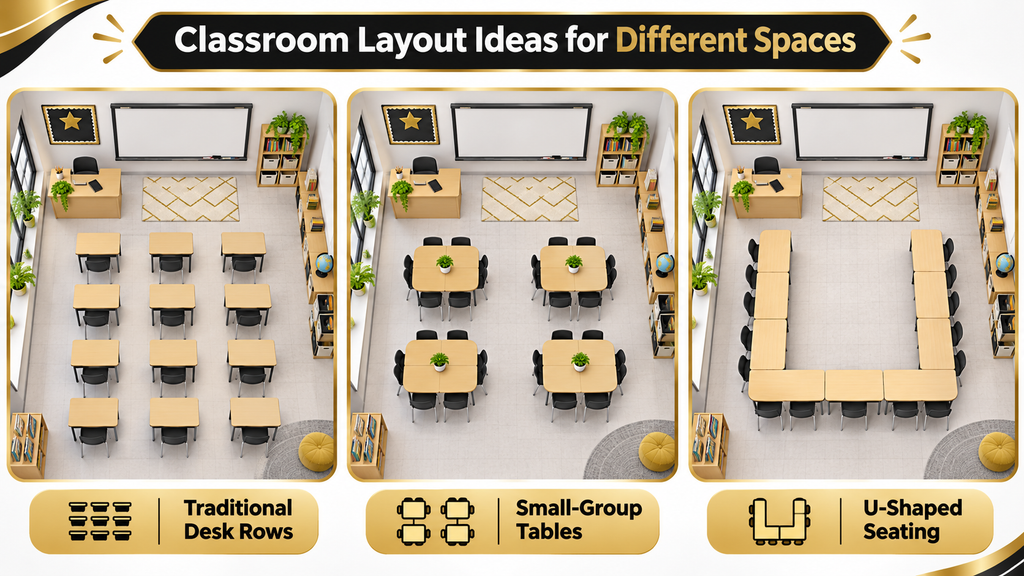
Here are three common options.
| Layout | Best for | What to consider |
|---|---|---|
| Desk rows | Independent work and direct instruction | Make interaction and teacher movement easy |
| Small groups | Collaboration and hands-on activities | Allow space between groups and manage distractions |
| U-shaped seating | Discussion and whole-class interaction | Requires enough space and may not suit every class size |
Desk Rows
Rows are a practical choice when students frequently work independently or need a clear view of the teaching area.
Keep sufficient walking space between desks so you can assist students without interrupting others.
Small-Group Tables
Groups of four or five students can work well for collaborative tasks, classroom projects, and shared materials.
Place commonly used supplies near the groups, and establish expectations for sharing and returning materials.
U-Shaped Arrangement
A U-shaped layout allows students to face the central teaching area while seeing classmates during discussions.
However, it may use considerable floor space, particularly in larger classes.
For smaller classrooms, choose essential furniture first. Remove unused items where school policies allow, and avoid filling every corner.
Practical tip: Test your arrangement during actual lessons. If students frequently crowd around one area or struggle to see the board, adjust the layout rather than keeping it unchanged all year.
How to Organize Classroom Supplies and Learning Areas
A beautiful classroom can become disorganized quickly when students don’t know where materials belong.
The simplest classroom organization system gives frequently used items a clear home.
Create Labeled Supply Stations
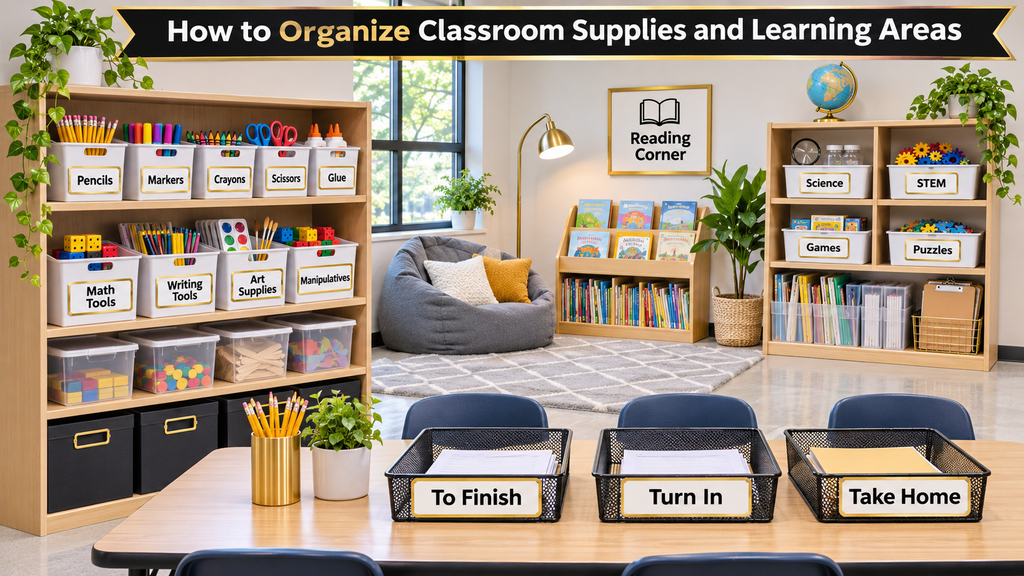
Use baskets, folders, or reusable containers for pencils, crayons, scissors, glue, and other classroom essentials.
Choose short labels supported by pictures for younger students. This helps children recognize storage locations before they can read every word.
Place everyday supplies where students can reach them safely. Keep teacher-only materials, confidential records, and potentially hazardous supplies in appropriate secure storage.
Organize Student Work
Create separate locations for unfinished assignments, completed work, and papers being sent home.
For example, you might use three clearly labeled trays:
- To Finish
- Turn In
- Take Home
Students should understand exactly when and how to use each tray.
Set Up a Reading Corner
A classroom library doesn’t need expensive shelves or elaborate decorations.
A small bookshelf, organized book baskets, and a comfortable space can create a welcoming reading area.
Arrange books by simple categories or reading interests. Keep the collection manageable and rotate books when appropriate.
Make Materials Easy to Find
Store supplies close to where students use them. For example, keep math manipulatives near a small-group table and independent reading books near the reading area.
This reduces unnecessary movement and makes classroom cleanup more manageable.
Bulletin Boards, Morning Work, and Classroom Routines
A classroom should feel inviting, but decorations should also have a purpose.
Instead of covering every wall with posters, choose displays that support student learning.
Use Bulletin Boards as Learning Tools
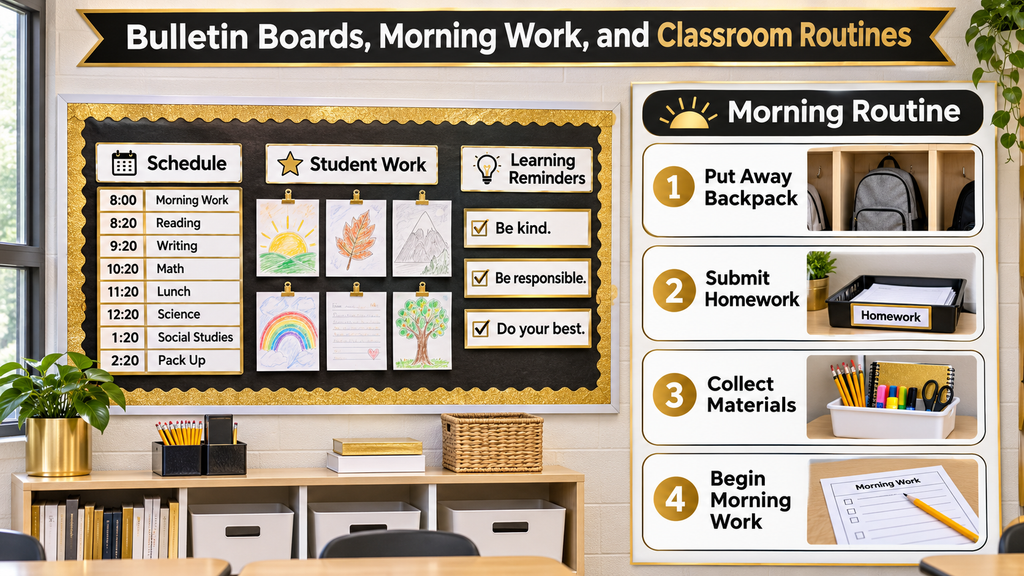
Useful displays might include a visual daily schedule, student work, classroom expectations, a vocabulary wall, or a rotating topic board.
For example, a reading bulletin board could show the books students are exploring, while a math display might include number strategies or examples of current lessons.
Keep important information at a height students can see and avoid overcrowding the display with unrelated decorations.
Create a Simple Morning Routine
A predictable morning routine helps students understand what to do after arriving.
A simple sequence might be:
- Put away your backpack.
- Place homework in the designated tray.
- Collect any needed materials.
- Begin the posted morning activity.
Morning work can involve independent reading, a short review exercise, journaling, or another familiar task appropriate for the class.
For younger students, use small pictures alongside written instructions.
Teach the Routine, Don’t Just Display It
During the first days of school, demonstrate each procedure and let students practice it.
Show them how to collect supplies, submit work, transition between areas, and clean up.
Routines become easier to follow when students know what each step looks like in practice.
Classroom Setup Checklist Before the First Day
Once you’ve arranged your classroom, use this checklist to catch anything you might have missed.
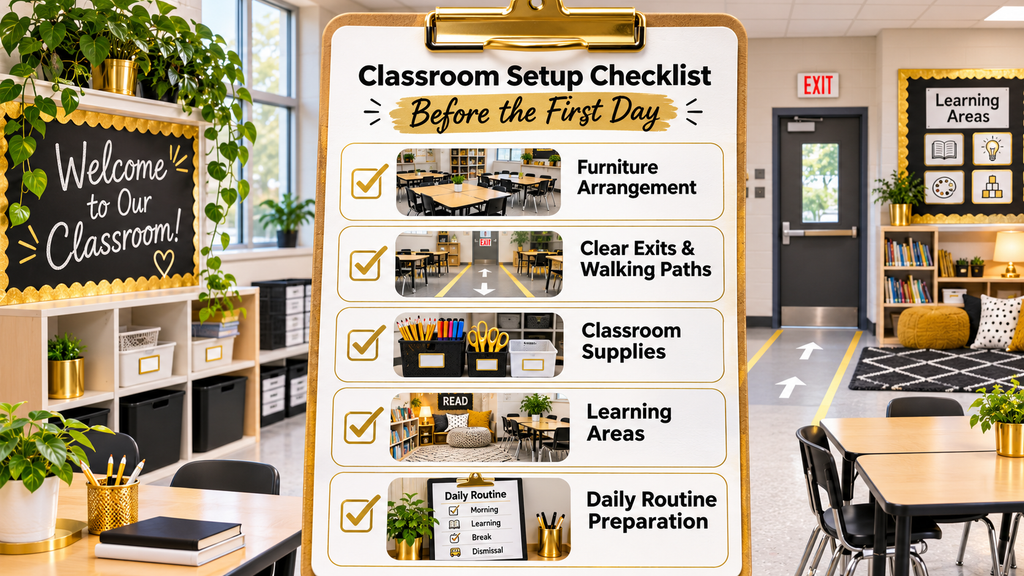
Furniture and Safety
- Desks and chairs are arranged for everyday lessons.
- Walking paths and exits are clear.
- Students can see the teaching area.
- Classroom spaces accommodate students’ access needs.
Supplies and Learning Areas
- Frequently used supplies have labeled storage.
- Student work trays are ready.
- Books and learning materials are organized.
- Teacher-only materials are stored appropriately.
Displays and Routines
- The daily schedule is easy to find.
- Bulletin boards contain useful learning information.
- Morning arrival instructions are prepared.
- Students have clear procedures for accessing supplies.
Try a Practice School Day
Before students arrive, walk through a typical day in your classroom.
Imagine everyone entering at once, collecting materials, joining a group lesson, and cleaning up.
Notice where movement might become difficult or where instructions could be unclear. Make small changes before those problems become daily frustrations.
An effective classroom doesn’t have to be picture-perfect. It needs to work for the students and teacher who use it.
Start with a practical layout, organize essential materials, and teach simple routines. You can always improve the arrangement as you learn what your students need.