Writing about your own life might sound easy until you sit down with a blank page. Where should you begin? Which memories are worth sharing? And how can you turn everyday experiences into an interesting story?
If you’re wondering how to write an autobiography for a school assignment, you don’t need an extraordinary life. You need a clear structure, a few meaningful memories, and your own voice.
This guide explains the writing process step by step, with introduction ideas, a simple outline, and a complete example to help you get started.
What Is an Autobiography?
An autobiography is a true story about someone’s life, written by that same person. It describes personal experiences, important events, challenges, achievements, and lessons learned.
Unlike a biography, which someone else writes about a person’s life, an autobiography uses the first-person point of view, including words such as “I,” “me,” and “my.”
For example:
“When I was ten, my family moved to a new city. I was nervous about leaving my friends, but the experience helped me become more confident.”
An autobiography can cover different stages of your life, from childhood to the present. A memoir is different because it usually focuses more closely on a particular experience, time, or theme.
For a school assignment, you don’t have to describe every birthday or school year. Choose moments that explain who you are and how you’ve grown.
How to Write an Autobiography Step by Step
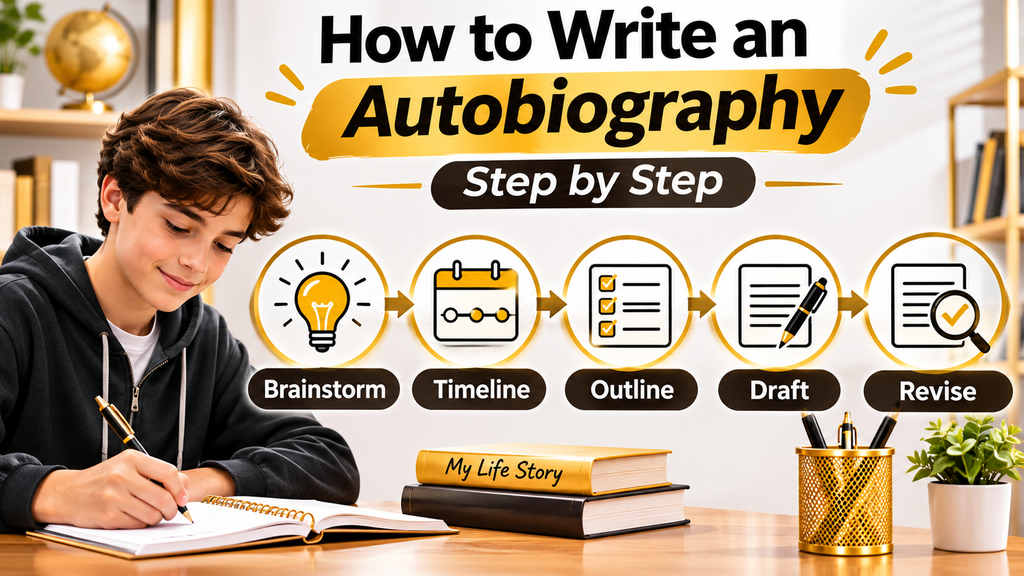
The best place to start is with your memories, not a perfect introduction. Follow these six steps to organize your ideas and develop your story.
Step 1: Understand the Assignment
Read your teacher’s instructions carefully. Check the required length, deadline, and any specific topics you must cover.
Some assignments ask for your entire life story, while others focus on a particular stage or experience.
Step 2: Brainstorm Important Life Events
Think about your childhood, family, school years, friendships, interests, and personal achievements.
Ask yourself:
- What is one of my earliest memories?
- Which experiences made me happy or proud?
- What challenges have I overcome?
- Who or what has influenced me?
- What have I learned about myself?
Write down your ideas without worrying about their order. You can decide which memories to include later.
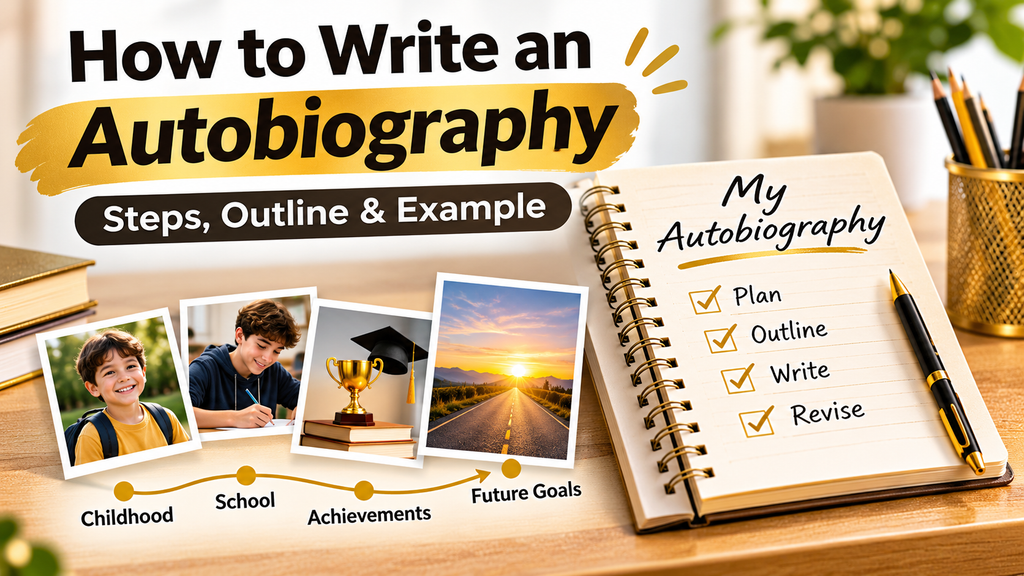
Step 3: Create a Life Timeline
Arrange your chosen memories from earliest to most recent.
For example, your timeline might begin with childhood, move into your first years at school, describe an important challenge, and end with your current interests and future goals.
A timeline helps readers follow your experiences without getting confused.
Step 4: Make an Outline
Divide your story into an introduction, middle paragraphs, and conclusion.
Your introduction should introduce you and the main idea of your story. The middle should describe important experiences, while the conclusion should reflect on what you’ve learned.
You can follow this simple autobiography format:
| Section | What to Write |
|---|---|
| Introduction | Introduce yourself and your story |
| Early life | Childhood memories and background |
| Important events | School, interests, achievements, or challenges |
| Personal growth | What your experiences taught you |
| Conclusion | Your present life and future goals |
Step 5: Write Your First Draft
Use “I” and write as naturally as possible. Describe what happened, how you felt, and why the experience mattered.
Instead of writing, “My first day at school was scary,” try:
“I stood outside my new classroom, holding my backpack tightly and wondering whether I would make any friends.”
Small details help readers imagine the experience.
Step 6: Revise and Proofread
After finishing your draft, read it aloud. Check the order of events, remove unnecessary repetition, and correct grammar and spelling mistakes.
Make sure each important event contributes something meaningful to your story.
How to Start an Autobiography
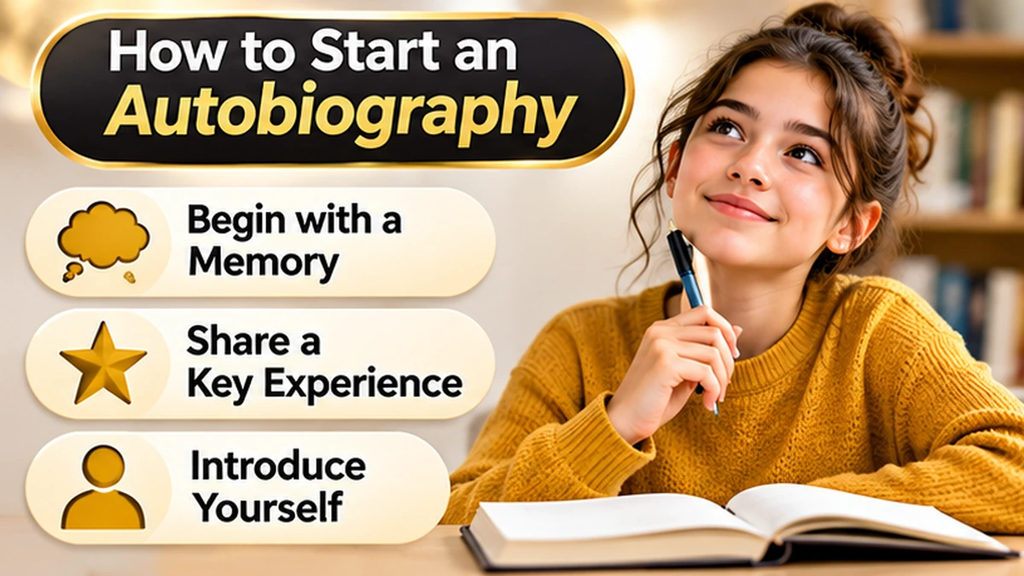
Your opening paragraph should introduce your life story while encouraging readers to continue.
You can begin in several ways.
Start with a childhood memory:
“One of my earliest memories is helping my grandmother plant flowers in her garden. Those afternoons taught me patience and gave me a love of nature.”
Start with an important experience:
“I never imagined that joining a school competition would change how I saw myself.”
Start with a personal introduction:
“My name is Daniel, and growing up in a small town has shaped the way I think about family, friendship, and community.”
Choose an opening that reflects your real experiences. You can mention your name, background, or interests, but avoid listing too many personal facts at once.
The best introduction gives readers a sense of who you are and what your story will explore.
Autobiography Example for Students
Here is an original, fictional student autobiography. Notice how it moves from early life to school experiences, a meaningful challenge, personal growth, and future goals.
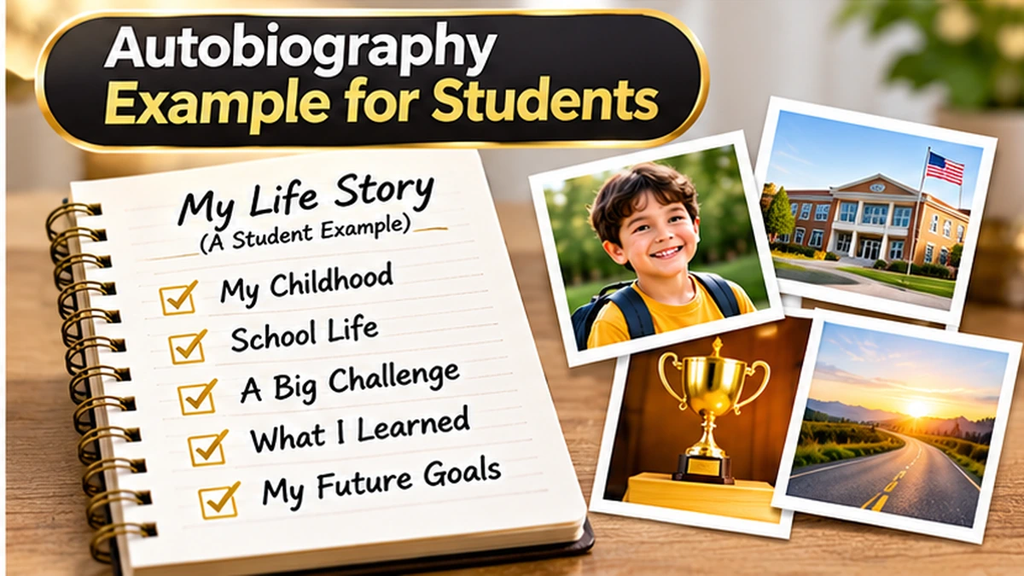
My Life Story: Learning to Believe in Myself
My name is Maya, and I grew up in a small town where most people knew one another. As a child, I loved drawing, reading adventure stories, and spending afternoons playing outside with my younger brother.
One of my favorite childhood memories is visiting the local library with my mother every Saturday. I enjoyed choosing new books and imagining the places and people described in their pages.
When I started elementary school, I was shy and rarely volunteered to answer questions. I enjoyed learning, especially reading and art, but speaking in front of other students made me nervous.
Everything became more challenging when my family moved to another town during middle school. I had to leave familiar places and make new friends. For several weeks, I felt like everyone belonged except me.
One day, my English teacher encouraged me to participate in a storytelling competition. At first, I refused. Eventually, I decided to try because I wanted to become more confident.
I spent several evenings practicing my story. Although I didn’t win the competition, I completed my presentation without giving up. For the first time, I realized that being brave doesn’t mean never feeling afraid.
That experience encouraged me to join the school reading club. I made new friends, discovered more books, and became comfortable sharing my ideas.
Today, I enjoy writing short stories and helping my classmates with reading assignments. In the future, I hope to become a teacher or writer.
Looking back, I understand that moving to a new school helped me grow. My experiences have taught me that confidence develops when we keep trying, even when something feels difficult.
Why this example works: It includes personal background, childhood memories, school experiences, a challenge, and reflection. The ending also connects past experiences with future goals.
Your autobiography should follow a similar structure while using your own true experiences.
Autobiography Outline, Template, and Final Checklist
You can begin your autobiography by completing this simple template with information from your own life.
Introduction
My name is ______. I grew up in ______, and one important thing about me is ______.
Early Life
When I was younger, I enjoyed ______. One childhood memory I still remember is ______.
Important Experience
An important event in my life was ______. It happened when ______, and I felt ______.
What I Learned
This experience taught me ______. Since then, I have ______.
Conclusion
Today, I enjoy ______. In the future, I hope to ______ because ______.
Use these sentences as starting points, then expand them with specific details. You don’t need to keep the exact wording.
Before submitting your autobiography, check that:
- You wrote in the first person.
- Your introduction clearly begins your story.
- The events follow an understandable order.
- You explained why important experiences mattered.
- Your spelling, grammar, and punctuation are correct.
Remember that you can choose which personal details to share. You don’t need to disclose private or uncomfortable experiences to write a meaningful assignment.
Learning how to write an autobiography is about more than remembering events. It’s about understanding how your experiences helped shape the person you are today.
Start with a few important memories, organize them carefully, and tell your story in your own words.