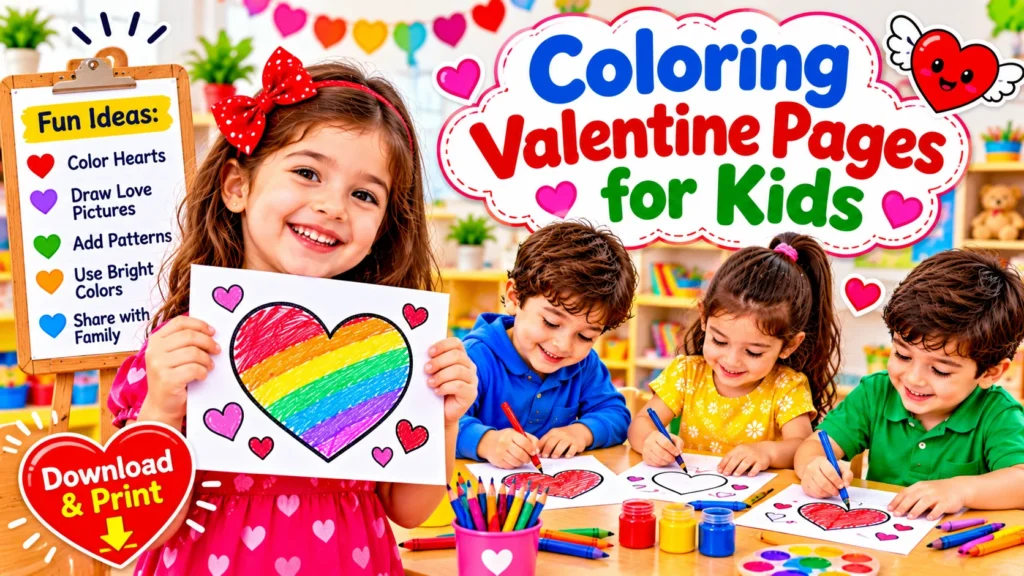
Valentine’s Day is one of the easiest holidays to bring into a classroom or living room, and coloring is the simplest way to start. Coloring valentine pages gives young children a calm, creative activity that builds hand strength, color choice, and kindness at the same time. This guide shows how to choose the right page for each age, a three-part routine that turns coloring into a lesson, and easy ways to use the finished pages.
Short version: To use coloring valentine pages well, pick pages that match the child’s age, offer a small set of colors, and add one tiny goal, such as making a card for someone they care about. Display or give away the finished work.
Why Valentine Coloring Works in Early Learning
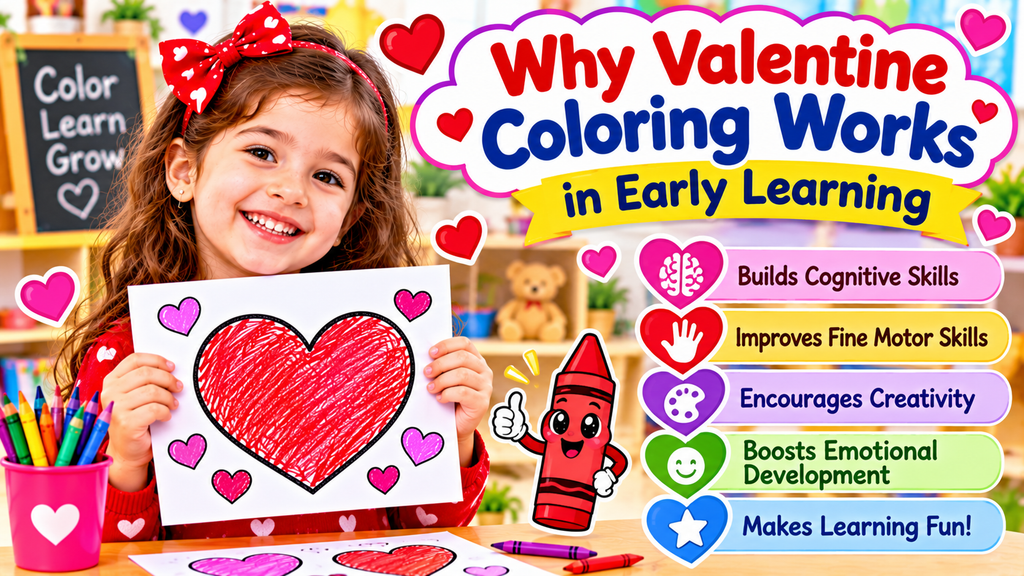
Valentine pages use shapes children already know: hearts, envelopes, flowers, and cute animals. Familiar shapes lower the pressure, so even hesitant children are willing to start.
The theme also opens the door to talking about feelings. Words like kind, thankful, and friendly come up naturally, which makes this holiday a gentle way to practice social-emotional skills without a formal lesson.
Pick the Right Page for Each Age
A page that is too detailed frustrates beginners, and one that is too simple bores older children. Use this table as a starting point.
| Age range | Best page style | What it builds |
| 2 to 3 | One big heart, thick outlines | Grip, scribbling, color names |
| 4 to 5 | Simple scenes like a mailbox or teddy bear | Staying inside lines, color choice |
| 6 to 7 | Patterned hearts and cards with short words | Planning, patterns, early writing |
| 8 and up | Detailed designs with small sections | Patience, shading, creativity |
If a page feels too hard, move one level down. If a child finishes in two minutes, move one level up.
The Color, Chat, Give Method
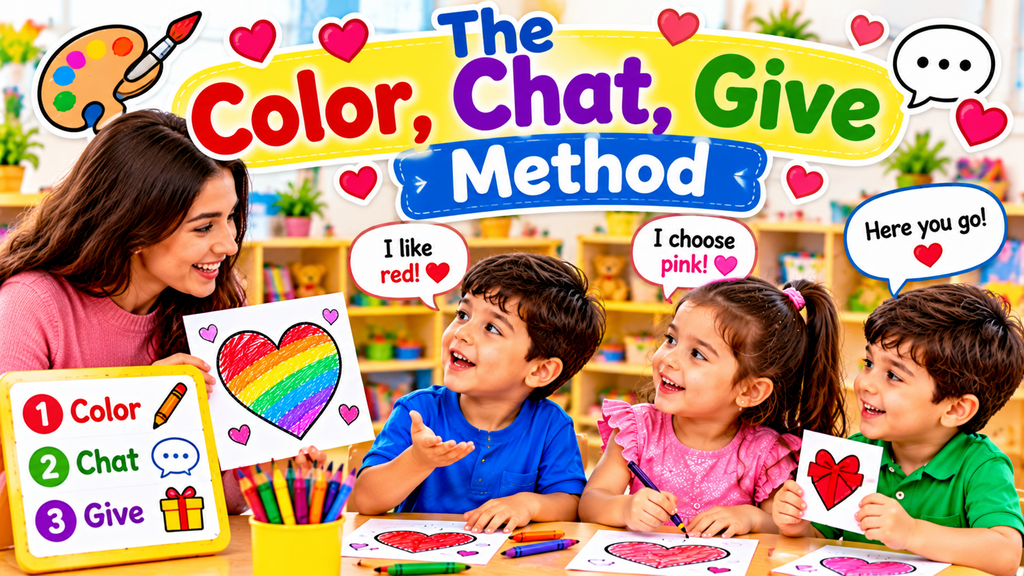
Free coloring is fun, but a small structure keeps attention longer. This routine takes about fifteen minutes and works for one child or a whole group.
Color
Offer only three or four crayons or markers. Fewer choices help children decide quickly and often lead to bolder combinations.
Chat
While children color, ask simple questions: “Who is this page for?” or “Which color feels happy to you?” Short conversations build vocabulary and help children explain how they feel.
Give
When the page is finished, ask the child to give it to someone, such as a friend, a grandparent, a neighbor, or a teacher. The giving step turns a quiet activity into a lesson in kindness.
Valentine Page Themes Kids Love
Variety keeps the activity fresh across several days. Here are themes that work well for different interests.
- Classic hearts: Plain, patterned, or split into sections for color blocking.
- Love bugs and animals: Bears, bunnies, owls, and puppies holding hearts.
- Mailboxes and envelopes: Great for practicing names and writing short notes.
- Flowers and bouquets: Good for older children who enjoy detail.
- Card fronts: Pages with space for a message inside, ready to fold.
- Word pages: Short phrases like “Be kind” or “Thank you” in bubble letters.
Rotating themes also helps if you plan a full week of Valentine activities.
Skills Hidden Inside the Fun
Coloring looks simple, but it supports several early skills at once:
- Fine motor control: Holding a crayon and staying inside lines strengthens the small muscles in the hand.
- Color recognition: Naming colors and mixing them builds vocabulary.
- Focus: Finishing a page teaches children to stay with a task.
- Emotional language: Talking about who the page is for helps children name feelings.
- Early writing: Adding a name or short message gives meaningful writing practice.
Because the goal feels like play, children rarely notice they are practicing.
Easy Ways to Use Finished Pages
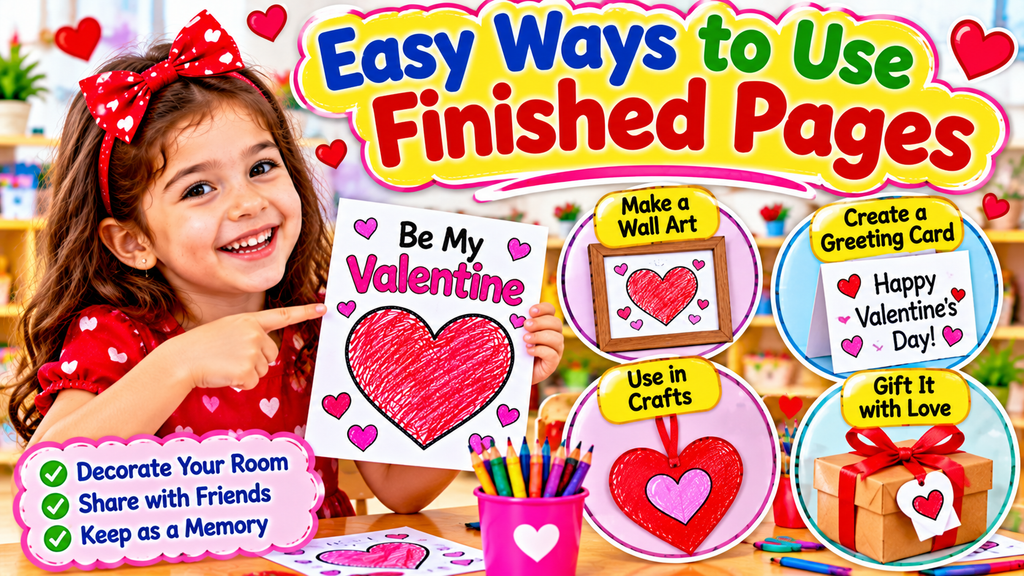
A colored page does not have to end up in a folder. Try one of these:
- Fold it into a card. Glue a finished page onto colored paper and write a message inside.
- Make a classroom mailbox. Children drop their pages into a decorated box and deliver them on Valentine’s Day.
- Build a garland. Cut out hearts and string them across a window or bulletin board.
- Create a gallery wall. Hang every page, with a name and a color-choice note beside it.
- Send one home. A colored page in a backpack gives parents something to talk about.
Setup Checklist Before You Print
Run through this list so the activity goes smoothly.
- Pages match the age level of your group
- Crayons or markers are sorted and ready
- Each child has a clear workspace
- Extra sheets are available for children who want to try again
- A goal is explained in one sentence
- There is a place to display or deliver the finished pages
Crayons Ready, Hearts Open
Valentine’s Day does not need expensive supplies or complicated plans. A few well-chosen pages, a handful of colors, and a small purpose are enough to turn a quiet afternoon into something meaningful. Let children make their own choices, and celebrate effort over neatness. A wobbly heart colored with love is a great piece of art.
This week, print a few coloring valentine pages, set out three colors, and let your young artists make something to give away.