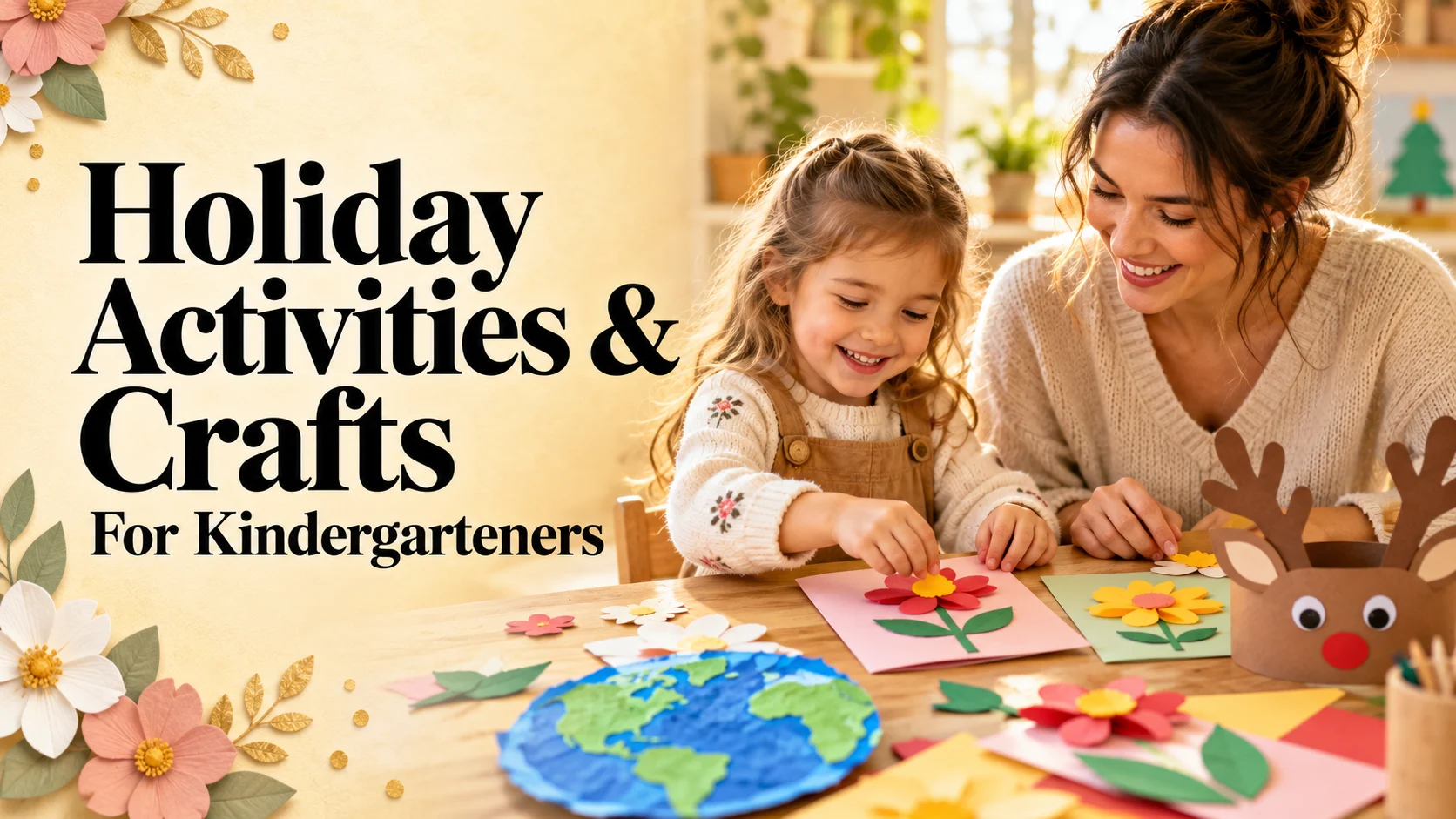

Holiday activities and crafts for kindergarteners give children a chance to make something personal while practicing drawing, counting, speaking, and working together. The best projects use familiar materials, have a few clear steps, and leave room for children’s own ideas.
Below are 11 simple activities for Mother’s Day, Earth Day, Thanksgiving, and Christmas. Use them in a classroom, adapt them for a small group, or try one at home.
Choose an Activity That Fits Your Day
Start with the time and supplies you have. These estimates cover the activity itself; preparation, drying, and cleanup may take longer.
| Activity | Main materials | Estimated time |
|---|---|---|
| Handprint flower card | Paper, crayons, glue | 15–20 minutes |
| Paper bouquet | Colored paper, glue | 20–25 minutes |
| Appreciation booklet | Folded paper, crayons | 15–25 minutes |
| Recycling sort | Clean packaging, containers | 15–20 minutes |
| Scrap-paper Earth | Cardboard, paper scraps, glue | 20–25 minutes |
| Nature observation walk | Paper, crayons | 15–25 minutes |
| Gratitude tree | Paper leaves, crayons | 20–25 minutes |
| Thank-you cards | Paper, drawing supplies | 15–20 minutes |
| Reindeer headband | Brown paper, tape, crayons | 20–25 minutes |
| Torn-paper tree | Paper scraps, glue | 15–20 minutes |
| Paper keepsake ornament | Thick paper, crayons | 15–20 minutes |
Before starting, make one example so you can spot difficult steps. Show children how the materials work, then welcome different results. Use child-safe scissors and washable supplies. Adults should handle stapling, hole punching, and difficult fastening.
Mother’s Day Crafts for Kindergarteners
A meaningful gift does not need expensive materials. A child’s drawing or dictated sentence often makes a simple paper project feel special.
Let children choose whom their gift is for. Offer “someone who cares for me” as an alternative to a Mother’s Day message.
1. Handprint Flower Card
Materials: Thick paper for the card, colored paper, crayons, scissors, and glue.
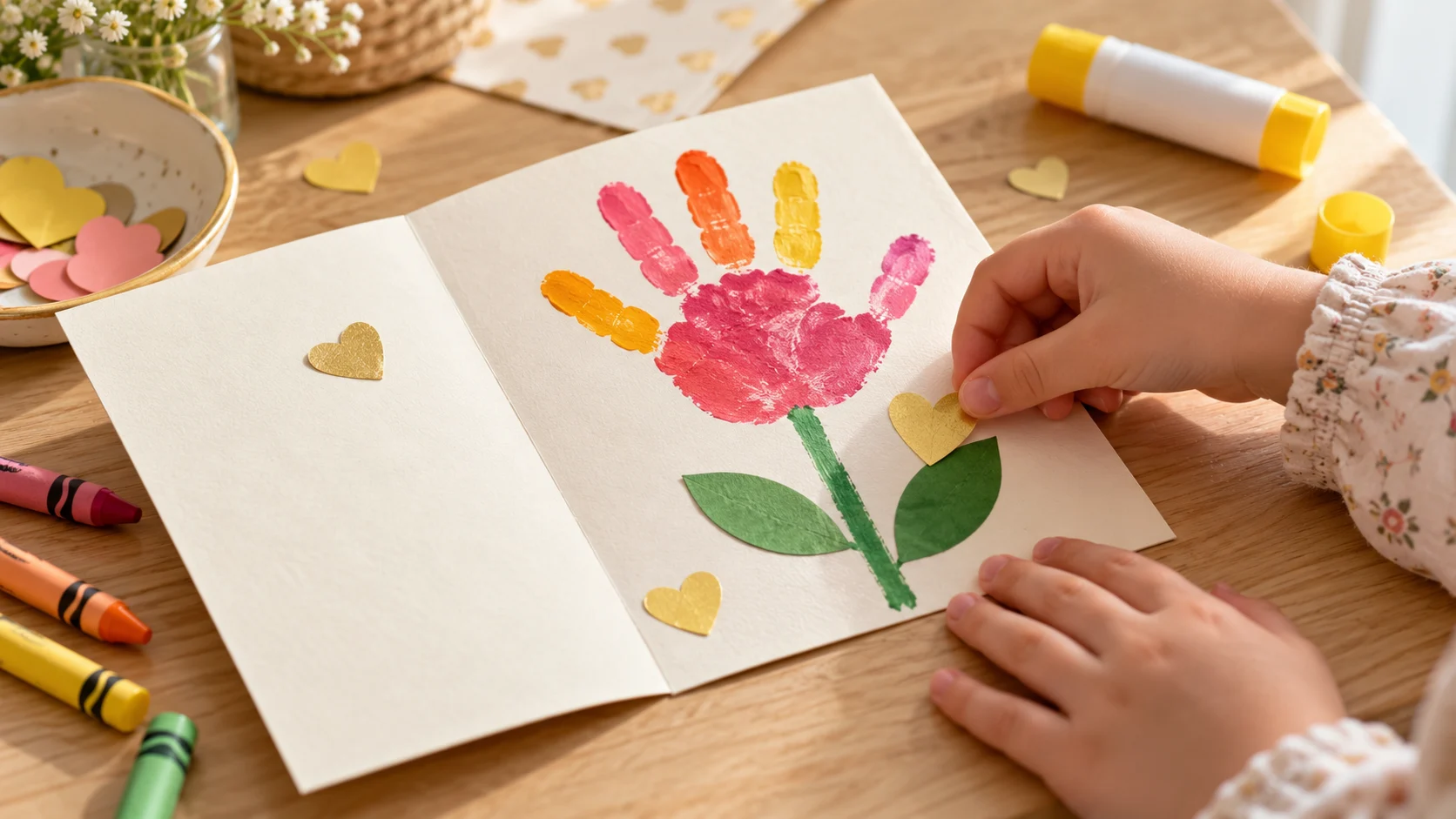
- Fold the thick paper in half.
- Trace the child’s hand onto colored paper.
- Help cut out the shape if needed.
- Glue the handprint onto the card with the fingers pointing upward.
- Draw a stem and leaves underneath.
- Add a message inside.
Try this prompt: “My favorite thing we do together is…”
Children can write a few words or tell an adult what to record. Read their sentence back so they can check that it says what they mean.
2. Paper Flower Bouquet
Materials: Colored paper, green paper strips, glue, and a large sheet of paper.
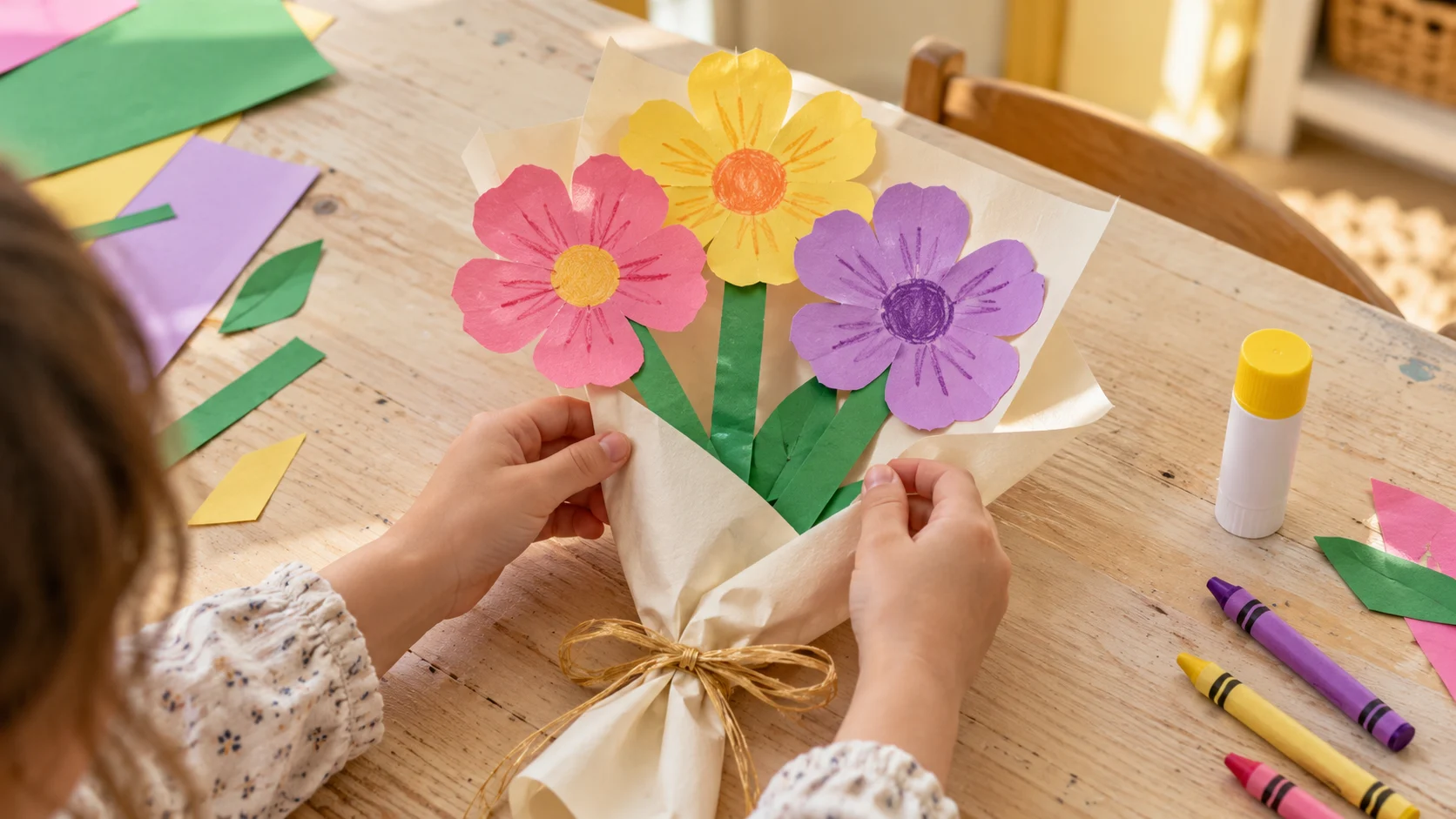
- Draw and cut out three large flowers.
- Decorate the centers with patterns or drawings.
- Glue a paper stem behind each flower.
- Arrange the flowers on the large sheet.
- Fold the lower edges around the stems to make a paper wrapper.
- Add a label for the recipient.
Bring in a little counting: “You have two flowers. How many more do you need to make three?”
3. “Things I Love About You” Booklet
Materials: Two sheets of paper, crayons, and a pencil.
Fold the sheets into a small book. An adult can secure the pages if needed.
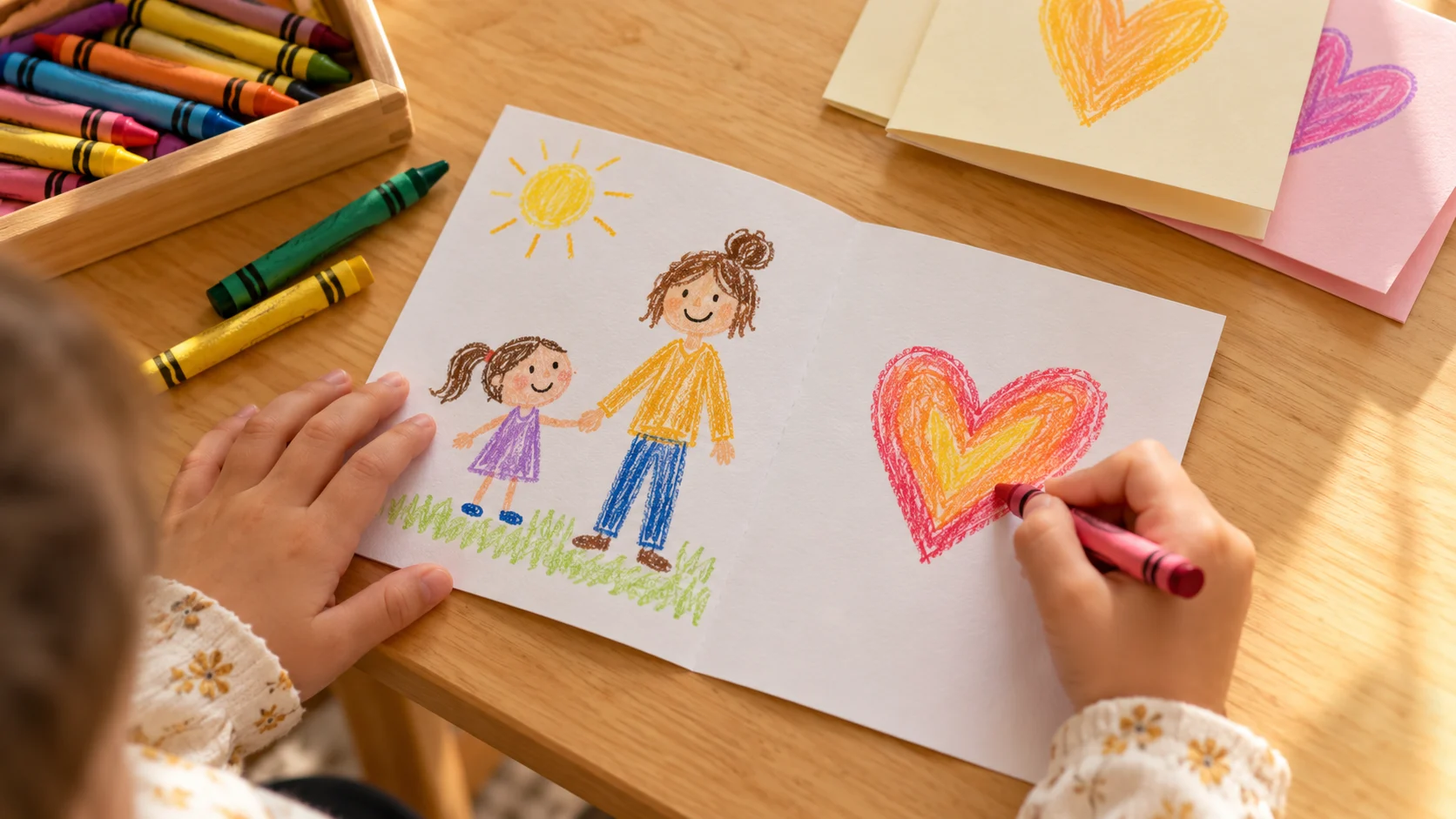
Give each page a simple prompt:
- You help me…
- We laugh when…
- I like going to…
- Here is a picture of us.
Let children draw before asking them to write or dictate. Their pictures may help them decide what they want to say.
Earth Day Activities for Kindergarteners
Young children can explore caring for the environment through familiar actions: reusing paper, looking after plants, and putting waste in the correct place.
4. Sort, Reuse, or Recycle
Materials: Clean, dry packaging and a few containers.
Use safe items such as cardboard tubes, paper, boxes, and suitable plastic containers. Leave out glass, sharp edges, and packaging that held hazardous substances.
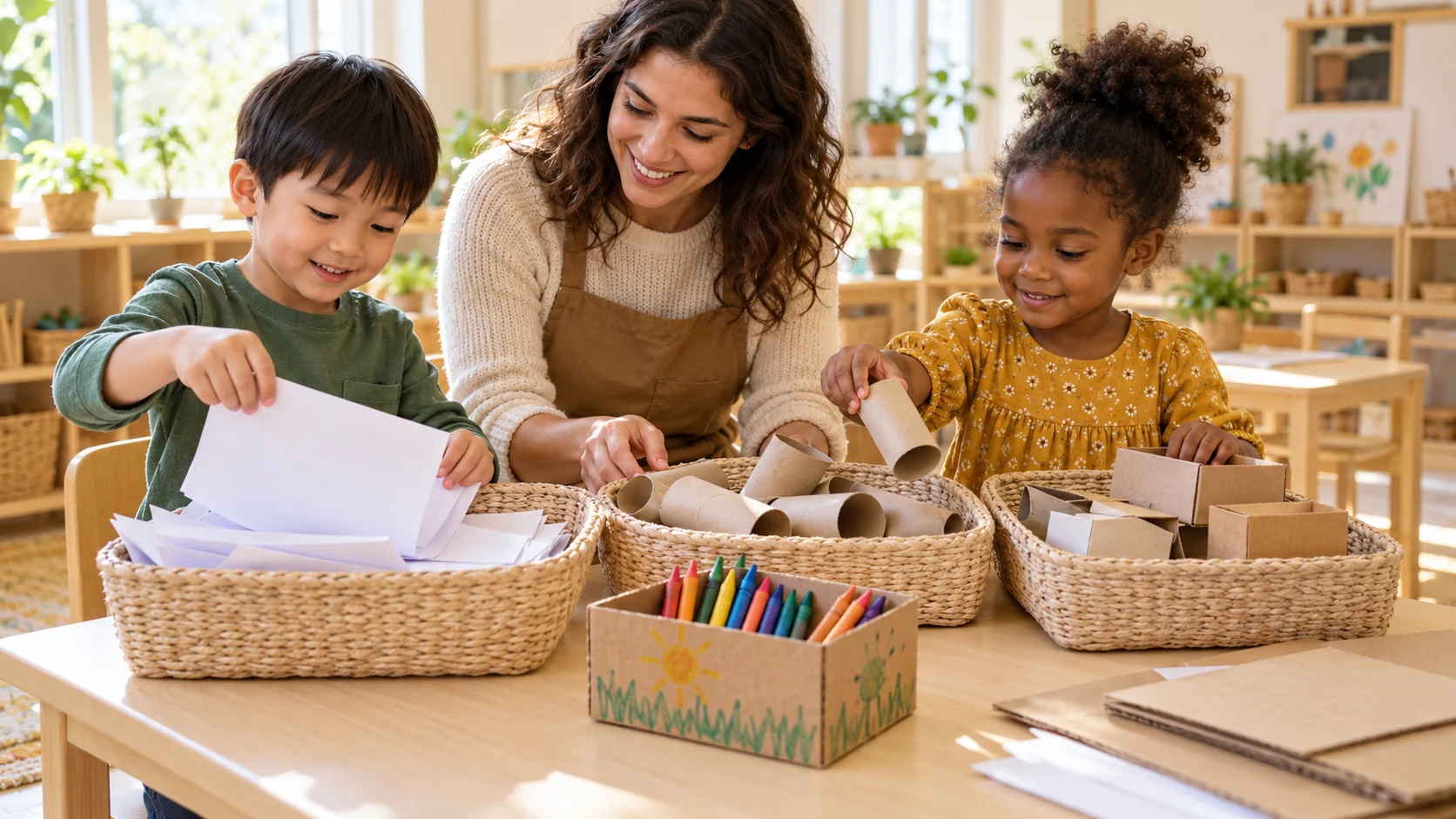
- Put a small collection of materials on a table.
- Invite children to describe what each item is made from.
- Sort the items into paper, cardboard, and plastic groups.
- Choose something that could be used again.
- Discuss its possible new purpose.
A cardboard tube might become a craft tool; a small box could store crayons.
Ask: “What could we do with this before we throw it away?”
5. Make an Earth Picture from Paper Scraps
Materials: A cardboard circle, leftover blue and green paper, and glue.
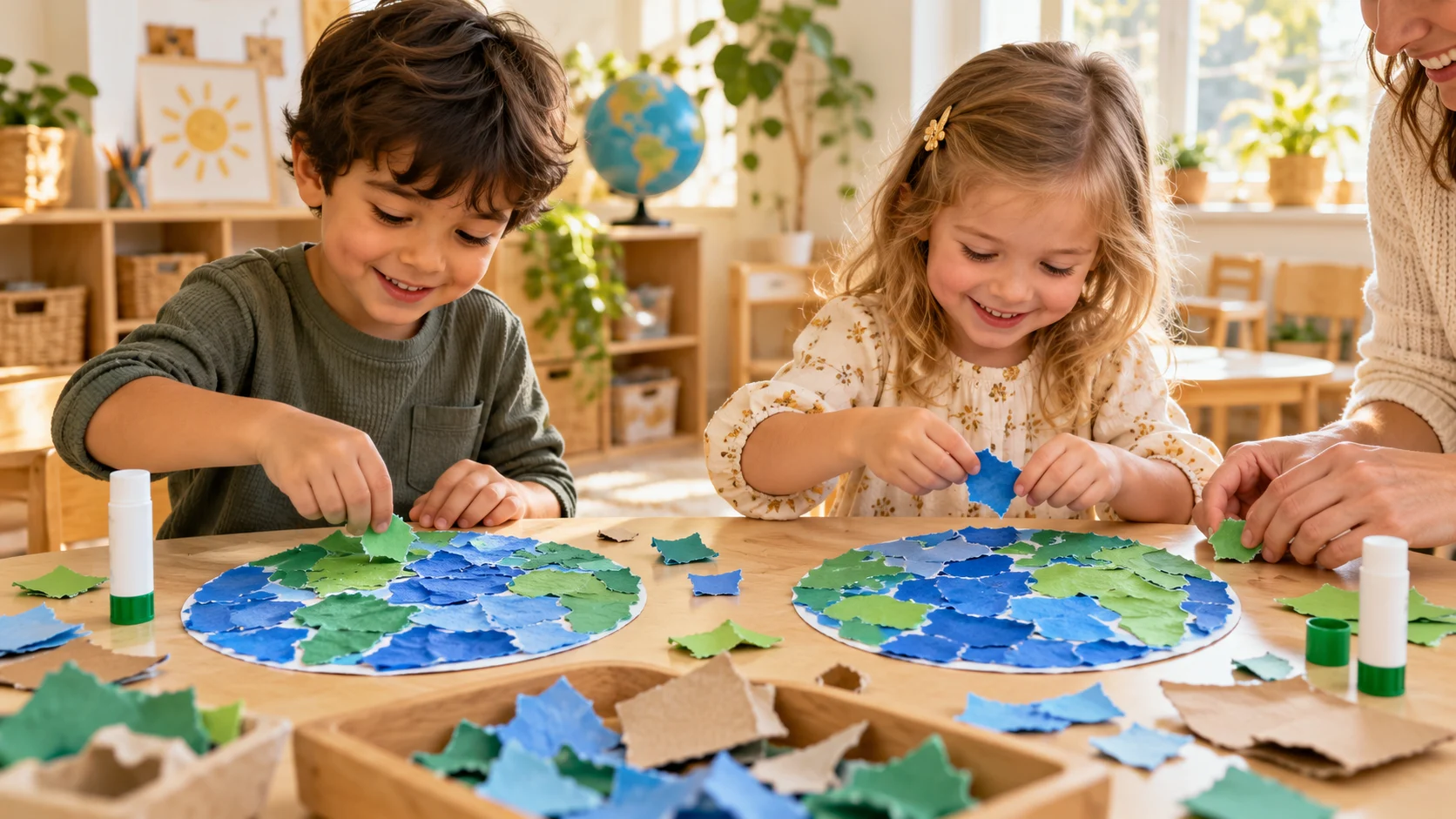
- Tear the paper into small pieces.
- Add blue pieces to represent water.
- Add green pieces to represent land.
- Leave the picture flat to dry.
- Write one child-chosen action beneath it.
Examples include “I can use both sides of paper” or “I can help care for our plants.” Explain that this is an Earth-inspired picture rather than an accurate map.
6. Take a Nature Noticing Walk
Materials: Paper, crayons, and something firm to draw on.
Invite children to look closely at the plants, shapes, and patterns around them. Encourage observation without picking leaves or disturbing wildlife.
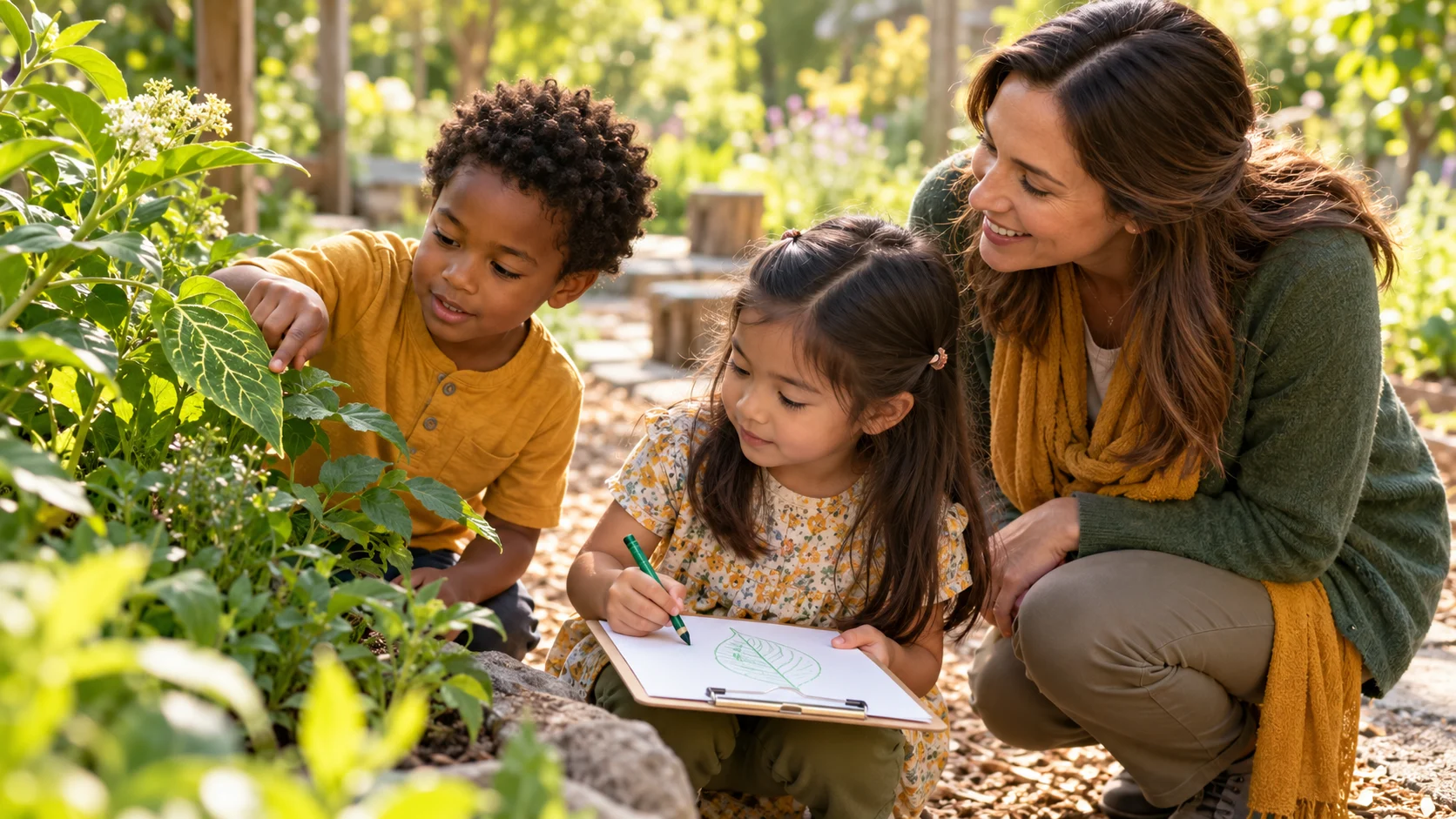
Instead of asking children to collect objects, invite them to notice:
- Something growing
- A sound they can hear
- A pattern or shape
- Something people could help care for
Pause so children can draw one observation. Back indoors, let them compare what they noticed.
Ask: “Did everyone see the same things?”
Thanksgiving Activities That Focus on Gratitude
For kindergarten children, appreciation becomes clearer through specific examples: someone finding a lost coat, sharing supplies, or helping with a difficult task.
Children should be free to participate without discussing private family experiences.
7. Build a Gratitude Tree
Materials: A large paper trunk, paper leaves, crayons, and tape or glue.
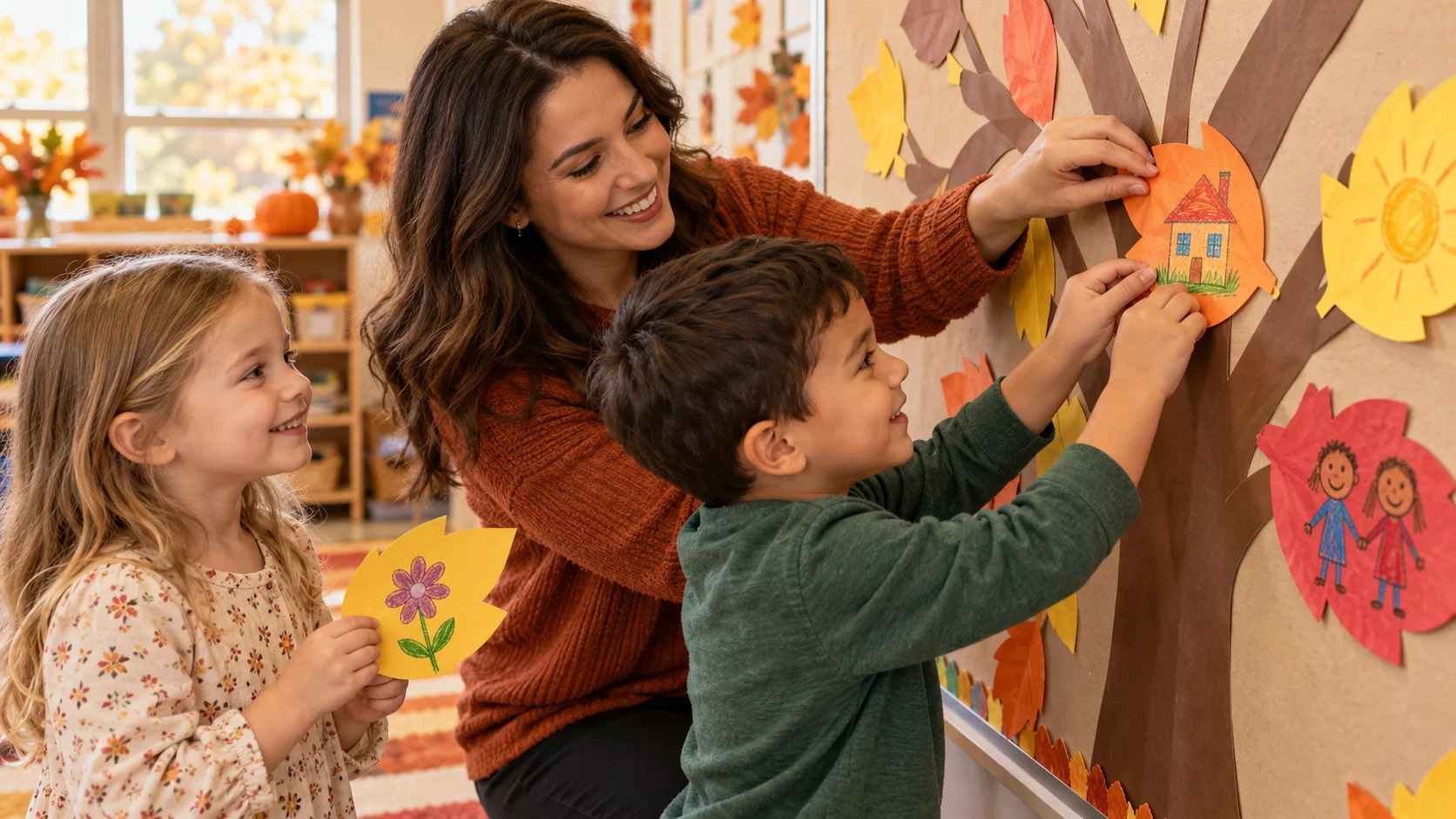
- Display the trunk at a height children can reach.
- Give each child a leaf.
- Ask them to draw someone or something they appreciate.
- Add their explanation in their own words.
- Attach the leaves to the branches.
Use concrete prompts:
- Who helped you this week?
- What is something you enjoy doing?
- What makes our classroom welcoming?
Sharing aloud can be optional. Children may prefer to show their drawing or have an adult read their words.
8. Create a Thank-You Card Station
Materials: Folded paper, crayons, and pencils.
Invite children to choose someone they would like to thank. This could be a friend, relative, librarian, school cleaner, or another person who helps them.
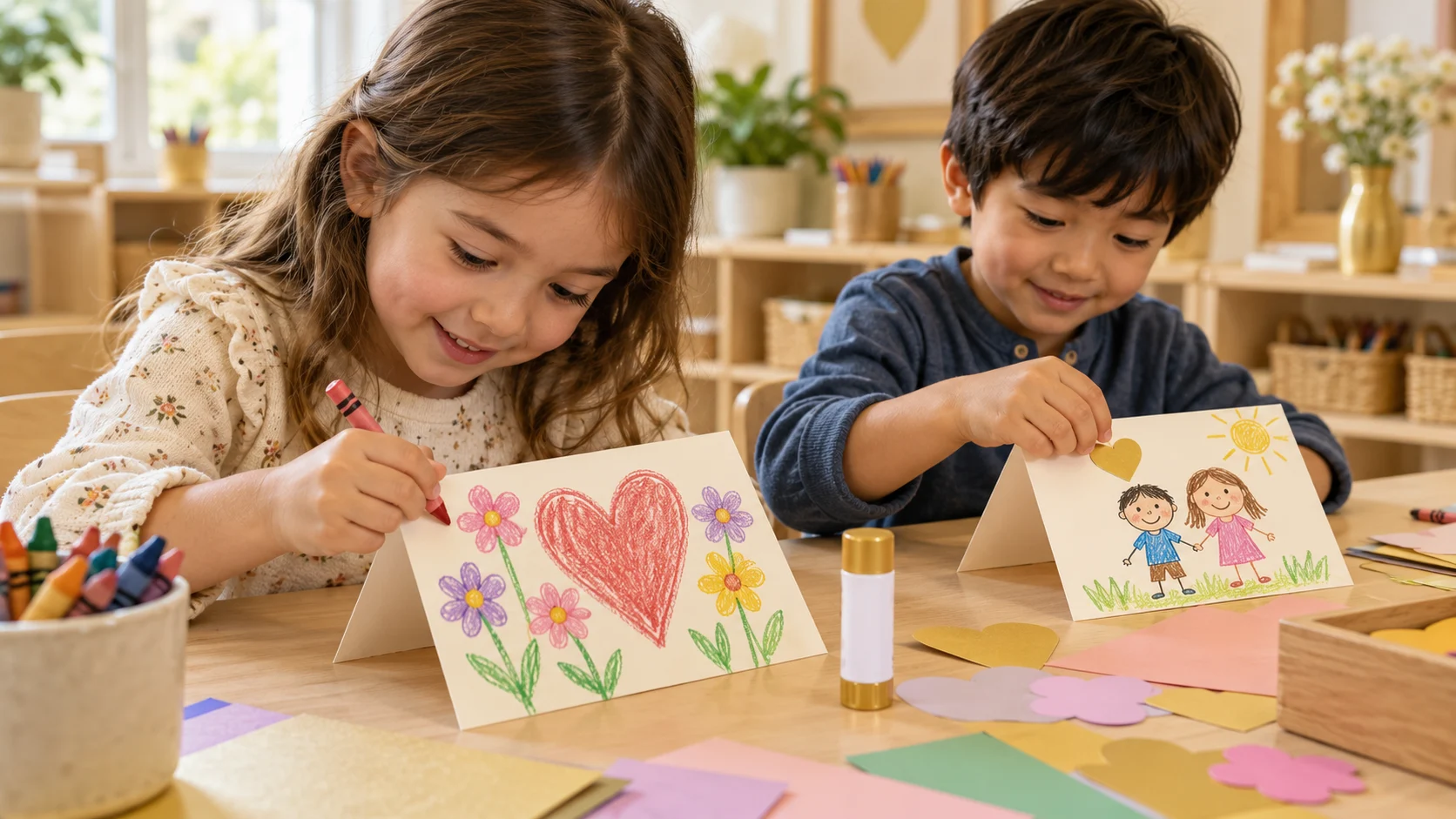
Offer a sentence starter: “Thank you for…”
Encourage a specific action: “Thank you for showing me where the books go.” Children can deliver the cards with adult support or keep them to share later.
Add a Thanksgiving Read-Aloud Response
If you are using a Pete the Cat Thanksgiving book, follow the reading with an original activity rather than a copied illustration.
Give children plain paper and ask them to draw something they appreciate. Then help them complete:
“I appreciate ______ because ______.”
Connect discussion questions to what actually happens in your chosen book. Preview the text first and use a legally obtained copy.
If your lesson includes Thanksgiving history, choose accurate, age-appropriate resources. Avoid stereotyped costumes and recognize Native peoples as diverse communities living today.
How to Make a Reindeer Headband
This paper craft lets children choose their own antler shapes and facial expressions. Prepare the band beforehand if your group needs more time for decorating.
9. Paper Reindeer Headband
Materials: Brown paper, extra paper for antlers, crayons, glue, scissors, and tape.
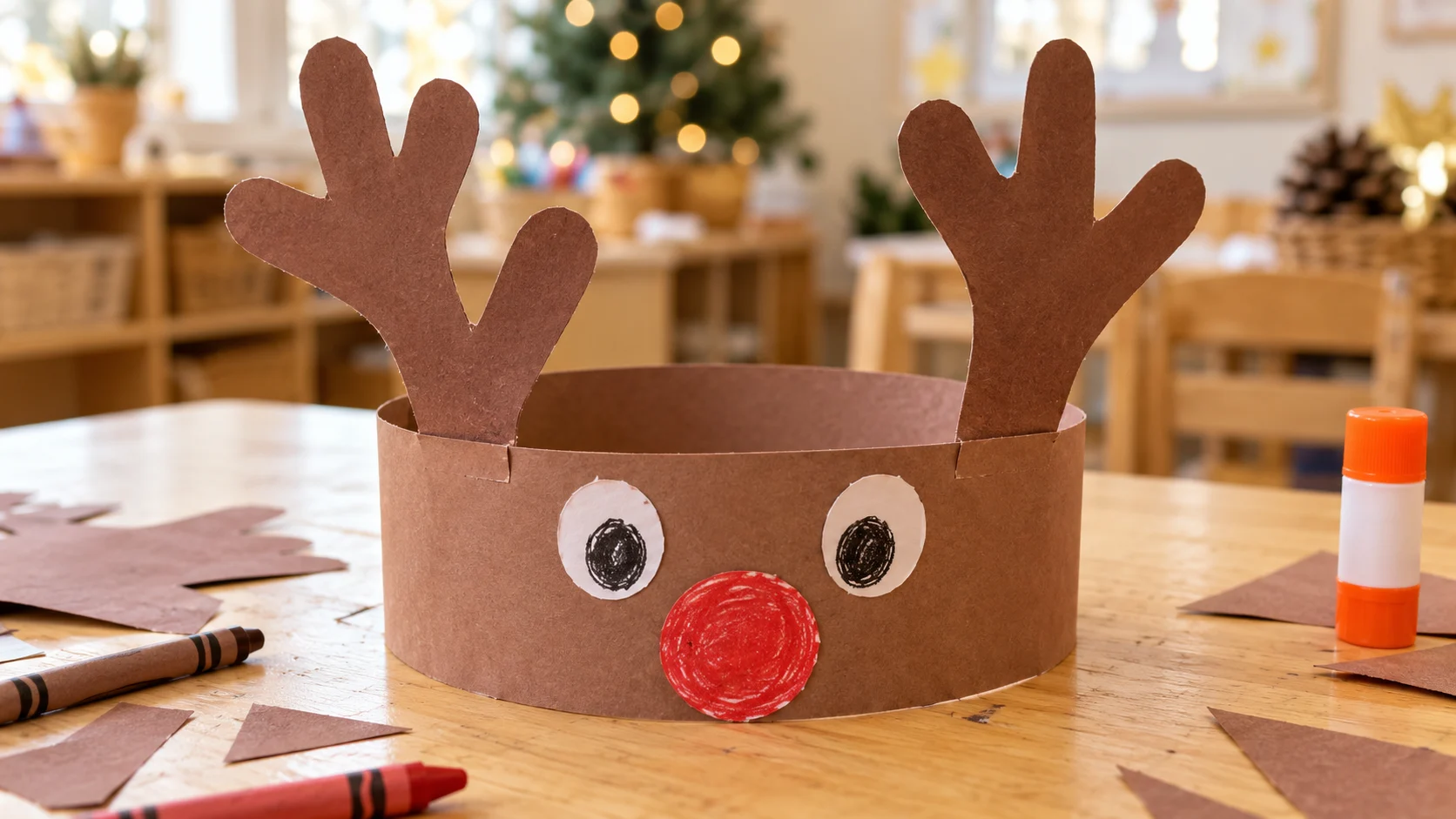
- Cut a wide strip of brown paper. Join two strips if needed.
- Have an adult measure it comfortably around the child’s head.
- Draw and cut out two paper antlers.
- Glue the antlers to the band.
- Draw eyes and a nose.
- Have an adult tape the band closed.
Keep the band above the eyes and check that it feels comfortable. Let the child remove it whenever they want.
Make it easier: Prepare the bands and antlers in advance, leaving decorating and arranging to the children.
Two More Simple Christmas Crafts
10. Torn-Paper Tree
Materials: Green paper scraps, a background sheet, glue, and crayons.
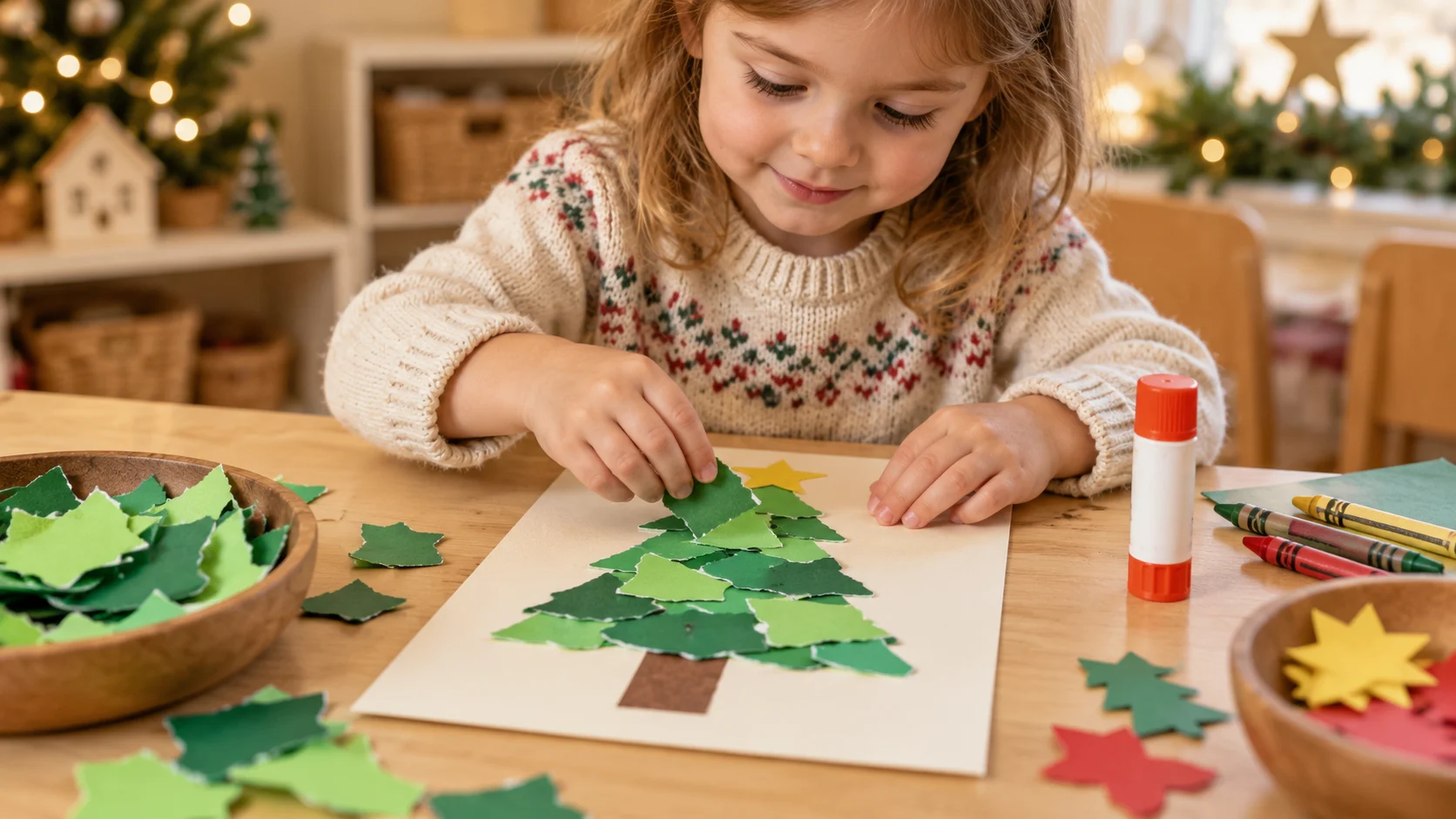
- Draw a large triangle on the background.
- Tear the green paper into pieces.
- Glue the pieces inside the triangle.
- Add a paper trunk.
- Draw decorations if desired.
Use position words while children work: “Which piece will go at the top?” or “Can you place one beside the trunk?”
11. Paper Keepsake Ornament
Materials: Thick paper, crayons, a hole punch, and a short hanging loop.
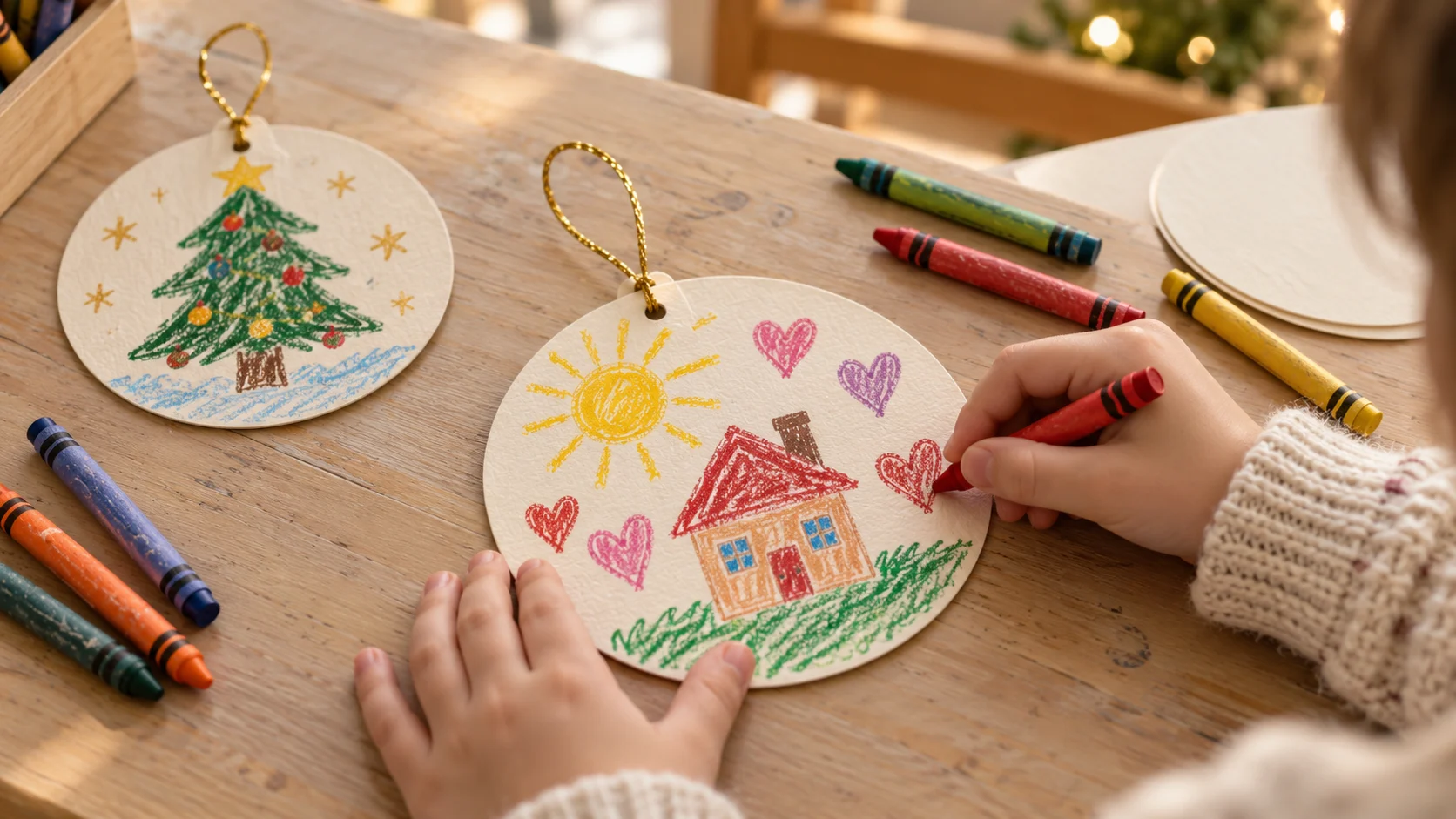
- Cut out a large circle or another simple shape.
- Let the child decorate both sides.
- Add their name and the year.
- Invite them to draw a favorite memory.
- Have an adult punch a hole and attach the loop.
Display the ornaments on a tree, wall, or classroom board. Keep hanging loops short and supervise their use.
Make Holiday Videos Part of an Activity
A video is more useful when children know what to notice and have a chance to respond afterward.
Choosing Christmas Videos for Kids
Choose a song with actions, a clearly narrated story, or a simple craft demonstration. Match the viewing to something children can do afterward, such as repeating a movement pattern or making a paper decoration.
Choosing Thanksgiving Videos for Kids
Focus on gratitude, kindness, or carefully checked historical content. Before selecting a Thanksgiving video for kids, consider its language, accuracy, and representation of people and traditions.
Preview the entire video, including its messages, advertisements, and autoplay settings.
| Viewing choice | Before watching | After watching |
|---|---|---|
| Song with actions | Introduce one movement to notice. | Repeat or invent a movement pattern. |
| Seasonal story | Watch for a helpful action. | Draw or describe that moment. |
| Craft demonstration | Show the materials beforehand. | Recall the first step, then begin. |
| Gratitude video | Ask, “How can people show thanks?” | Make a thank-you drawing. |
Choose one discussion question rather than several. Give children time to think, and accept responses through speech, drawing, or movement.
If a video does not suit your group’s traditions, use a seasonal alternative or a live read-aloud.
Help Every Child Participate
Before the activity, identify which parts children can do independently and where they may need support.
- Larger shapes for easier handling
- Pre-cut pieces alongside cutting options
- Glue sticks instead of liquid glue
- Drawing or dictation instead of required writing
- A quiet workspace for children who need one
- Family-neutral messages and seasonal alternatives
Avoid requiring every craft to look alike. A child who places flowers sideways or chooses an unexpected color is still making decisions and expressing an idea.
For home activities, set out only the materials needed for one project. This makes the instructions and cleanup easier to manage.
Frequently Asked Questions
What makes a holiday craft suitable for kindergarten?
Look for a few clear steps, manageable materials, and meaningful choices. Children should be able to complete much of the activity themselves, with help available for difficult tasks.
How can I keep craft costs low?
Use paper scraps, cardboard, crayons, and glue. Check what you already have before choosing a project, and avoid activities that require several specialty supplies.
What if a child does not celebrate the holiday?
Offer an equally engaging alternative, such as a caregiver appreciation card, a nature picture, or a winter tree. Let children participate without having to explain their family’s beliefs.
Should I correct a craft that looks different from the example?
Help when a child asks or when a practical problem prevents the project from working. Otherwise, welcome their choices. The example shows a possibility; it does not need to become a pattern everyone must copy.
How much adult help is appropriate?
Provide the help needed for safe, comfortable participation. Prepare difficult parts when necessary, but leave children meaningful work such as choosing, arranging, drawing, and explaining.
Choose One Project and Keep It Simple
Start with an activity that matches your supplies and the children’s interests. Explain a few steps, allow time for exploration, and invite children to tell you about their work.
A personal message, an observation, or a thoughtful choice can make a simple paper craft worth keeping.