
Dr. Seuss Coloring Pages and Worksheets for Kids
Looking for fun Dr. Seuss coloring pages and engaging educational activities for children? Coloring sheets and book-inspired worksheets can help make storytime more interactive while giving young learners opportunities to practice creativity, counting, letter recognition, and rhyming.
Whether you’re a parent planning a screen-free afternoon, a preschool teacher organizing classroom activities, or a homeschool educator preparing a reading lesson, this guide provides practical coloring ideas, learning worksheets, and printing tips for children ages 3–8.
You’ll also discover how to choose suitable Dr. Seuss coloring sheets, use original story-inspired activities, and adapt worksheets for different ages and learning abilities.
Why Kids Love Dr. Seuss Coloring Pages
Dr. Seuss books are known for imaginative stories, playful language, expressive illustrations, and memorable characters. These elements make book-themed coloring especially appealing to children who enjoy visual activities and storytelling.
Coloring allows children to revisit familiar story ideas while using their imagination. Teachers can connect coloring activities to reading lessons, while parents can encourage children to describe their pictures and make creative choices.
- Creative expression: Children experiment with colors and imaginative combinations.
- Story connections: Coloring creates opportunities to revisit characters, settings, and events.
- Fine-motor practice: Holding crayons and making marks offers practice with small hand movements.
- Early vocabulary: Adults can introduce descriptive words while discussing pictures.
- Learning through play: Simple coloring activities can incorporate numbers, letters, and shapes.
Coloring should remain enjoyable rather than becoming a test of how accurately a child can stay within the lines.
Dr. Seuss Coloring Pages: Fun Themes to Explore
When searching for Dr. Seuss coloring pages, you’ll encounter different story themes, illustration styles, and difficulty levels. Choosing activities based on a child’s interests can make the experience more rewarding.
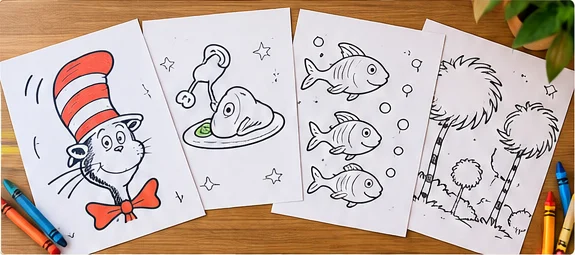
The Cat in the Hat Coloring Activities
The Cat in the Hat provides a familiar starting point for discussing colors, patterns, and story events.
Try this: Give children an original striped-hat worksheet and ask them to create alternating color patterns.
Green Eggs and Ham Activities
This story inspires discussions about unusual colors, food preferences, and trying new experiences.
Try this: Let children color an imaginary meal and describe their creative choices.
One Fish, Two Fish Activities
Fish-themed coloring sheets are useful for combining color recognition with basic counting practice.
Try this: Color two fish red, three fish blue, and one fish yellow.
The Lorax Nature Activities
Nature-related coloring projects encourage conversations about trees, habitats, and caring for the environment.
Try this: Draw an original forest scene and discuss ways to protect plants.
Oh, the Places You’ll Go! Activities
This book can inspire imaginative discussions about adventures and future experiences.
Try this: Ask children to draw and color a place they would love to visit.
Fox in Socks Rhyming Activities
Rhyming activities can introduce children to playful word sounds and simple vocabulary.
Try this: Match and color familiar rhyming pairs such as cat and hat.
Easy Dr. Seuss Coloring Sheets for Preschoolers
Preschoolers between ages 3 and 4 generally benefit from coloring activities featuring recognizable objects, thick outlines, and large spaces. Simple illustrations provide room for children to experiment with colors without becoming overwhelmed by tiny details.
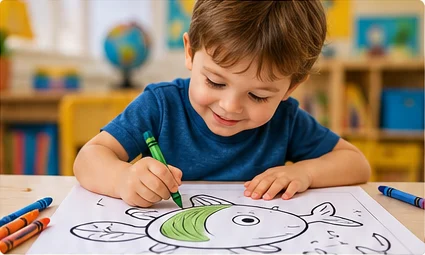
Features of a Good Preschool Coloring Sheet
- Clear, thick outlines.
- Large areas suitable for chunky crayons.
- Limited background details.
- Simple objects and familiar shapes.
- Short instructions that an adult can explain easily.
Simple Preschool Activity
Give children an original printable containing three fish or other simple shapes. Ask them to choose colors and identify which object is biggest or smallest.
Children who are not ready to follow specific instructions can color freely. Encourage participation and curiosity rather than perfect results.
Dr. Seuss Worksheets for Preschool and Kindergarten
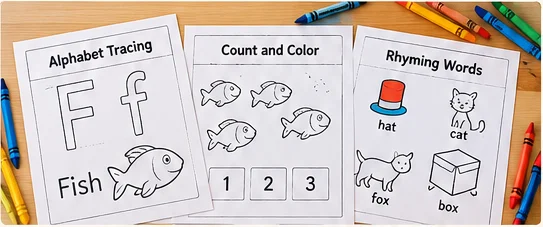
Dr. Seuss worksheets can complement coloring activities by introducing more structured learning tasks. Preschool and kindergarten learners may enjoy worksheets focused on alphabet tracing, counting, rhyming, shapes, and simple story comprehension.
1. Alphabet and Letter Tracing
Children trace uppercase and lowercase letters while identifying objects beginning with those sounds.
Example: Trace the letter F and color a fish.
2. Rhyming Word Matching
Young learners connect words with similar ending sounds.
Example: Match hat with cat, fish with dish, and fox with box.
3. Counting and Number Recognition
Children count illustrated objects, identify quantities, and practice recognizing numerals.
Example: Count four fish and circle the number 4.
4. Shapes and Patterns
Color and shape sequences introduce basic pattern recognition.
Example: Red circle, blue circle, red circle, blue circle. What comes next?
5. Story Sequencing
Ask children to organize simple story events in the correct order after reading a book.
Example: Draw the beginning, middle, and end of a favorite story.
6. Creative Writing
Older learners can create an imaginary character and write a short sentence describing it.
Example: My imaginary animal lives in ______.
Sample Rhyming Words Worksheet
| Word | Rhyming Word | Activity |
|---|---|---|
| Hat | Cat | Draw and color a hat. |
| Fish | Dish | Draw a fish inside a dish. |
| Tree | Bee | Color a tree and a bee. |
| Fox | Box | Draw a colorful box. |
| Star | Car | Color a star and a car. |
For younger learners, read each word aloud and allow them to point to matching pictures instead of writing.
How to Find and Print Dr. Seuss Coloring Sheets
Printable coloring sheets are convenient for classroom lessons, home activities, and reading celebrations. However, parents and teachers should choose reliable sources and check whether materials may legally be printed or shared.
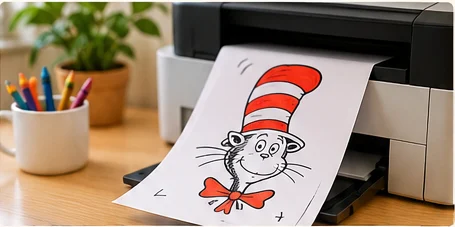
- Choose a reliable source: Look for authorized educational materials or appropriately licensed printable resources.
- Preview the sheet: Confirm that the illustration and instructions suit the child’s age.
- Check usage permissions: Verify whether home or classroom printing is permitted.
- Select paper size: Standard US Letter paper measures 8.5 × 11 inches.
- Adjust the printer: Choose the correct orientation and check scaling.
- Print a test page: Ensure that outlines and text remain clear.
- Prepare supplies: Arrange crayons, colored pencils, or washable markers.
PDF vs. PNG vs. JPG
| Format | Best Use | What to Check |
|---|---|---|
| Multi-page worksheets and consistent page layouts. | Paper dimensions and print scaling. | |
| PNG | High-quality line drawings and simple illustrations. | Resolution and page margins. |
| JPG | Basic images and photographs. | Compression and outline sharpness. |
Creative Ways to Use Dr. Seuss Coloring Pages at Home and School
Coloring activities become more engaging when connected with storytelling, conversation, and playful learning. Parents and teachers can use these ideas during reading lessons or creative activity periods.

Read and Color
Read a short story together and invite children to complete an age-appropriate coloring activity connected with its general theme.
Rhyming Word Hunt
Ask children to identify rhyming pairs and draw pictures representing the matching words.
Color and Count
Combine basic counting instructions with pictures of original fish, stars, or shapes.
Storytelling Art Gallery
Display completed drawings and let children explain the story behind their artwork.
Reading Celebration
Create a supervised classroom activity station with books, original worksheets, coloring supplies, and rhyming games.
Create an Imaginary Creature
Let children invent their own fantasy animal, choose its colors, and describe where it lives.
For group activities, provide different difficulty levels and let children participate through drawing, speaking, pointing, or writing.
Best Dr. Seuss Coloring Sheets and Worksheets by Age
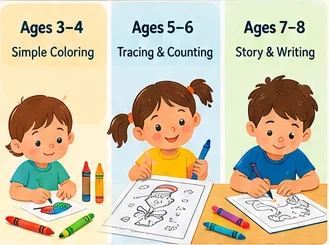
Children develop learning skills at different rates, so worksheet difficulty should be based on individual readiness rather than age alone.
| Age | Recommended Activities | Learning Focus |
|---|---|---|
| 3–4 years | Large-outline coloring, simple shapes, matching colors. | Fine-motor exploration and vocabulary. |
| 5–6 years | Tracing letters, counting objects, patterns, rhyming. | Early literacy and basic math. |
| 7–8 years | Detailed coloring, short writing, story sequencing. | Comprehension and creative expression. |
How to Adapt Activities
- For beginners: Use fewer objects, bigger shapes, and shorter instructions.
- For confident learners: Add questions, writing prompts, or more complex patterns.
- For accessibility: Consider larger print, adapted writing tools, or verbal responses.
- For motivation: Allow children to choose among suitable themes.
How Coloring and Worksheets Support Early Learning
Well-chosen coloring activities and worksheets provide opportunities to practice several early learning skills. Their value depends on the child’s interests, developmental readiness, and the guidance provided by adults.
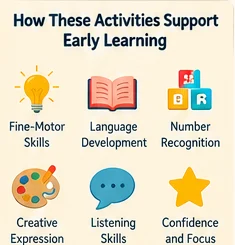
Fine-Motor Skills
Using crayons and tracing lines gives children opportunities to practice hand movements involved in drawing and early handwriting.
Language Development
Adults can ask children to describe their pictures, name colors, and explain story ideas.
Number Recognition
Counting worksheets introduce simple quantities, number symbols, and comparisons.
Creative Expression
Children can experiment with unusual color combinations, imaginative landscapes, and original character ideas.
Listening and Following Directions
Short instructions can provide opportunities to practice listening and completing manageable tasks.
A Simple 20-Minute Reading and Coloring Activity Plan
Parents and teachers can organize a short reading and coloring session using just a picture book, a suitable worksheet, and a few art supplies.
| Time | Activity | Purpose |
|---|---|---|
| 0–5 minutes | Read a short picture book aloud. | Introduce vocabulary and story ideas. |
| 5–8 minutes | Discuss characters, events, or favorite scenes. | Encourage comprehension and conversation. |
| 8–16 minutes | Complete a coloring sheet or worksheet. | Provide creative and skill-based practice. |
| 16–20 minutes | Let children explain their artwork. | Encourage communication and storytelling. |
The schedule is flexible. Younger children may prefer shorter sessions, while others may enjoy spending more time drawing and coloring.
Common Mistakes to Avoid When Choosing Coloring Sheets
Selecting an unsuitable coloring page can make an otherwise enjoyable activity frustrating. Parents and teachers should consider the child’s abilities, interests, and the quality of the printable.
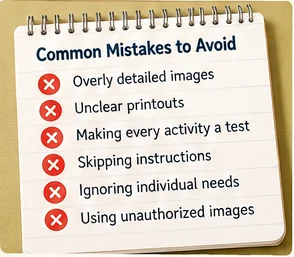
- Overly detailed illustrations: Small spaces may be difficult for younger children to color.
- Blurry printouts: Poor image quality can make outlines and text difficult to distinguish.
- Too many instructions: Long directions may overwhelm beginning learners.
- Making every activity a test: Excessive correction can reduce enjoyment.
- Ignoring individual needs: Children may require different levels of support.
- Using unauthorized artwork: Check permissions before reproducing or sharing copyrighted images.
Offering both easy and advanced options can make activities more inclusive, particularly in classrooms with mixed learning levels.
Frequently Asked Questions About Dr. Seuss Coloring Pages

Where can I find Dr. Seuss coloring pages?
Look for official publisher resources, authorized educational materials, or appropriately licensed printable collections. Always check usage permissions before downloading, printing, or distributing character artwork.
Are Dr. Seuss coloring sheets suitable for preschoolers?
Yes. Simple, age-appropriate coloring activities can be enjoyable for preschool children. Choose large outlines, limited details, and short instructions.
What is the difference between coloring pages and worksheets?
Coloring pages usually focus on filling illustrations with color. Worksheets typically involve a learning objective, such as counting, tracing, matching, or recognizing patterns.
Can teachers use Dr. Seuss worksheets in classrooms?
Teachers may use resources when their licensing or usage terms permit classroom printing and distribution. Original teacher-created activities can also complement related reading lessons.
Which worksheets are best for kindergarten?
Kindergarten learners may enjoy letter tracing, matching rhymes, counting objects, completing simple patterns, and discussing story events.
What paper should I use for coloring sheets?
Standard printer paper works well with crayons and colored pencils. Thicker paper can be useful for markers and more elaborate art projects.
Do children need to stay inside the lines?
No. Young children can benefit from experimenting with drawing tools and making their own marks. Creativity and engagement are more important than perfect coloring.
Can coloring worksheets help children learn to read?
Worksheets may provide practice with related skills, including letter recognition, rhyming, vocabulary, and story recall. They are best used alongside reading aloud, conversation, and appropriate literacy instruction.
Final Thoughts: Make Reading and Coloring Fun
Dr. Seuss coloring pages and worksheets can add a creative dimension to children’s reading experiences when they are selected thoughtfully. Simple coloring sheets are suitable for many preschool activities, while older children may enjoy educational tasks involving letters, numbers, rhyming, and storytelling.
The best approach is to combine engaging books with age-appropriate activities and give children opportunities to explore their own ideas. Parents and teachers can adjust each activity to suit individual learning needs while keeping the experience positive and enjoyable.
Make Storytime a Creative Learning Adventure
Choose suitable, authorized printable resources, prepare colorful art supplies, and encourage children to explore reading through imagination, conversation, and hands-on learning.