Storytime is one of the most enjoyable parts of the preschool and kindergarten day. Children love listening to familiar characters, funny situations, and exciting adventures. But when a teacher asks, “Can you tell me what happened in the story?” some children may struggle to remember the events or explain them in the correct order.
This is where story retelling activities can make a difference.
Retelling helps young children remember important details, organize their thoughts, develop vocabulary, and express their ideas. With picture cards, puppets, storytelling mats, and familiar books, teachers can turn retelling into an engaging classroom experience.
Whether you are teaching preschoolers who are beginning to speak in longer sentences or kindergarten students developing reading comprehension, this guide explains how to teach story retelling step by step.
What Is Story Retelling?
Story retelling is the ability to describe what happened in a story using your own words, pictures, gestures, or storytelling materials.
Instead of memorizing every sentence, children recall the important characters, places, and events.
A simple story retelling usually includes:
- Characters: Who was in the story?
- Setting: Where did the story happen?
- Beginning: What happened first?
- Middle: What happened next?
- End: How did the story finish?
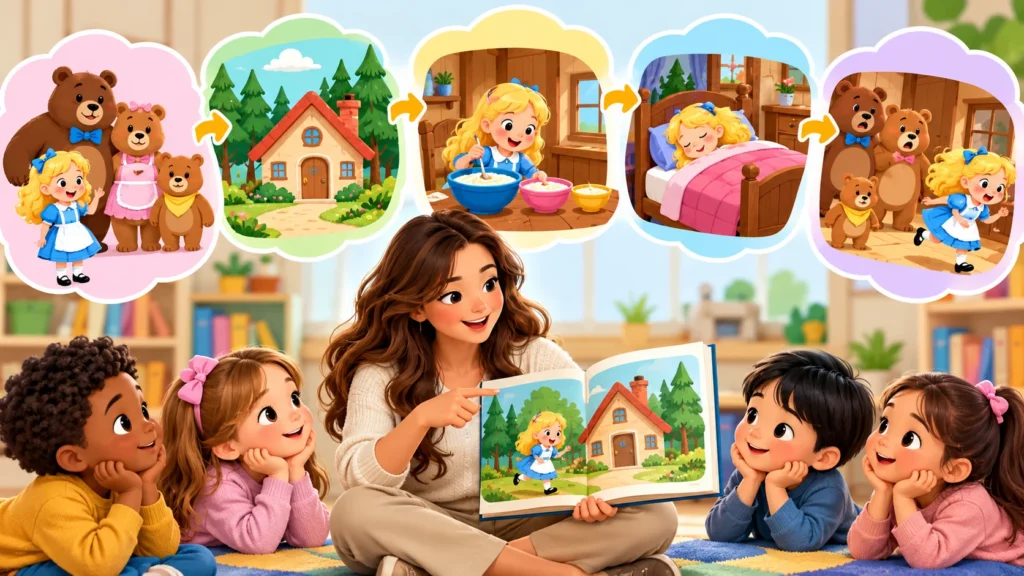
For example, after listening to Goldilocks and the Three Bears, a child might say:
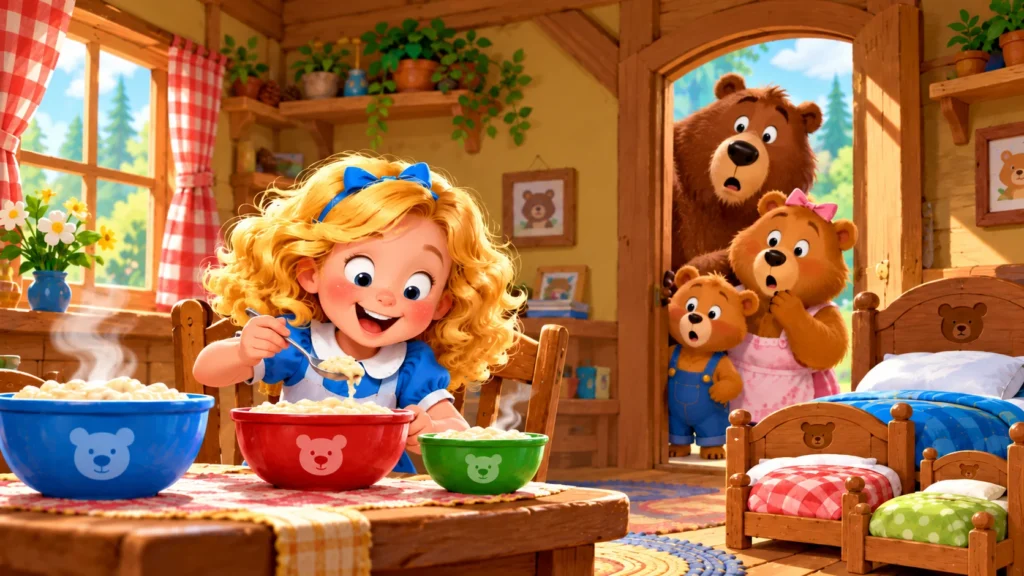
“Goldilocks went into the bears’ house. She tried their porridge, chairs, and beds. Then the bears came home, and Goldilocks ran away.”
This is a simple but meaningful retelling because the child remembers the main events and explains them in a logical sequence.
Older or more confident children may add details about characters’ feelings, problems, and solutions.
What Is the Difference Between Retelling and Reconstructing a Story?
Retelling focuses on remembering and organizing events. Reconstructing a story encourages children to think more deeply about why events happened and how characters felt.
For example:
Retelling question: What happened when the bears returned home?
Deeper comprehension question: How do you think the bears felt when they discovered someone had entered their house?
Both approaches support early literacy. Children often benefit from learning to recall events before answering more complex questions about motivations and feelings.
Why Is Story Retelling Important for Preschool and Kindergarten Children?
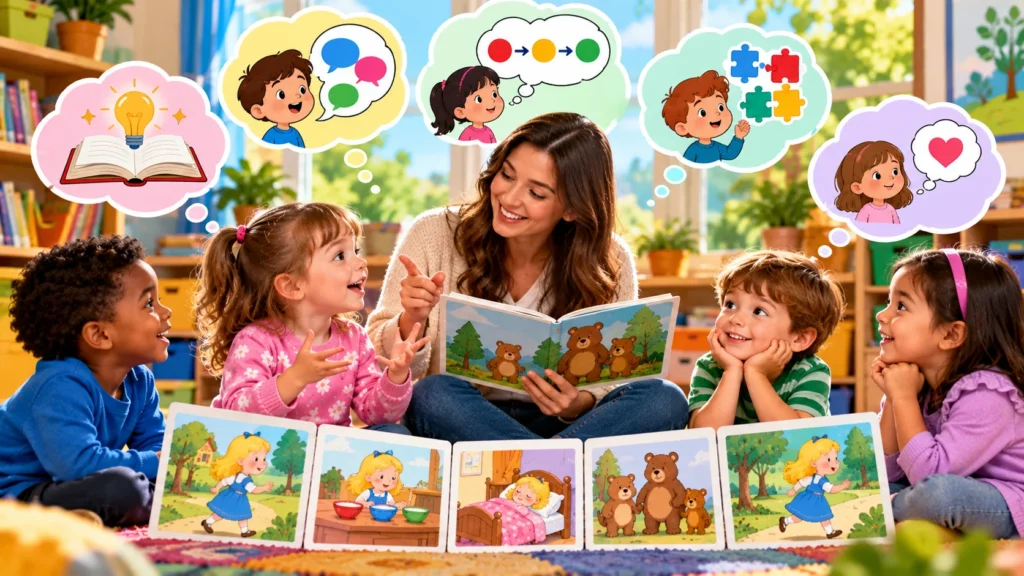
Story retelling supports several important areas of early childhood development.
1. Strengthens Reading Comprehension
Children learn that stories contain connected events rather than unrelated pictures or sentences.
When they identify what happened first, next, and last, they begin to recognize story structure.
2. Develops Vocabulary and Oral Language
Retelling encourages children to use new words they hear during storytime.
Teachers can introduce sequencing words such as:
- First
- Next
- Then
- After that
- Finally
These words help children organize spoken explanations and eventually support written storytelling.
3. Improves Memory and Sequencing
Remembering a story requires children to recall details and arrange events in a meaningful order.
Picture cards and repeated read-alouds help make this task manageable.
4. Encourages Confidence and Communication
Children who initially answer with one word may gradually begin using short sentences.
For example, a child might progress from saying “Bear” to “The bear came home” and later to “The three bears came home and found their porridge had been eaten.”
Teachers should value each stage of progress.
5. Supports Social and Emotional Understanding
Discussing characters’ actions and feelings encourages children to consider different perspectives.
Questions such as “Why was the character upset?” or “What could the character do next?” introduce opportunities for thoughtful conversation.
How to Teach Story Retelling Step by Step
Teaching children to retell stories works best when teachers provide clear examples, visual support, and repeated opportunities to practice.
Step 1: Choose a Short, Familiar Story
Begin with a book that has recognizable characters, clear illustrations, and a simple sequence of events.
Traditional fairy tales, repetitive stories, and picture books with predictable patterns are particularly helpful.
“Good starting choices include Goldilocks and the Three Bears, The Little Red Hen, and The Three Little Pigs.”
Children are often more willing to retell stories they already know.
Step 2: Read the Story Aloud
Read the book naturally and allow children to enjoy it.
Use expressive voices, gestures, and illustrations to maintain interest.
During the first reading, avoid interrupting every page with comprehension questions. Give students time to understand and enjoy the story.
On a second reading, pause occasionally to highlight important events.
Step 3: Introduce Characters and Setting
Show children the main characters and discuss where the story takes place.
Ask simple questions:
- Who is in this story?
- Where are the characters?
- What is the character doing?
For children who need extra support, provide two picture choices instead of requiring a verbal answer.
Step 4: Teach Beginning, Middle, and End
Explain that most stories have events that happen in a particular order.
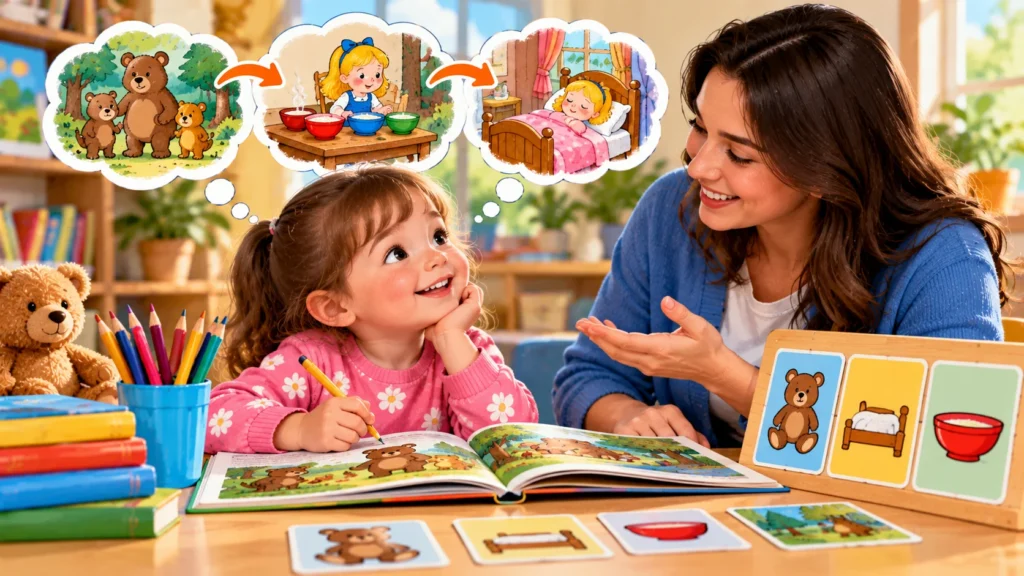
Use three picture cards to represent important moments.
Beginning: Introduce the characters and what happens first.
Middle: Describe the important events or problem.
End: Explain how the story finishes.
A teacher might say:
“First, the little girl entered the house. Next, she tried the bears’ things. Finally, the bears returned home.”
Keep the first demonstration short and easy to follow.
Step 5: Retell the Story Together
Invite children to help reconstruct the sequence.
Place three or four picture cards on a table or classroom board.
Ask students to arrange the pictures in the correct order.
Then encourage them to describe each picture.
If a child forgets an event, provide a gentle prompt rather than immediately correcting the answer.
For example:
“We know Goldilocks tried the porridge. What did she try after that?”
Step 6: Encourage Independent Retelling
Once children understand the process, give them opportunities to retell stories independently or with a partner.
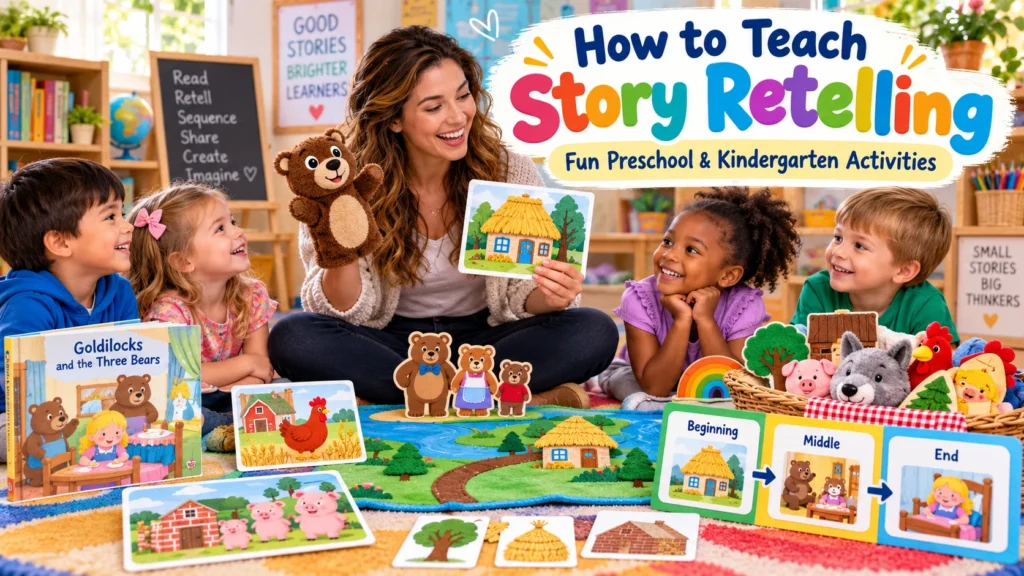
They can use puppets, storytelling mats, drawings, or picture cards.
Some children may still need visual reminders, while others may be ready to retell without props.
Teaching tip: Gradually reduce support as children become more confident. The goal is meaningful understanding, not memorizing the exact words of a book.
Goldilocks Story Retelling Activity for Preschool and Kindergarten
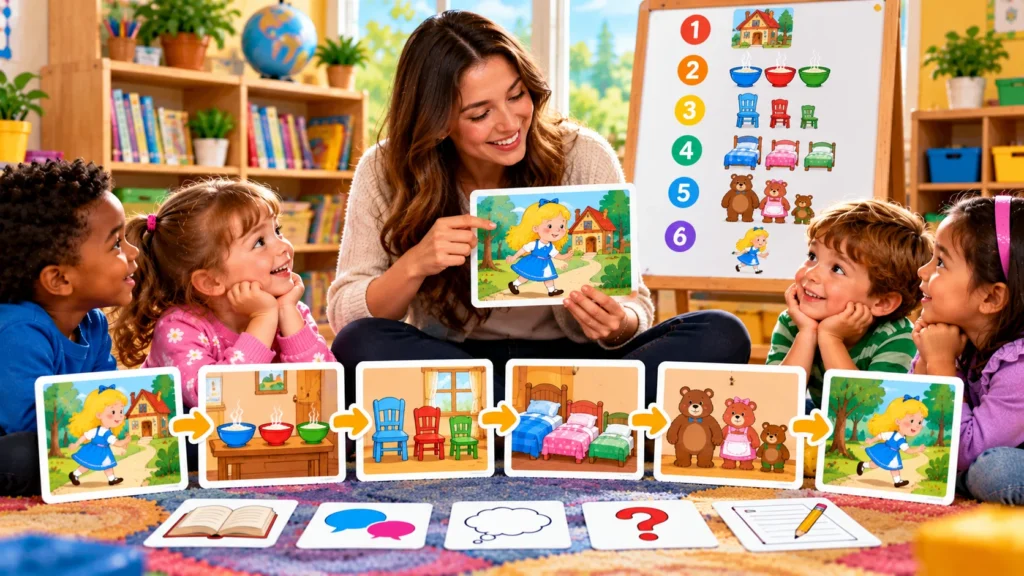
Goldilocks and the Three Bears is a useful traditional fairy tale for practicing story retelling because it includes familiar characters, repeated actions, and clearly connected events.
The Goldilocks story is especially effective when teachers combine reading with toys, pictures, and dramatic play.
Materials Needed
- An age-appropriate Goldilocks storybook
- Three toy bears or paper bear characters
- Three bowls, chairs, or beds represented by pictures
- Beginning, middle, and end sequencing cards
- A storytelling mat or felt board
How to Teach the Goldilocks Story
Activity 1: Introduce the Characters
Show pictures of Goldilocks and the three bears.
Ask children to identify the characters and describe their differences.
Use words such as big, medium, and small to connect storytelling with early vocabulary development.
Activity 2: Read the Fairy Tale
Read the story while pointing out the important events.
Encourage children to notice what Goldilocks does in the house and what happens when the bears return.
Activity 3: Arrange the Story Events
Prepare picture cards showing the following sequence:
- Goldilocks enters the bears’ house.
- Goldilocks tries the porridge, chairs, and beds.
- The bears return and discover what happened.
- Goldilocks wakes up, sees the bears, and runs away.
Ask children to place the pictures in order.
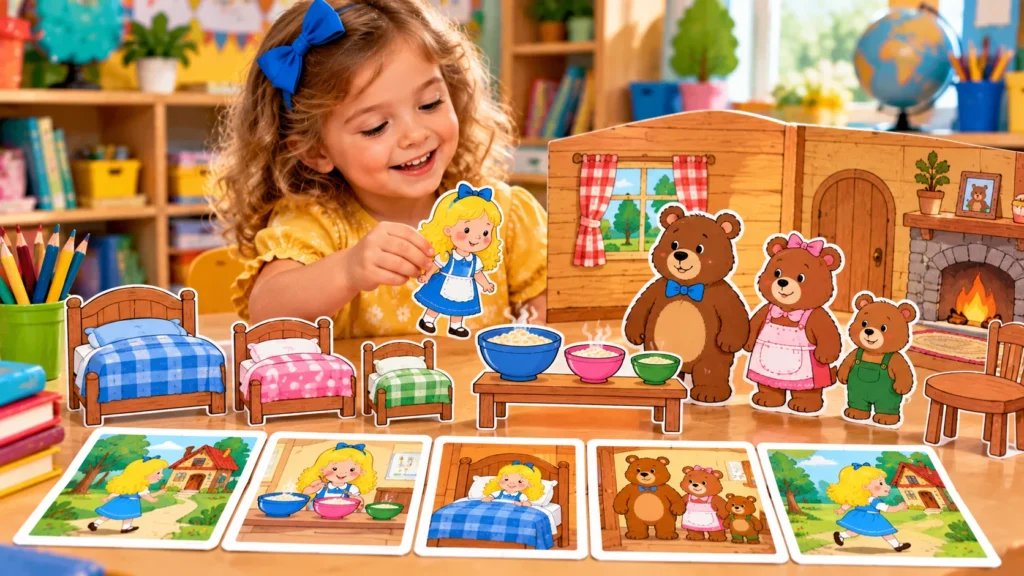
Activity 4: Retell With Props
Give students toy bears and simple household props.
Allow them to move the characters while explaining the story.
Children who are not ready to narrate full sentences can demonstrate events through actions.
Activity 5: Discuss Character Feelings
Ask:
- How did the bears feel when they came home?
- Why do you think Goldilocks ran away?
- What could Goldilocks have done differently?
- Why is it important to ask permission before entering someone’s home?
These questions help children move beyond recalling events toward understanding characters’ actions.
Example Goldilocks Retelling
“Once upon a time, three bears lived in a house. One day, Goldilocks came inside while the bears were away. She tasted their porridge, sat on their chairs, and tried their beds. Then the bears came home. Goldilocks woke up, saw the bears, and ran away.”
This example demonstrates a complete, age-appropriate sequence without requiring children to remember every detail.
10 Fun Story Retelling Activities for Preschool and Kindergarten
Children learn through different experiences. Some enjoy drawing, while others prefer movement, storytelling props, or small-group games.
The following activities make retelling a story more interactive and accessible.
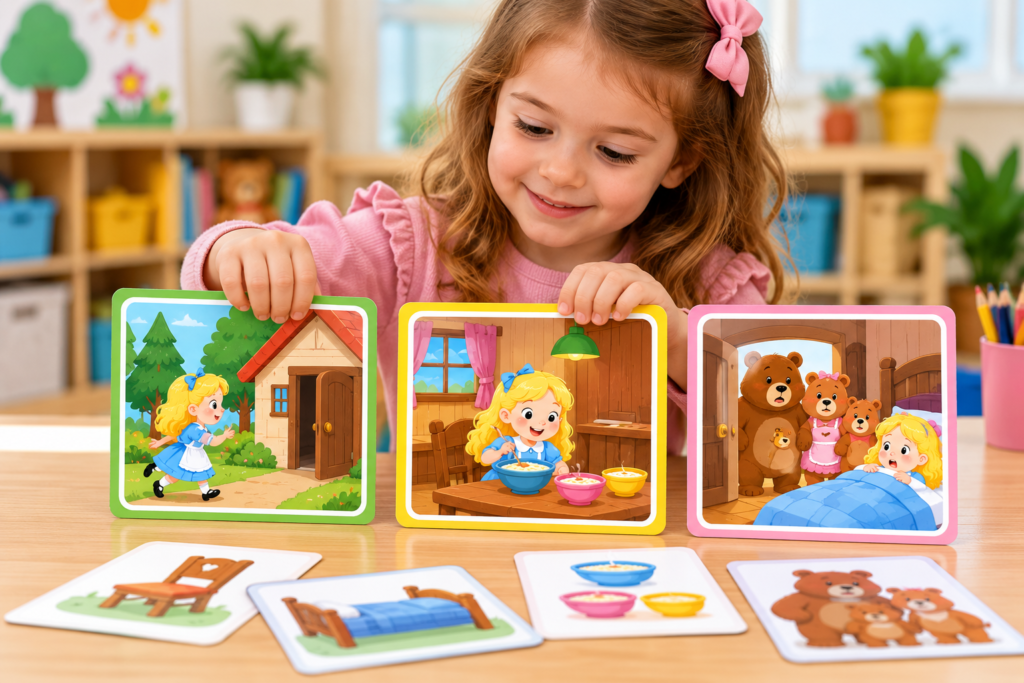
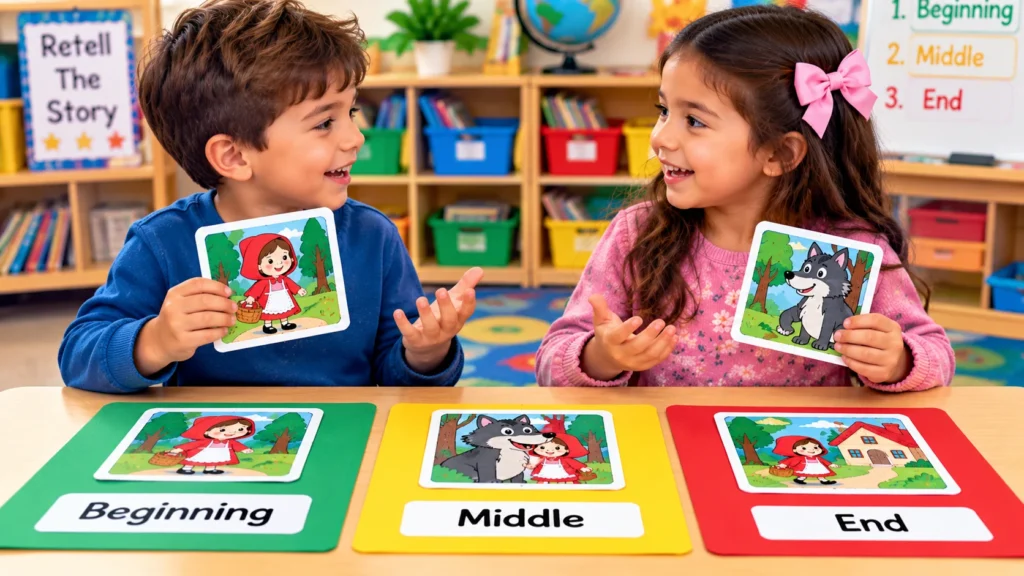
1. Beginning, Middle, and End Picture Cards
Best for: Ages 3–6
Materials: Story picture cards, a table, or a pocket chart.
Choose three important events from a familiar story and print or draw a picture for each one.
Mix the cards and invite children to place them in the correct sequence.
Ask:
“What happened first?”
“What happened after that.
“How did the story end?”
For younger children, begin with two cards before introducing three.
Learning benefit: Strengthens sequencing, memory, and oral expression.
2. Puppet Story Retelling
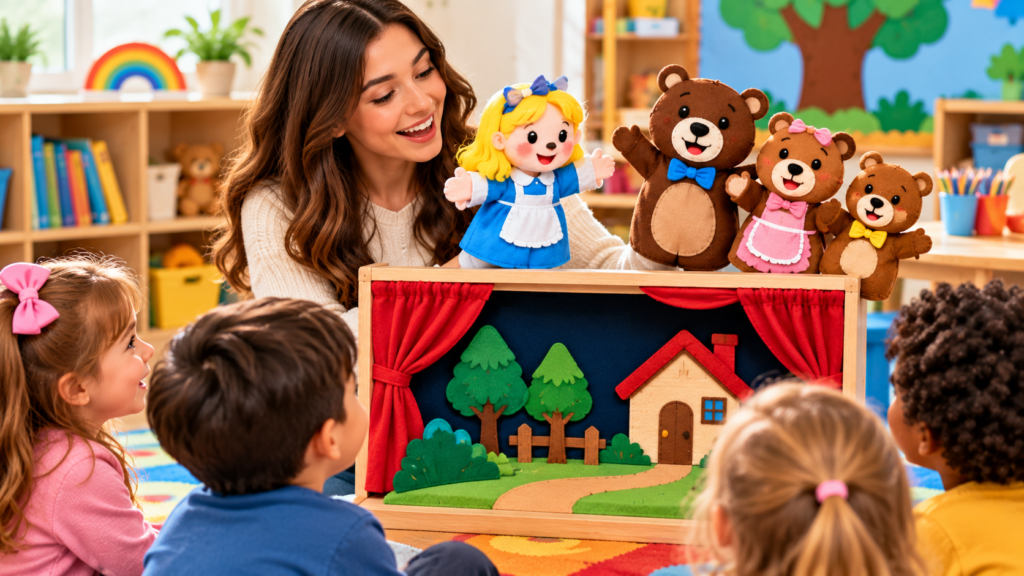
Best for: Ages 3–6
Materials: Hand puppets, paper-bag puppets, or character cutouts.
After reading a story, give children puppets representing the characters.
Encourage them to act out the beginning, middle, and end.
For example, children can use three bear puppets to recreate the Goldilocks story.
A child can move the puppets while a teacher provides narration, then gradually begin speaking independently.
Learning benefit: Develops language, imagination, and understanding of characters.
3. Story Basket Activity
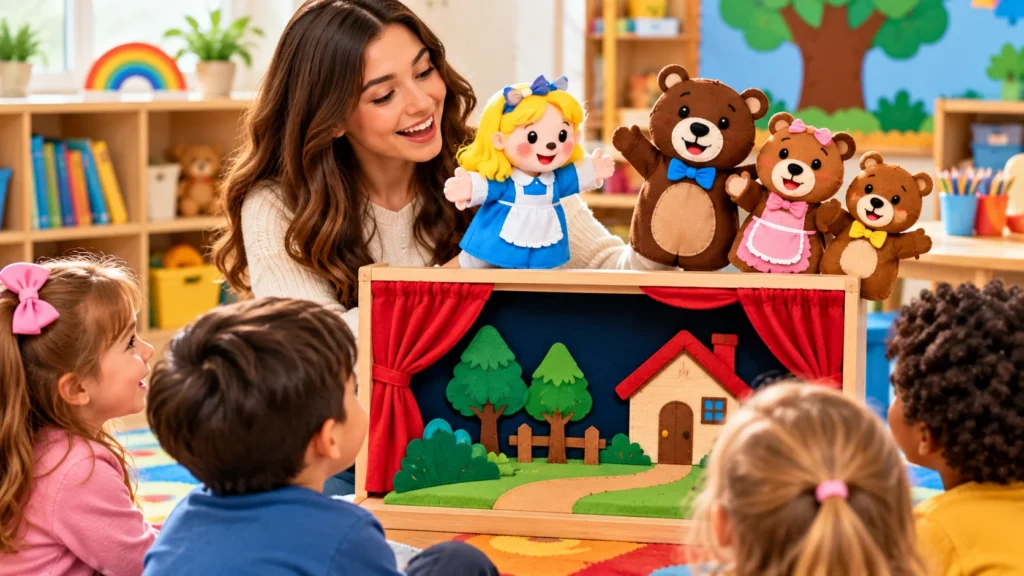
Best for: Ages 3–5
Materials: Basket and small objects related to a book.
Create a basket containing objects or toys representing important parts of a familiar story.
For The Three Little Pigs, include three pig figures, a wolf figure, and representations of straw, sticks, and bricks.
As children retell the story, they select and move the objects in sequence.
This approach makes abstract story events easier to understand.
Learning benefit: Supports vocabulary, recall, and hands-on storytelling.
4. Story Retelling Mats
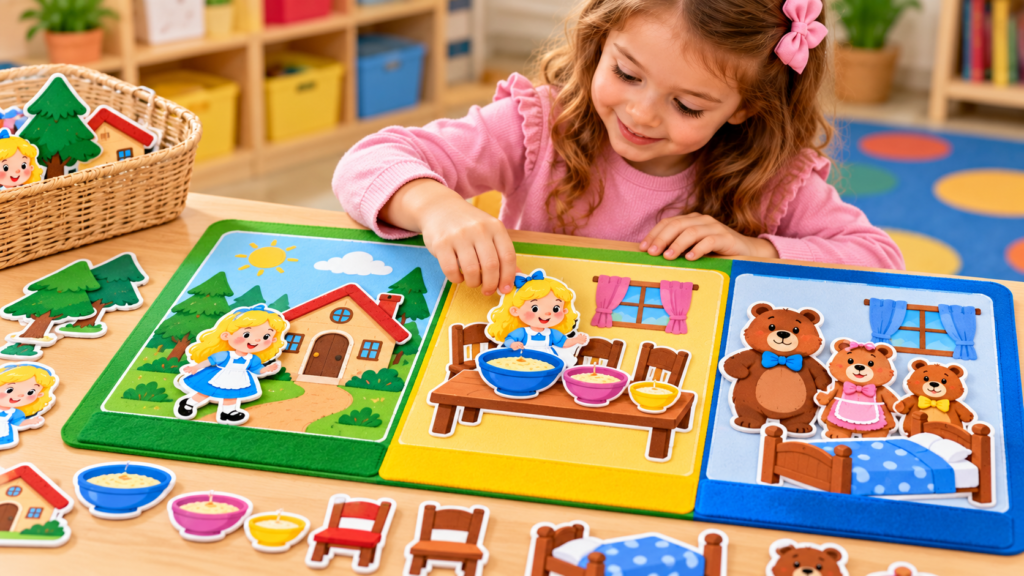
Best for: Ages 4–6
Materials: Paper mats, character cutouts, and illustrated settings.
Divide a large sheet of paper into three sections labeled:
Beginning | Middle | End
Children place characters or pictures in the appropriate sections while explaining what happened.
A more advanced story mat can include character, setting, problem, and solution spaces.
These mats work well during literacy centers, small-group instruction, or partner activities.
Learning benefit: Helps children visualize story structure and organize events.
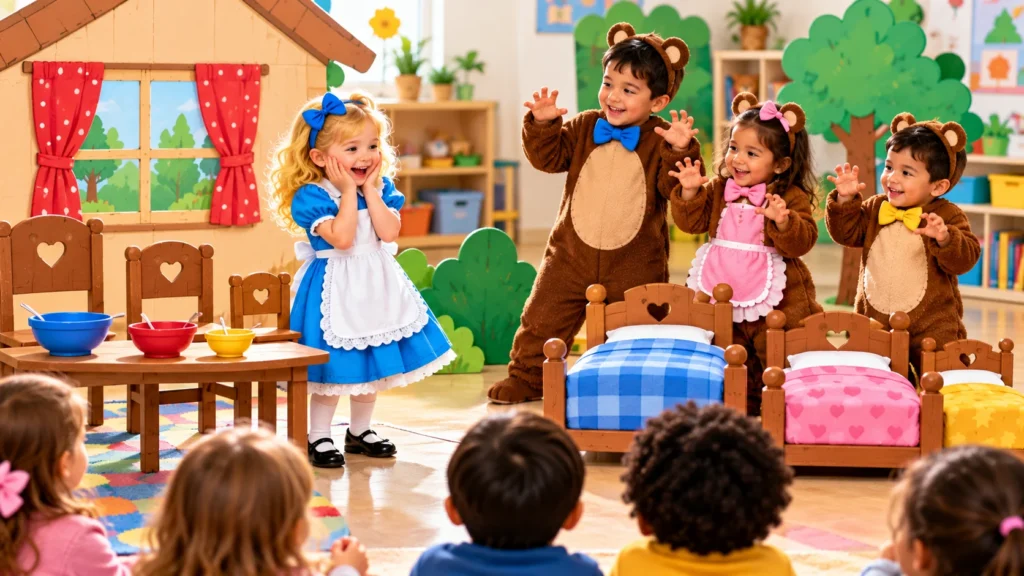
5. Act Out the Story
Best for: Ages 4–6
Materials: Simple costumes, character masks, or classroom props.
Choose a story with several recognizable characters.
Assign roles and invite children to act out important events.
For example, students can pretend to be the three little pigs building different houses.
Pause between scenes and ask the audience to describe what happened.
Learning benefit: Encourages expressive language, listening, collaboration, and comprehension.
6. Story Stones
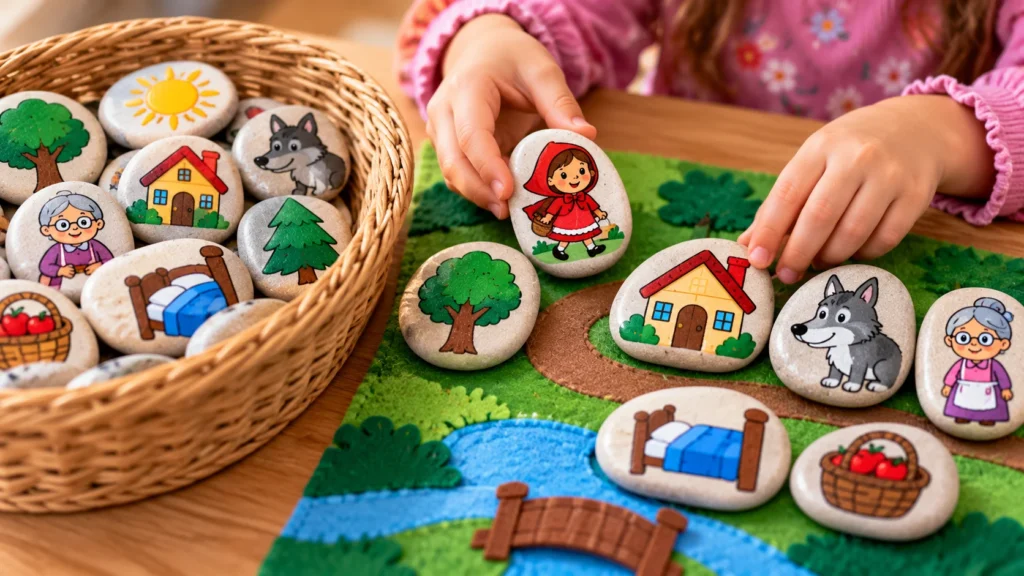
Best for: Ages 3–6
Materials: Smooth, child-safe stones or wooden discs featuring story pictures.
Draw or attach simple images of characters, places, and events to the stones.
After reading a story, invite children to arrange the stones in order.
Students can point to each stone while retelling the related event.
Use large, safe materials for younger children and supervise activities involving small objects.
Learning benefit: Supports sequencing, memory, and vocabulary.
7. Felt Board Storytelling
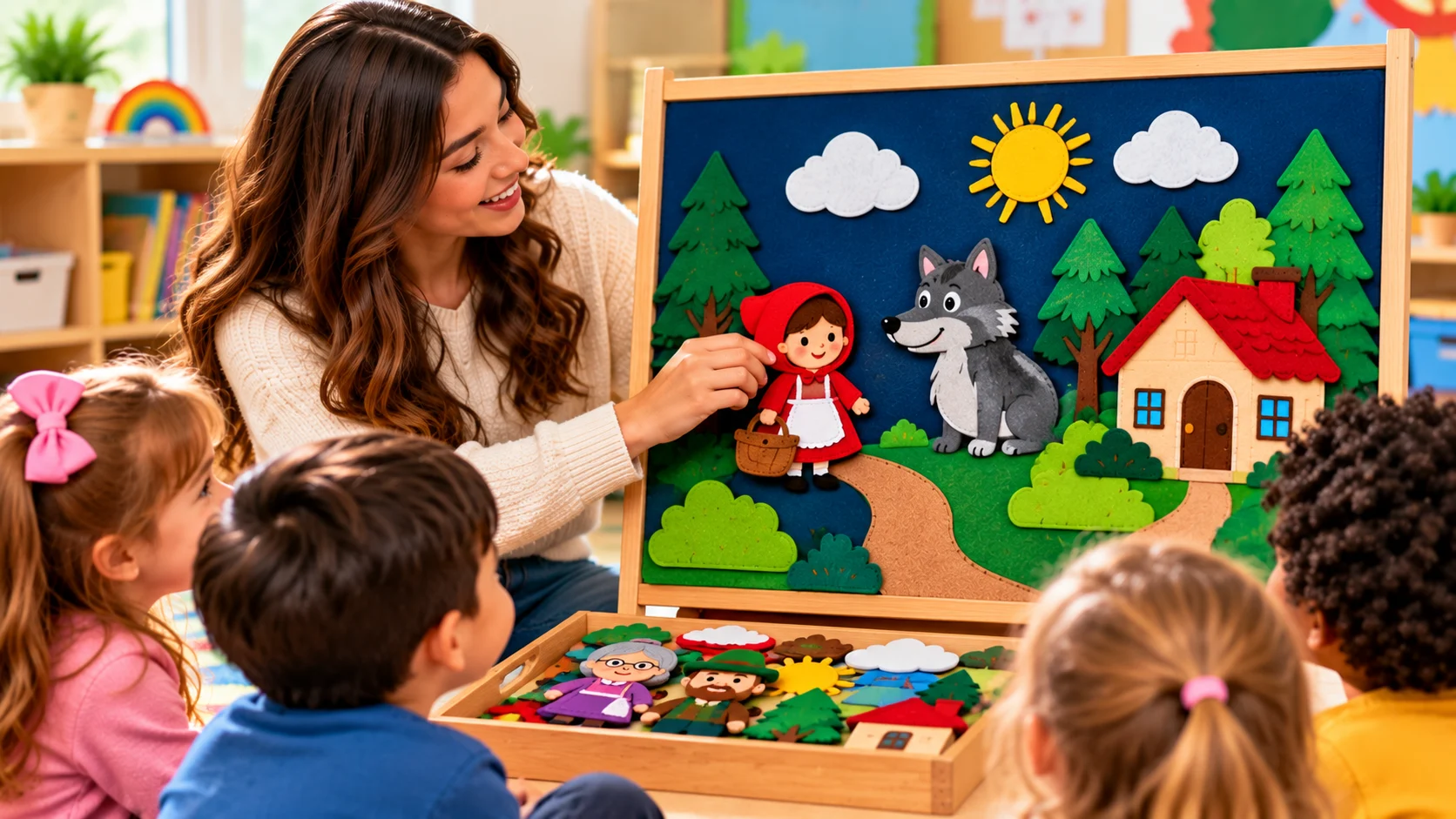
Best for: Ages 3–5
Materials: Felt board and felt characters.
Place felt characters and objects on a board while reading aloud.
After the story, remove the pieces and invite children to recreate the events.
The teacher can model a sentence such as:
“First, the little hen found some wheat.”
Children can repeat or extend the sentence as they move the characters.
Learning benefit: Provides visual support and encourages active participation.
8. Draw and Retell
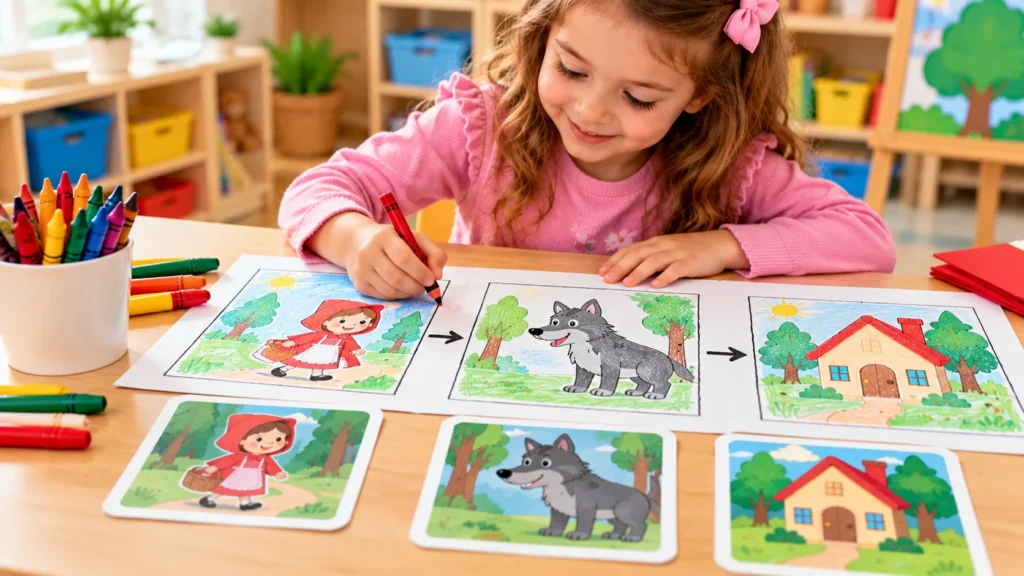
Best for: Ages 4–6
Materials: Paper, crayons, and pencils.
Divide a page into three boxes.
Ask children to draw what happened at the beginning, middle, and end of a familiar story.
When finished, invite them to explain each drawing.
Children who struggle with drawing can use stickers, printed pictures, or teacher-supported sketches.
Learning benefit: Connects visual expression with oral storytelling.
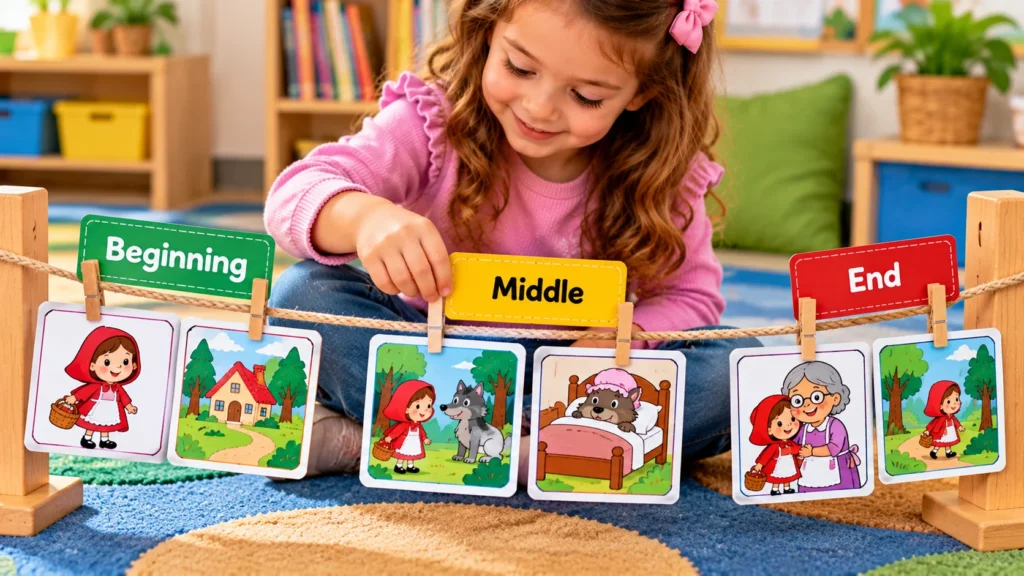
9. Story Retelling Rope
Best for: Ages 4–6
Materials: Thick rope or yarn with large attached visual markers.
Create a storytelling rope with markers representing character, setting, important events, and ending.
Children move from one marker to the next as they retell a story.
For example:
- First marker: Characters
- Second marker: Setting
- Third marker: Beginning
- Fourth marker: Middle
- Fifth marker: Ending
Keep the activity simple for beginners and use larger materials under supervision.
Learning benefit: Helps children organize and remember multiple story elements.
10. Partner Story Retelling
Best for: Ages 5–6
Materials: Familiar books or picture sequencing cards.
Pair children and ask one student to retell a story while the other listens.
The listening partner can ask simple questions such as:
“What happened next?”
“Who helped the main character?”
Afterward, students switch roles.
Teachers can provide sentence starters to help children who need support.
Learning benefit: Encourages communication, attentive listening, and independent retelling.
Best Children’s Books for Teaching Story Retelling
Selecting the right books makes story retelling easier, particularly for young children who are still developing language and memory skills.
These books offer different opportunities for practicing narrative understanding.
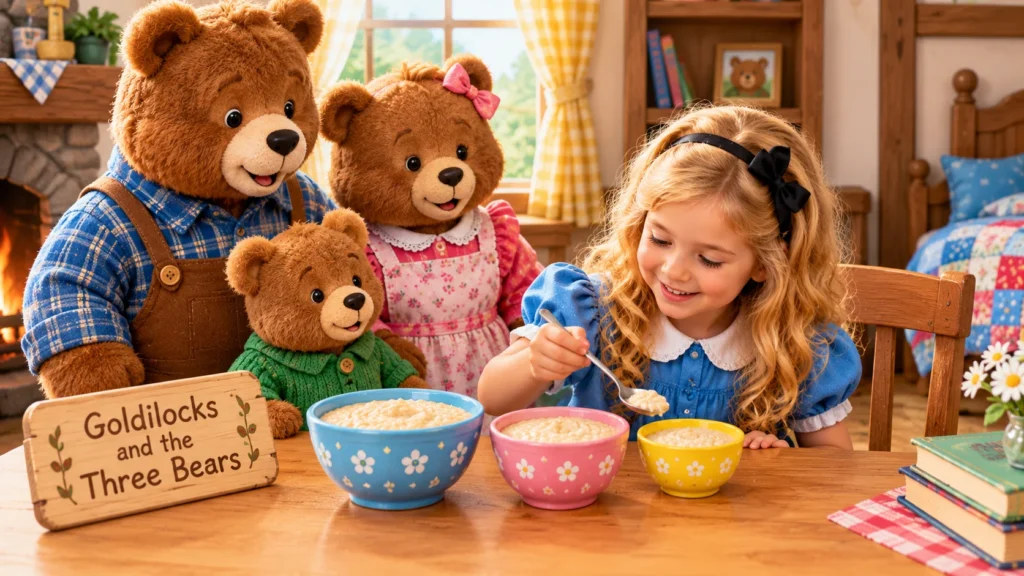
1. Goldilocks and the Three Bears
Best for: Beginning, middle, and end sequencing.
The repeated actions and familiar characters make this traditional fairy tale an excellent introduction to story structure.
Use toy bears, porridge bowls, and picture cards to help children remember important events.
2. The Doorbell Rang by Pat Hutchins
Best for: Repeated events, sequencing, counting, and predicting.
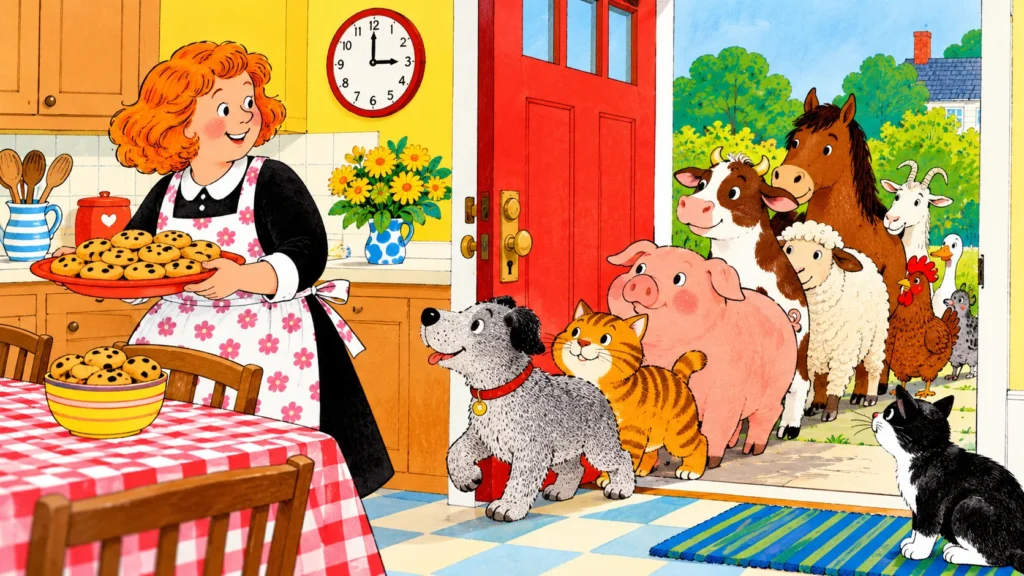
The Doorbell Rang follows children who are preparing to share cookies. As more visitors arrive, the cookies must be divided among an increasing number of people.
Children can use paper cookies and character figures to recreate the story.
Classroom activity:
Begin with a collection of pretend cookies.
As the teacher introduces each new group of visitors, invite children to rearrange the cookies.
Ask:
“Who arrived next?”
“What happened to the number of cookies each person could have?”
“What happened near the end of the story?”
This activity combines story retelling with early mathematical reasoning.
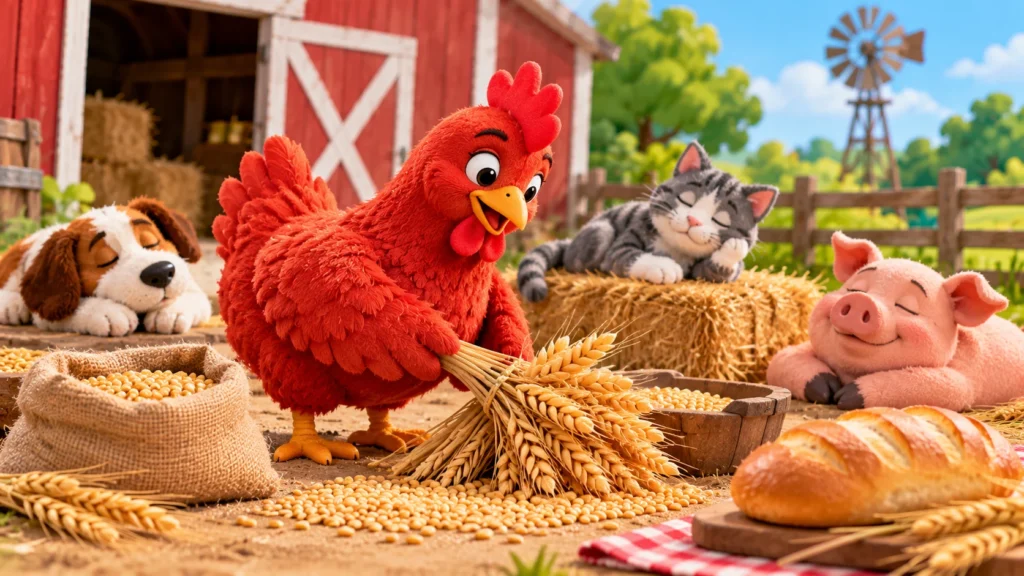
3. The Little Red Hen
Best for: Character actions, sequence, and cause and effect.
The repeated pattern of asking for help makes this traditional story easy for children to follow.
Use character puppets and simple picture cards to retell the steps involved in making bread.
After retelling, discuss cooperation and helping others.
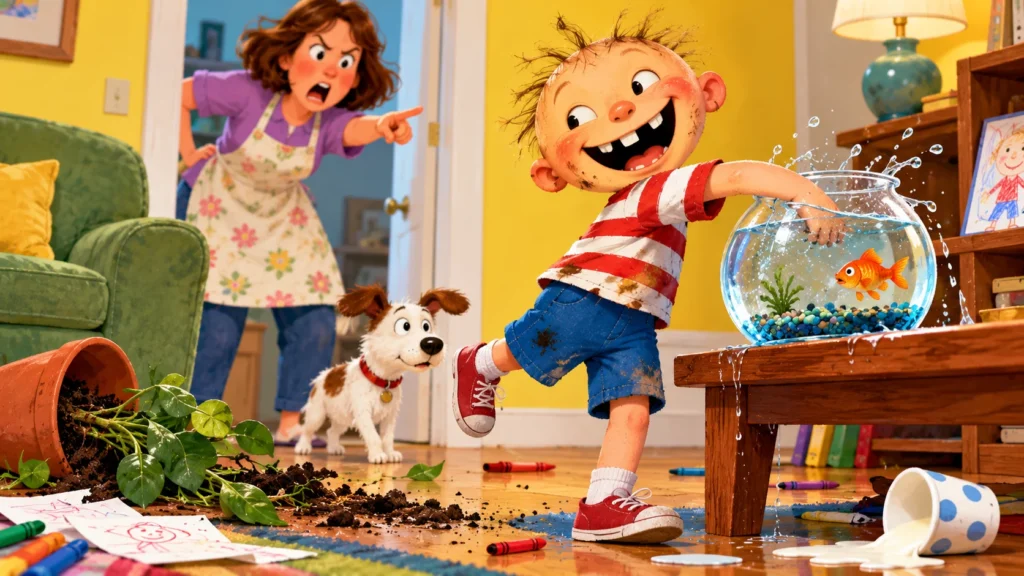
4. No, David! by David Shannon
Best for: Picture-based retelling, behavior discussions, and character feelings.
No, David! uses expressive illustrations and limited text, making it useful for children who benefit from visual storytelling.
Ask students to describe what David does on different pages.
Encourage them to place selected illustrated events in the order they occur in the book.
Then discuss how David and his caregiver might feel.
Teaching note: Families searching for a No, David! PDF should use a legally authorized digital edition or library copy. Teachers can create original picture prompts for classroom discussion without distributing unauthorized copies of the book.
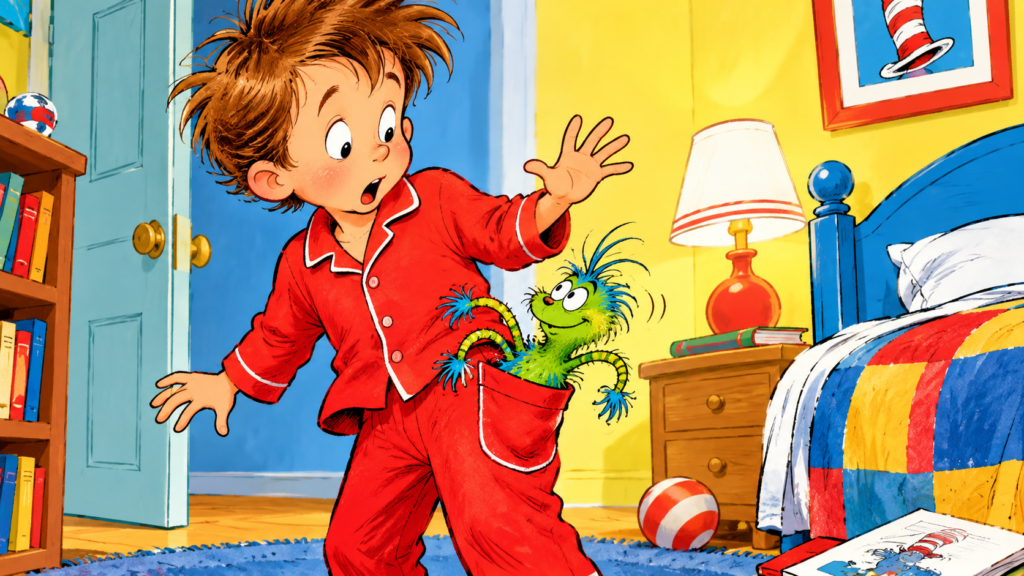
5. A Wocket in My Pocket! by Dr. Seuss
Best for: Rhyming, vocabulary, oral language, and imaginative description.
A Wocket in My Pocket! is especially useful for playful language activities.
It does not follow the same conventional beginning-middle-end plot structure as Goldilocks and the Three Bears.
Instead of forcing a traditional retelling exercise, ask children to remember and describe imaginary creatures and the places they appear.
Students can draw a creature and explain where it lives.
This activity supports recall, descriptive vocabulary, and creative speaking.
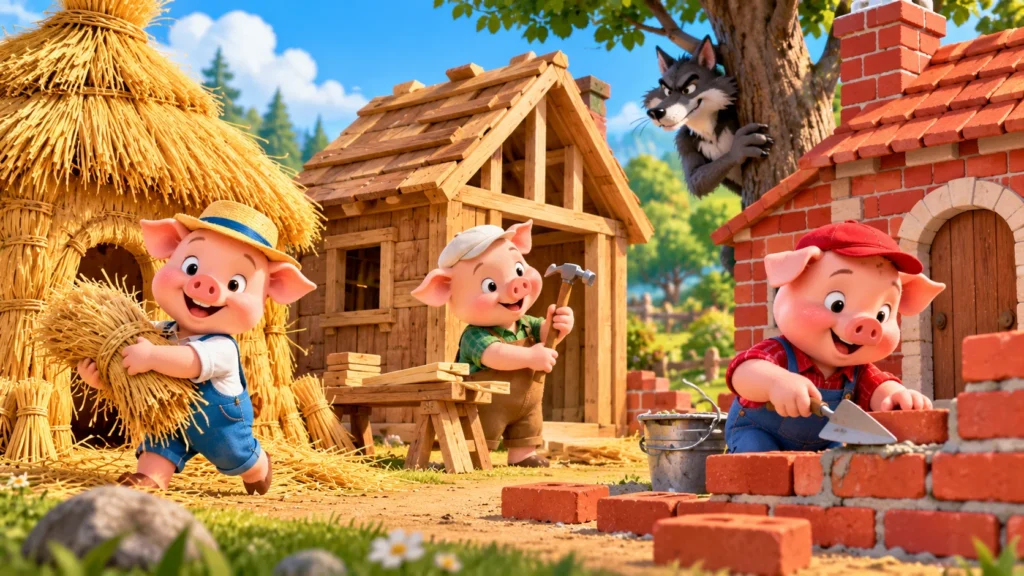
6. The Three Little Pigs
Best for: Story sequence, problem and solution, and cause and effect.
Children can use straw, sticks, and brick-patterned blocks to recreate the three houses.
Invite students to describe the building sequence and how the houses respond to the wolf’s actions.
Example Language Lesson Plan for Preschool Story Retell
A structured lesson plan helps teachers introduce story retelling without overwhelming young learners.
The following example can be adapted for preschool or kindergarten.
Lesson Title: Let’s Retell Goldilocks and the Three Bears
Age group: 4–6 years
Duration: Approximately 20 minutes
Learning area: Oral language, early literacy, and comprehension
Learning Objectives
By the end of the activity, children will have opportunities to:
- Identify important story characters.
- Recall selected events from a familiar story.
- Organize three or more events in sequence with appropriate support.
- Use sequencing words during oral retelling.
- Express simple ideas about characters’ actions and feelings.
Materials
- Goldilocks storybook
- Three toy bears or character cards
- Beginning, middle, and end pictures
- Storytelling mat
- Teacher observation checklist
Lesson Procedure
Minutes 0–3: Warm-Up
Show the three bears and ask children whether they recognize the characters.
Introduce the words first, next, and last.
Minutes 3–8: Story Reading
Read Goldilocks and the Three Bears aloud.
Point out the characters, setting, and important events.
Allow children to participate naturally without interrupting the story too frequently.
Minutes 8–11: Teacher Modeling
Place three picture cards in sequence.
Explain the story using simple sentences.
For example:
“First, Goldilocks entered the house. Next, she explored the bears’ things. Last, the bears returned, and Goldilocks ran away.”
Minutes 11–16: Guided Practice
Mix the picture cards and invite children to arrange them.
Ask students to describe each picture.
Provide sentence starters such as:
“First, Goldilocks…”
“Next, she…”
“At the end…”
Accept gestures and short phrases from children who are still developing oral language.
Minutes 16–20: Retelling and Assessment
Invite children to retell the story using the picture cards or puppets.
Ask one or two questions about the bears’ feelings.
Observe children’s understanding and identify which students may benefit from additional modeling.
Expected Learning Outcome
Children should have meaningful opportunities to participate in retelling at their own developmental level.
Some may identify two or three events with visual support, while others may explain a longer sequence independently.
The purpose is to observe growth in language and understanding rather than require every child to produce the same response.
Story Retelling Expectations by Age
Young children develop storytelling skills at different rates.
The following examples are flexible instructional starting points rather than strict developmental milestones.
Ages 3–4: Early Story Recall
Children may:
- Name familiar characters.
- Point to important story pictures.
- Remember one or two events.
- Use gestures, short phrases, or individual words.
Helpful teaching strategy: Use repeated read-alouds and two-picture sequencing activities.
Ages 4–5: Developing Story Sequence
Children may:
- Identify main characters and settings.
- Retell two or three important events.
- Begin using first, next, and last.
- Describe simple character actions.
Helpful teaching strategy: Introduce three-part storytelling mats and small-group retelling.
Ages 5–6: Expanding Narrative Skills
Children may:
- Recall several connected events.
- Use longer sentences.
- Describe story problems and endings.
- Explain simple character feelings and motivations.
Helpful teaching strategy: Encourage partner retelling, story maps, and explanations of cause and effect.
Children with different language backgrounds or developmental needs may demonstrate comprehension in different ways. Visual support and responsive teaching remain valuable at every age.
How to Help Children Who Struggle With Story Retelling
Not every child finds retelling easy. Some students remember pictures but struggle to explain them, while others lose track of the story sequence.
Teachers can make retelling more accessible through several approaches.
Start With Fewer Events
Instead of asking children to recall an entire book, begin with two important moments.
Once they can organize those events, gradually add another.
Use Visual Prompts
Pictures, puppets, and story mats reduce the need to remember everything without support.
Allow children to point or move objects while they speak.
Model Complete Sentences
If a child says “Bear home,” a teacher can respond:
“Yes, the bears came home.”
This expands the child’s language without making the response feel like a mistake.
Repeat Familiar Stories
Repeated readings allow children to notice details they may have missed earlier.
Use the same story across several sessions with different activities.
Encourage Home-Language Support
Multilingual children may understand a story before they can explain it fully in the classroom language.
Where possible, allow them to discuss ideas in a familiar language, use pictures, or demonstrate events through actions.
Avoid Correcting Every Detail
Focus first on whether children understand the important events.
If a child changes a minor detail but remembers the overall sequence, acknowledge the successful parts before providing additional guidance.
How to Assess Story Retelling Skills
Story retelling assessment does not need to involve a formal test.
Teachers can observe children during normal storytelling activities and record how much support each child needs.
Simple Story Retelling Checklist
| Skill | What to Observe |
|---|---|
| Identifies characters | Can name or point to important characters |
| Recognizes setting | Can identify where the story takes place |
| Recalls beginning | Remembers an important opening event |
| Recalls middle | Describes what happened next |
| Recalls ending | Explains how the story finished |
| Uses sequencing language | Uses first, next, then, or last |
| Explains character actions | Describes what a character did |
| Shows understanding | Responds to simple questions about events or feelings |
Three Levels of Progress
Emerging: The child identifies characters or events with substantial visual or adult support.
Developing: The child retells some important events with occasional prompts.
Increasingly Independent: The child explains a connected sequence of events with limited assistance.
These descriptions can help teachers monitor classroom progress, but they are not standardized diagnostic categories.
Example Observation Note
“During a Goldilocks activity, the student independently identified the three bears, sequenced three main picture cards, and described the ending after one verbal prompt.”
Short observations like this help teachers plan the next lesson.
Common Story Retelling Mistakes to Avoid
Choosing Stories That Are Too Complicated
Books with many characters, unexpected time changes, or lengthy plots may overwhelm beginners.
Start with short, predictable stories and increase complexity gradually.
Expecting Children to Memorize the Text
Retelling is not the same as reciting a book word for word.
Encourage children to explain events using their own language.
Asking Too Many Questions During Reading
Frequent interruptions can make it difficult for children to enjoy and understand the story.
Balance reading for enjoyment with opportunities to discuss important events.
Removing Visual Support Too Quickly
Some children need pictures and objects for an extended period.
Gradually reduce support rather than expecting independent retelling immediately.
Focusing Only on Correct Answers
Storytelling should also encourage confidence, curiosity, imagination, and conversation.
Celebrate children’s attempts and provide constructive modeling.
Tips for Making Story Retelling More Engaging
Teachers can keep retelling activities fresh without constantly introducing new books.
Try rotating storytelling materials throughout the week.
For example:
Monday: Read the story and introduce the characters.
Tuesday: Sequence three important events.
Wednesday: Retell using puppets or a story basket.
Thursday: Draw or act out the story.
Friday: Retell with a partner and discuss character feelings.
This routine provides repeated exposure while keeping the learning experience varied.
Teachers can also create a dedicated story retelling center with familiar books, picture cards, and simple props.
Frequently Asked Questions About Story Retelling
What is the easiest way to teach story retelling to preschoolers?
Start with a familiar picture book and two or three important events. Model a short retelling, then invite children to arrange picture cards and describe what happens. Use puppets or objects to support children who are not ready to speak in complete sentences.
What are the five main elements of story retelling?
A useful introductory framework includes characters, setting, beginning, middle, and end. As children progress, teachers can also introduce the story’s problem, important actions, and solution.
How do you teach beginning, middle, and end in kindergarten?
Read a familiar story and choose three clear pictures representing its main events. Demonstrate the correct order and explain what happens in each picture. Then allow children to organize and retell the events with gradually reduced support.
Why is Goldilocks a good story for retelling?
Goldilocks and the Three Bears contains familiar characters, repeated actions, and a sequence that is easy to represent with objects and pictures. These features make the story useful for sequencing, oral language, and comprehension activities.
Can The Doorbell Rang be used for story retelling?
Yes. The Doorbell Rang by Pat Hutchins features repeated arrivals and changing cookie-sharing arrangements. Children can use pretend cookies and character figures to recreate events in sequence while practicing counting and prediction.
Is A Wocket in My Pocket! suitable for story retelling?
It can support recall, description, rhyming, and imaginative language. However, it is not the strongest choice for practicing a conventional beginning-middle-end narrative because its structure focuses more on playful language and imaginary creatures.
How long should a preschool story retelling lesson last?
A focused activity may take around 10–20 minutes, depending on the children’s ages, attention, needs, and the complexity of the story. Short sessions with movement and visual support often work better than lengthy whole-group exercises.
What if a child cannot retell a story independently?
Provide visual cards, model simple sentences, and reduce the number of events. Allow the child to demonstrate understanding through gestures, pictures, or role-play. If difficulties persist or raise broader developmental concerns, collaborate with the child’s family and appropriate educational specialists.
Final Thoughts
Teaching story retelling to preschool and kindergarten children does not require expensive materials or complicated lesson plans.
A familiar picture book, a few simple props, and thoughtful teacher guidance can create meaningful opportunities for early language and literacy development.
Begin with short stories, demonstrate how events connect, and give children plenty of opportunities to practice through pictures, puppets, storytelling mats, and play.
Books such as Goldilocks and the Three Bears, The Doorbell Rang, and The Little Red Hen provide excellent starting points for classroom retelling.
Most importantly, remember that children develop storytelling skills at different rates. A child who can point to the correct picture today may soon be ready to describe the event in a sentence.