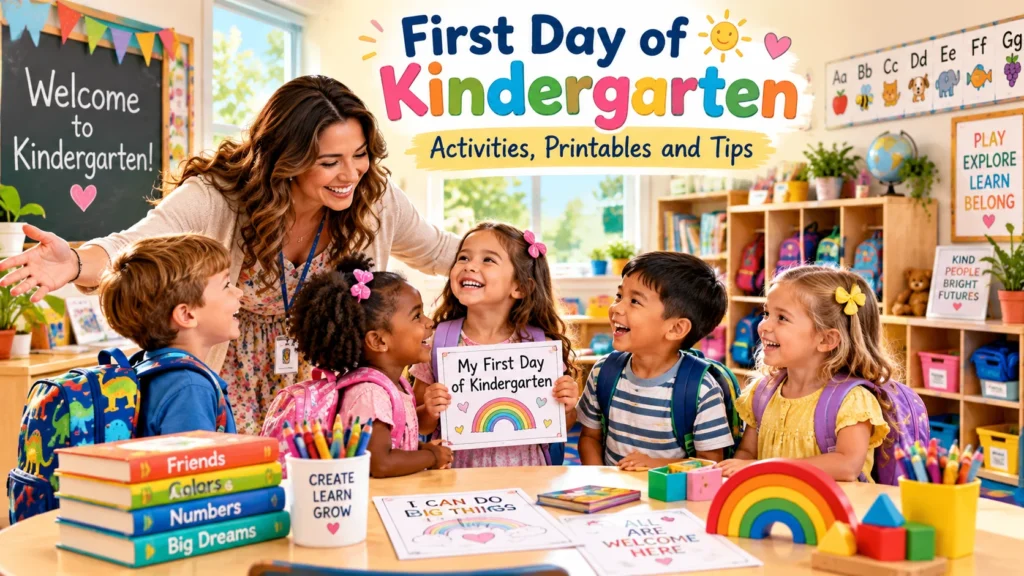
The first day of kindergarten is a big milestone for children, parents, and teachers. For some children, it is their first experience spending a full school day away from home. Others may be excited to meet new friends, explore their classroom, and begin learning. A successful first day does not require complicated lessons or a packed schedule. Simple activities, welcoming routines, and plenty of opportunities for play can help children feel safe, confident, and ready to participate.
This guide shares 12 easy first day of kindergarten activities, an adaptable daily schedule, printable worksheets, and practical tips for teachers and families. You will also find ideas for helping nervous children adjust and making classroom routines easier.
How to Prepare for the First Day of Kindergarten
Good preparation helps teachers spend less time searching for supplies and more time connecting with students.
Before children arrive, organize the classroom so they can explore it safely and understand where their belongings and learning materials belong.
First-Day Classroom Preparation Checklist
Use this simple checklist:
- Prepare name tags for every student.
- Label cubbies, backpack hooks, and storage areas.
- Set out crayons, paper, puzzles, and building blocks.
- Create a quiet reading or calming area.
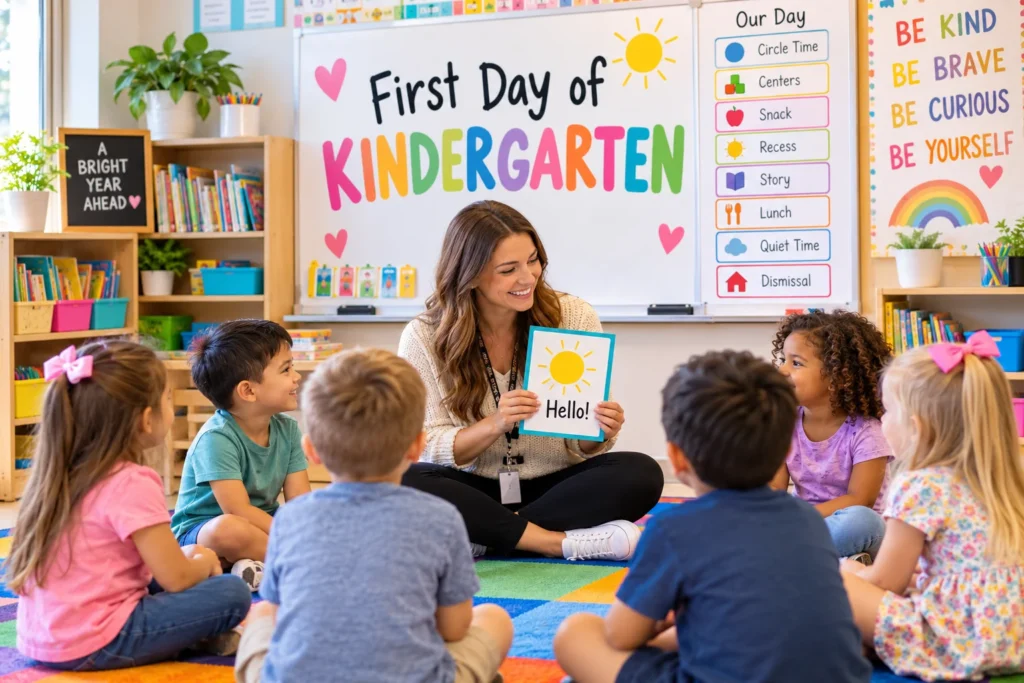
- Display a picture-based daily schedule.
- Prepare a few easy activities that require little explanation.
- Review bathroom, handwashing, and snack procedures.
- Check student support needs and emergency information according to school policies.
- Confirm transportation and authorized pickup arrangements.
- Keep extra activities ready, but do not feel obligated to use them.
Teacher tip: Instead of introducing every classroom material immediately, start with a few familiar options. Blocks, puzzles, drawing supplies, and picture books make welcoming activities because children can use them without complicated directions.
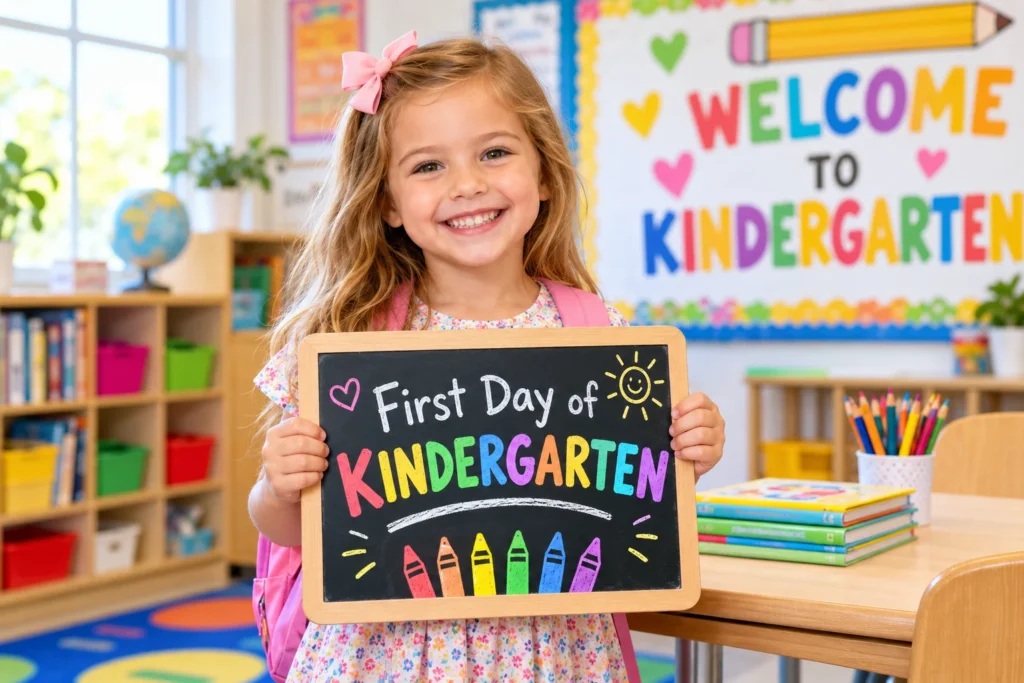
12 Fun First Day of Kindergarten Activities
The best first day of kindergarten activities help children learn names, explore their surroundings, practice simple routines, and connect with classmates.
Each activity below includes a suggested duration and materials so teachers can plan quickly.
1. Personalized Name Tag Welcome
Time: 5–10 minutes
Materials: Name tags, markers, and stickers
Welcome each student by name as they enter the classroom. Give them a personalized name tag and invite them to decorate it.
Children can add stickers, draw a small picture, or choose a color for their tag.
Why it’s helpful: Children begin recognizing their names and feel acknowledged as members of the classroom.
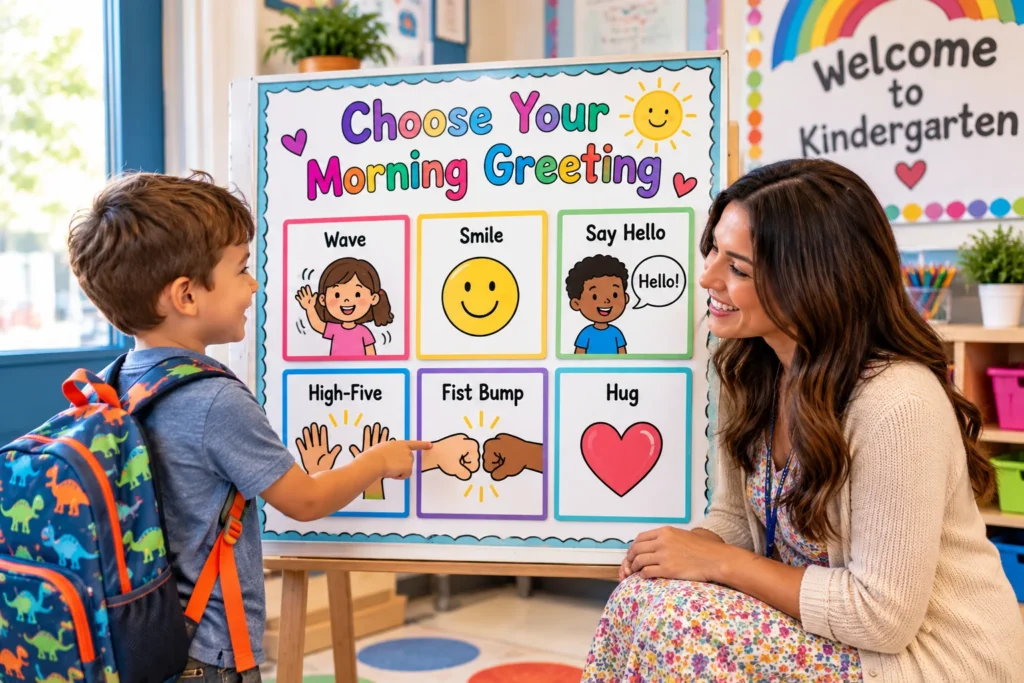
2. Choose Your Morning Greeting
Time: 1–2 minutes per child
Materials: Optional greeting choice chart
Offer children several ways to say hello:
- Wave
- Smile
- Say hello
- Give a high-five
- Use a communication card
Allow students to choose their preferred greeting without requiring physical contact.
Why it’s helpful: It encourages communication and gives children a comfortable way to connect with their teacher.
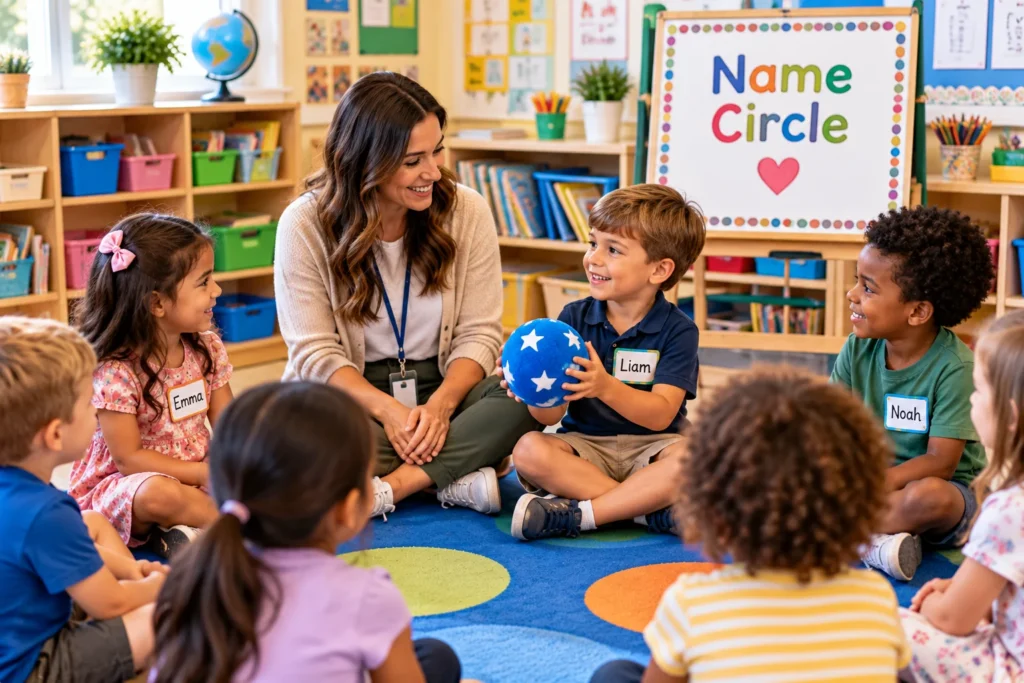
3. My Name Circle Game
Time: 8–10 minutes
Materials: Soft ball or stuffed animal
Gather students in a circle and introduce yourself. Pass a stuffed animal to one child and invite them to share their name.
Continue around the circle, keeping the activity relaxed and playful.
Children who do not want to speak can wave, show their name tag, or let the teacher introduce them.
Teacher tip: Divide a large class into smaller groups rather than expecting every child to remain seated for a long introduction.
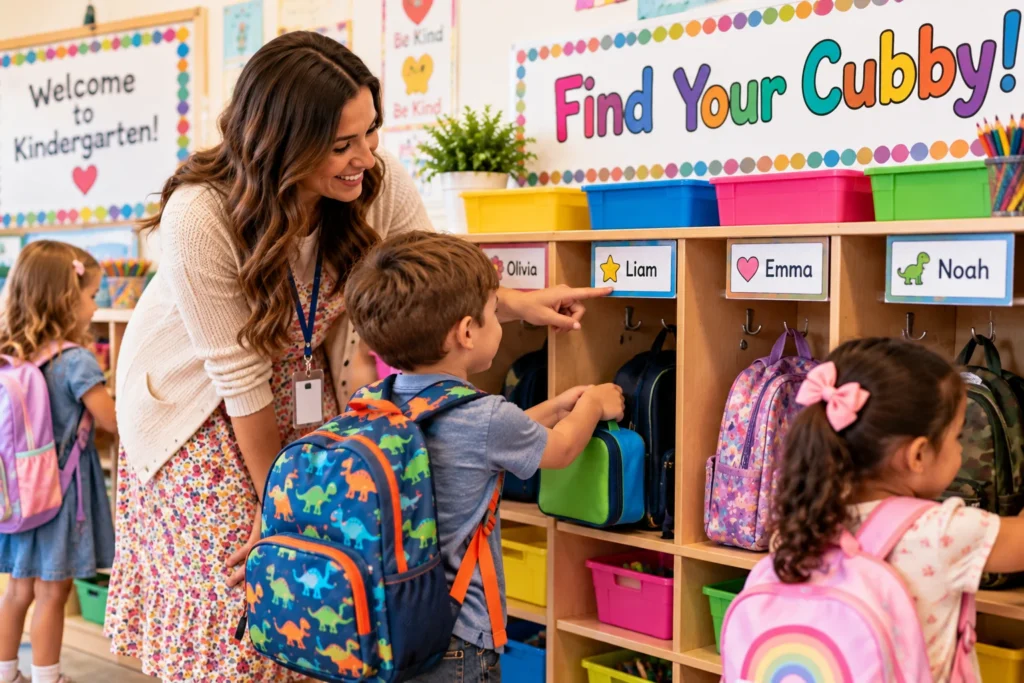
4. Find Your Cubby Activity
Time: 5–10 minutes
Materials: Labeled cubbies or backpack hooks
Invite students to find their personal storage spaces.
Show them how to hang their backpacks, place supplies in the correct area, and return to their chosen activity.
Use picture labels where appropriate.
Why it’s helpful: Children become familiar with their classroom and begin learning simple independence skills.
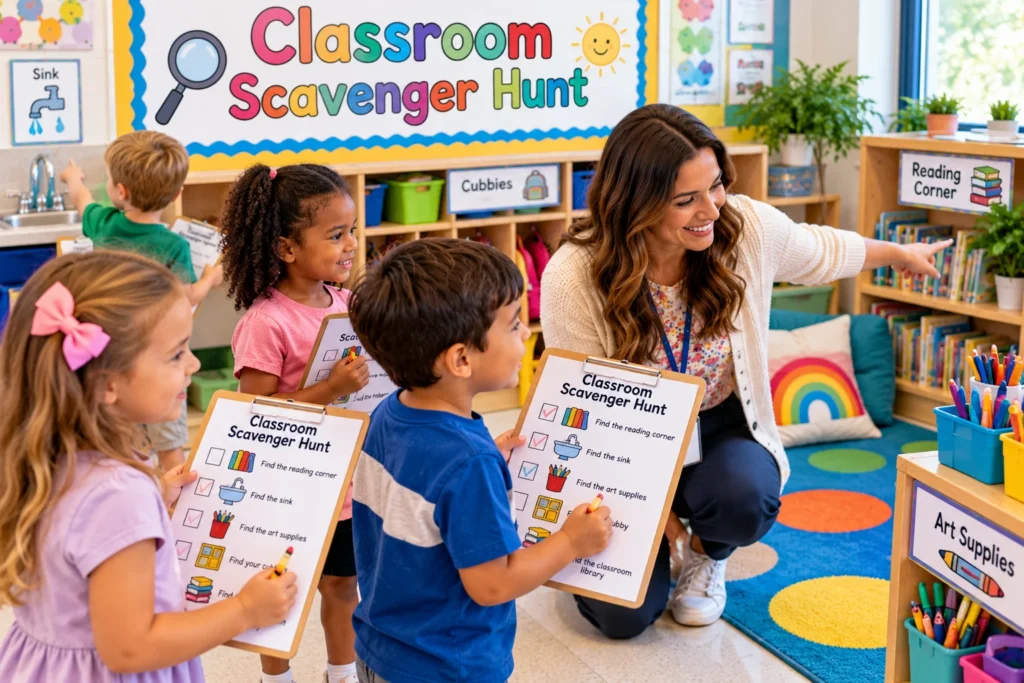
5. Classroom Scavenger Hunt
Time: 10–15 minutes
Materials: Picture-based scavenger hunt printable
Take students on a guided classroom tour.
Help them find:
- The classroom library
- The reading corner
- The bathroom or bathroom sign
- The handwashing area
- The art supplies
- Their personal cubbies
- The place to ask an adult for help
Children can check or color pictures on their worksheets as they find each location.
Teacher tip: Visit only a few areas at a time if students need shorter activities. The purpose is familiarity, not completing every item.
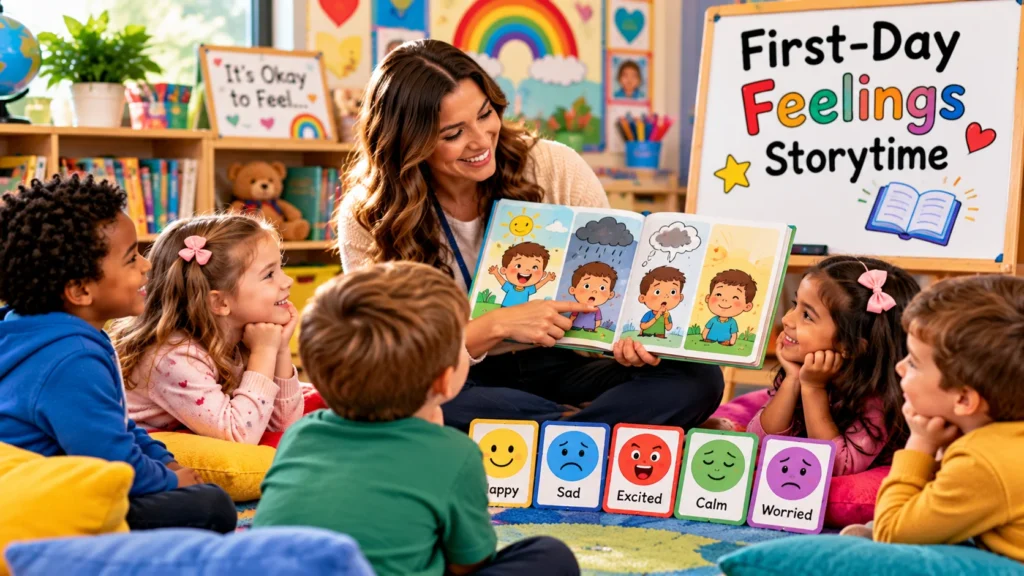
6. First-Day Feelings Storytime
Time: 10–15 minutes
Materials: An age-appropriate picture book
Choose a story about starting school, friendship, or experiencing a new situation.
Before reading, invite children to identify how a character might feel. Afterward, ask questions such as:
- How did the character feel?
- What helped the character feel better?
- Who can help us at school?
Children can answer with words, gestures, or emotion pictures.
Why it’s helpful: Storytime provides a gentle opportunity to discuss excitement, uncertainty, and asking for support.
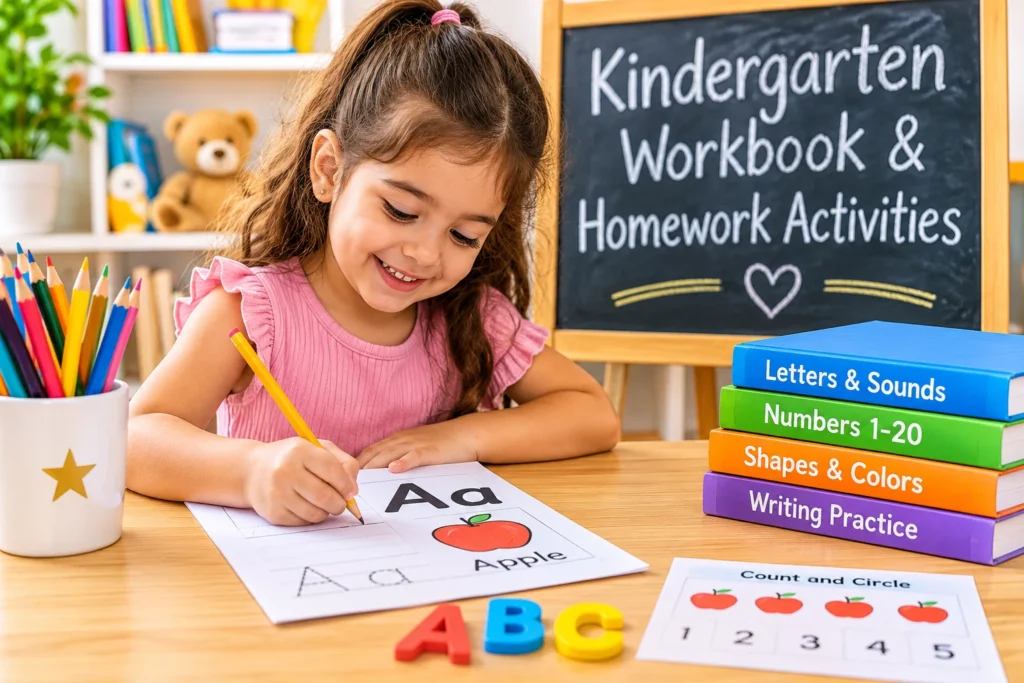
7. All About Me Drawing
Time: 15–20 minutes
Materials: All About Me worksheet and crayons
Invite students to draw themselves and something they enjoy.
You might ask them to share their favorite color, animal, food, or activity.
Teachers can write children’s spoken answers beside their pictures.
Why it’s helpful: This activity encourages self-expression and gives teachers useful information about their students’ interests.
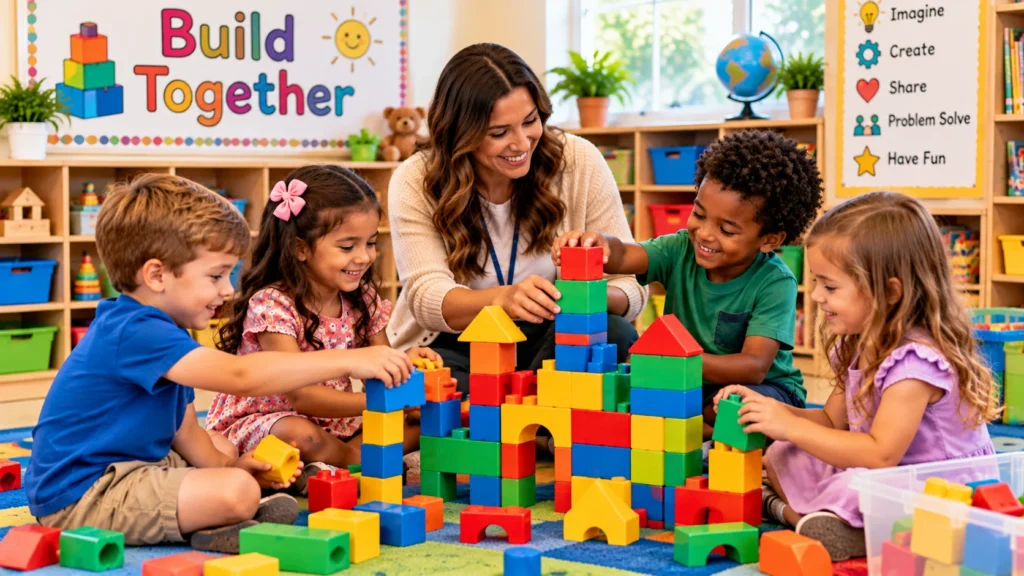
8. Build Together With Blocks
Time: 15–20 minutes
Materials: Large building blocks or age-appropriate construction toys
Set up a building station where children can create houses, towers, bridges, or anything they imagine.
Students can work independently, beside classmates, or together in small groups.
Encourage simple conversations about their creations without requiring everyone to build the same structure.
Why it’s helpful: Block play provides opportunities for cooperation, creativity, and problem-solving.
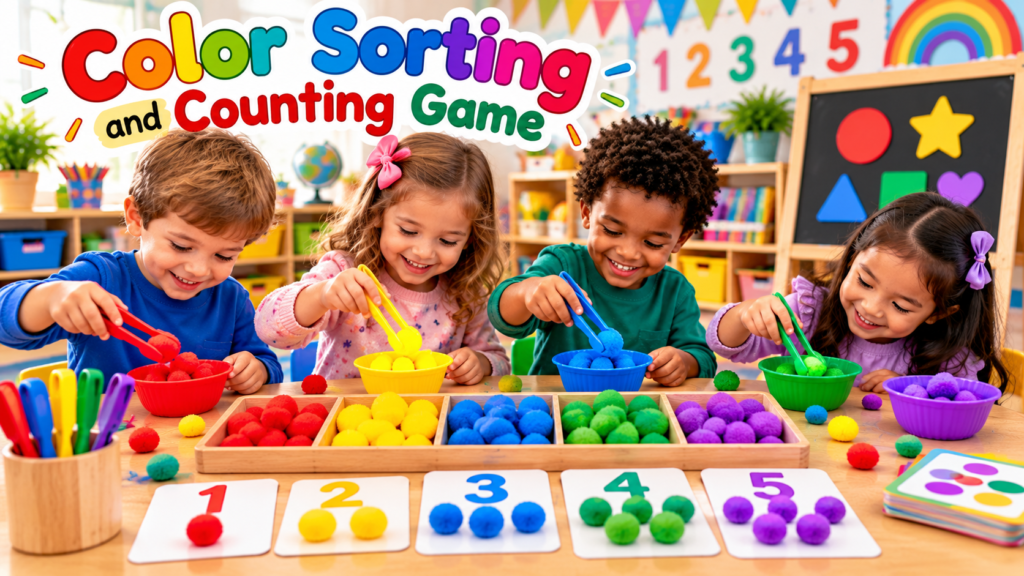
9. Color Sorting and Counting Game
Time: 10–15 minutes
Materials: Colored counters, blocks, or sorting trays
Place colorful objects on a table and invite children to organize them by color.
Students can also count items, compare groups, or create simple patterns according to their readiness.
Teacher tip: Begin with two or three colors and offer additional sorting challenges only when children are interested.
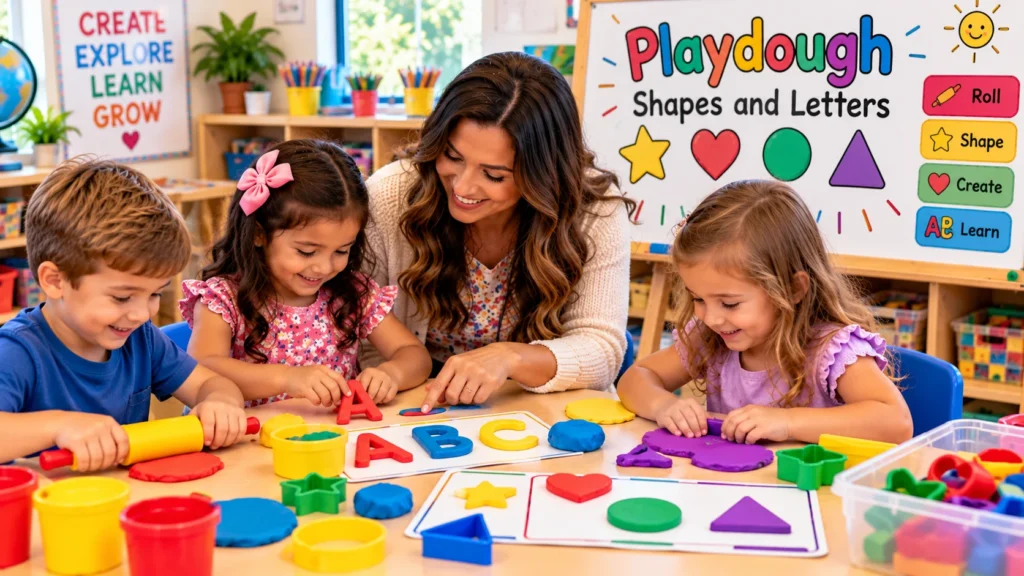
10. Playdough Shapes and Letters
Time: 10–15 minutes
Materials: Child-safe playdough, shape cutters, and optional letter mats
Let students roll, flatten, squeeze, and shape playdough.
Some children may enjoy creating simple letters, while others prefer making shapes or pretend food.
The activity should remain playful rather than becoming a handwriting test.
Why it’s helpful: Manipulating playdough provides fine-motor practice while encouraging creativity.
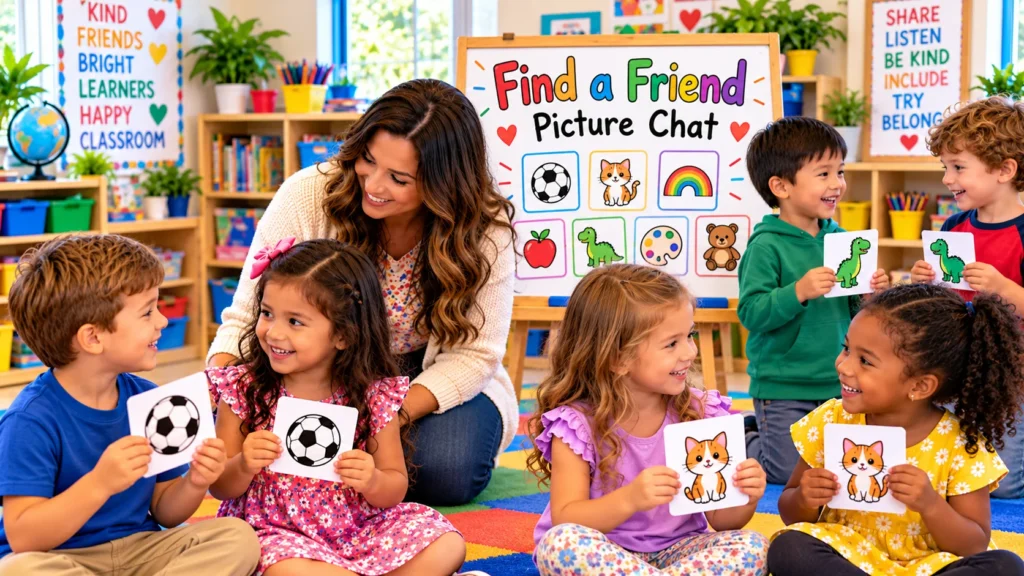
11. Find a Friend Picture Chat
Time: 8–10 minutes
Materials: Picture cards featuring animals, colors, foods, or hobbies
Invite children to choose a picture that represents something they like.
Pair interested students and encourage them to show or describe their choices.
For example, one child might select a cat picture while another chooses a soccer ball.
Why it’s helpful: Picture prompts give children an easy starting point for conversations and classroom friendships.
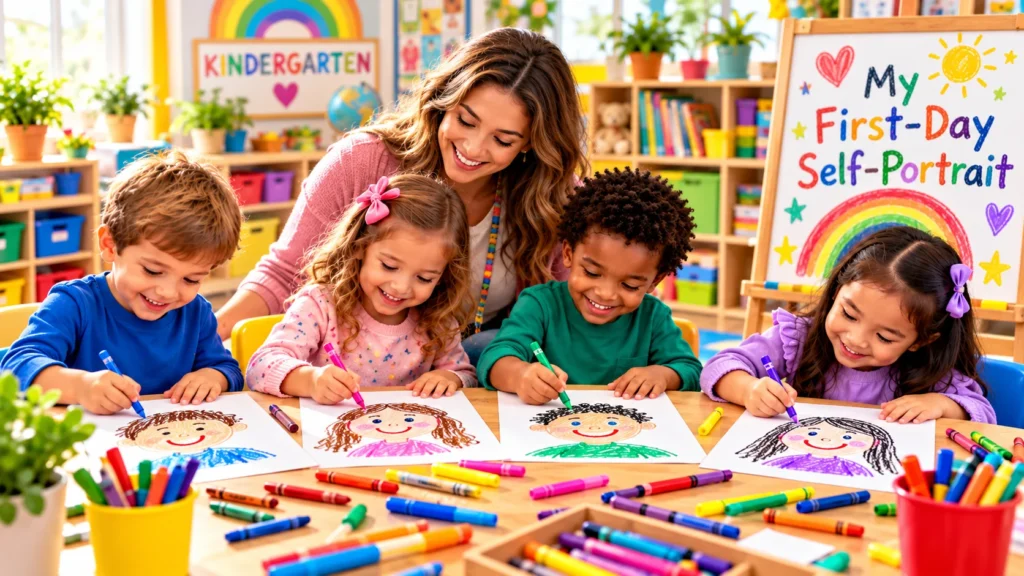
12. My First-Day Self-Portrait
Time: 15–20 minutes
Materials: Drawing paper, crayons, and markers
Ask children to draw themselves on their first day of school.
Write each child’s name and the date on the finished artwork.
Store the drawings in individual portfolios. Later in the school year, children can create another self-portrait and compare their work.
Teacher tip: Appreciate each child’s effort rather than judging how accurately they draw facial features or bodies.
First Day of Kindergarten Printables
A first day of kindergarten printable makes classroom preparation easier by providing a simple activity that teachers can organize in advance.
Printables work best when they complement hands-on learning instead of replacing play, movement, and social interaction.
The accompanying eight-page kindergarten printable pack includes the following resources.
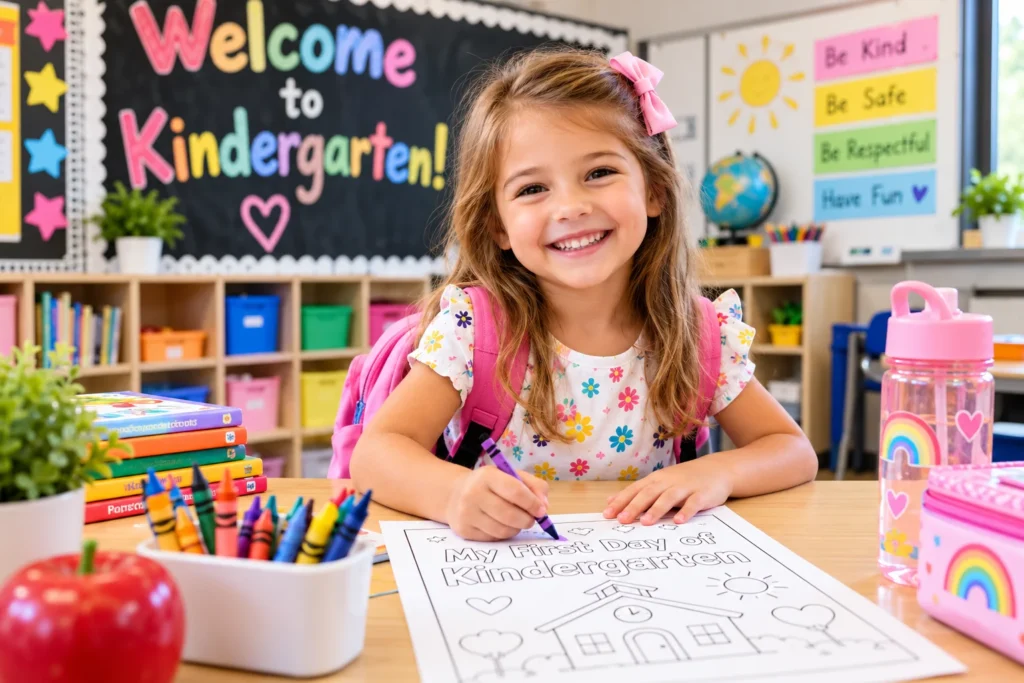
1. First-Day Coloring Page
A school-themed coloring sheet gives students a familiar activity during arrival or quiet transitions.
Children can color a school building and draw or describe something they are excited about.
2. All About Me Worksheet
This printable gives children space to share their names, favorite colors, preferred activities, and drawings.
Teachers can record verbal responses for children who are not yet writing independently.
3. My Name Practice Sheet
Children can look at their written names, practice making letter shapes, or decorate their names using colorful materials.
There is no need to expect accurate letter formation on the first day.
4. Classroom Scavenger Hunt
This checklist introduces important classroom locations through a guided activity.
Children can mark the places they discover while learning where to find supplies and ask for help.
5. Morning Routine Checklist
A simple visual or written checklist introduces common daily expectations, such as greeting the teacher, putting belongings away, and beginning an activity.
Teachers can add picture symbols for children who benefit from visual directions.
6. First-Day Photo Sign
A first-day photo sign can become a memorable keepsake for families.
Include a short heading and the school year. Follow school photography and privacy policies before taking or sharing photographs.
7. Parent Preparation Checklist
A parent checklist helps families remember essential supplies, transportation arrangements, and the information they need to share with the school.
8. First-Day Teacher Planner
A flexible planning sheet gives teachers space to organize welcome activities, circle time, learning stations, and dismissal procedures.
Printable preparation tip: Print the activity sheets before the school day, keep extra copies available, and organize them in separate folders. Choose only the resources that suit your students; completing all eight sheets is unnecessary.
Sample First Day of Kindergarten Schedule
A simple, predictable schedule helps children understand what happens during their school day.
The timetable below provides an example for a full-day kindergarten program. Adjust it according to local school hours, meals, outdoor play arrangements, and student needs.
| Time | Activity | Purpose |
|---|---|---|
| 8:00–8:20 AM | Arrival and welcome activities | Help children settle |
| 8:20–8:35 AM | Morning circle and greetings | Learn names |
| 8:35–9:00 AM | Building blocks and puzzles | Encourage exploration |
| 9:00–9:20 AM | Classroom tour | Introduce important areas |
| 9:20–9:40 AM | Handwashing and snack | Practice routines |
| 9:40–10:10 AM | Storytime and feelings discussion | Support communication |
| 10:10–10:40 AM | Outdoor play | Provide movement |
| 10:40–11:10 AM | Scavenger hunt and drawing | Explore and create |
| 11:10–11:50 AM | Lunch | Practice independence |
| 11:50 AM–12:15 PM | Quiet books and calm activities | Support transitions |
| 12:15–12:45 PM | Art and craft activities | Encourage creativity |
| 12:45–1:15 PM | Choice-based learning centers | Promote play and connection |
| 1:15–1:35 PM | Review classroom routines | Reinforce expectations |
| 1:35–2:00 PM | Reflection and dismissal | Prepare to go home |
The schedule is a planning example, not a requirement. Shorten activities when children appear tired or overwhelmed, and allow extra time for important routines.
Classroom Rules and Routines to Teach on Day One
Children do not need to memorize every classroom rule immediately. Focus on a few routines that will help them feel safe and understand what to do.
Practice Simple Classroom Expectations
Introduce positive rules such as:
- Use kind words.
- Take turns.
- Keep hands and feet safe.
- Take care of classroom materials.
- Ask for help when needed.
Demonstrate each expectation through everyday situations.
For example, show children how to ask for a turn with a toy or where to put materials after an activity.
Introduce Essential Routines
Bathroom: Explain how students can ask for help or permission according to school procedures. Respond promptly to children’s needs.
Handwashing: Demonstrate when and how to wash hands.
Transitions: Use a familiar signal, such as a short phrase or visual card, before changing activities.
Cleanup: Show students where materials belong and give them time to practice.
Dismissal: Explain where students wait and how they will be released to authorized adults.
Teacher tip: Practice routines several times during the first week. Repetition is part of learning, not a sign that students have failed to understand instructions.
Easy First-Day Kindergarten Crafts
A simple craft can help children celebrate their new classroom without requiring complicated materials.
My Name Rainbow
Write each child’s name on paper in large letters. Invite students to decorate the letters with different colors.
For children who are still exploring early writing, allow tracing, coloring, or sticker decoration.
Kindergarten Paper Crown
Prepare a paper crown template with a short first-day message.
Children can decorate their crowns with crayons, stickers, or shapes. Help students assemble the crowns safely.
Handprint or Hand Outline Keepsake
Create a keepsake using washable paint or a traced hand outline.
Add the child’s name and school year. Offer drawing alternatives for children who prefer not to use paint.
Keep crafts simple enough that children can make meaningful choices about their finished work.
How to Help Nervous Kindergarteners on the First Day
Some children arrive feeling excited, while others may cry, remain quiet, or hesitate to enter the classroom.
These reactions can occur during a major transition. Teachers and families should respond with patience rather than expecting every child to adjust immediately.
Create a Predictable Goodbye
Encourage families to establish a brief goodbye routine.
For example, a parent might say:
“I love you. Your teacher will help you today, and I’ll see you after school.”
Avoid disappearing without saying goodbye or repeatedly returning after the goodbye is complete.
Acknowledge Children’s Feelings
Use calm, reassuring language:
“It feels different here because everything is new. I’m here to help you.”
Avoid telling children they must stop crying or feel happy immediately.
Offer a Comfortable Starting Activity
Some children may prefer books, drawing, or puzzles before participating in a group activity.
Allow time for observation and gradual involvement.
Explain What Happens Next
Use a visual schedule to show the order of activities.
A child may feel more comfortable knowing that snack, playtime, storytime, and going home are all part of the day.
Work With Families
Discuss individual support strategies with caregivers when needed.
Children with communication differences, disabilities, sensory sensitivities, or other support needs may benefit from additional accommodations.
The goal is not to make every child behave identically. It is to help each child participate comfortably and safely.
First Day of Kindergarten Tips for Parents
Parents can make the transition easier by preparing children for new routines without creating unnecessary pressure.
The Night Before Kindergarten
- Choose comfortable school clothes.
- Pack the required classroom supplies.
- Label personal belongings.
- Check lunch and snack instructions.
- Confirm transportation and pickup arrangements.
- Talk positively about the next day.
- Follow a familiar bedtime routine.
The Morning of the First Day
Allow enough time for breakfast, getting dressed, and traveling to school.
Explain what the child can expect in simple language.
You might say:
“You’ll meet your teacher, see your classroom, play with different materials, and learn some new routines.”
Avoid promising that everything will feel easy. Instead, explain that it is okay to ask adults for help.
After the First School Day
Give children time to rest and process their experience.
Ask gentle questions, such as:
- What was your favorite activity?
- What did you play with?
- What was something new you learned?
- Was there anything that felt difficult?
Some children may not want to talk immediately, and that is okay.
Celebrate their effort and continue encouraging a positive relationship with school.
First Day of Pre-K vs. First Day of Kindergarten
The first day of Pre-K may look different from the first day of kindergarten because the children are often younger and have different developmental needs.
However, both settings should emphasize play, emotional security, and supportive relationships.
| Feature | Pre-K | Kindergarten |
|---|---|---|
| Typical age | Often 3–5 years | Often 5–6 years |
| Main focus | Exploration, play, and social development | Play, routines, early literacy, and math |
| Group activities | Often shorter and more flexible | Gradually more structured |
| Writing | Drawing, marks, and early letter exploration | Developing letter recognition and writing |
| Independence | Frequent adult support | Increasing independence with guidance |
Program structures and entry ages vary by location.
In places where the term first day of kindy is used, it may refer to a kindergarten or early childhood program, depending on the local education system.
Regardless of terminology, children benefit from developmentally appropriate activities and a welcoming first-day experience.
Making Kindergarten Activities Inclusive
Children enter kindergarten with different abilities, languages, interests, and prior school experiences.
Teachers can make first-day activities more accessible by offering different ways to participate.
| Classroom Need | Helpful Adaptation |
|---|---|
| Child is shy or hesitant | Allow observation before joining |
| Child is not yet writing | Offer drawing, stickers, or adult transcription |
| Child benefits from visual directions | Use picture cards and demonstrations |
| Child is learning English | Include familiar words, visuals, and home-language support |
| Child has sensory sensitivities | Offer quieter spaces and alternative materials |
| Child needs movement | Include flexible seating and movement breaks |
Inclusive activities help children participate according to their individual strengths rather than expecting everyone to complete identical tasks.
Common First-Day Kindergarten Mistakes to Avoid
Planning Too Many Activities
A long list of activities can make the day feel rushed. Choose a few meaningful experiences and keep alternatives ready.
Expecting Children to Know School Routines
Some children have attended preschool, while others are entering a classroom for the first time. Explain and demonstrate expectations without making assumptions.
Using Too Many Worksheets
Printable activities can be useful, but young children also need play, exploration, movement, and interaction.
Forcing Children to Participate
A child who watches an activity before joining may still be learning from the experience. Offer choices and allow gradual participation.
Rushing Dismissal
Make time to gather belongings, check transportation arrangements, and follow authorized pickup procedures.
Focusing Only on Academic Skills
The first day also involves developing trust, recognizing classroom spaces, communicating needs, and beginning friendships.
How to End the First Day of Kindergarten Successfully
A calm ending helps children leave school with a positive memory.
Before dismissal, invite students to share something they enjoyed.
They may talk about a favorite activity, show a drawing, or point to a picture representing their day.
Help children collect their belongings, review the next school day’s expectations, and follow the school’s dismissal procedures.
You might end with a simple message:
“Today we learned about our classroom, practiced new routines, and met new friends. We will keep learning together.”
Teachers can also provide a brief update for families about what children practiced during their first day.
Frequently Asked Questions
What should children do on the first day of kindergarten?
Children usually meet their teacher, explore the classroom, participate in simple activities, learn basic routines, and begin getting to know classmates. The exact schedule varies by school.
What are the best first day of kindergarten activities?
Name games, classroom scavenger hunts, storytime, building blocks, coloring, drawing, and hands-on sorting games are good options. Choose activities that suit children’s interests and readiness.
What first day of kindergarten printables are useful?
Coloring pages, All About Me worksheets, name practice sheets, morning routine checklists, scavenger hunts, and photo signs are useful resources for classroom preparation.
How long should first-day activities last?
Many introductory activities can take around 5–20 minutes, but activity length should depend on children’s engagement and individual needs.
How can I help my child feel ready for kindergarten?
Talk about school positively, practice everyday routines, read books about starting school, visit the classroom if possible, and establish a reassuring goodbye routine.
What if my child cries on the first day?
Stay calm, acknowledge the child’s feelings, and follow the school’s arrival procedures. Teachers can provide reassurance and supportive activities. Some children need more time or individualized support to adjust.
Is the first day of Pre-K the same as kindergarten?
Not necessarily. Pre-K often involves younger children and may have shorter, more flexible routines. Both should provide developmentally appropriate activities, play, and emotional support.
Final Thoughts
The first day of kindergarten is about more than introducing classroom rules or completing worksheets. It is the beginning of new relationships, routines, and learning experiences.
Teachers can make the day welcoming by planning simple activities, preparing useful printables, and giving children time to explore.
Parents can help by practicing routines, preparing school supplies, and reassuring children that it is okay to experience different feelings.
Most importantly, remember that children adjust at their own pace. A successful first day is one where students feel safe, supported, and ready to return for another day of learning.