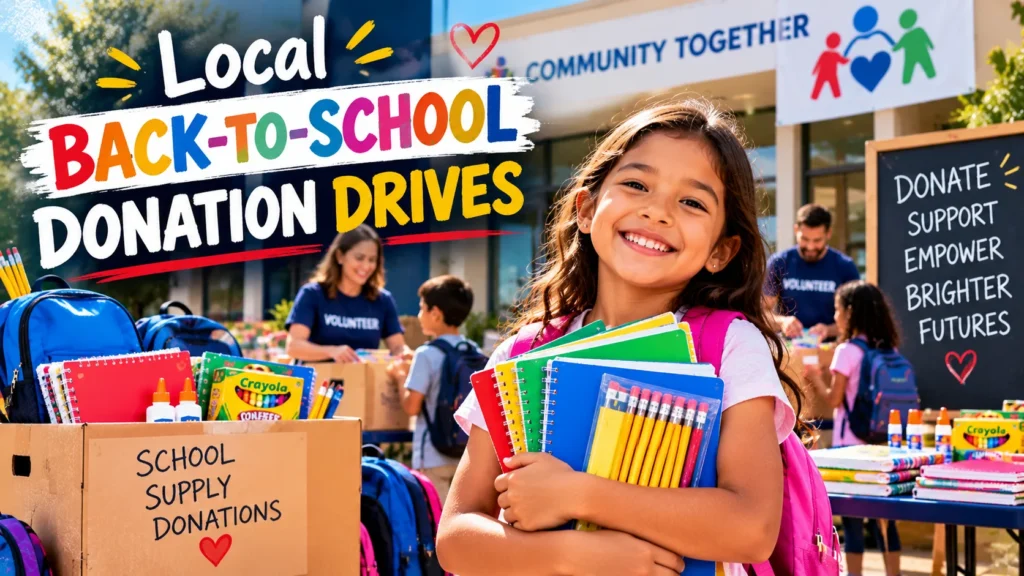
Wondering where to donate school supplies instead of leaving unused notebooks, pencils, or backpacks in storage? Many schools, charities, and community organizations welcome educational donations that help children prepare for class.
The best places to donate school supplies include local public schools, school districts, community centers, educational nonprofits, and organized back-to-school donation drives. You can also support classroom projects online if you do not have physical supplies to give.
However, not every organization accepts the same items. Some require brand-new materials, while others may welcome clean, gently used backpacks and classroom supplies.
This guide explains where to donate, which supplies are most useful, how to find local donation opportunities, and where families can look for free back to school supplies.
Where Can You Donate School Supplies?
You can donate school supplies through several organizations, depending on your location and the materials you want to give.
Here is a quick comparison of the most practical options.
| Donation Option | How You Can Help | What to Know |
|---|---|---|
| Local public schools | Donate requested classroom supplies | Contact the school first |
| School districts | Support student assistance programs | Policies vary by district |
| Kids In Need Foundation | Donate new K–12 school supplies | New supplies only |
| The Salvation Army | Participate in Stuff the Bus drives | Collection locations and dates vary |
| Community centers | Support local children and families | Confirm current programs |
| Faith-based charities | Contribute to community supply drives | Check accepted items |
| DonorsChoose | Fund teacher-requested materials | Financial donations rather than physical drop-offs |
| Local youth organizations | Support educational activities | Ask about supply needs |
For physical donations, start with a nearby school or a currently operating donation drive. If you prefer supporting a classroom online, consider a verified teacher-requested supply project.
8 Best Places to Donate School Supplies
1. Local Public Schools
Public schools are one of the easiest places to begin your search. Some schools welcome extra notebooks, pencils, folders, and other essentials for classrooms or students who need additional support.
Teachers may need supplies throughout the year, not just when classes begin.
Commonly requested materials include:
- Notebooks and loose-leaf paper
- Pencils, pens, and erasers
- Folders and binders
- Crayons and washable markers
- Glue sticks and classroom art supplies
- Backpacks and pencil cases
Before donating, call the school’s front office and ask whether it accepts supplies directly. Some districts coordinate donations through a central office or approved community partner.
Best for: Donors who want to support students in their own neighborhood.
2. Kids In Need Foundation
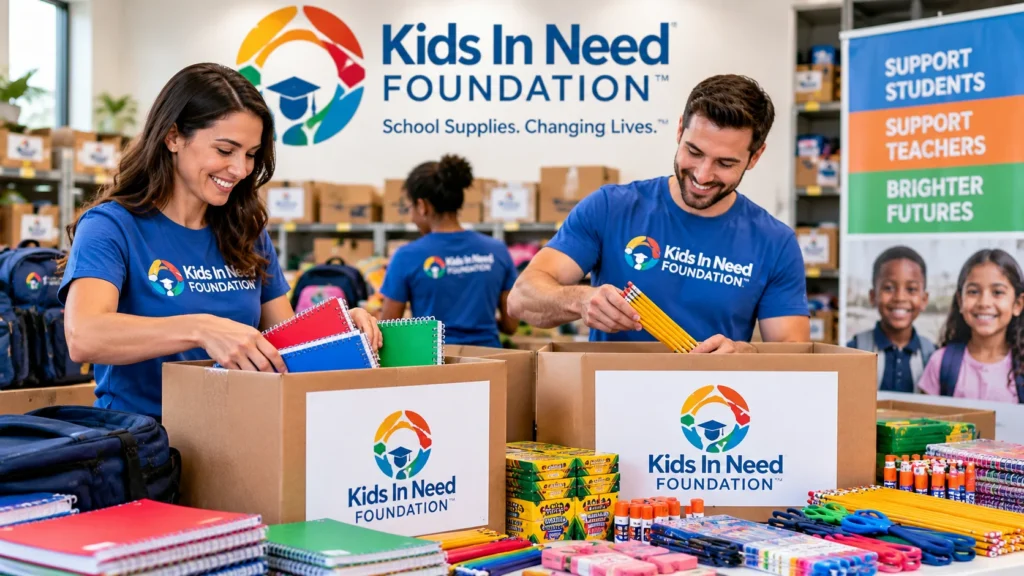
Kids In Need Foundation is a US nonprofit that helps students and teachers in under-resourced schools access essential classroom materials.
Its programs include distributing school supplies, supporting teacher resource centers, and helping communities organize supply drives.
The foundation accepts new, K–12-appropriate school supplies through its product donation program. It does not accept used items, chemicals, or hazardous materials.
Examples of suitable supplies include:
- Number 2 pencils
- Single-subject notebooks
- Crayons and colored pencils
- Washable markers
- Folders and erasers
- Pencil pouches
- Round-tip scissors
Donors should follow the foundation’s product donation process rather than sending supplies without coordination.
Best for: Individuals, businesses, and groups donating new supplies or organizing a larger collection.
3. The Salvation Army
The Salvation Army operates community assistance programs, including seasonal school supply collections in participating areas.
Its Stuff the Bus campaign works with Walmart to collect school supplies during the summer.
At participating locations, donors may be able to purchase additional notebooks, crayons, or pencils and place them in designated collection bins.
Some local programs also provide online supply registries.
Collection dates and participating locations change, so check the current program before visiting a store.
Best for: People who prefer organized community donation drives with convenient drop-off options.
4. Community Centers and Family Resource Centers
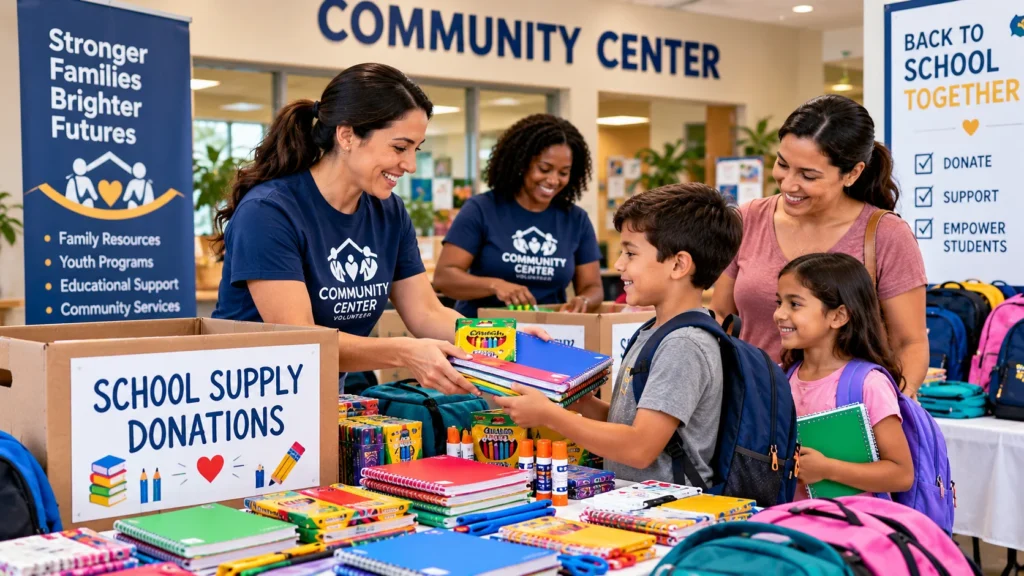
Community centers frequently connect families with local educational and social services.
Some organize backpack giveaways, tutoring programs, or school supply collections. Others may refer donors to nearby organizations with active programs.
Ask your local center:
- Does it currently collect school supplies?
- Which supplies are most useful?
- Are there specific grade levels that need help?
- Can donations be dropped off during regular hours?
A community center may also be able to recommend schools or nonprofit partners that need additional materials.
Best for: Donors who want to support families in their local community.
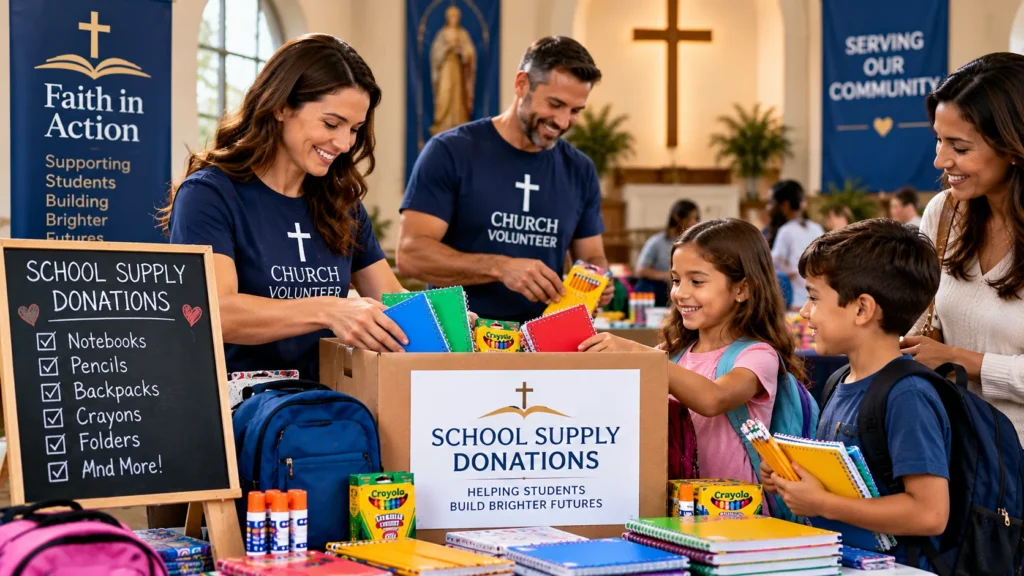
5. Churches and Faith-Based Charities
Many faith-based organizations coordinate charitable activities for families and children.
Depending on the community, these may include school supply drives, backpack distributions, and educational assistance programs.
Churches and other local religious organizations may partner with schools to collect supplies for children before the academic year begins.
Check whether the organization accepts new or gently used materials and whether its current collection serves the community you wish to support.
Best for: Donors who want to participate in neighborhood-based charitable programs.
6. Public Libraries and Youth Organizations
Public libraries provide educational resources and sometimes participate in school supply donation events.
Youth organizations and after-school programs may also need materials for homework help, reading activities, arts and crafts, or educational workshops.
Useful supplies may include notebooks, pencils, markers, construction paper, and age-appropriate learning materials.
However, libraries and youth programs do not universally accept physical donations.
Contact the organization before visiting and ask whether it has an active collection or an educational supplies wish list.
Best for: Donors interested in supporting after-school learning and community education.
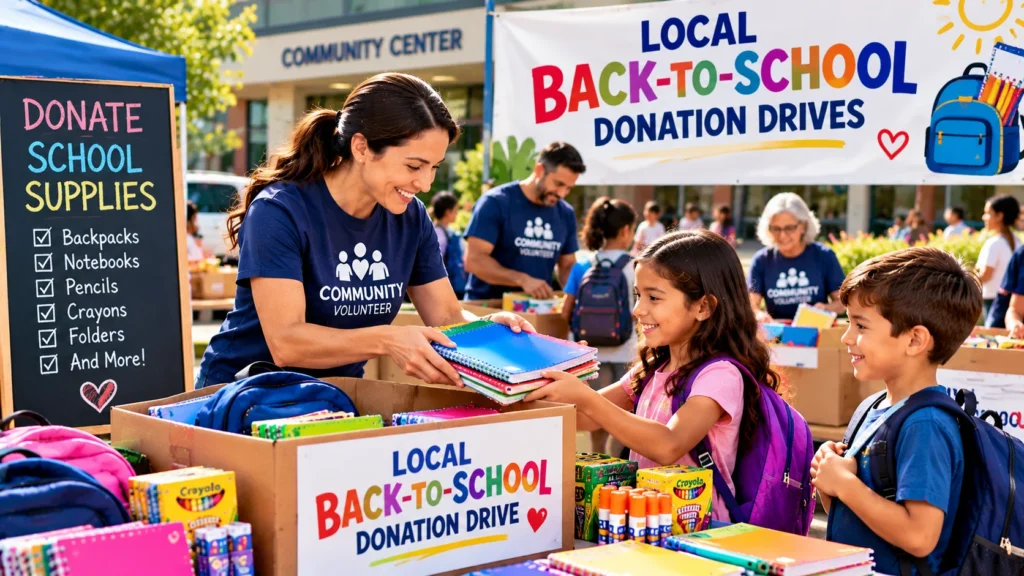
7. Local Back-to-School Donation Drives
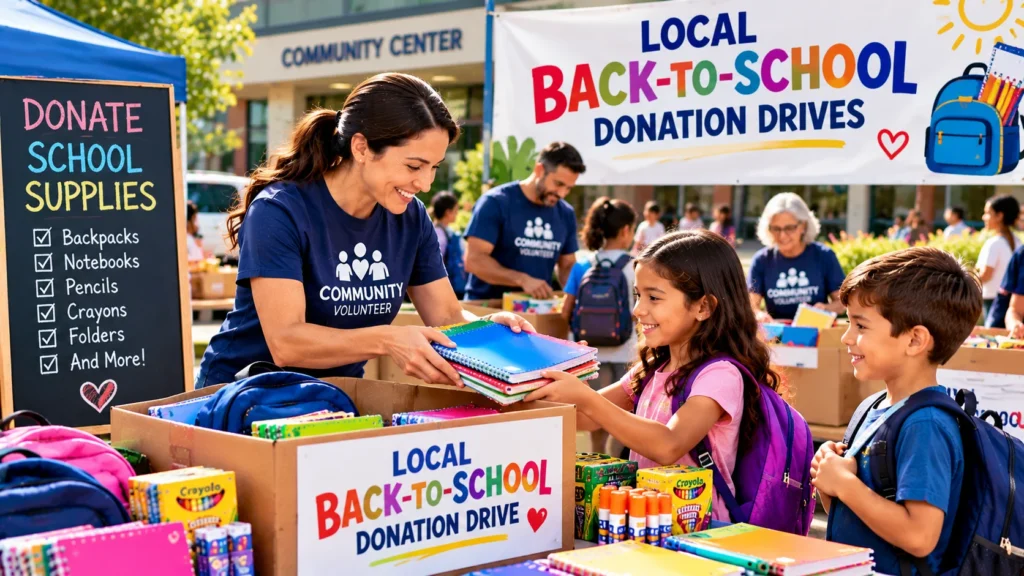
Back-to-school donation drives bring together schools, charities, businesses, and volunteers to collect classroom essentials.
These collections often take place during the summer, although some organizations run supply programs at other times.
You may find donation drives through:
- School district announcements
- Local nonprofit organizations
- Community event calendars
- Workplace volunteer programs
- Neighborhood associations
Some drives collect individual items, while others request complete backpacks filled with supplies.
Always check the collection schedule and requirements before preparing your donation.
Best for: Donors looking for a simple, organized drop-off opportunity.
8. DonorsChoose Classroom Projects
DonorsChoose provides a different way to support students.
Instead of delivering school supplies yourself, you contribute financially toward classroom materials requested by eligible US public school teachers.
Teachers can request essential items such as pencils, notebooks, books, and other educational resources.
Once contributions meet the applicable funding requirements, the platform coordinates the purchase and delivery of materials.
This can be useful if you want to help students in a particular school or support a classroom without arranging a physical donation.
Best for: People who prefer making financial contributions toward specific educational needs.

What School Supplies Are Most Needed?
The most useful school supplies are those regularly used in classrooms and specifically requested by receiving organizations.
Here is a practical school supply donation checklist.
| Category | Useful School Supplies |
|---|---|
| Writing supplies | Pencils, pens, erasers, sharpeners |
| Paper products | Notebooks, loose-leaf paper, composition books |
| Organization | Folders, binders, pencil cases |
| Art supplies | Crayons, colored pencils, washable markers |
| Classroom essentials | Glue sticks, rulers, safety scissors |
| School bags | Backpacks and book bags |
| Learning materials | Age-appropriate books and educational resources |
Which Supplies Should You Donate First?
If you are purchasing new items specifically for donation, prioritize supplies from the organization’s wish list.
Common classroom essentials such as pencils, notebooks, folders, and paper are often practical choices.
For backpack donations, consider whether the receiving program prefers empty backpacks or fully assembled supply kits.
Avoid buying specialized products without checking the grade levels and classroom requirements.
Can You Donate Used School Supplies?
Yes, some organizations accept gently used school supplies, but acceptance policies vary.
Clean, functional backpacks, binders, pencil cases, and certain educational materials may be suitable for reuse programs.
Other organizations, including Kids In Need Foundation, require new supplies.
Before donating used items, inspect them carefully.
Potentially acceptable items, when permitted:
- Clean backpacks with working zippers
- Undamaged binders
- Reusable pencil cases
- Complete, usable art supply sets
- Books in good condition
Items generally better to avoid donating:
- Broken pencils or damaged stationery
- Dried-out markers
- Heavily used notebooks
- Torn or moldy backpacks
- Leaking glue or paint
- Materials containing private student information
A helpful rule is to donate items that another student can use safely and comfortably.
If the materials are unsuitable for donation, consider appropriate recycling or disposal options.
How to Find School Supply Donation Locations Near You
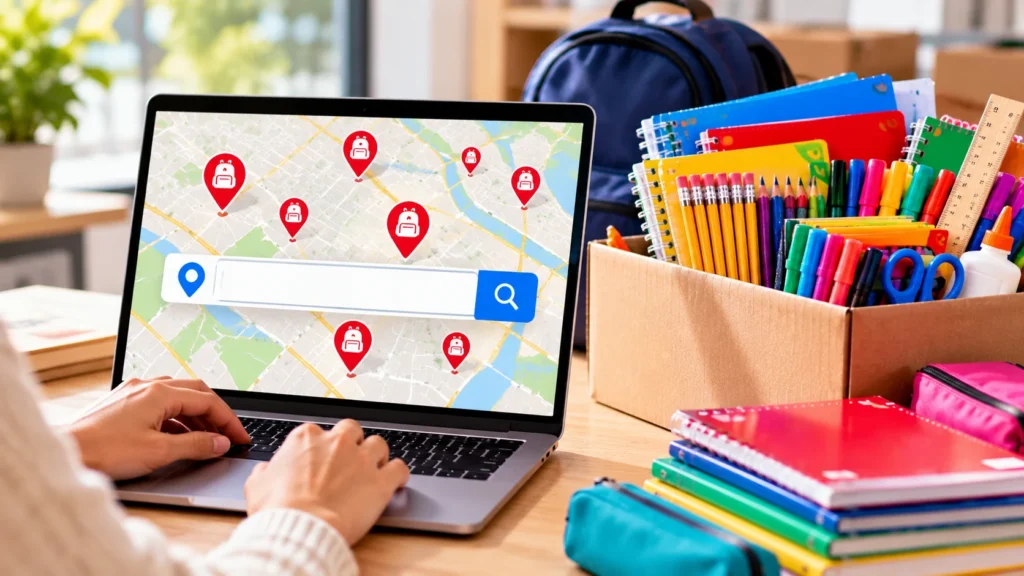
If you are searching for where to donate school supplies near me, start with local organizations rather than assuming every national charity has a nearby collection site.
Step 1: Search by City or ZIP Code
Use location-specific search phrases such as:
- School supply donation centers near me
- Donate school supplies in [city]
- Backpack donation drives near me
- School supply drop-off locations in [ZIP code]
- Local charities accepting school supplies
Look for recent event announcements and official organization websites.
Step 2: Contact Your Local School District
Your school district may know which schools need extra supplies or which community partners coordinate donations.
Ask whether direct donations are accepted or if supplies must be delivered through an authorized program.
Step 3: Check Current Community Drives
Search local community center announcements, library calendars, and nonprofit event pages.
A drive advertised in a previous year may not be operating now, so confirm the current collection period.
Step 4: Verify Before Dropping Off
Before visiting a donation location, ask these questions:
| Question | Why It Matters |
|---|---|
| Are you currently accepting supplies? | Confirms the donation opportunity is active |
| What items do you need most? | Helps avoid unwanted donations |
| Do supplies need to be new? | Clarifies condition requirements |
| What are your drop-off hours? | Prevents an unnecessary trip |
| Can I receive a donation acknowledgment? | Helps with recordkeeping |
A brief phone call or email can make the process much easier.
How to Donate School Supplies Step by Step
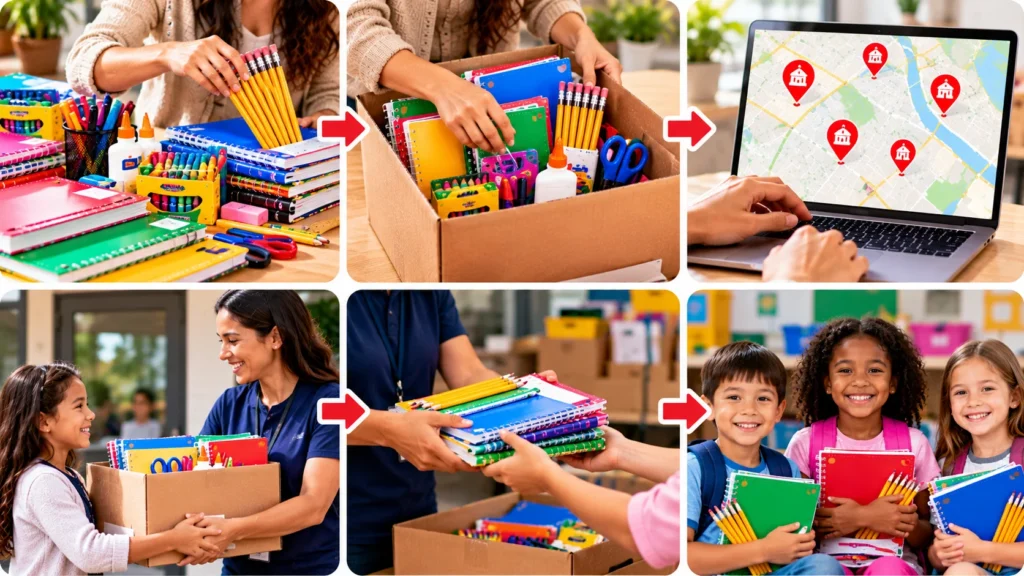
Donating school supplies usually requires only a little planning.
Step 1: Gather Available Supplies
Start by checking your home, office, or storage space for unused notebooks, pencils, backpacks, and other educational materials.
Group similar items together so they are easier to inspect.
Step 2: Choose a Suitable Organization
Select a school, nonprofit, community center, or donation drive that supports the students you want to help.
Make sure it accepts the types of supplies you have available.
Step 3: Confirm Donation Requirements
Contact the organization before preparing your donation.
Ask whether it has a wish list, minimum quantity, or specific instructions for used supplies.
Step 4: Inspect and Organize Items
Check that supplies are clean, safe, and functional.
Keep matching items together and avoid including broken or incomplete materials.
Step 5: Pack Supplies Properly
Use sturdy boxes or bags to protect donations during transportation.
Separate notebooks from items that could leak, break, or damage paper products.
Step 6: Arrange Delivery
Follow the organization’s drop-off, shipping, or collection instructions.
Do not leave unattended donations outside a building unless the organization permits it.
Step 7: Keep a Record
If you want documentation, ask the organization whether it can provide written acknowledgment of your donation.
Keeping an itemized list can also help with your personal records.
Where to Find Free Back to School Supplies
Donating school supplies helps students, but some families may be searching for assistance themselves.
If your family is struggling to afford essential classroom materials, several types of programs may offer free back to school supplies.
Availability and eligibility depend on your location.
1. Public School Assistance Programs
Start with your child’s school or district office.
Some schools provide basic supplies, distribute donated materials, or refer families to community partners.
Ask the school counselor or family liaison whether there is a student supply assistance program.
2. Salvation Army School Supply Giveaways
Some local Salvation Army programs distribute backpacks and school supplies to families at no cost.
Contact your local organization to find out whether assistance is currently available and whether registration is required.
3. Community Back-to-School Events
Community organizations may host seasonal giveaways where children receive supplies such as backpacks, notebooks, pencils, and folders.
These events can have limited quantities or registration deadlines.
Check official announcements before attending.
4. Local Charities and Family Resource Centers
Nonprofit organizations and family support programs may provide educational materials or connect families to other assistance services.
Contact organizations in your city to ask about available school supply programs.
5. United Way 211
In the United States, calling 211 can connect you with information about local assistance and community services.
Ask whether there are school supply giveaways, backpack programs, or other educational resources available in your area.
The service can help identify possible resources, although it cannot guarantee that a particular program has supplies available.
How Can Families Qualify for Free School Supplies?
Requirements vary by organization.
Some giveaways are open to community members, while others may have eligibility rules based on residency, school enrollment, financial need, or registration.
Families should check whether they need:
- A completed registration form
- Proof of residence
- Student enrollment information
- Identification or other requested documentation
Not every program requires these documents.
Contact the provider directly to confirm its policies.
How to Organize a School Supply Donation Drive
If you want to help more students, organizing a school supply drive can be a practical way to bring your community together.
A small collection at a workplace, school, or neighborhood center can be enough to begin.
Choose a School or Charity
Contact the organization that will receive the donations.
Ask for a supply wish list and confirm that it can accept your planned collection.
Create a Donation Checklist
Focus on essential school materials rather than collecting random stationery.
A simple list might include pencils, notebooks, folders, crayons, and backpacks.
Set Collection Dates
Choose a suitable collection period and make the deadlines clear to participants.
Provide a safe, accessible location where approved supplies can be dropped off.
Promote the Drive
Share the details with friends, coworkers, community groups, and neighbors.
Explain which supplies are needed, where they should be delivered, and the final collection date.
Sort and Deliver Donations
After the collection ends, organize supplies according to the recipient’s requirements.
Arrange delivery with the school or charity and thank everyone who contributed.

How to Make Your School Supply Donation More Helpful
A useful donation is not necessarily the largest one. It is a donation that meets a real need.
Follow the Organization’s Wish List
Schools and nonprofits often know which materials are most needed.
Following their recommendations helps prevent excess supplies that may be difficult to distribute.
Donate Clean and Functional Items
Check each item before packing.
New supplies are usually straightforward to prepare, while gently used items require additional inspection.
Think Beyond Back-to-School Season
Supplies can run out during the academic year.
Some teachers and community programs welcome replenishments after school has started.
Consider Age-Appropriate Materials
A preschool classroom may need crayons and washable markers, while older students may require notebooks, binders, and other writing supplies.
Ask about the ages or grade levels being served.
Choose Reliable Donation Programs
Look for organizations with clear contact information, donation guidelines, and an explanation of how contributions are used.
If donating money, verify the organization’s identity and use an official payment method.
Other Ways to Support Students Without Donating Supplies
Physical school supplies are not the only way to help students.
You can also:
- Make a financial donation: Support a verified nonprofit’s educational programs.
- Fund classroom requests: Contribute to materials requested by teachers through appropriate platforms.
- Volunteer your time: Help sort donations, assemble backpacks, or assist with community events.
- Share local donation opportunities: Inform others about verified school supply drives.
- Support educational programs: Contribute to tutoring, reading, or after-school learning initiatives.
Choose an approach that fits your budget, schedule, and community’s needs.
Frequently Asked Questions
Where is the best place to donate school supplies?
Local public schools, school districts, community centers, and educational nonprofits are good places to start. If you want to donate new supplies nationally, Kids In Need Foundation is another option. Always contact the organization to confirm its current donation requirements.
Can I donate school supplies directly to a school?
Yes, some schools accept notebooks, pencils, backpacks, and other classroom materials directly. However, donation rules vary by school district. Contact the administration before dropping off supplies to confirm which items are needed.
Does Goodwill accept school supplies?
Goodwill donation acceptance policies vary by local organization. Some locations may accept usable school-related items. Goodwill generally sells donated goods to support its programs, so donations are not necessarily distributed directly to students.
Can I donate used backpacks and notebooks?
Some local organizations may accept clean, gently used backpacks or other reusable materials. Many programs require new notebooks and stationery. Ask about condition requirements before donating used supplies.
When should I donate school supplies?
Summer is a common time for school supply collections because many programs prepare for the upcoming academic year. However, some schools and organizations need supplies throughout the year. Contact the recipient to learn about its current needs.
Where can low-income families get free back to school supplies?
Families can ask local schools, community centers, Salvation Army programs, and family resource organizations about free supplies. Calling 211 may also help identify local assistance programs. Availability and eligibility requirements vary.
Can I donate school supplies online?
Yes. Some organizations offer verified online supply registries, while platforms such as DonorsChoose allow financial contributions toward classroom materials. Follow the provider’s official donation instructions.
Are donated school supplies tax-deductible?
In the United States, qualifying donations to eligible charitable organizations may be deductible under applicable tax rules. Eligibility depends on factors such as the recipient, donation value, and documentation. Check current IRS requirements before claiming a deduction.
What school supplies should I avoid donating?
Avoid damaged backpacks, broken stationery, dried-out markers, leaking products, and materials containing personal information. Organizations may also reject used supplies or items unsuitable for the students they serve.
How do I know my school supply donations will reach students?
Choose an organization that explains how it collects and distributes supplies. Look for transparent donation policies, current contact details, and information about its educational programs. You can also ask whether donations are delivered directly to students, provided to teachers, or used to fund other services.
Conclusion
Knowing where to donate school supplies makes it easier to turn extra notebooks, pencils, backpacks, and other classroom materials into meaningful support for students.
Local schools, educational charities, community centers, and organized donation drives provide several ways to contribute. You can also make financial donations, support teachers online, or volunteer with educational programs.
The most important step is to match your donation with an organization’s actual needs. Check its requirements, prepare your supplies carefully, and confirm the delivery process.
Whether you donate a few pencils or organize a larger collection, thoughtful contributions can help students access the materials they need for everyday learning.
Start by contacting a local school or trusted nonprofit and asking which school supplies would be most helpful.