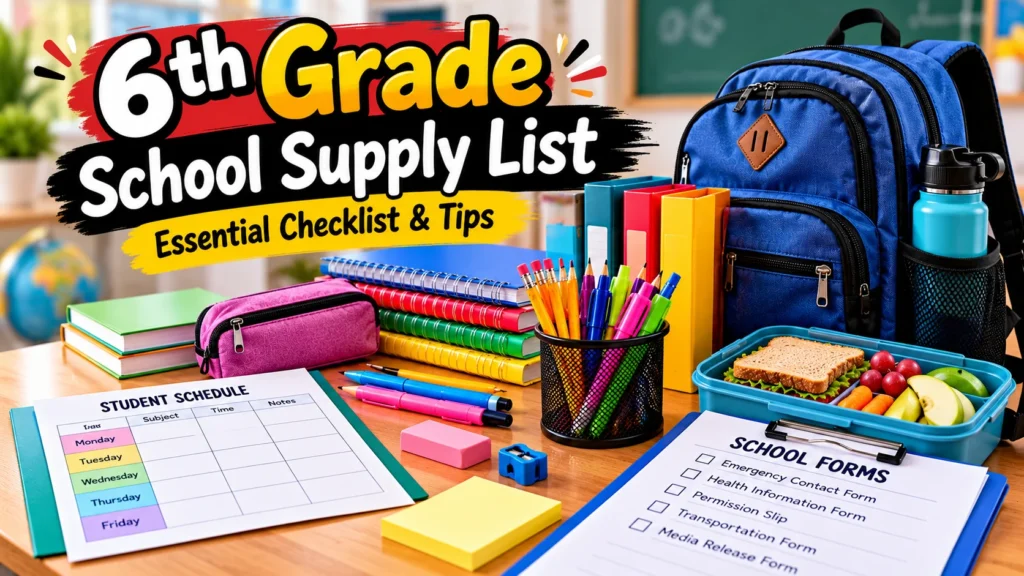
Getting ready for sixth grade is an exciting step for students and parents. Between new classes, homework assignments, and increased responsibilities, having the right school supplies can help students stay organized from the first day.
A complete 6th grade school supply list should include everyday writing materials, notebooks, folders, organizational tools, and any subject-specific items required by teachers.
Whether your child is entering middle school or completing sixth grade in an elementary school, this guide covers what to buy, what can wait, and how to prepare without overspending.
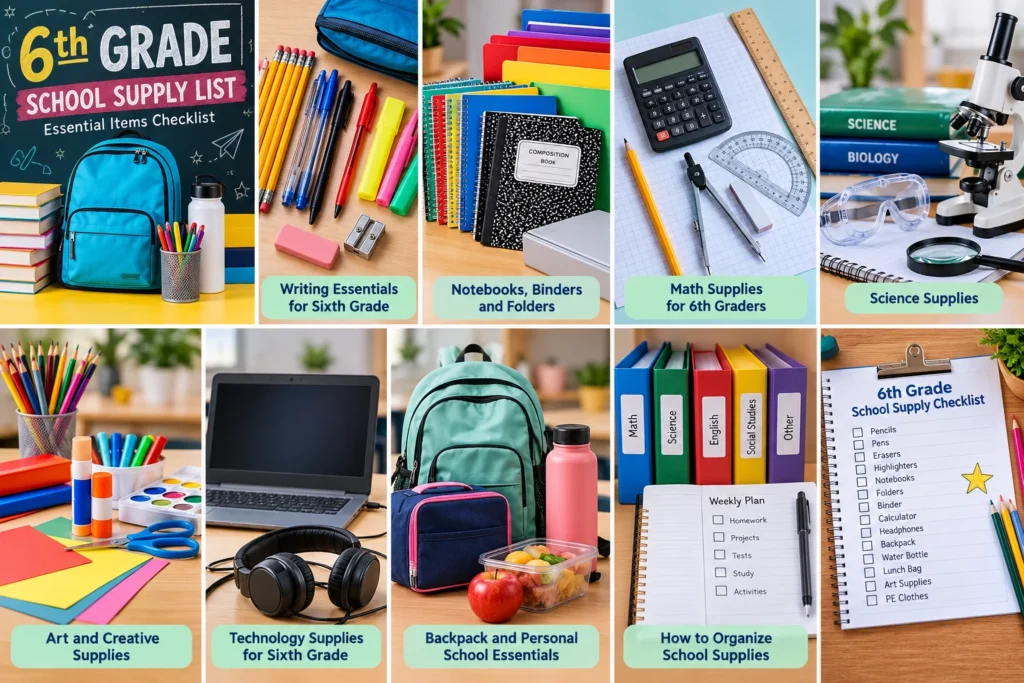
Quick 6th Grade School Supply Checklist
Most 6th graders need pencils, pens, notebooks, folders, erasers, highlighters, and a backpack. Additional supplies, such as calculators, graph paper, and headphones, depend on the school’s requirements.
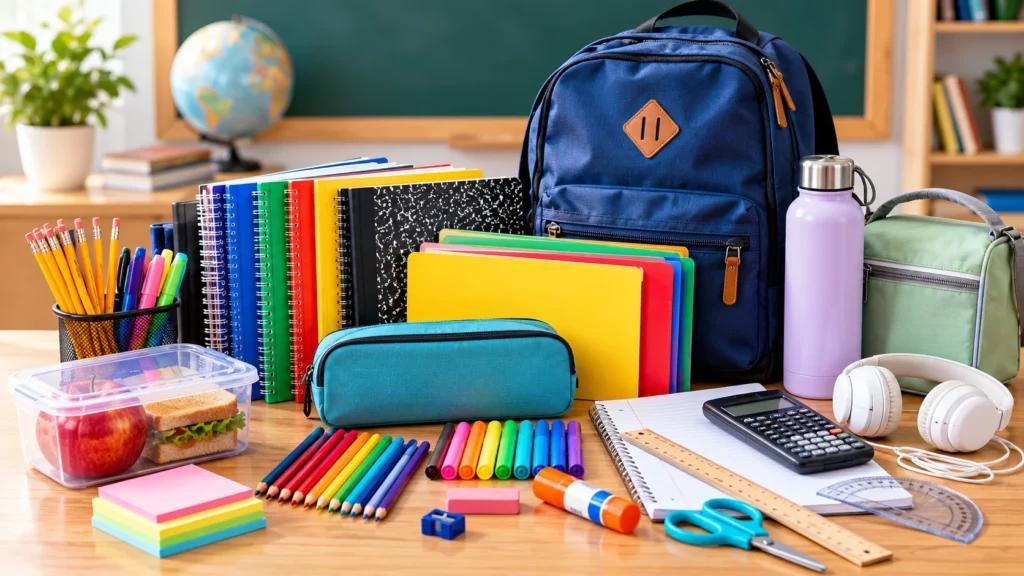
Use this checklist as a starting point before shopping.
| School supply | Suggested starting quantity | Priority |
|---|---|---|
| No. 2 pencils | 1–2 packs | Essential |
| Blue or black pens | 1 pack | Commonly needed |
| Large erasers | 2–3 | Essential |
| Highlighters | 2–4 | Commonly needed |
| Pencil pouch | 1 | Essential |
| Spiral notebooks | Based on class requirements | Essential if assigned |
| Composition notebooks | Based on class requirements | School-dependent |
| Pocket folders | 4–6 | Commonly needed |
| Binder and dividers | As requested | School-dependent |
| Loose-leaf paper | 1 pack | Commonly needed |
| Colored pencils | 1 box | Commonly needed |
| Washable markers | 1 box | School-dependent |
| Glue sticks | As requested | School-dependent |
| Scissors | 1 pair | Commonly needed |
| Ruler | 1 | Commonly needed |
| Calculator | Teacher-approved type | School-dependent |
| Wired headphones | 1 pair, if requested | School-dependent |
| Academic planner | 1, if not provided | School-dependent |
| Backpack | 1 | Essential |
| Reusable water bottle | 1 | Recommended |
Important: These quantities are general shopping suggestions, not requirements for every school. Always compare them with the official sixth-grade supply list provided by your child’s school or teachers.
Essential Writing Supplies for Sixth Grade
Writing tools are among the most frequently used school materials. Sixth graders use them for classroom assignments, homework, note-taking, and everyday learning.
1. No. 2 Pencils
Pencils are useful for math calculations, worksheets, written exercises, and tests.
A pack of sharpened No. 2 pencils is a practical starting point. Mechanical pencils may also be suitable if teachers allow them.
Students should keep a few pencils in their pencil case and store extra supplies at home.
2. Blue or Black Pens
Pens help students complete written assignments and take notes.
Blue and black ink are common classroom choices. Some teachers may request red pens for corrections or particular activities, so review the school list before purchasing additional colors.
3. Erasers and Pencil Sharpener
A good eraser allows students to correct mistakes neatly.
A small pencil sharpener can also be useful, but some schools restrict handheld sharpeners. Check classroom rules before including one.
4. Highlighters
Highlighters help students identify important vocabulary, key information, and assignment instructions.
Two or three colors are generally enough to begin. Encourage students to highlight meaningful details rather than entire pages.
5. Pencil Pouch
A zippered pencil pouch keeps pens, pencils, erasers, and other small items together.
For a 6th grader who changes classrooms during the day, a compact pouch can make it easier to find writing materials quickly.
Notebooks, Binders, and Folders
Sixth grade often introduces more complex schedules and separate assignments for different subjects. Having an organization system can help students manage papers and keep track of schoolwork.
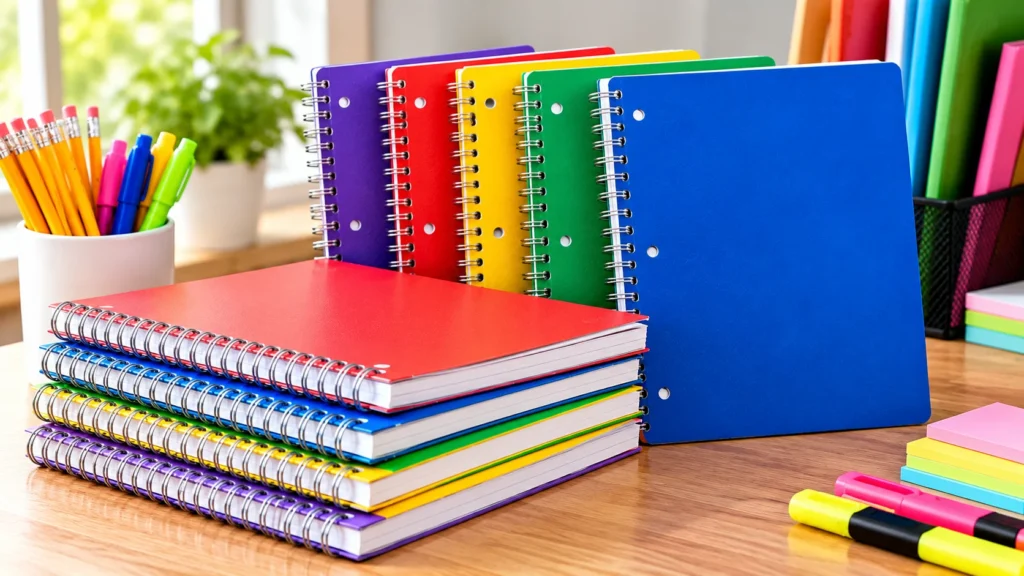
Spiral Notebooks
Spiral notebooks are useful for class notes, math problems, and daily practice.
Some teachers prefer one notebook for each subject, while others recommend multi-subject notebooks.
Color-coded notebooks can help students identify materials without searching through their backpacks.
Composition Notebooks
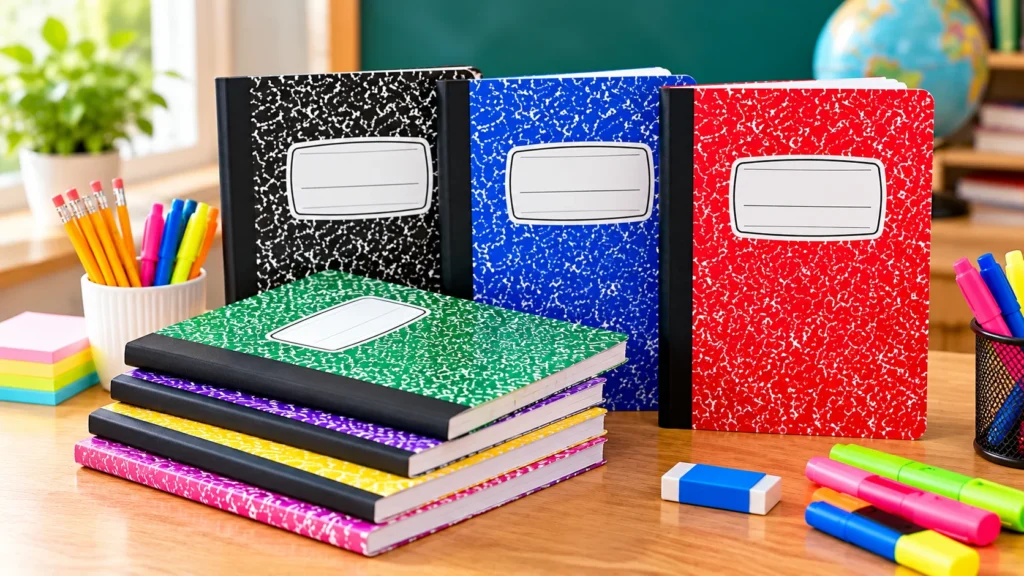
Composition notebooks have bound pages that stay together.
They are commonly used for science journals, reading responses, writing practice, and classroom activities.
However, not every subject requires one, so purchase the number specified by the school.
Three-Ring Binders
A binder allows students to organize loose-leaf paper, worksheets, and handouts.
Tabbed dividers can separate materials by subject or topic.
Before buying a large binder, check whether it will fit comfortably inside your child’s backpack or school locker.
Pocket Folders
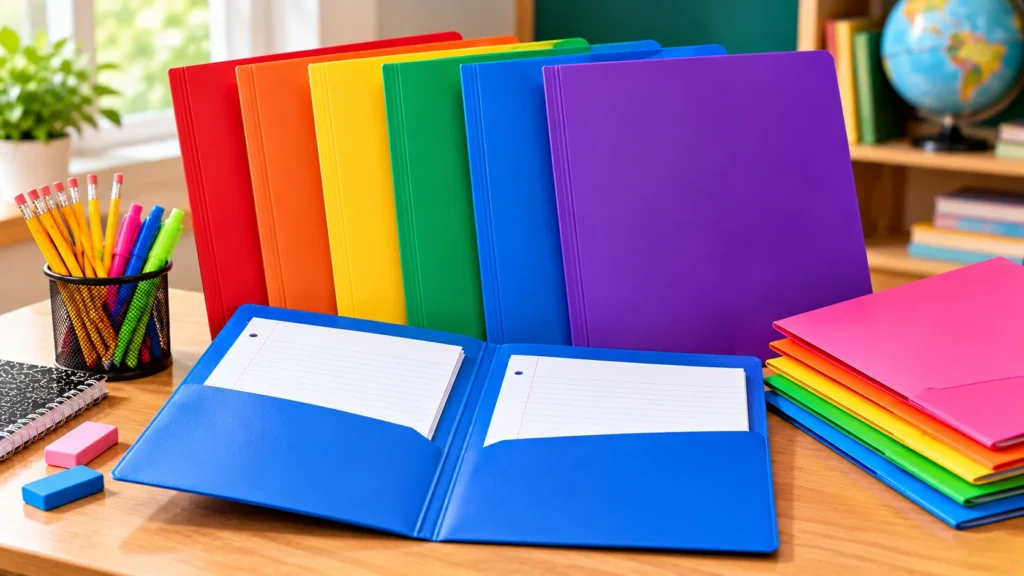
Pocket folders are one of the most useful organizational supplies for sixth grade.
Students can use separate folders for different subjects or create a simple homework system:
- Left pocket: Assignments to complete.
- Right pocket: Completed work to return.
This approach helps reduce misplaced papers and makes daily backpack checks easier.
Loose-Leaf Paper
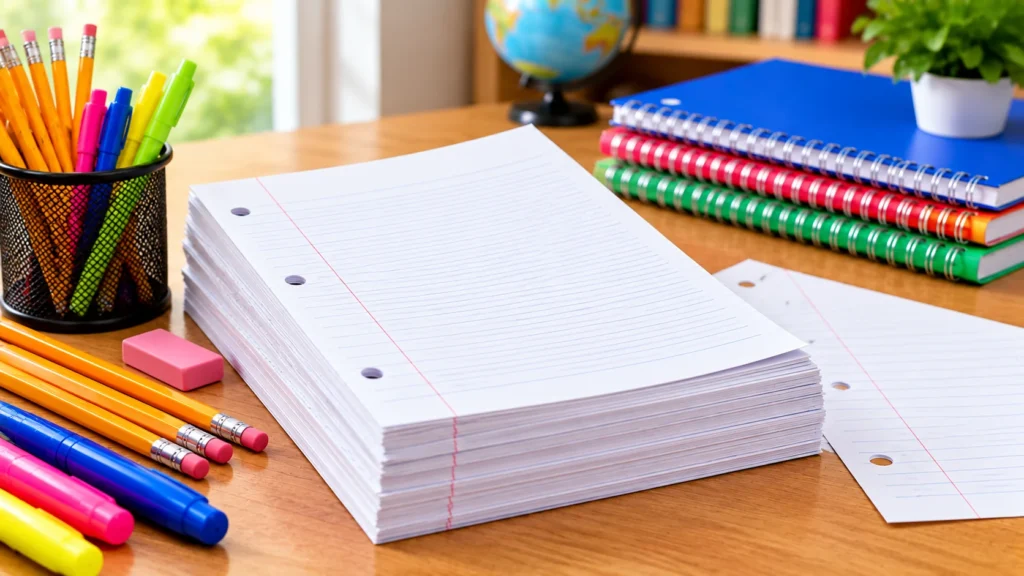
Loose-leaf notebook paper is useful for assignments, notes, and binder organization.
Schools may specify wide-ruled or college-ruled paper. Buy the type requested by your child’s teacher.
Math Supplies for a 6th Grader
Sixth-grade math often includes fractions, decimals, ratios, geometry, and introductory algebraic thinking.
Students may need a few additional tools to complete classroom exercises and homework.
| Math supply | Purpose |
|---|---|
| Pencils and erasers | Solving and correcting problems |
| Ruler | Measuring lengths and drawing straight lines |
| Graph paper | Creating coordinate grids and graphs |
| Math notebook | Recording examples and practice problems |
| Calculator | Completing teacher-approved calculations |
| Protractor | Measuring angles when required |
Does a Sixth Grader Need a Calculator?
Some sixth-grade schools include calculators on their supply lists, while others provide classroom devices or limit calculator use.
A basic calculator may be sufficient in one school, but another may specify a different model.
Avoid purchasing an expensive scientific or graphing calculator without teacher instructions.
Science Supplies for 6th Graders
Science classes may involve observing experiments, recording information, creating diagrams, and writing explanations.
Commonly useful science supplies include:
- Science notebook or composition book
- Pencils and erasers
- Colored pencils for diagrams
- Pocket folder for worksheets
- Ruler for measurements
- Index cards for studying vocabulary
Schools typically provide specialized laboratory equipment for supervised classroom activities.
Parents should not purchase laboratory tools, chemicals, or protective equipment unless the school specifically requests approved items.
English and Social Studies Supplies
English language arts and social studies often require reading, writing, research, and organized note-taking.
English Language Arts
Students may use a dedicated notebook or binder to keep vocabulary exercises, writing assignments, reading notes, and worksheets together.
Index cards or sticky notes can also help with vocabulary review and reading activities when requested.
Social Studies
A notebook or folder helps students organize geography assignments, historical timelines, maps, and class notes.
Colored pencils may be useful for maps, charts, and presentations.
Using one consistent organization system for each subject makes reviewing assignments easier.
Art and Creative Supplies
Creative projects can be part of art classes, science assignments, presentations, and other sixth-grade activities.
Common art supplies include:
| Item | Common classroom use |
|---|---|
| Colored pencils | Illustrations, maps, and diagrams |
| Washable markers | Posters and visual presentations |
| Glue sticks | Paper crafts and classroom projects |
| Scissors | Cutting paper and project materials |
| Construction paper | Displays and creative assignments |
| Sketchbook | Drawing activities, if required |
Some schools provide shared art materials, while others ask students to bring their own.
Check whether a separate art-class supply list is available before purchasing specialty materials.
Technology Supplies for Sixth Grade
Technology requirements differ between schools.
Some students use school-issued Chromebooks or laptops, while others access digital learning materials through shared classroom devices.
Wired Headphones or Earbuds
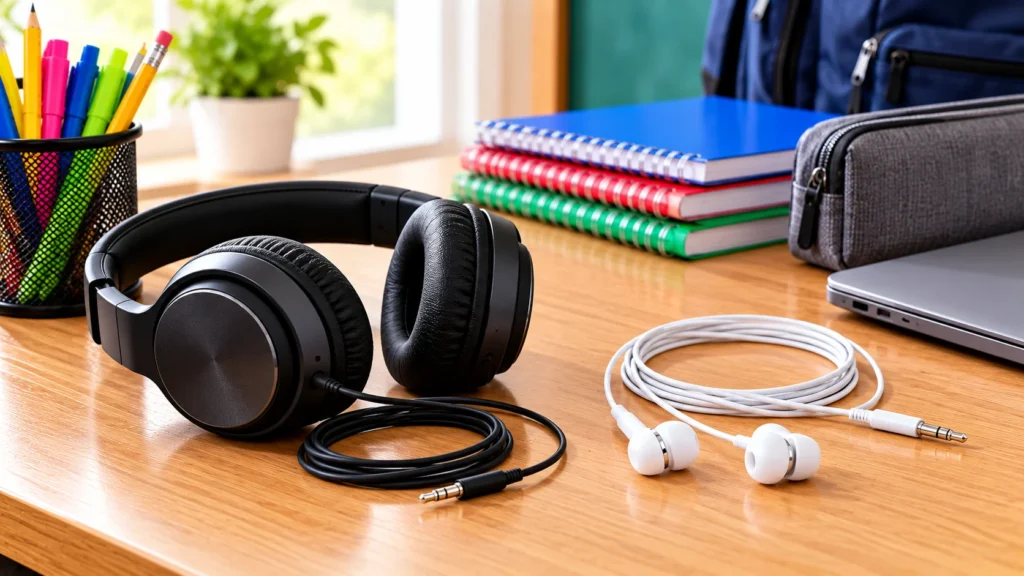
Headphones may be required for educational videos, audio assignments, and online lessons.
Several schools specifically request wired headphones rather than Bluetooth models.
Check the required connector and school rules before buying.
Chromebook or Laptop Accessories
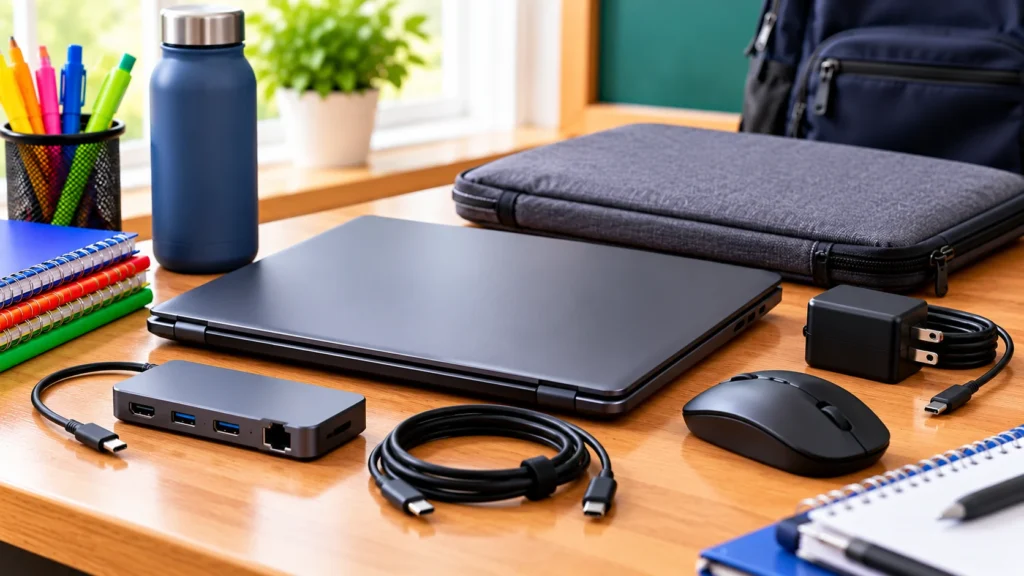
If your child’s school provides a device, follow its instructions about chargers, protective cases, and storage.
Do not assume that a personal laptop or expensive accessory is necessary.
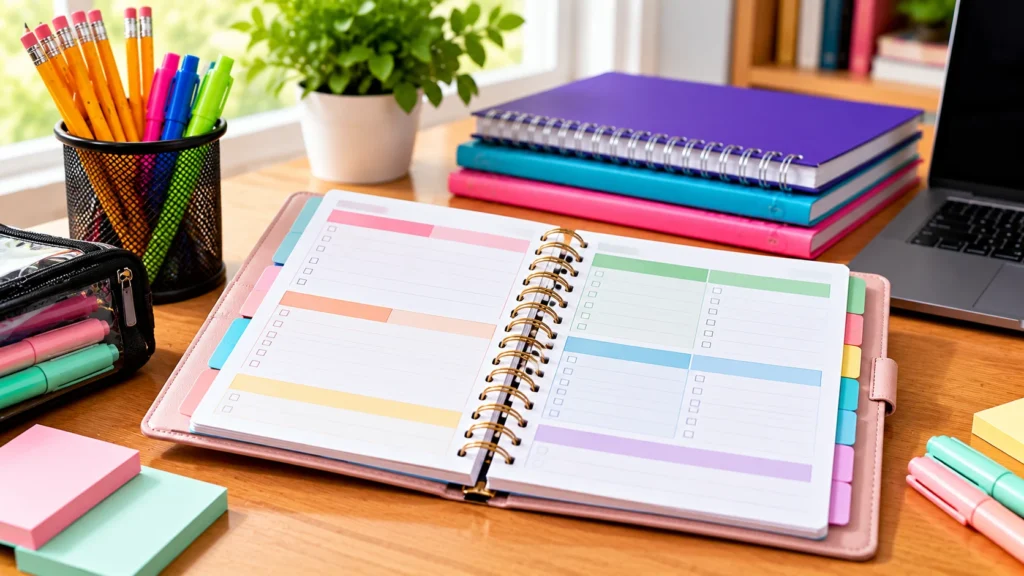
Student Planner
An academic planner can help students record:
- Homework assignments
- Test dates
- Project deadlines
- Classroom reminders
- Weekly study goals
Some schools provide planners or use online assignment systems, so confirm whether a personal planner is needed.
Backpack and Personal School Essentials
Along with classroom materials, students need practical items for carrying supplies and managing the school day.
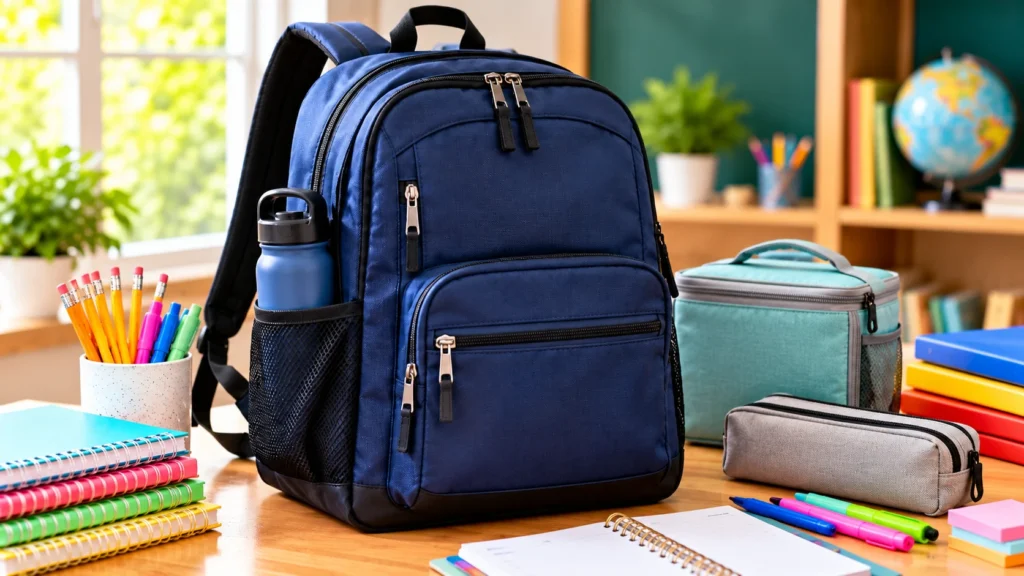
Backpack
Choose a backpack with comfortable padded straps, sturdy zippers, and enough room for the materials required each day.
A lightweight design with separate compartments can make organization easier.
Check school rules before buying a rolling backpack or a particular style. Some schools have restrictions on backpack materials, size, or design.
Reusable Water Bottle
A leak-resistant water bottle is a practical everyday item.
Choose one that is easy to clean and fits securely in a backpack pocket.
Lunch Bag
Students who bring lunch from home may need an insulated lunch bag and reusable food containers.
Use appropriate cooling for foods that need to stay cold.
Physical Education Supplies
Some schools have separate requirements for physical education classes.
Depending on the program, students may need athletic shoes, gym clothes, or a change of clothing.
Confirm these requirements before purchasing PE supplies.
Which Sixth-Grade Supplies Are Actually Required?
One of the biggest mistakes parents make is assuming every online school supply checklist applies to their child’s school.
In reality, requirements can vary considerably.
For example, one school may request several spiral notebooks and color-coded folders. Another may prefer composition books, binders, and loose-leaf paper.
Some schools require wired headphones and calculators, while others provide these materials.
A useful way to plan purchases is to divide supplies into three groups.
| Buy first | Confirm with school | Usually optional |
|---|---|---|
| Pencils | Number of notebooks | Decorative stationery |
| Erasers | Binder size | Extra organizers |
| Pencil pouch | Calculator type | Premium pen sets |
| Backpack, if needed | Headphone requirements | Personal whiteboard |
| Basic writing materials | Art and PE materials | Additional sticky notes |
This approach helps families purchase common essentials while avoiding unnecessary expenses.
How Much Should You Spend on Sixth-Grade School Supplies?
The cost of school supplies depends on the items required, where you shop, and what you already own.
Instead of setting a fixed shopping budget based on a general online list, start by identifying the items your child actually needs.
Reuse Last Year’s Supplies
Check for unused notebook pages, functional binders, pencil cases, rulers, and other reusable materials.
You may already have several items on the checklist.
Compare Basic Supplies
Store-brand notebooks, pencils, folders, and erasers can often meet everyday classroom needs.
Compare product quantities and quality rather than choosing an item simply because it is advertised as a back-to-school deal.
Avoid Buying Unnecessary Extras
Decorative supplies, premium stationery, and additional gadgets may look appealing, but they are not always needed for classroom learning.
Prioritize practical materials first.
Purchase Specialty Items Later
Wait for teacher instructions before buying expensive calculators, technology accessories, or specialized materials.
Look for School Supply Assistance
Families needing financial help can contact their school office to ask about local supply drives, student assistance programs, or available donated materials.
How to Organize School Supplies for Sixth Grade
Good organization habits can help students manage homework, find materials quickly, and become more independent.
Color-Code Each Subject
Assign a different color to each subject.
| Subject | Suggested color |
|---|---|
| Math | Blue |
| Science | Green |
| English | Red |
| Social Studies | Yellow |
| Other subjects | Purple |
Students can match folder and notebook colors to make finding supplies easier.
Label School Materials
Write the student’s name on notebooks, folders, pencil cases, and other personal items where appropriate.
Labeling helps prevent confusion when classmates have similar supplies.
Use a Homework Folder
A dedicated homework folder can separate unfinished assignments from completed work.
Students should check it each afternoon and before leaving for school.
Keep a Weekly Backpack Routine
Choose one day each week to:
- Remove unnecessary papers.
- Organize loose worksheets.
- Check for missing supplies.
- Review upcoming assignments.
- Refill the pencil pouch if needed.
This routine helps students maintain organization throughout the school year.
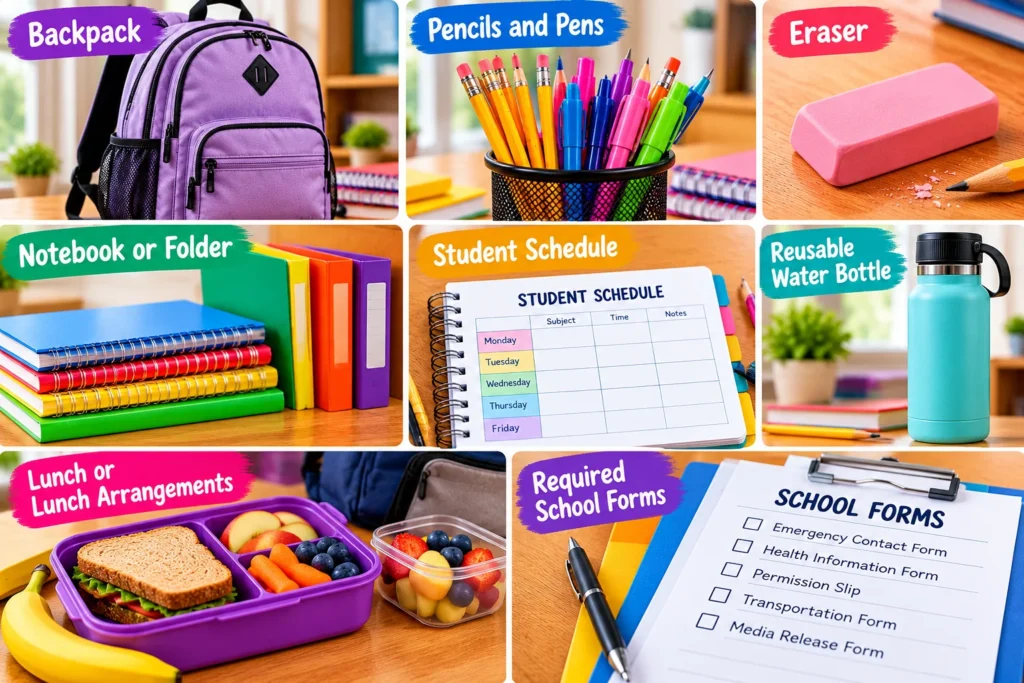
What Should a 6th Grader Bring on the First Day?
The first day of sixth grade may include orientation, classroom introductions, schedule reviews, and teacher instructions.
Unless the school requests something different, a student can usually begin with:
- Backpack
- Pencils and pens
- Eraser
- Notebook or folder
- Student schedule, if available
- Reusable water bottle
- Lunch or lunch arrangements
- Required school forms
Students may not need to carry every supply on the first day. Follow school instructions about when to bring additional materials.
Printable Sixth Grade School Supply Checklist
Use this checklist as a final shopping reference. Check off the items required by your child’s school.
Writing Essentials
- ☐ No. 2 pencils
- ☐ Blue or black pens
- ☐ Erasers
- ☐ Highlighters
- ☐ Pencil sharpener, if allowed
- ☐ Pencil pouch
Notebooks and Organization
- ☐ Spiral notebooks
- ☐ Composition notebooks
- ☐ Loose-leaf paper
- ☐ Pocket folders
- ☐ Three-ring binder, if required
- ☐ Binder dividers, if required
- ☐ Academic planner, if needed
Math and Science
- ☐ Ruler
- ☐ Graph paper
- ☐ Calculator, if required
- ☐ Science notebook
- ☐ Index cards, if requested
Art and Classroom Materials
- ☐ Colored pencils
- ☐ Washable markers
- ☐ Glue sticks
- ☐ Scissors
- ☐ Sticky notes
- ☐ Dry-erase markers, if requested
Technology and Personal Items
- ☐ Wired headphones, if required
- ☐ School-approved charging accessories
- ☐ Backpack
- ☐ Water bottle
- ☐ Lunch bag, if needed
- ☐ PE clothing and shoes, if required
Shopping reminder: Cross out items your school provides and add any teacher-specific requirements before making your final purchases.
Common School Supply Shopping Mistakes to Avoid
Even with a checklist, parents can make a few avoidable purchasing mistakes.
Buying Everything Before Checking School Requirements
A general online checklist may contain items your child’s teachers do not use.
Always prioritize the official school list.
Choosing the Wrong Notebook Type
Some teachers require composition notebooks, while others specify spiral notebooks, binders, or particular paper ruling.
Buying the wrong type can lead to unnecessary returns.
Purchasing Wireless Headphones Without Checking
Some schools only allow wired headphones or devices with certain connectors.
Confirm compatibility before purchasing.
Overpacking the Backpack
Carrying every textbook, notebook, and extra supply each day can make a backpack unnecessarily heavy.
Encourage students to pack according to their daily class schedule.
Forgetting to Restock Supplies
Pencils, erasers, paper, and glue sticks can run out during the school year.
Review essential supplies periodically and replace items when needed.
Frequently Asked Questions
What supplies does a 6th grader need for school?
Most sixth graders need pencils, pens, erasers, notebooks, folders, a pencil case, and a backpack. Some schools also require binders, colored pencils, calculators, and wired headphones.
How many notebooks does a sixth grader need?
The number of notebooks depends on school and teacher requirements. Some classes require separate notebooks for each subject, while others use binders or multi-subject notebooks.
Do 6th graders need binders or folders?
Many sixth-grade students use folders, binders, or both to organize assignments and notes. However, teachers may specify a particular system, so check the official list.
What type of calculator is best for a 6th grader?
The best calculator is the type approved or requested by the student’s math teacher. Some schools use basic calculators, while others have different requirements.
Are headphones required in sixth grade?
Some schools require headphones for digital learning. Wired models are specifically requested by certain districts, so check compatibility and school policies before shopping.
What should a 6th grader keep in their backpack?
A sixth grader should carry the notebooks, folders, writing materials, homework, and other supplies needed for that school day. Personal essentials, such as a water bottle, may also be useful.
How can I organize supplies for a 6th grader?
Use color-coded folders, label notebooks, keep small items in a pencil pouch, and establish a weekly backpack-cleaning routine. A homework folder or planner can also help students track assignments.
What school supplies are optional for sixth grade?
Optional items may include decorative stationery, extra sticky notes, premium organizers, personal whiteboards, and other accessories not specified by teachers.
How can parents save money on sixth-grade supplies?
Reuse materials from previous years, compare prices, purchase basic supplies first, and wait for teacher instructions before buying specialty items.
Are school supply lists the same for all sixth graders?
No. School supply requirements differ by district, school, teacher, and subject. The school’s official checklist is the most reliable source for required quantities and materials.
Final Thoughts
Preparing for sixth grade becomes easier when families start with a clear checklist and focus on practical supplies.
A useful 6th grade school supply list includes everyday writing tools, notebooks, folders, organization materials, and any additional items required by individual classes.
Rather than purchasing everything at once, review the official school requirements, reuse materials you already own, and prioritize the essentials.
With the right supplies and simple organizational habits, sixth graders can begin the school year feeling prepared, confident, and ready to learn.