
Reading becomes more exciting when students have something enjoyable to work toward. Whether it is completing a reading bingo card, exploring a new book genre, or sharing stories with friends, reading challenges can help children discover the pleasure of books.
For teachers and parents, the goal is not simply to encourage students to finish more books. It is to help them develop positive reading habits, build confidence, and explore stories that capture their interests.
The best reading challenges combine creativity, achievable goals, and opportunities for students to celebrate their progress.
In this guide, you will discover 20 fun reading challenge ideas for elementary students, along with age-appropriate reading goals, progress-tracking methods, and practical tips for organizing challenges at school or home.
What Is a Reading Challenge?
A reading challenge is an activity that encourages students to read, listen to, or explore books while working toward a specific goal.
Unlike traditional reading assignments, reading challenges often include playful elements such as bingo cards, themed book lists, reading calendars, or classroom activities.
For example, a teacher might challenge students to read for 10 minutes each day, explore three different types of books, or share a favorite story with a classmate.
Reading challenges can take several forms:
- Individual challenges: Students work toward personal reading goals.
- Classroom challenges: Students participate in a shared reading activity.
- Family challenges: Parents and children enjoy books together.
- Seasonal challenges: Students explore themed activities during summer, winter, or holidays.
A successful reading challenge should be flexible enough to accommodate different reading abilities and interests.
Why Are Reading Challenges Important for Students?
Reading challenges offer a structured yet enjoyable way to encourage children to engage with books.
1. Encourage Regular Reading Habits
Small, achievable reading goals help students make reading part of their daily or weekly routines. Even brief, consistent reading sessions can provide valuable opportunities to practice literacy skills.
2. Increase Reading Motivation
Creative activities, student choice, and visible milestones can make reading feel more engaging. Children may be more willing to participate when they can select books that match their interests.
3. Introduce Different Types of Books
Reading challenges encourage students to explore fiction, nonfiction, poetry, graphic novels, and other reading materials they might not choose independently.
4. Support Reading Confidence
Completing manageable goals can give students a sense of accomplishment. Recognizing individual progress helps children appreciate their growth without comparing themselves with classmates.
5. Encourage Social Interaction
Partner reading, classroom discussions, and book recommendations give students opportunities to share ideas and talk about what they have read.
20 Fun Reading Challenge Ideas for Students:
These activities work in classrooms, school libraries, homeschooling environments, and family reading routines. Teachers can adjust each challenge according to students’ ages, interests, and reading abilities.
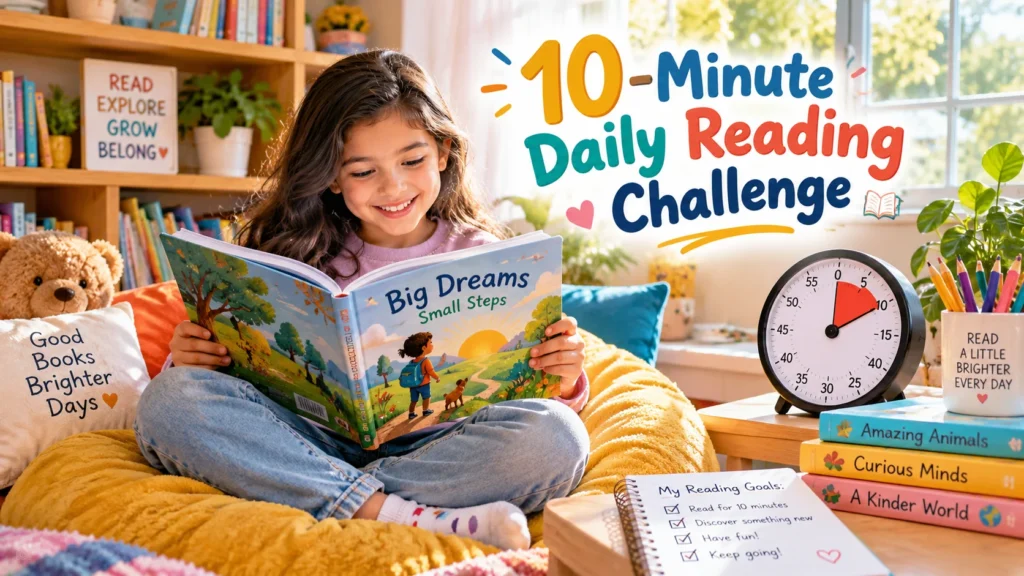
1. 10-Minute Daily Reading Challenge
Best for: Kindergarten–Grade 5
Suggested duration: 7–30 days
This simple activity encourages students to spend a few minutes reading each day.
Ask students to choose a book and read independently, with a partner, or alongside an adult. Younger children can participate by listening to a story or exploring picture books.
After each session, students add a sticker or checkmark to their reading calendar.
Fun idea: Let students choose a special reading location, such as a classroom reading corner or a cozy spot at home.
2. Five-Day Reading Streak
Best for: Grades 1–5
Suggested duration: 5 days
Challenge students to complete one enjoyable reading activity each school day.
For example:
- Monday: Read a favorite book.
- Tuesday: Read something funny.
- Wednesday: Read with a friend.
- Thursday: Learn something from a nonfiction book.
- Friday: Share a favorite part of a story.
Students can record their activities on a five-day checklist.
The focus should be participation rather than maintaining a perfect streak.
3. Read Five Different Types of Books
Best for: Grades 2–5
Suggested duration: 2–4 weeks
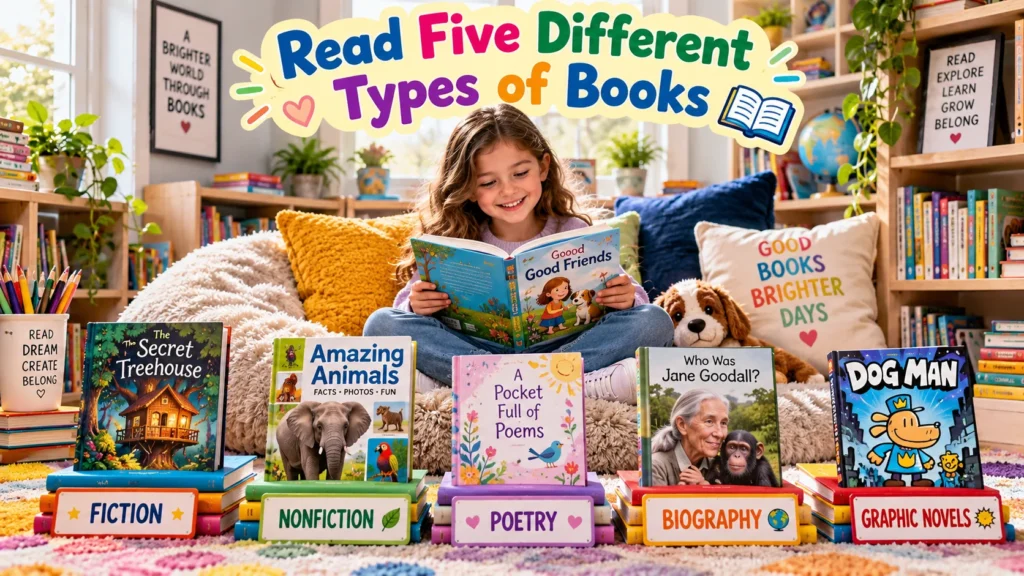
Encourage students to explore books beyond their usual preferences.
Create a checklist featuring five categories: fiction, nonfiction, poetry, biography, and graphic novels.
Students select a book from each category and record one interesting thing they discovered.
Learning opportunity: This activity introduces different writing styles and helps students discover new reading interests.
4. Read, Reread, and Retell Challenge
Best for: Kindergarten–Grade 2
Suggested duration: 1 week
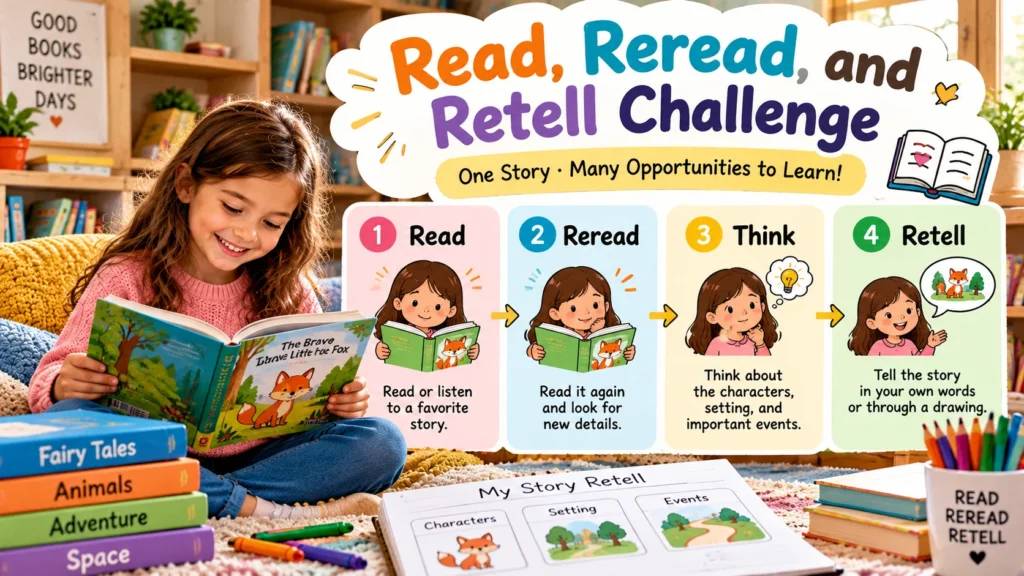
Ask children to choose a short, enjoyable story.
During the challenge, they read or listen to it, revisit favorite sections, and explain the story using their own words or pictures.
Students can identify the main character, setting, and important events.
For younger children, an adult can read aloud while the child participates through discussion and illustrations.
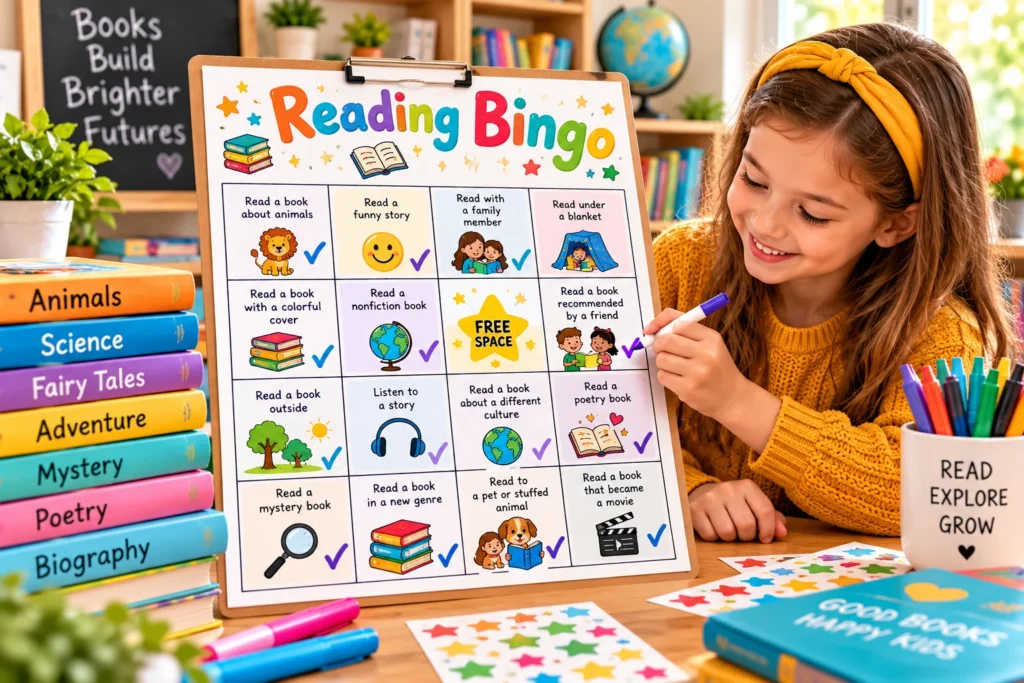
5. Reading Bingo Challenge
Best for: Kindergarten–Grade 5
Suggested duration: 2–4 weeks
Reading bingo turns ordinary reading activities into a playful game.
Create a bingo board with prompts such as:
- Read a book about animals.
- Read under a blanket.
- Read with a family member.
- Choose a book with a colorful cover.
- Read a funny story.
- Explore a nonfiction book.
- Read a book recommended by a friend.
- Listen to a story.
Students mark each completed square and work toward finishing a row or the entire board.
For a more inclusive version, allow students to choose any five activities instead of completing a particular row.
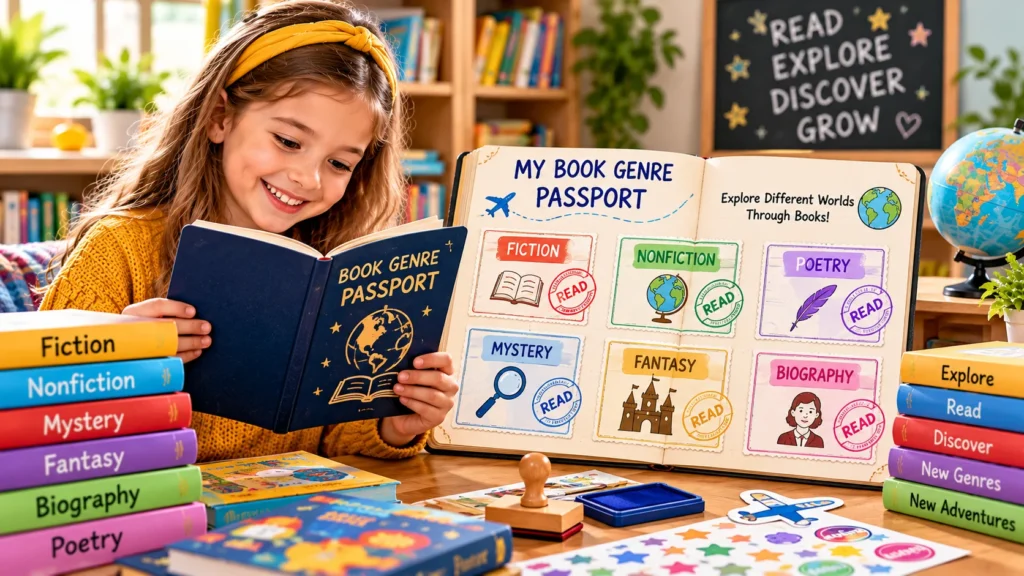
6. Book Genre Passport
Best for: Grades 2–5
Suggested duration: 1 month
Give each student a small paper booklet designed like a passport.
Each page represents a different book genre, such as mystery, fantasy, biography, poetry, or informational nonfiction.
After exploring a genre, students add a stamp, sticker, or short reflection to their passport.
Creative extension: Ask students to recommend one genre to a classmate and explain why they enjoyed it.
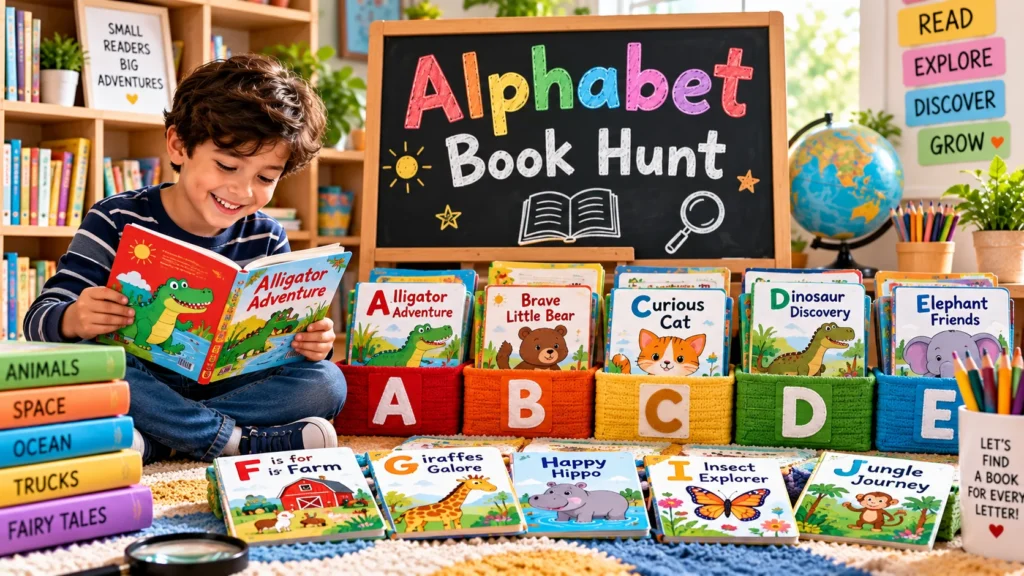
7. Alphabet Book Hunt
Best for: Kindergarten–Grade 2
Suggested duration: 2–3 weeks
Create an alphabet chart and invite students to find books with titles, characters, or topics beginning with different letters.
For example, students might choose an animal book for A, a book about birds for B, or a story featuring a cat for C.
Students can work individually or contribute to a shared classroom alphabet chart.
This challenge combines book discovery with letter recognition and vocabulary development.
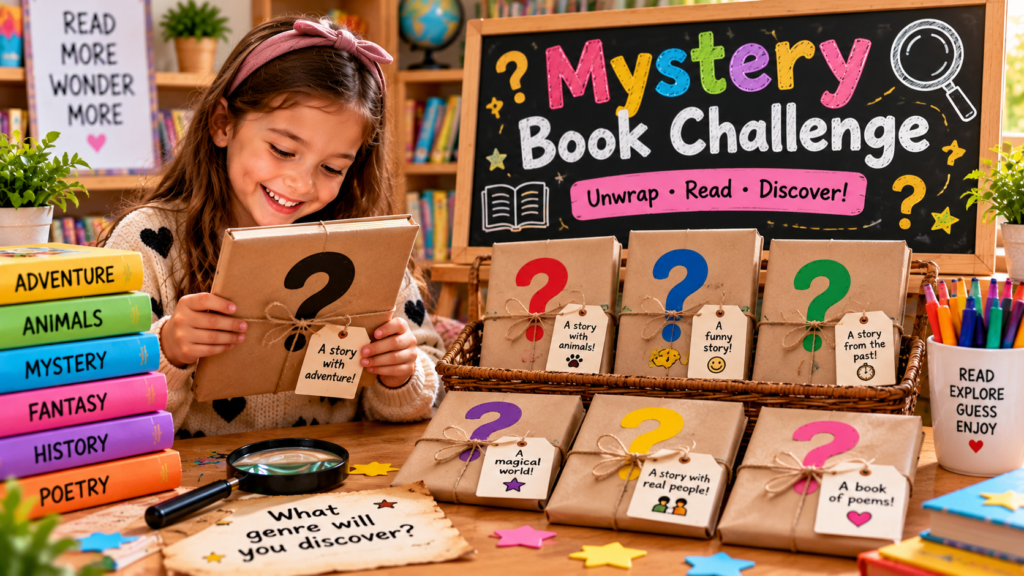
8. Mystery Book Challenge
Best for: Grades 1–5
Suggested duration: 1–2 weeks
Wrap several age-appropriate books in plain paper so students cannot immediately see their covers.
Write a short clue on each package, such as “An adventure in the forest” or “A surprising science discovery.”
Students choose a mystery book based on the clue, then read or explore it.
Afterward, they can share whether the story matched their expectations.
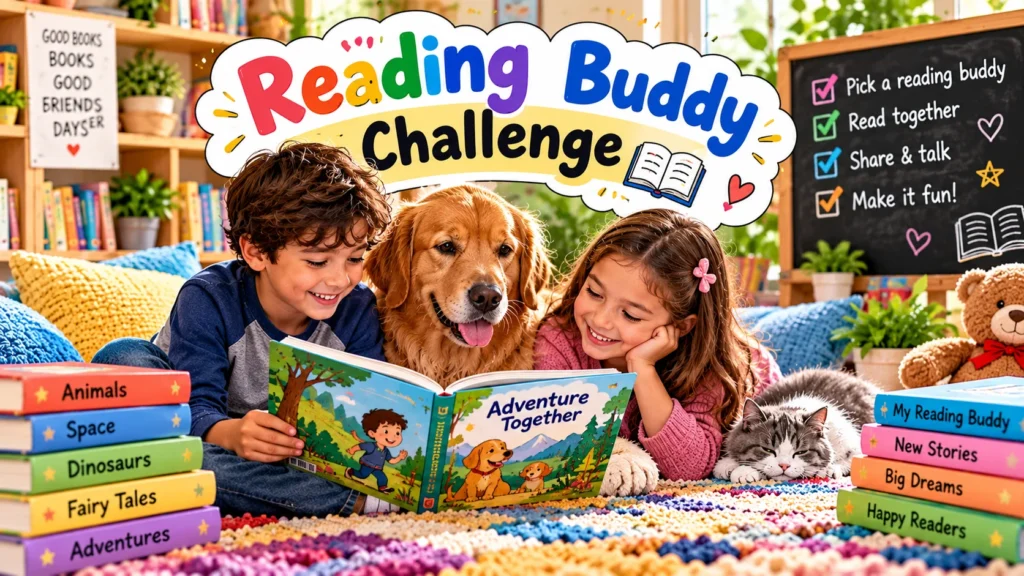
9. Reading Buddy Challenge
Best for: Kindergarten–Grade 5
Suggested duration: Weekly sessions
Pair students with classmates or older reading buddies.
Partners can take turns reading aloud, discussing illustrations, or asking each other questions about a story.
For example, a fourth-grade student might read a picture book with a kindergarten student.
Teachers should provide guidance and select suitable books so both students can participate comfortably.
10. Classroom Reading Tree
Best for: Kindergarten–Grade 5
Suggested duration: 1 month
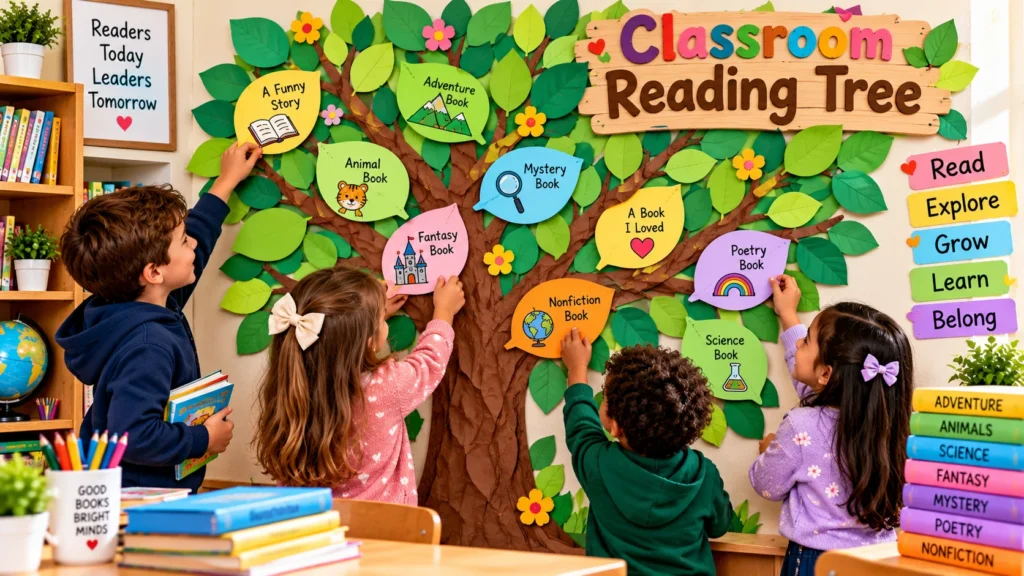
Create a large paper tree on a classroom wall or bulletin board.
Each time students complete a personal reading goal, they add a colorful paper leaf to the tree.
Leaves can display a book title, a favorite character, or something interesting the student learned.
As the challenge progresses, the tree fills with colorful leaves representing the class’s reading experiences.
Important: Celebrate the collective display without using leaf counts to rank individual students.
11. Book Recommendation Wall
Best for: Grades 2–5
Suggested duration: Ongoing
Set up a bulletin board where students recommend books to their classmates.
Each recommendation card can include:
- Book title
- Author
- Favorite character or topic
- One reason to read the book
Students can decorate their cards with drawings or stars.
This activity encourages students to express their opinions and discover books through peer recommendations.
12. Classroom Read-Aloud Marathon
Best for: Kindergarten–Grade 5
Suggested duration: One school day or week
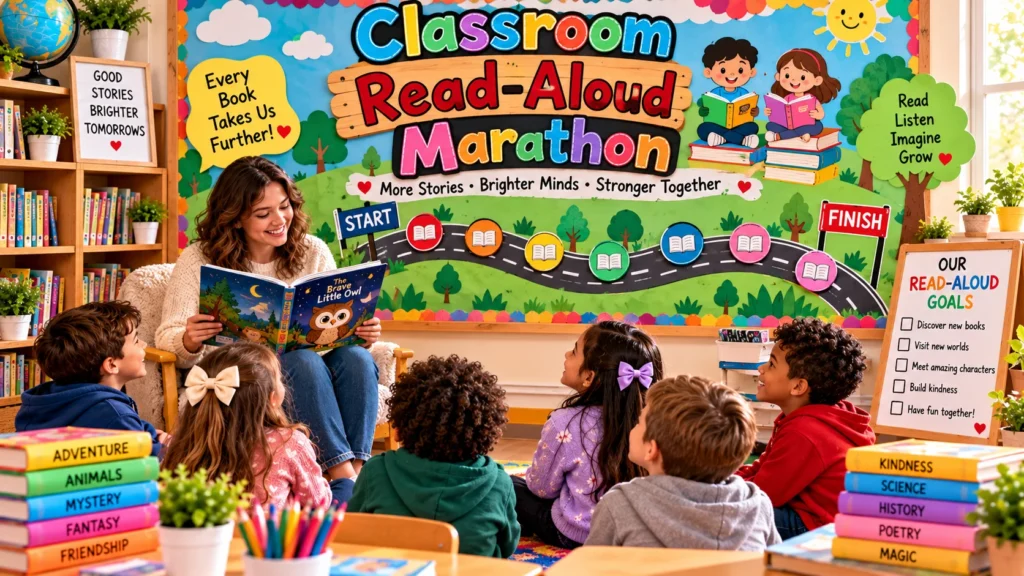
Organize several short read-aloud sessions featuring different types of books.
Teachers, librarians, or invited school staff can read stories while students listen and participate in discussions.
Between sessions, students may draw favorite scenes, predict story endings, or share their favorite characters.
Rather than focusing on how many pages are completed, make the event a celebration of storytelling.
13. Family Reading Night
Best for: Kindergarten–Grade 5
Suggested duration: One evening per week
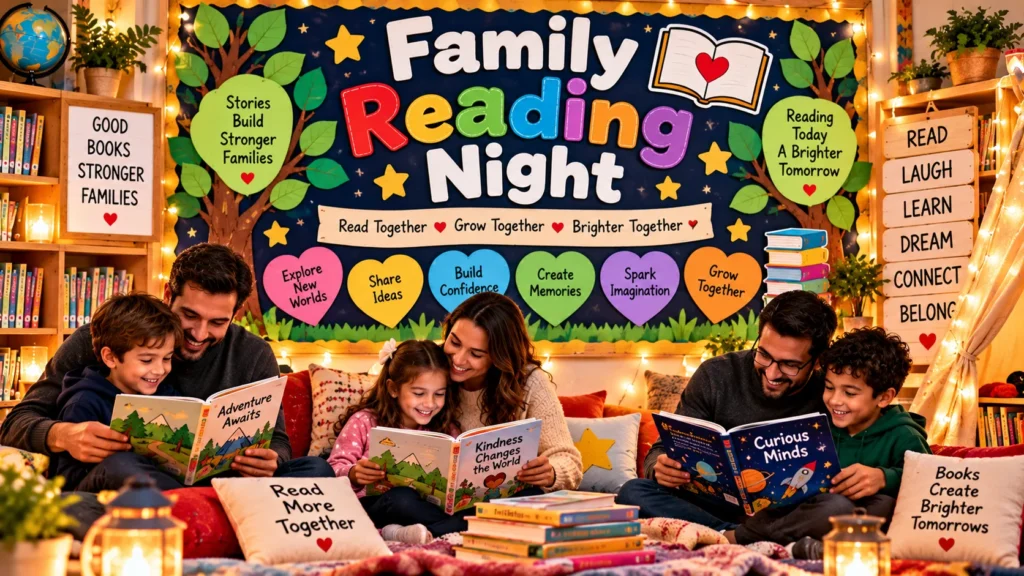
Invite students to spend a little time reading with family members.
Families can take turns reading aloud, listen to a story together, or discuss a book after dinner.
Children may record the book title or draw their favorite scene.
This activity can help families establish enjoyable shared reading routines without requiring expensive materials.
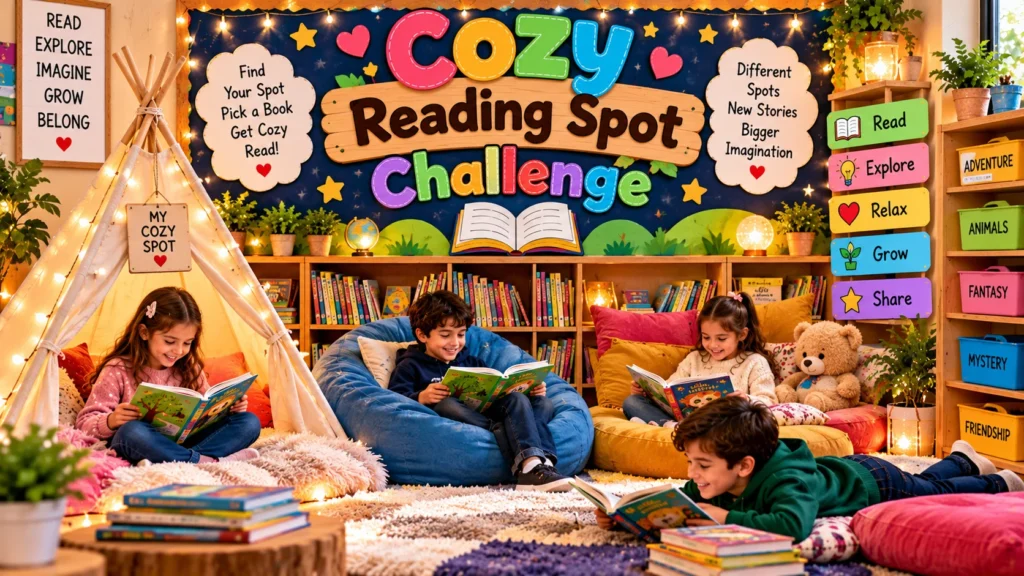
14. Cozy Reading Spot Challenge
Best for: Kindergarten–Grade 5
Suggested duration: 1 week
Encourage students to find comfortable places to enjoy books.
Possible locations include a reading corner, a sofa, a shaded outdoor area, or a quiet library space.
Students can create a simple reading-spot checklist and mark each location they try.
Remind children to choose safe, comfortable places with enough light for reading.
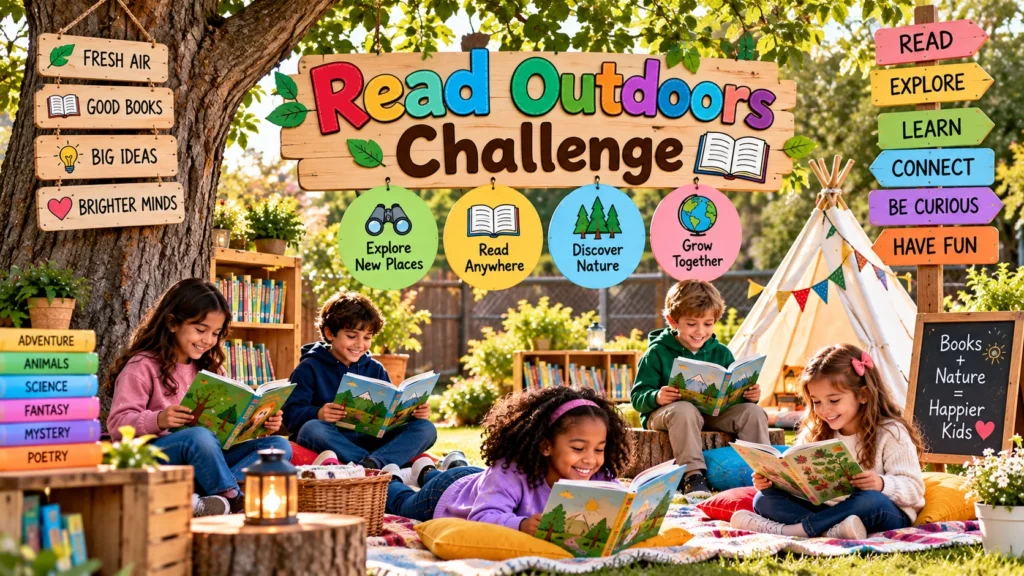
15. Read Outdoors Challenge
Best for: Grades 1–5
Suggested duration: One day or weekend
Take reading beyond the classroom.
Students can enjoy books under a tree, in a school garden, or during a supervised outdoor reading session.
Nature-themed books are especially suitable for this activity.
After reading, students can describe something they noticed in their surroundings or connect the story to nature.
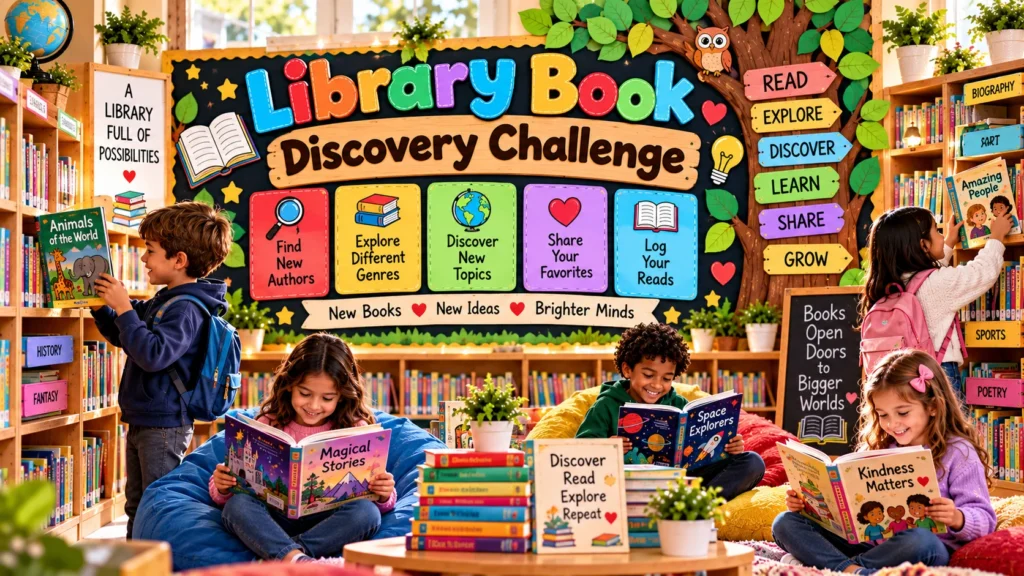
16. Library Book Discovery Challenge
Best for: Grades 1–5
Suggested duration: 2 weeks
Invite students to explore their school or public library.
Give them a checklist with prompts such as finding a book about space, discovering a new author, or locating a nonfiction book about animals.
Students do not need to finish every discovered book. The purpose is to help them learn how to explore books and find interesting reading materials.
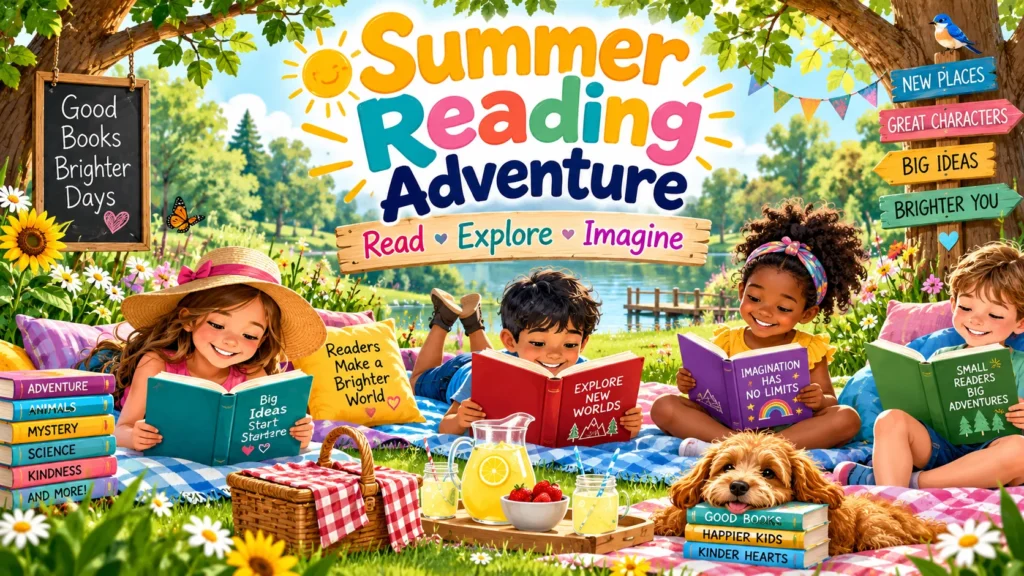
17. Summer Reading Adventure
Best for: Kindergarten–Grade 5
Suggested duration: 4–8 weeks
Create a summer reading calendar featuring simple weekly activities.
Examples include reading a book about the ocean, visiting the library, enjoying a family read-aloud, or discovering an interesting fact from a book.
Families can adapt activities to their schedules and available resources.
Include indoor options for very hot or rainy days.
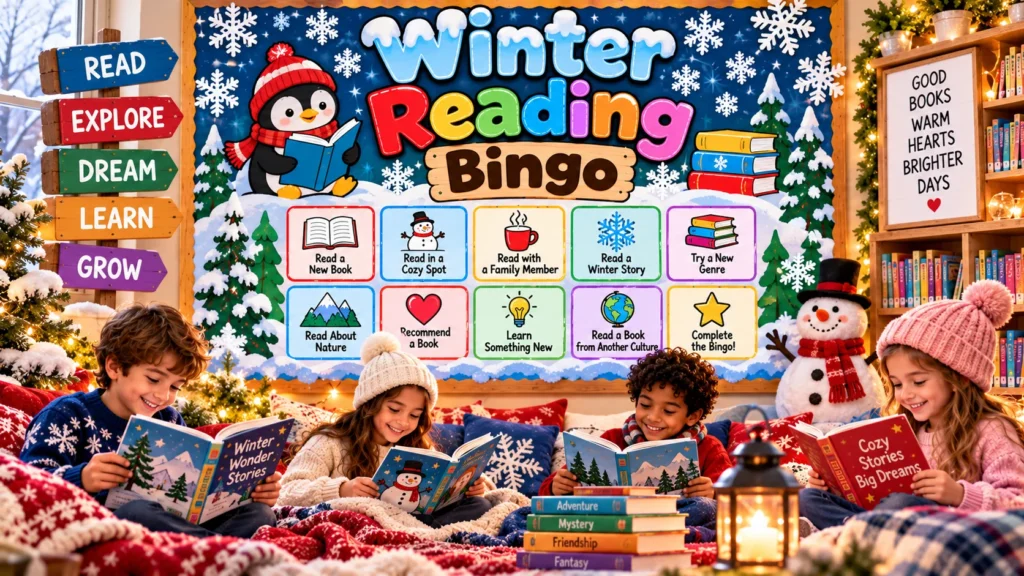
18. Winter Reading Bingo
Best for: Kindergarten–Grade 5
Suggested duration: 2–4 weeks
Design a winter-themed bingo board featuring cozy reading activities.
Ideas include reading under a blanket, choosing a book about snow, listening to a winter story, or reading with a family member.
Students can complete activities at school or home and color the corresponding squares.
This challenge offers a creative way to make reading enjoyable during winter.
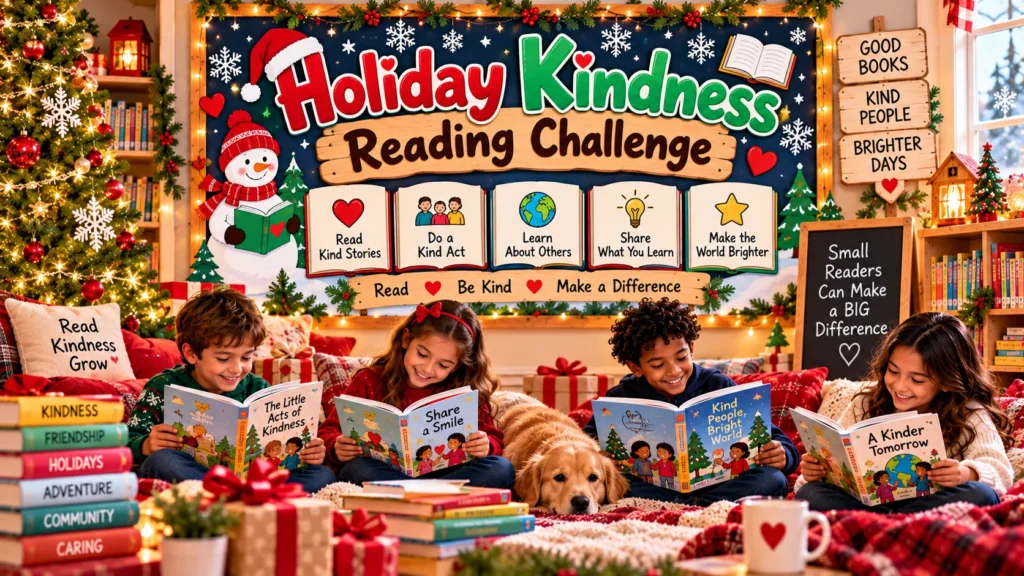
19. Holiday Kindness Reading Challenge
Best for: Grades 1–5
Suggested duration: 1–2 weeks
Combine reading with activities that encourage kindness and empathy.
Ask students to explore stories involving friendship, helping others, sharing, and understanding feelings.
After reading, students can describe one kind action from the story or suggest a thoughtful action they could try themselves.
This challenge works well during holidays but can also be used throughout the school year.
Reading Challenges by Grade Level
Different age groups benefit from different types of reading activities. A challenge should match the student’s reading development rather than relying on grade level alone.
| Grade level | Recommended challenges | Suggested focus |
|---|---|---|
| Kindergarten | Alphabet Book Hunt, Reading Bingo, Read-Aloud Challenge | Story listening, picture exploration, letter awareness |
| Grades 1–2 | Reading Streak, Reading Buddy, Read and Retell | Reading practice, confidence, basic comprehension |
| Grades 3–5 | Genre Passport, Book Recommendations, 30-Day Challenge | Book choice, comprehension, discussion, independent reading |
For students who need additional support, teachers can shorten the activity, provide accessible books, or include shared reading and audiobooks.
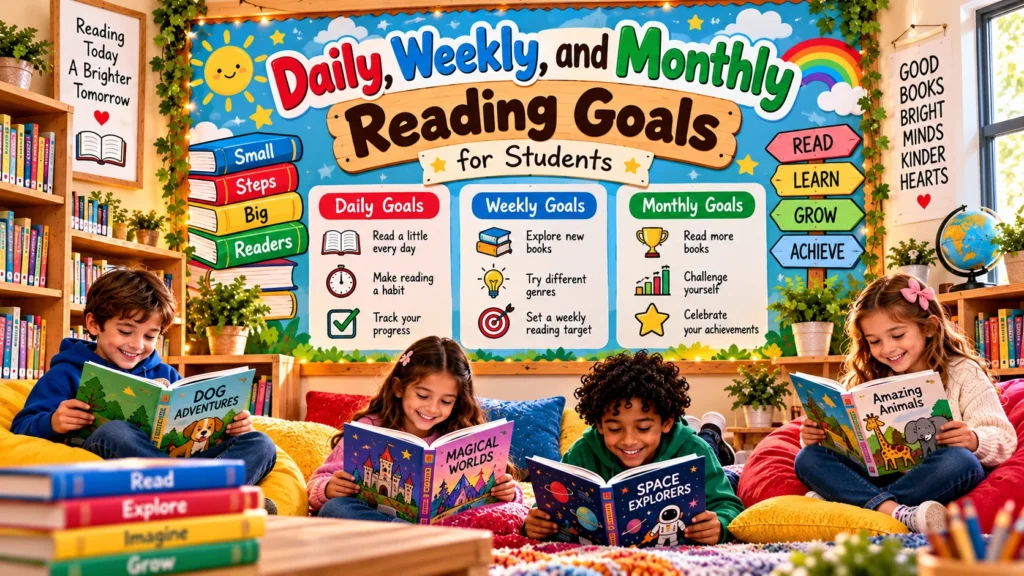
Daily, Weekly, and Monthly Reading Goals for Students
Reading goals are most effective when they are realistic, flexible, and appropriate for each child.
Daily Reading Goals
Daily goals should focus on creating enjoyable opportunities to read.
Examples:
- Read or listen to a story for 10 minutes.
- Read a short poem.
- Explore a nonfiction book.
- Share one interesting idea from a story.
A child who is just beginning to read may need an adult’s help, while an experienced reader may enjoy a longer independent session.
Weekly Reading Goals
Weekly goals give students time to explore books without the pressure of completing an activity every day.
Examples:
- Complete three enjoyable reading sessions.
- Explore two different types of books.
- Share a book recommendation.
- Finish one row of a reading bingo card.
Monthly Reading Goals
Monthly challenges work well for larger classroom projects.
Examples:
- Explore four different genres.
- Complete a reading passport.
- Participate in weekly reading discussions.
- Create a personal list of favorite books.
Tip for teachers: Allow students to help select their goals. A manageable personal goal is often more meaningful than one identical target assigned to an entire class.
How to Organize a Successful Classroom Reading Challenge:
A reading challenge does not need an elaborate setup. Clear expectations and a few simple materials are enough to get started.
Step 1: Choose the Purpose
Decide what you want the challenge to encourage.
Your goal might be to increase reading participation, introduce different genres, build confidence, or encourage students to discuss books.
Step 2: Select an Age-Appropriate Activity
Choose a challenge that matches your students’ interests and abilities.
Younger children may enjoy picture-based bingo boards, while older elementary students might prefer reading passports or book recommendation activities.
Step 3: Set a Flexible Timeline
Decide whether the challenge will last one week, two weeks, or a month.
Provide enough time for students to participate without feeling rushed.
Step 4: Prepare Materials
Gather books, printed activity sheets, reading calendars, pencils, and optional stickers.
Use existing classroom or library resources whenever possible.
Step 5: Explain the Rules Clearly
Demonstrate one sample activity and show students how to record their progress.
Explain that the challenge is about enjoying books, practicing reading, and celebrating individual growth.
Step 6: Celebrate Participation
At the end of the challenge, invite students to share favorite books, interesting discoveries, or personal achievements.
Recognize different forms of progress rather than rewarding only the students who read the most.
Avoid making personal reading results public without considering student privacy and comfort.
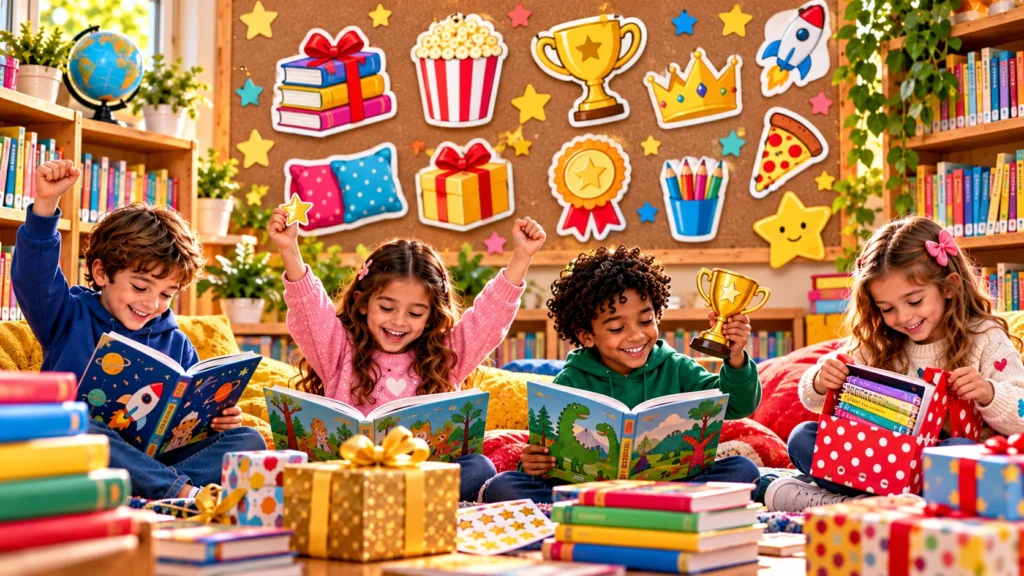
Fun Rewards for Completing Reading Challenges
Rewards can make reading challenges feel special, but they should not overshadow the enjoyment of books.
Consider these affordable options:
- Personalized reading certificates
- Colorful bookmarks
- Extra classroom read-aloud time
- Choosing the next class story
- A special library visit
- Displaying student book recommendations
- A classroom reading celebration
- Reading-themed badges or stickers
Students who make meaningful progress toward individual goals should also receive recognition.
Instead of emphasizing competition, celebrate persistence, curiosity, creativity, and participation.
Common Reading Challenge Mistakes to Avoid
Even enjoyable activities can become discouraging when expectations are too rigid.
Setting identical goals for everyone: Students have different reading abilities and access to books. Offer flexible personal targets.
Focusing only on book counts: The number of completed books does not always reflect effort, understanding, or enjoyment.
Using complicated tracking systems: Simple calendars and checklists are often easier for children and teachers to maintain.
Providing limited book choices: Offer a variety of topics, genres, lengths, and formats.
Making rewards the main purpose: Encourage students to appreciate stories and celebrate their progress, not simply collect prizes.
Ignoring students who need support: Provide accessible reading materials, adult assistance, and alternative ways to participate.
Frequently Asked Questions About Reading Challenges
What is a reading challenge for students?
A reading challenge is a structured activity that encourages children to read or explore books while completing achievable goals. Examples include reading bingo, genre exploration, and daily reading calendars.
What are the best reading challenges for elementary students?
Reading bingo, daily reading goals, classroom reading trees, buddy reading, and book genre passports are useful options. The best activity depends on students’ ages, interests, and reading abilities.
How can teachers make reading challenges fun?
Teachers can introduce creative themes, allow students to choose books, incorporate colorful trackers, and celebrate participation. Keeping activities flexible and low-pressure can help maintain interest.
How long should a reading challenge last?
Reading challenges can last anywhere from a few days to several weeks. A one-week challenge is a useful starting point, while monthly or seasonal activities allow students more time to explore books.
What are good reading goals for kindergarten students?
Suitable goals include listening to a picture book, identifying favorite characters, discussing illustrations, recognizing familiar letters, or participating in short shared reading sessions.
How can parents organize a reading challenge at home?
Parents can choose a simple activity, set an achievable timeline, provide access to suitable books, and use a calendar or checklist to record participation. Reading together can make the experience more enjoyable.
Do reading challenges improve reading skills?
Reading challenges can encourage students to engage with books and practice reading more regularly. However, improvements in specific literacy skills also depend on appropriate instruction, reading materials, and individual learning needs.
How do you encourage students who do not like reading?
Start by discovering their interests and offering appealing books in accessible formats. Short reading sessions, adult support, student choice, and encouragement can help make reading feel more manageable.
Should students receive prizes for reading challenges?
Prizes are optional. Certificates, bookmarks, classroom celebrations, and opportunities to choose books can recognize participation without making external rewards the main reason for reading.
Can reading challenges work for students with different reading levels?
Yes. Teachers can adapt reading durations, book difficulty, activity instructions, and participation formats. Individual goals help students work toward meaningful progress at their own pace.
Conclusion
Reading challenges can turn ordinary reading routines into enjoyable opportunities for discovery, creativity, and personal growth.
From reading bingo and book genre passports to classroom reading trees and family reading nights, there are many ways to encourage students to engage with books.
The most effective approach is to choose age-appropriate activities, establish achievable goals, provide meaningful choices, and celebrate individual progress.
Whether you are a teacher organizing a classroom activity or a parent encouraging reading at home, start with one simple challenge and adjust it to your child’s interests and needs.
Every reading journey begins with a book, a little curiosity, and an opportunity to enjoy the story.
Teacher Tip: Let students choose their own reading goals to keep the challenge enjoyable and achievable.

Join the conversation