
Keeping elementary students motivated can be challenging, especially when traditional stickers and small prizes start losing their excitement. Teachers need classroom reward ideas that encourage positive behavior, celebrate individual progress, and make learning enjoyable without adding unnecessary expenses or work.
Fortunately, effective classroom rewards don’t have to be expensive or complicated. From colorful prize boxes and adorable desk pets to classroom currency and free privileges, there are plenty of creative ways to recognize students’ efforts.
The secret is choosing a classroom reward system that is fair, easy to maintain, and appropriate for your students’ ages and needs.
What Are Classroom Rewards?
Classroom rewards are incentives or forms of recognition teachers use to encourage positive behavior, acknowledge accomplishments, and celebrate student growth.
These rewards can be physical items, such as pencils or stickers, or special experiences, such as choosing a classroom activity or becoming the teacher’s helper.
For example, a teacher might recognize students for:
- Following established classroom routines.
- Helping classmates and showing kindness.
- Demonstrating persistence during challenging assignments.
- Improving their reading, writing, or math skills.
- Taking responsibility for classroom materials.
- Reaching personal learning goals.
However, rewards should not become the only reason students participate in learning.
“A successful classroom reward system combines meaningful recognition with clear expectations, student choice, and positive teacher-student relationships.“
When used thoughtfully, rewards can support classroom routines while helping children recognize their own progress.
How to Create a Classroom Prize Box on a Budget
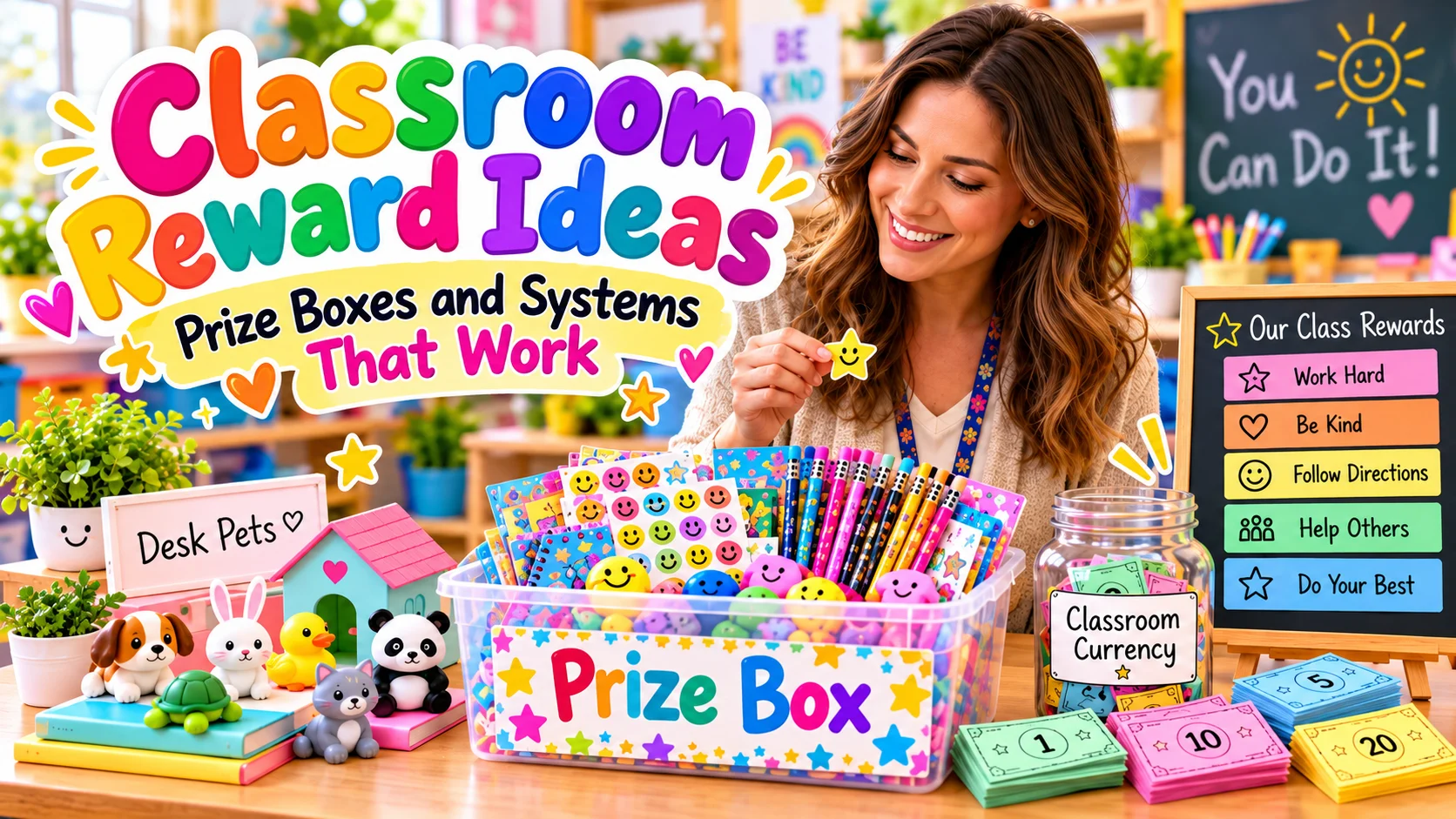
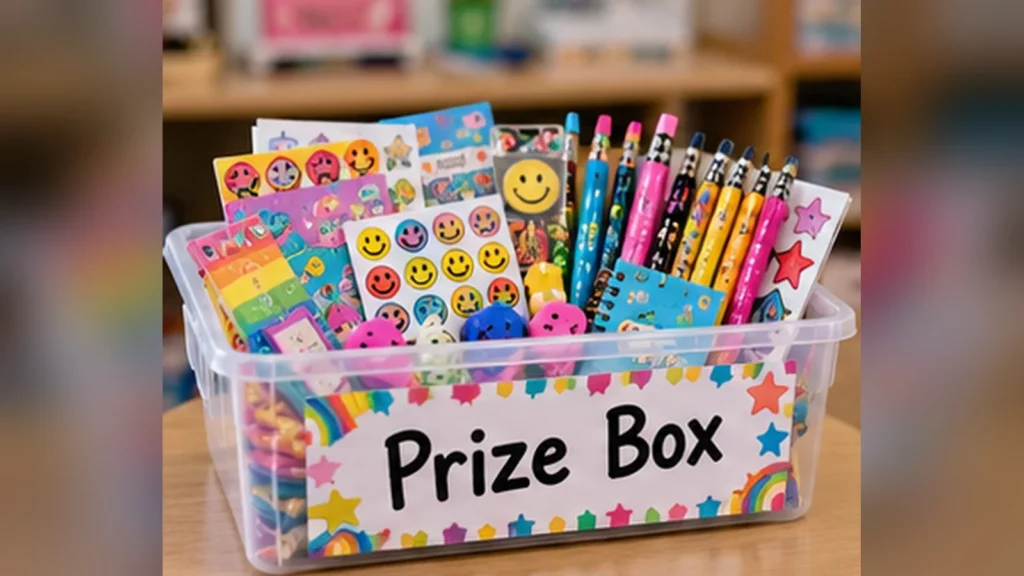
A classroom prize box is a container filled with small rewards students can select after meeting established goals.
Prize boxes remain appealing because they provide a simple, visible way to recognize student accomplishments.
However, teachers do not need an overflowing treasure chest to create an exciting experience.
Step 1: Choose a Suitable Container
Start with a sturdy box, plastic storage bin, or reusable basket.
A transparent container makes it easy for students to see available prizes, while a decorated box can make the experience feel special.
Keep the container in an accessible location that does not interrupt classroom activities.
Step 2: Select Affordable Prize Box Items
Choose rewards that are inexpensive, practical, and appropriate for elementary students.
| Prize Box Item | Why It’s Useful |
|---|---|
| Stickers | Affordable and available in many themes |
| Decorative pencils | Useful for everyday classroom activities |
| Fun erasers | Small, practical, and collectible |
| Bookmarks | Encourage reading |
| Mini notebooks | Support creative writing and drawing |
| Printable reward coupons | Provide rewards without additional purchases |
| Coloring activities | Encourage creativity |
| Small puzzles | Offer problem-solving opportunities |
Including different options allows students to choose prizes that match their interests.
Step 3: Set a Realistic Budget
A teacher can begin with a small budget and expand the prize box gradually.
Here is an illustrative $20 classroom prize box budget:
| Supplies | Example Budget |
|---|---|
| Stickers | $4 |
| Decorative pencils | $5 |
| Erasers | $4 |
| Bookmarks and printable cards | $2 |
| Mini notebooks | $3 |
| Extra supplies | $2 |
| Total | $20 |
Actual prices vary depending on location, supplier, and package size.
Buying supplies in multipacks, using printable rewards, and reusing storage containers can help reduce expenses.
Step 4: Establish Prize Box Rules
Clear rules prevent confusion and make reward distribution manageable.
For example:
- Students earn prize opportunities by meeting clearly defined goals.
- Prize box visits occur during scheduled times.
- Students select one reward per eligible visit.
- Everyone has access to appropriate earning opportunities.
- The teacher explains how rewards are earned before starting the system.
A weekly prize box visit can be convenient, but teachers should choose a schedule that works for their students.
Step 5: Rotate Rewards Occasionally
Children may become less interested when the same prizes remain available for months.
Instead of replacing everything, introduce a few new options from time to time.
Teachers can also ask students which prizes they enjoy most.
Their answers may reveal that simple activities or classroom privileges are more appealing than additional toys.
Desk Pets: A Fun Classroom Reward System
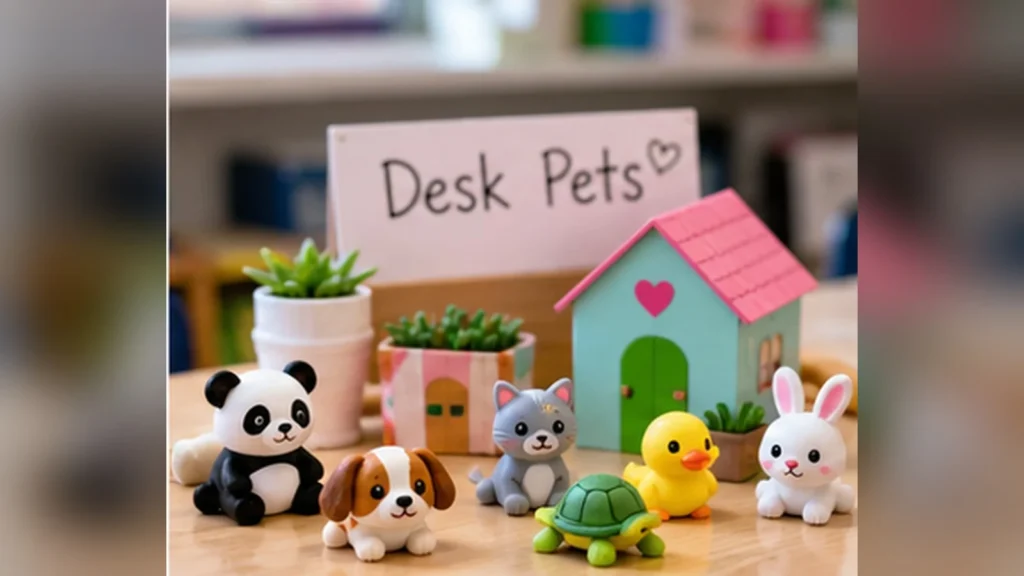
Desk pets are small toy animals students can earn as part of a classroom reward system.
These miniature animals are popular because children can name them, create homes for them, and collect accessories as they accomplish classroom goals.
Unlike ordinary prizes, desk pets can become part of an ongoing classroom activity.
How Do Desk Pets Work?
Students earn opportunities to choose a desk pet by meeting specific expectations or personal learning goals.
For example, a teacher might allow students to select a desk pet after consistently practicing a new classroom routine or reaching an individualized goal.
Students can then personalize their animals with names, paper houses, or teacher-approved decorations.
The goal is to make recognition engaging while maintaining an organized learning environment.
Example Desk Pet Reward Chart
| Milestone | Reward |
|---|---|
| First personal goal | Choose a desk pet |
| Second goal | Create a paper pet house |
| Third goal | Add a pet accessory |
| Fourth goal | Create a personalized name tag |
| Fifth goal | Enjoy a special desk pet activity |
These milestones are examples, not fixed requirements.
Teachers should adapt them to students’ abilities, interests, and classroom expectations.
Desk Pet Rules for Students
Establish a few simple guidelines:
- Desk pets stay in their assigned area during lessons.
- Students handle pets only when permitted.
- Pets should not distract classmates.
- Students respect one another’s belongings.
- Desk pets are stored safely when not in use.
If a child does not enjoy desk pets, offer another reward of similar value.
The purpose is to support motivation and recognition, not require every child to participate in the same activity.
5 Classroom Reward Systems That Work
An organized reward system helps teachers recognize positive behaviors consistently while reducing confusion.
The best system depends on the classroom’s age group, learning goals, and available resources.
1. Classroom Points System
A points system allows students to earn points for meeting specific classroom expectations.
For example, students might earn points for practicing a new routine, demonstrating improvement, or completing agreed-upon responsibilities.
Points can later be exchanged for rewards or privileges.
Best for: Teachers who prefer a simple, flexible tracking method.
2. Ticket or Token Reward System
Students receive tickets or tokens when they demonstrate clearly defined behaviors.
They can save their tickets and exchange them for rewards during designated periods.
Teachers may use paper tickets, counters, or a simple tracking chart.
Best for: Elementary classrooms that benefit from visible progress tracking.
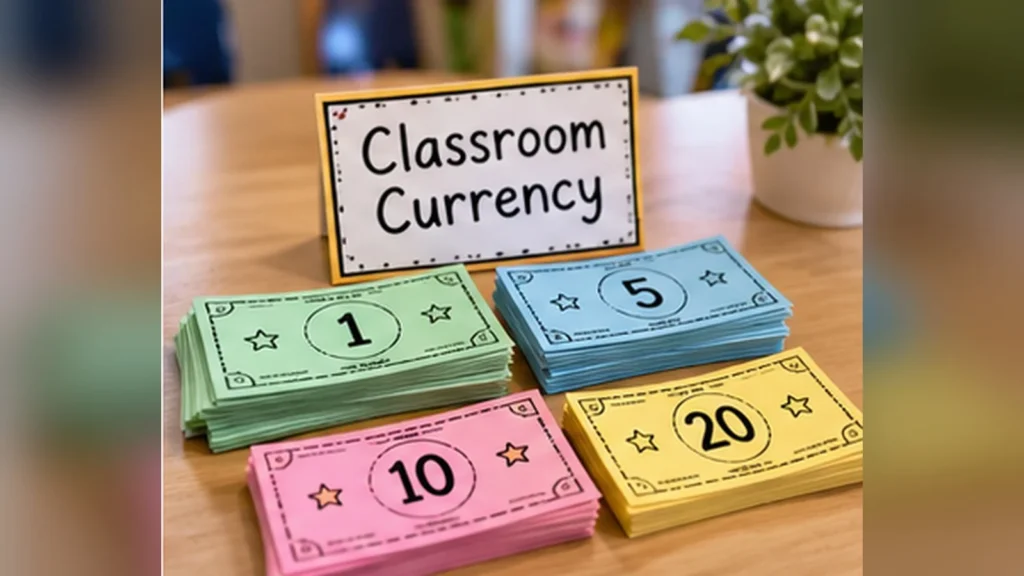
3. Classroom Currency System
A classroom economy uses pretend money that students earn by accomplishing goals or completing classroom responsibilities.
Students can save their classroom dollars and use them in a class store.
This approach can also support basic financial literacy concepts, including saving, spending, and decision-making.
Best for: Older elementary students learning introductory money skills.
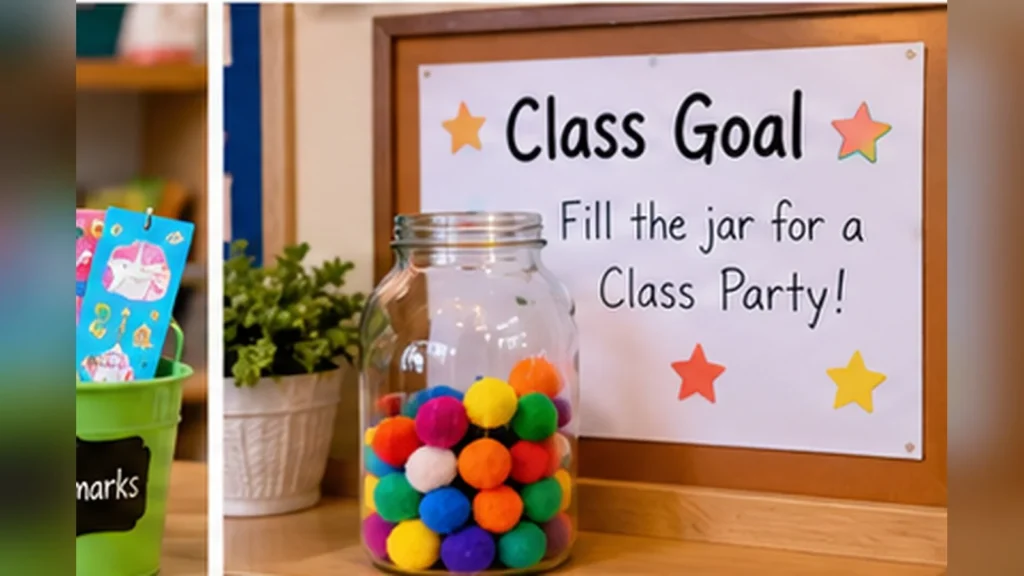
4. Whole-Class Reward System
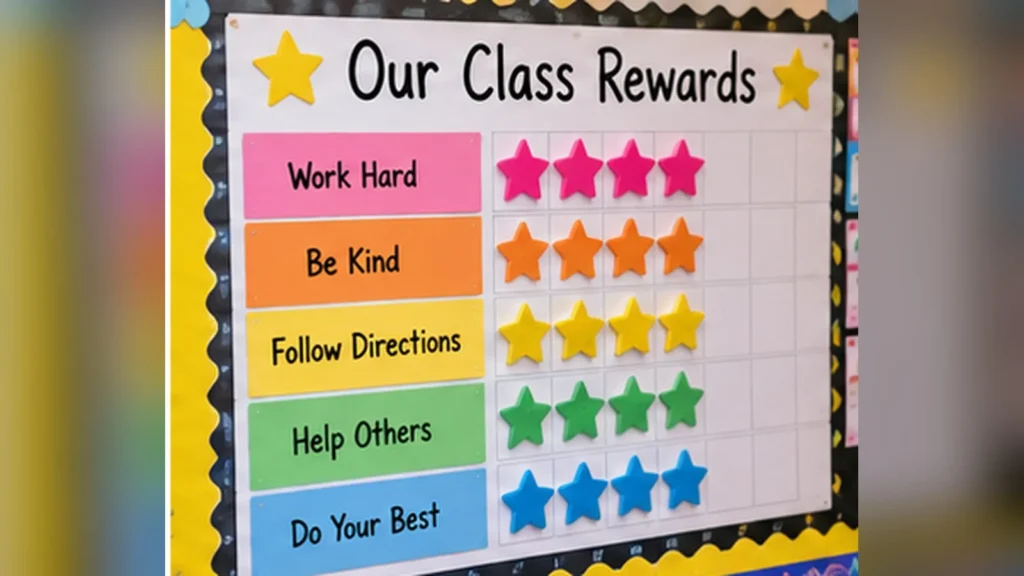
A whole-class system encourages students to work together toward a shared goal.
For example, the class might collect stars for successfully completing an established transition routine.
Once the goal is achieved, everyone participates in an enjoyable classroom activity.
Best for: Developing cooperation and shared classroom responsibility.
5. Desk Pet Milestone System
Students earn miniature animal figures and accessories as they reach individualized goals.
The system adds creativity and gives students opportunities to personalize their rewards.
Best for: Classrooms where students enjoy imaginative activities and collectible items.
Classroom Reward System Comparison
| Reward System | Preparation Level | Typical Cost | Main Benefit |
|---|---|---|---|
| Points system | Low | Free or minimal | Easy to customize |
| Ticket system | Low | Minimal | Makes progress visible |
| Classroom currency | Moderate | Free or minimal | Encourages saving and choice |
| Whole-class rewards | Low | Often free | Supports teamwork |
| Desk pets | Moderate | Varies | Encourages creative participation |
Start with one manageable system. Introducing multiple reward systems simultaneously can create unnecessary confusion.
How to Distribute Allowances in Class:
A classroom allowance system uses pretend money to help students understand responsibility, saving, and spending.
It is often part of a classroom economy where students earn currency and exchange it for approved rewards.
Step 1: Create Classroom Currency
Teachers can use printable classroom dollars, paper tokens, or a basic point-tracking sheet.
The currency should be clearly identified as pretend classroom money.
Step 2: Decide How Students Earn Allowances
Establish achievable expectations before distributing classroom dollars.
Here is a sample structure:
| Classroom Action | Example Reward |
|---|---|
| Completing a classroom job | $2 |
| Demonstrating helpful cooperation | $1 |
| Meeting an individual weekly goal | $5 |
| Practicing a new classroom routine | $2 |
The amounts are illustrative and should be adjusted based on classroom goals.
Step 3: Choose a Distribution Schedule
Classroom allowances can be distributed daily or weekly.
Younger students may benefit from more frequent feedback, while older students may enjoy a weekly classroom banking routine.
Keep the process short so it does not interfere with instruction.
Step 4: Establish a Classroom Store
Allow students to exchange their earnings for approved prizes or experiences.
For example:
| Reward | Classroom Price |
|---|---|
| Bookmark | $3 |
| Decorative pencil | $5 |
| Choose a classroom game | $8 |
| Desk pet accessory | $10 |
| Select a special classroom role | $12 |
Students can choose to spend their currency immediately or save it for another reward.
Step 5: Keep the System Fair
Every student should have realistic opportunities to participate.
Avoid systems that reward only fast academic performance, perfect attendance, or behaviors that are inaccessible to children with particular support needs.
Instead, recognize individualized progress, classroom contributions, and achievable goals.
Reward Station Ideas for Demo Teaching
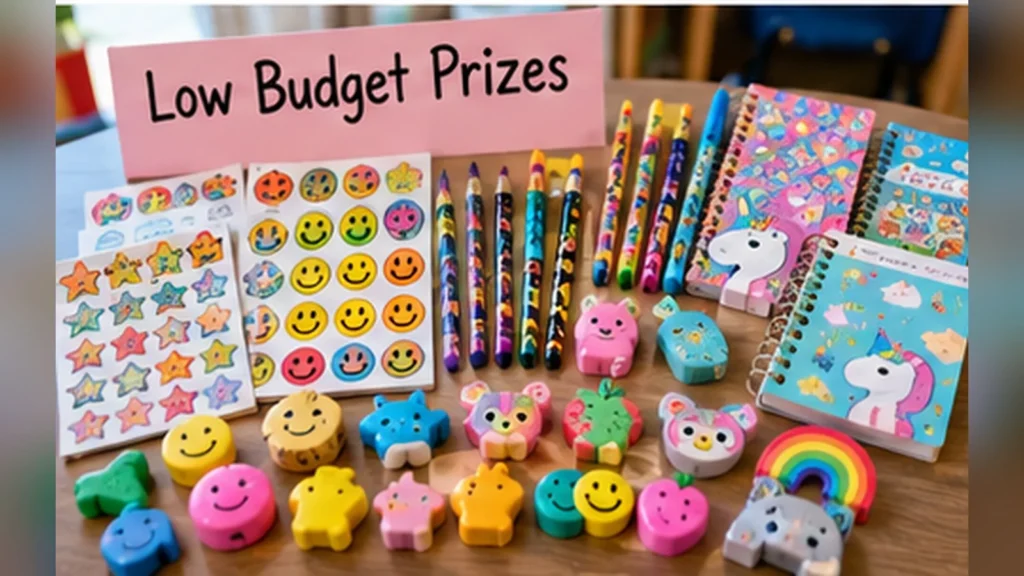
Student teachers preparing demonstration lessons often need low-budget prizes for demo teaching that are easy to transport and distribute.
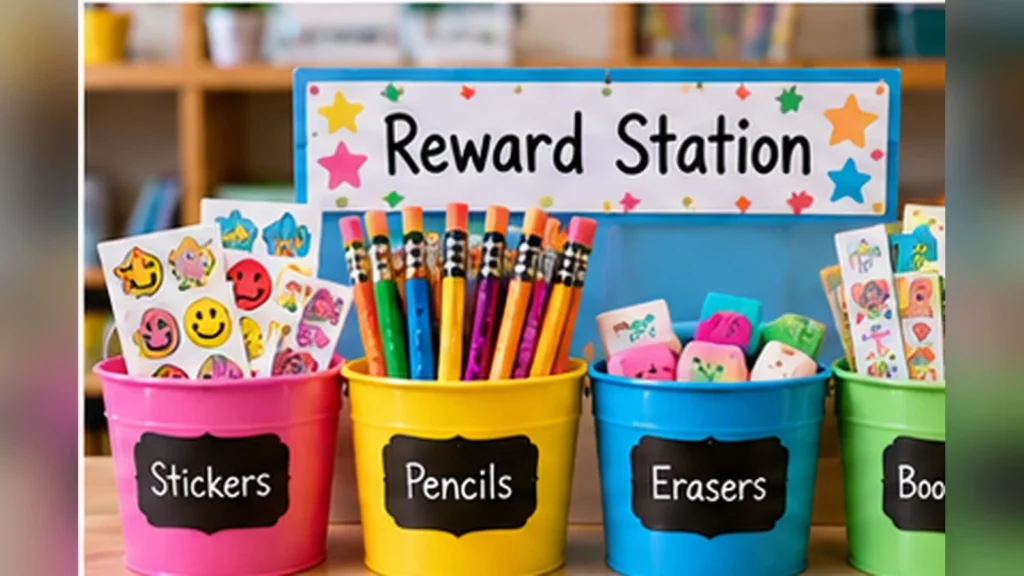
A classroom reward station can be simple and inexpensive.
Sticker Reward Station
Arrange motivational stickers in a small tray and allow eligible students to choose one.
Mystery Envelope Station
Place reward coupons or encouraging messages inside decorated envelopes.
Students can choose an envelope at a designated time.
Bookmark Reward Station
Prepare colorful bookmarks connected to the lesson topic.
For example, a literacy lesson might feature bookmarks with short reading encouragement messages.
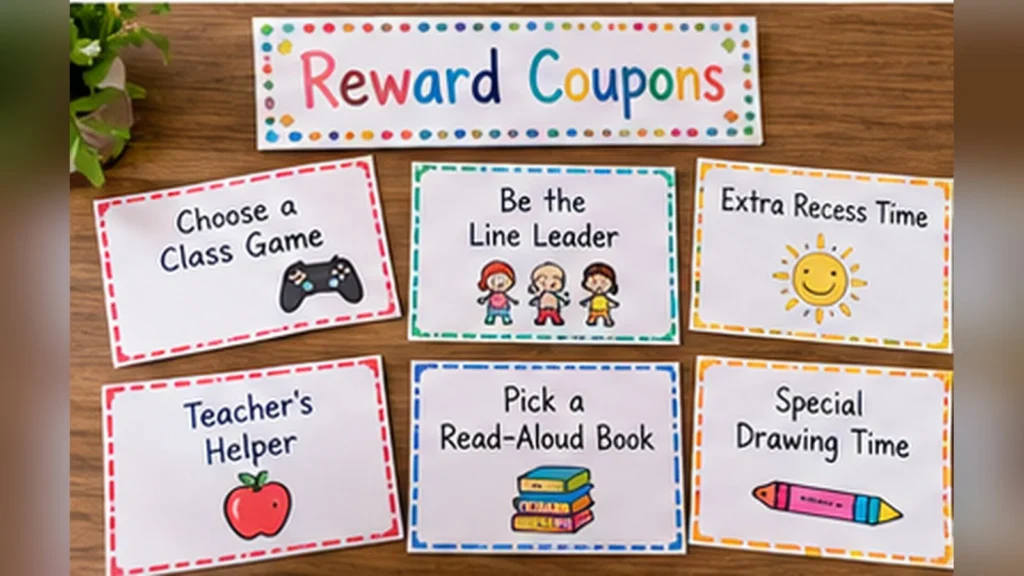
Reward Coupon Station
Create printable coupons for activities such as choosing a class game or becoming a classroom helper.
Make sure the supervising teacher approves any promised privileges.
Positive Feedback Station
Prepare appreciation cards that recognize effort, participation, cooperation, or improvement.
These cards are inexpensive and can help student teachers demonstrate positive classroom management.
For demonstration lessons, avoid elaborate systems that require significant explanation. The main priority should remain clear instruction, meaningful participation, and effective classroom routines.
Free Classroom Rewards That Students Actually Appreciate
Some of the most meaningful classroom rewards do not involve physical prizes.
Students often appreciate opportunities to make choices, take responsibility, and receive genuine recognition.
For example, a student who demonstrates improvement in reading might be invited to choose the next read-aloud book.
Another student might enjoy helping organize classroom materials or selecting an approved learning game.
Teachers can also write personalized appreciation notes that explain exactly what a child accomplished.
Instead of offering general praise, try a specific message such as:
“You worked carefully on your writing today and made an effort to improve your sentences. Your persistence really showed.”
Behavior-specific praise helps students understand which actions are being recognized.
When teachers combine meaningful feedback with enjoyable privileges, they can reduce dependence on material prizes.
How to Create a Fair and Inclusive Reward System
Classroom rewards should encourage every student, not make children feel excluded or discouraged.
A fair reward system recognizes that students have different strengths, learning needs, and opportunities.
Set Clear Expectations
Explain what students are working toward and demonstrate the expected behaviors.
Specific goals are easier for students to understand than vague instructions.
Recognize Individual Progress
A student learning a new skill may require different support from a student who has already mastered it.
Celebrate meaningful growth rather than expecting every child to reach identical milestones at the same time.
Offer Different Reward Options
Some students enjoy public recognition, while others prefer quiet encouragement.
Offer choices such as physical prizes, activities, classroom responsibilities, or private appreciation.
Avoid Public Comparisons
Do not use reward charts to embarrass students or repeatedly highlight those who have not earned prizes.
Recognition should strengthen confidence and encourage further effort.
Review the System Regularly
Observe how students respond and ask for feedback.
If rewards become distracting, expensive, or unfair, simplify the approach.
Effective classroom management relies on supportive relationships, clear routines, explicit teaching, and appropriate recognition working together.
Common Classroom Reward Mistakes to Avoid
Even creative reward systems can become ineffective when expectations are unclear or rewards are poorly managed.
Giving too many physical prizes: Constantly offering material rewards can become expensive and shift attention away from learning. Balance tangible prizes with meaningful praise and experiences.
Making rules complicated: Students should understand how to earn rewards without needing repeated explanations.
Offering rewards inconsistently: Unpredictable distribution can create confusion. Establish clear expectations and follow them fairly.
Using the same prizes repeatedly: Rotate reward choices occasionally to maintain interest.
Comparing students publicly: Focus on individual growth rather than ranking children against one another.
Removing previously earned rewards: Taking away recognition may create frustration and undermine trust. Use supportive correction and established classroom procedures instead.
Ignoring student preferences: Ask students which rewards they enjoy. Their feedback can help teachers improve the system without increasing expenses.
A classroom reward system should make teaching easier, not create an additional administrative burden.
Frequently Asked Questions About Classroom Rewards
What are the best classroom reward ideas for elementary students?
Stickers, pencils, bookmarks, desk pets, classroom privileges, reward coupons, and whole-class activities are useful options. The best rewards depend on students’ ages, interests, and individual learning needs.
What should I put in a classroom prize box?
A classroom prize box can include decorative pencils, erasers, stickers, bookmarks, mini notebooks, printable reward coupons, and age-appropriate small toys. Offering a variety of options makes it easier for students to choose something meaningful.
How do desk pets work in classrooms?
Desk pets are miniature toy animals students earn through a classroom reward system. Teachers establish rules for earning, handling, personalizing, and storing the pets. Students may also earn optional accessories as they reach additional goals.
How often should teachers give classroom rewards?
Teachers can provide specific praise throughout the day. Physical rewards may be distributed during designated times, such as weekly prize box visits, depending on students’ needs and the classroom system.
How can teachers distribute classroom allowances fairly?
Teachers can establish clear earning expectations, use pretend classroom currency, recognize individualized goals, and distribute earnings consistently. Every student should have achievable opportunities to participate.
What are some low-budget prizes for demo teaching?
Stickers, bookmarks, decorative pencils, printable reward coupons, and positive feedback cards are inexpensive options. Student teachers should confirm the host classroom’s policies before distributing rewards.
Can classroom reward systems work without prizes?
Yes. Many classrooms use non-material recognition, including specific praise, classroom responsibilities, student choice, and special activities. Physical prizes are optional rather than necessary for every classroom reward system.
How do you keep classroom rewards exciting all year?
Offer different reward choices, involve students in selecting appropriate incentives, rotate prize box items occasionally, and adjust the system as classroom needs change.
Final Thoughts
Creating an effective classroom reward system does not require expensive prizes or complicated tracking charts.
A simple prize box, a creative desk pet activity, a classroom currency program, or meaningful free privileges can all provide opportunities to recognize student accomplishments.
The most important step is choosing classroom reward ideas that are affordable, fair, and manageable for your students and teaching routine.
Start with one simple approach, explain expectations clearly, and give students meaningful opportunities to succeed.
With thoughtful planning and consistent encouragement, classroom rewards can become a positive part of everyday learning while supporting student confidence, responsibility, and growth.