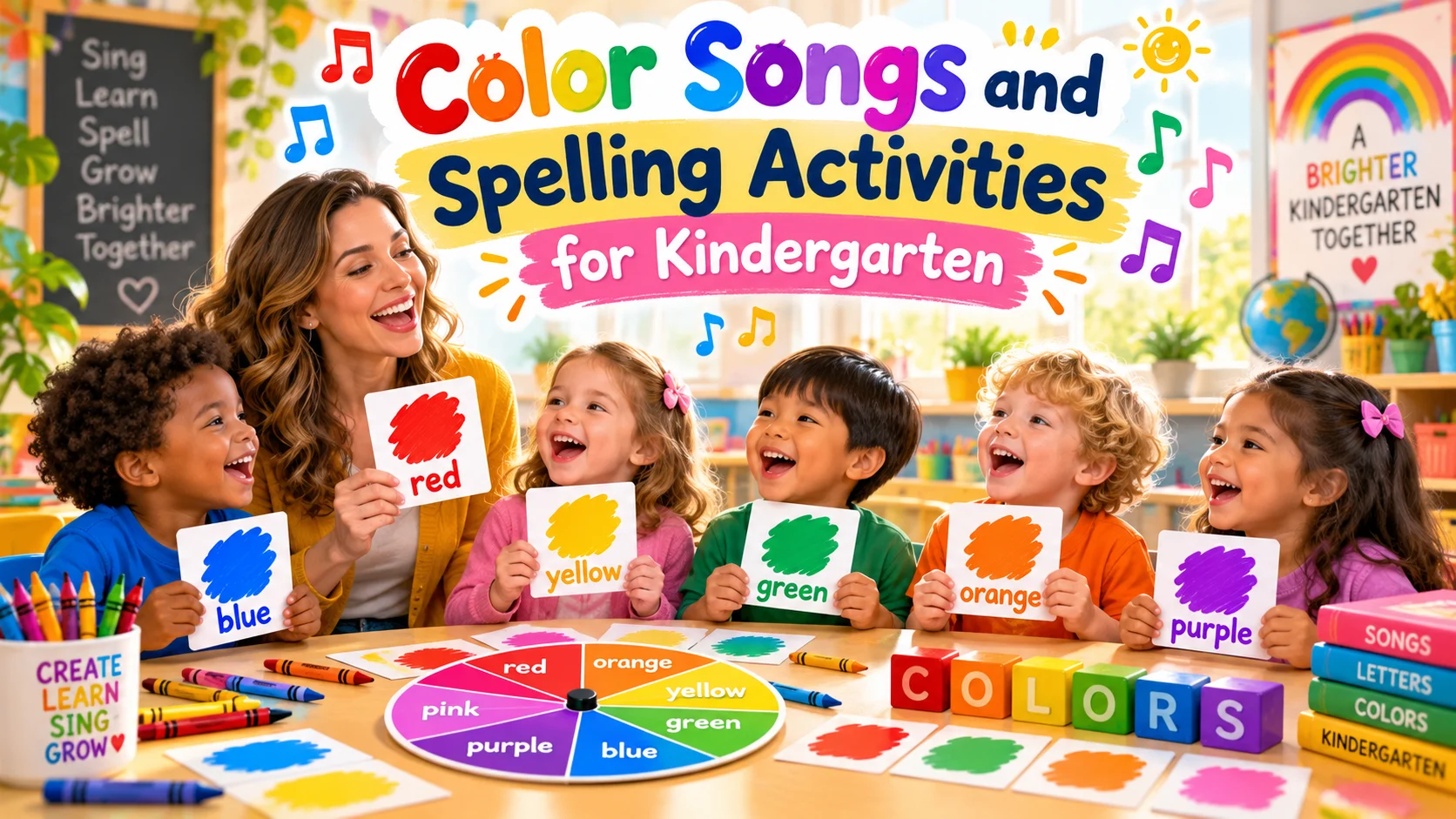

Learning colors is one of the most exciting parts of kindergarten. Children love spotting red apples, blue skies, yellow sunshine, and green leaves. But recognizing colors is only the beginning.
Color songs and spelling activities for kindergarten help children connect color names with letters and written words through music, movement, repetition, and hands-on learning.
This guide includes 10 original color songs, a spelling chart, eight interactive games, worksheet activities, and a simple five-day classroom learning plan.
Why Are Color Songs Important for Kindergarten?
Color songs offer opportunities to connect spoken color names with everyday objects, actions, and written words. Repeated lyrics help children practice familiar vocabulary in a playful classroom environment.
Color Recognition
Children identify basic colors in toys, drawings, and classroom materials.
Vocabulary Development
Repeated exposure helps children become familiar with descriptive words.
Early Literacy
Songs introduce color words, individual letters, and early spelling practice.
Active Participation
Singing, pointing, and clapping make classroom learning more interactive.
10 Fun Color Songs for Kindergarten
These original songs use familiar objects, simple vocabulary, and repetition. Sing them to a simple melody or use them as rhythmic chants.
1. Red Color Song – Find Something Red
Introduce red through apples, strawberries, and flowers.
A shiny red apple looking at me!
Red, red, clap your hands,
Find something red wherever you stand!
Activity: Ask children to identify red objects around the classroom.
R-E-D2. Blue Color Song – Beautiful Blue
Connect blue with the sky and familiar objects.
Blue is the color of the sky!
Blue, blue, what can you do?
Find something blue, one or two!
Activity: Children raise a blue card when they hear the word blue.
B-L-U-E3. Yellow Color Song – Bright Sunshine
Explore yellow through sunshine and flowers.
Yellow flowers, what a sight!
Y-E-L-L-O-W,
Yellow is a word we know!
Activity: Draw a yellow sun and arrange six letter cards to spell YELLOW.
Y-E-L-L-O-W4. Green Color Song – Growing Green
Introduce green through plants, leaves, and grass.
Green little leaves begin to grow!
G-R-E-E-N, say it with me,
Green is the color of a leafy tree!
Activity: Find green objects and notice the repeated E in GREEN.
G-R-E-E-N5. Orange Color Song – Orange Everywhere
Use pumpkins, carrots, and oranges as examples.
Orange carrots in the ground!
O-R-A-N-G-E,
Spell the word along with me!
Activity: Identify orange pictures and build ORANGE using letter tiles.
O-R-A-N-G-E6. Purple Color Song – Pretty Purple
Use purple grapes and flowers for examples.
Purple flowers looking fine!
P-U-R-P-L-E,
Purple is the word for me!
Activity: Color a picture with purple crayons, then copy the written word.
P-U-R-P-L-E7. Pink Color Song – Pretty in Pink
Pink little flowers everywhere!
P-I-N-K, clap with me,
Pink is easy to see!
Activity: Find pink objects and clap once for each letter in PINK.
P-I-N-K8. Brown Color Song – Brown All Around
Brown little acorns on the ground!
B-R-O-W-N, sing it again,
Brown is a color we can name!
Activity: Sort pictures of brown objects and arrange the letters of BROWN.
B-R-O-W-N9. Black Color Song – Beautiful Black
Black little shoes beside the wall!
B-L-A-C-K, let’s all say,
Black is the color we learn today!
Activity: Identify black objects. Notice that BLACK begins with B and ends with K.
B-L-A-C-K10. White Color Song – Wonderful White
Floating gently through the sky!
W-H-I-T-E, spell with me,
White is a color we can see!
Activity: Create a cotton cloud picture, then trace and copy WHITE.
W-H-I-T-EColor Spelling Chart for Kindergarten
A color spelling chart helps children match familiar colors to their written names. Display this chart during classroom games and early writing practice.
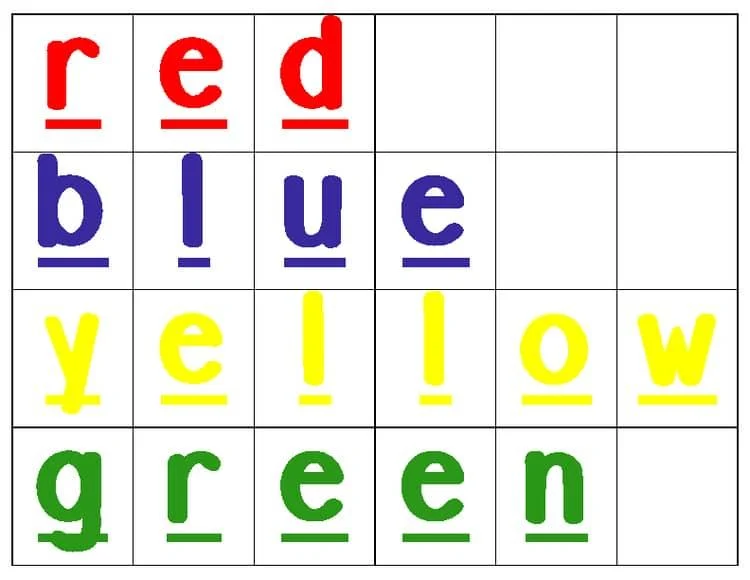
| Color | Spelling | Letters |
|---|---|---|
| Red | R-E-D | 3 |
| Blue | B-L-U-E | 4 |
| Green | G-R-E-E-N | 5 |
| Yellow | Y-E-L-L-O-W | 6 |
| Orange | O-R-A-N-G-E | 6 |
| Purple | P-U-R-P-L-E | 6 |
| Pink | P-I-N-K | 4 |
| Brown | B-R-O-W-N | 5 |
| Black | B-L-A-C-K | 5 |
| White | W-H-I-T-E | 5 |
8 Creative Spelling Colors Activities for Kindergarten
Hands-on spelling games help children practice letter order and written color names while remaining actively involved.
1. Rainbow Letter Matching
Materials: Color cards and alphabet letter cards.
- Place a color card on the table.
- Say its name together.
- Provide the letters needed to spell it.
- Arrange the letters in order.
- Read the completed word aloud.
Goal: Letter recognition and word building.
2. Color Word Hunt
Hide color-word cards around the classroom. Children find them and match each written word to an object of the same color.
Goal: Color and written-word matching.
3. Build the Color Word
Display a written color word and ask children to recreate it using magnetic letters or alphabet tiles.
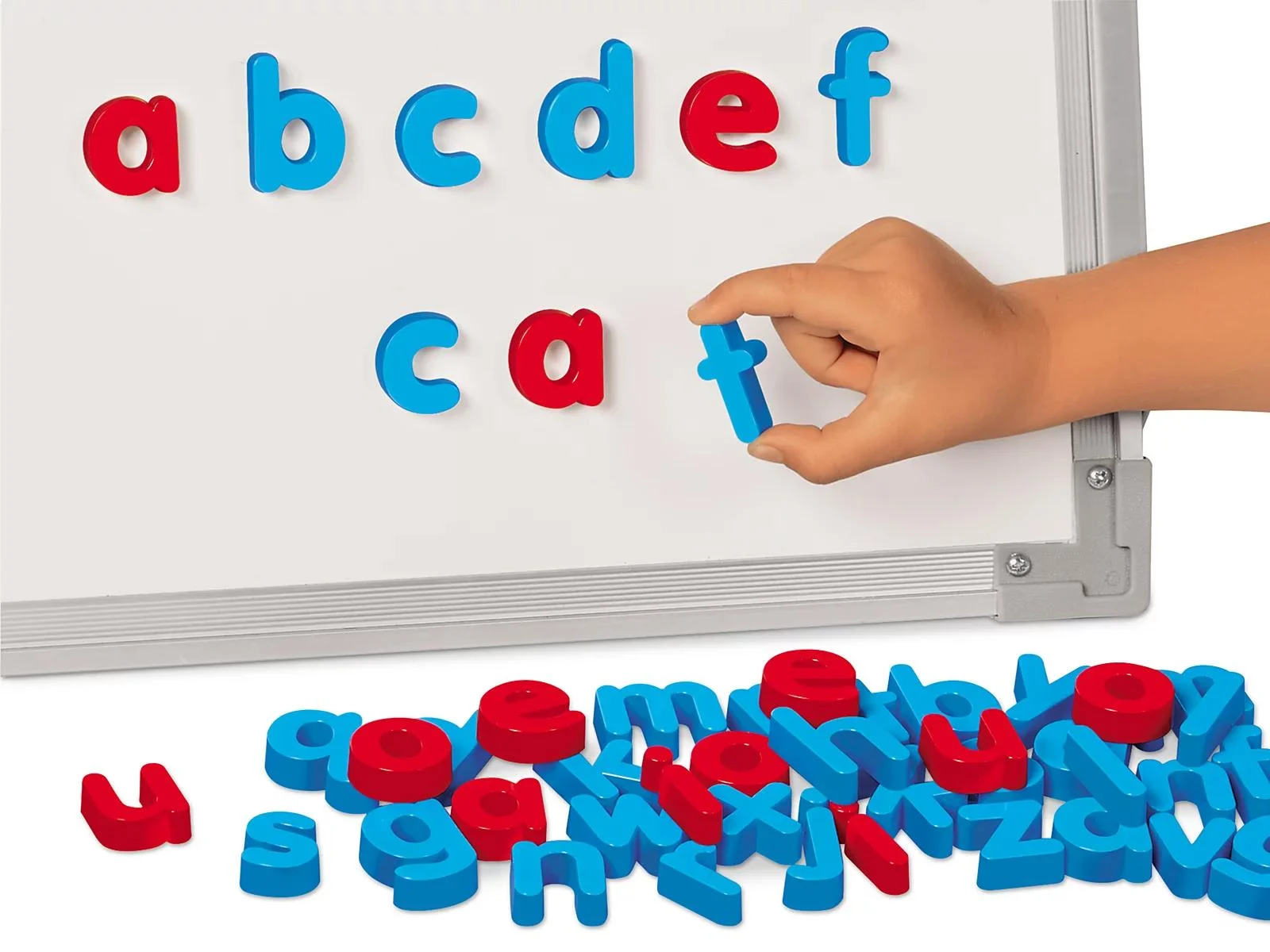
Begin with short words such as RED and BLUE. Increase the difficulty as children become more confident.
Goal: Letter sequencing and spelling.
4. Trace and Color
Provide dotted color words and matching pictures. Children trace the letters before coloring the picture.
Goal: Letter formation and recognition.
5. Color Word Bingo
Give children Bingo cards featuring written color names. Display a color, and ask children to cover the matching word.
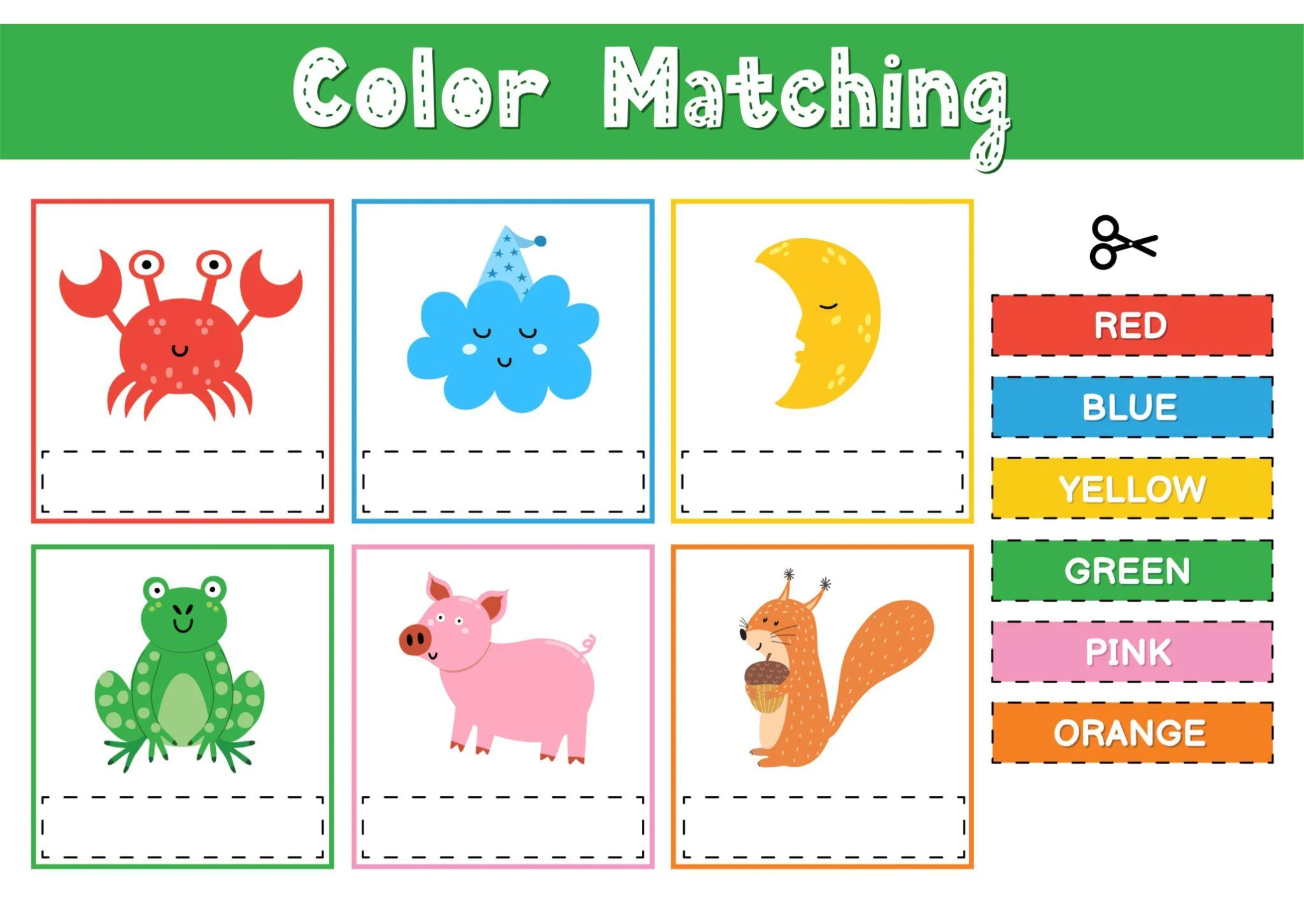
Provide a color-word reference chart for children who need additional support.
Goal: Recognizing written color words.
6. Magnetic Letter Sorting
Children choose a color-word card, collect its letters, and arrange them in the correct order. They then compare their spelling with the word card.
Goal: Letter identification and construction.
7. Missing Letter Challenge
Give children incomplete color words and ask them to identify the missing letters.
B L _ E
G R E _ N
P I _ K
Y E L L _ W
Goal: Recognizing letter patterns.
8. Color Word Memory Game
Place color cards and written word cards face down. Children turn over two cards and try to find a matching pair.
Start with three or four colors before adding more.
Goal: Visual memory and early word reading.
Color Songs With Movement and Actions
Movement activities offer another way to practice color vocabulary, listening, and following instructions.
Rainbow Freeze Dance
Play classroom-appropriate music. When it stops, display a color card. Children point to something matching that color.
Touch Something Blue
Call out a color and ask children to point to a matching classroom object. Use pointing when space is limited.
Rainbow Action Chant
Blue means tap, tap, tap!
Yellow means reach up high,
Green means wave and say goodbye!
Clap the Color Letters
Display a written color word and clap once for each letter.
RED: 3 claps.
BLUE: 4 claps.
GREEN: 5 claps.
These represent letters, not syllables.
Printable-Style Color Spelling Worksheets
Simple worksheets can reinforce color-word recognition and letter formation. Keep written activities short and combine them with playful learning.
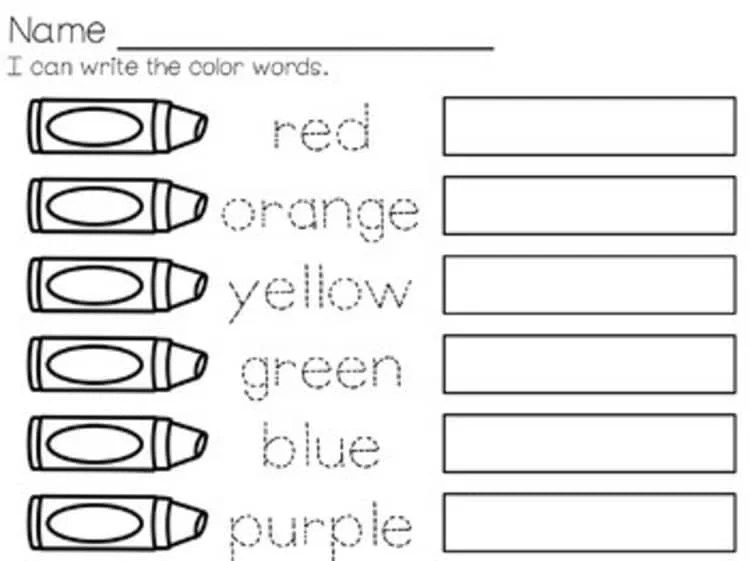
Worksheet 1: Trace the Color Words
Children trace the letters of familiar color words using dotted-letter examples.
BLUE
GREEN
PINK
YELLOW
Worksheet 2: Match Words to Colors
Display color swatches and written color names in separate columns. Children draw lines between matching pairs.
Worksheet 3: Fill in Missing Letters
Show incomplete words and provide a spelling chart for reference.
B L _ E
P _ N K
G R _ E N
W H _ T E
Worksheet 4: Color and Write
Children color simple objects and write or trace their color names. Useful pictures include apples, leaves, bananas, and pumpkins.
Worksheet 5: Find the Color Word
Create a beginner-friendly word-search grid featuring short color words such as RED, BLUE, and PINK.
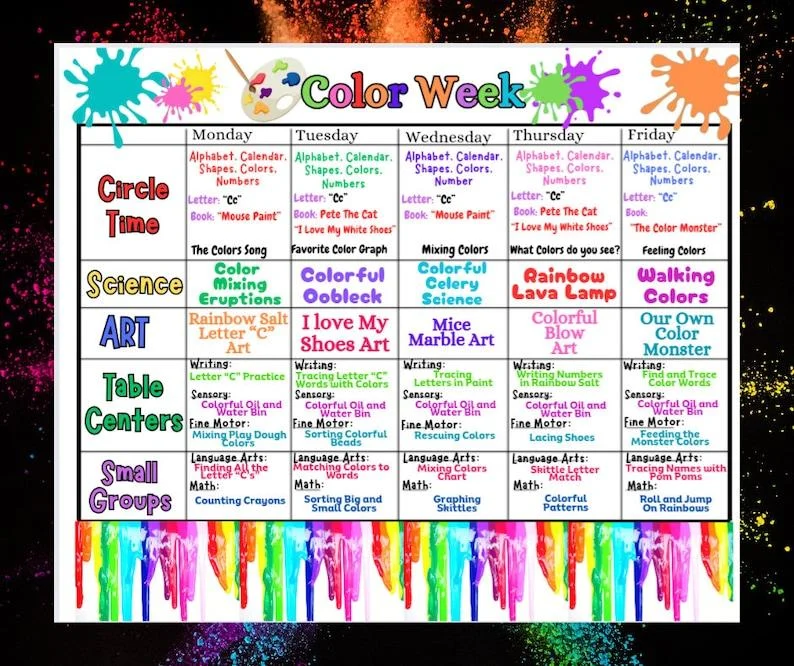
5-Day Color Songs and Spelling Lesson Plan
Use this simple weekly schedule to combine color identification, songs, games, and spelling practice.
| Day | Focus Colors | Classroom Activity | Learning Goal |
|---|---|---|---|
| Monday | Red and Blue | Color songs and color hunt | Recognize basic colors |
| Tuesday | Yellow and Green | Flashcards and word building | Match written color names |
| Wednesday | Orange and Purple | Letter-matching games | Recognize letters |
| Thursday | Pink, Brown, Black, White | Color Bingo and sorting | Review color names |
| Friday | All 10 Colors | Rainbow song and spelling review | Practice learned skills |
Suggested 15-Minute Daily Routine
- Minutes 1–3: Sing a color song.
- Minutes 4–7: Review color and word cards.
- Minutes 8–12: Play a matching or spelling game.
- Minutes 13–15: Review and celebrate participation.
Teachers can adjust activity duration based on attention spans and classroom needs.
Teaching Tips for Different Learning Levels
Children develop color recognition and spelling skills at different rates. Adapt activities to their abilities.
Beginners
Start with identifying and naming colors before expecting written word recognition.
Children Learning Letters
Use color-word cards with alphabet tiles. Practice identifying first letters and arranging letters in order.
Emerging Spellers
Encourage children to build or write familiar words before checking their spelling against a model.
Multilingual Learners
Pair spoken color names with clear visuals, written words, and opportunities for repetition.
Extra Support
Introduce fewer colors at a time and provide pointing, tracing, or matching alternatives.
Common Mistakes When Teaching Color Words
| Common Mistake | Better Approach |
|---|---|
| Teaching every color word at once | Introduce a few familiar words first |
| Only using worksheets | Combine songs, movement, and games |
| Expecting immediate spelling accuracy | Provide regular guided practice |
| Teaching letter names without written words | Display words while naming their letters |
| Making lessons too long | Use short, engaging activities |
| Comparing children’s progress | Adapt teaching to individual needs |
How to Check Children’s Color and Spelling Progress
Teachers can observe learning through simple classroom tasks instead of long tests.
- Point to a color when its name is spoken.
- Identify the color shown on a card.
- Match a written color word to its color.
- Identify letters within a familiar color word.
- Build or write color words with appropriate support.
Record which tasks children complete independently and which still need guidance. Remember that color recognition, word reading, and independent spelling are different learning goals.
Frequently Asked Questions
What are the easiest color songs for kindergarten?
Short songs about familiar colors such as red, blue, green, and yellow are good starting points. Repetition and actions make them practical for young learners.
How do you teach kindergarten children to spell colors?
Begin with color recognition, introduce written color words, identify their letters, and practice building words with alphabet cards.
Which color words should children learn first?
Familiar, shorter words such as RED and PINK can be useful starting points. Adapt the order to each child’s learning readiness.
Can color songs help with spelling?
Songs provide repeated opportunities to hear color names and letter sequences. Pair songs with written examples and guided spelling practice.
What are fun color spelling games?
Color Word Bingo, Rainbow Letter Matching, Magnetic Letter Sorting, Missing Letter Challenge, and Color Word Memory are useful classroom activities.
How long should a color lesson last?
A short 10–15-minute block may be a useful starting point. Adjust the duration to children’s attention spans and classroom routines.
What if a child recognizes colors but cannot spell them?
Color recognition and spelling are separate skills. Continue with songs, letter cards, tracing, and guided practice suited to the child’s needs.
Make Learning Colors Fun Every Day
Color songs and spelling activities for kindergarten can make early literacy practice enjoyable and interactive. Songs, visual examples, movement, letter cards, and simple games provide different ways to learn.
Start with one familiar color song, introduce its written word, and follow with a short matching or spelling activity. Gradually increase the challenge as children build confidence.
The goal is to encourage curiosity, confidence, and a positive attitude toward learning.