

A four-day school week gives students an extra weekday away from regular classes, usually in exchange for longer school days. While the schedule may offer flexibility for families and teachers, it also raises questions about learning time, childcare, and educational requirements.
Understanding shortened school week regulations is essential before deciding whether this model works for a community. In the United States, school calendar requirements differ by state, and districts must follow applicable instructional time rules.
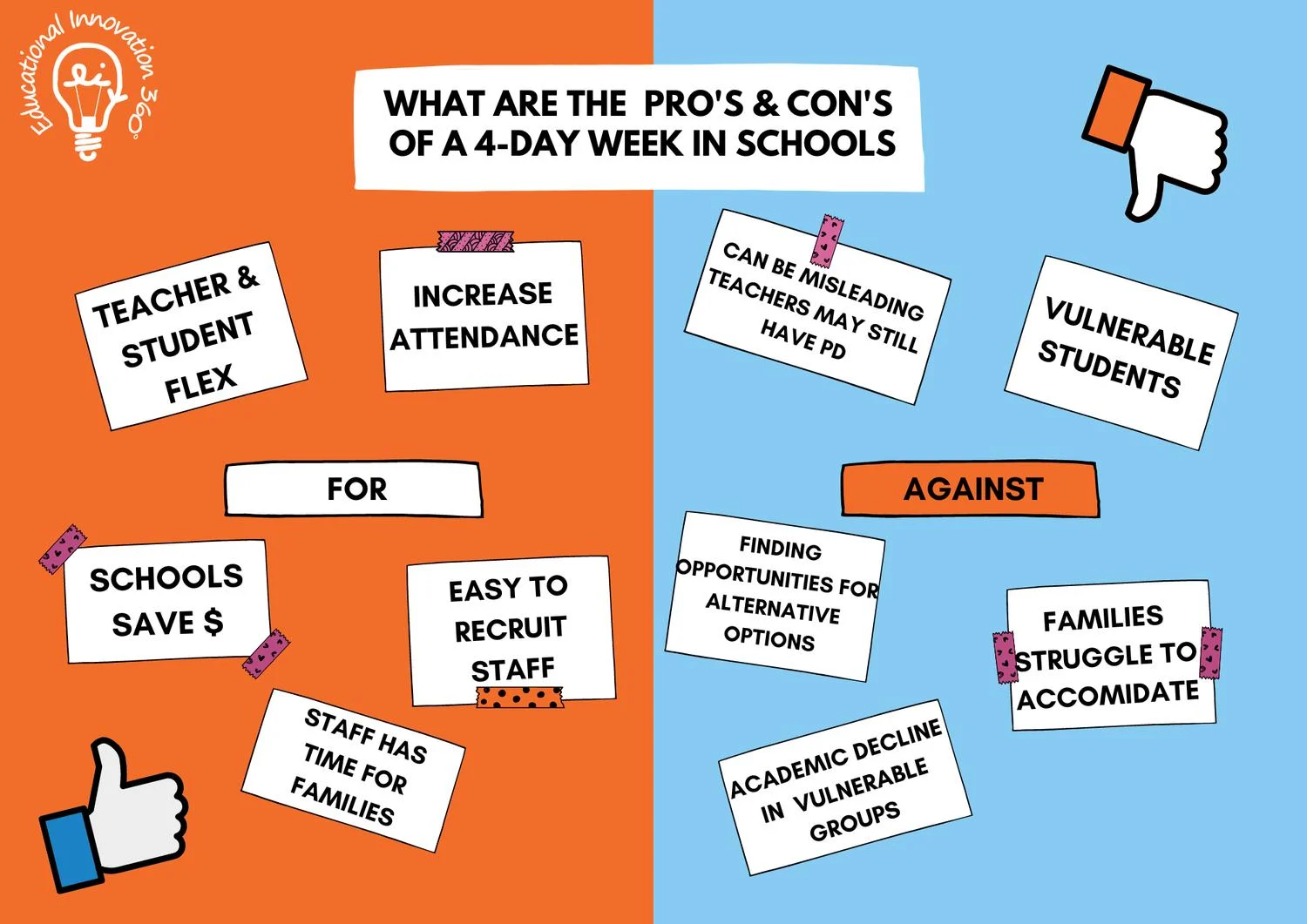
A four-day school week is permitted in many U.S. states when school districts meet state instructional requirements and obtain any necessary approvals. Potential benefits include scheduling flexibility and teacher recruitment, while drawbacks include childcare challenges, longer school days, and possible academic disadvantages.
What Is a Four-Day School Week?
A four-day school week is an alternative academic calendar in which students attend regular classes four days instead of five. Most participating schools operate Monday through Thursday, although some use Tuesday through Friday.

To meet instructional requirements, schools often extend the length of each school day. Some districts also provide optional tutoring, enrichment activities, or professional development on the fifth weekday.
The model is particularly common in rural districts, where schools may face staffing challenges, long transportation routes, and limited budgets.
Shortened School Week Regulations in the United States
There is no single nationwide rule authorizing every public school to adopt a four-day week. State education laws establish school calendar requirements, while local districts make scheduling decisions within those legal limits.

Minimum Instructional Time Requirements
States commonly establish minimum instructional requirements through school days, instructional hours, or both. A district may be allowed to operate fewer days if it provides enough qualifying instructional time.
However, longer school days do not automatically make a four-day schedule legal. Districts must check their state’s specific requirements, including any grade-level differences.
State Approval and District Responsibilities
Depending on the state, districts may need to submit a proposed calendar, obtain a waiver, receive state approval, or demonstrate compliance with flexible scheduling rules.
School boards should also consider transportation, attendance policies, special education services, school meals, and support for students who need additional instruction.
| Regulatory Area | What Schools Must Consider |
|---|---|
| Instructional hours | Meeting state-mandated teaching time requirements. |
| School calendar | Complying with minimum days or approved alternatives. |
| State approval | Obtaining permission or waivers where required. |
| Student services | Maintaining required educational and accessibility services. |
| District planning | Establishing transportation, meal, staffing, and family support arrangements. |
The National Conference of State Legislatures provides information about different state approaches, including flexible instructional requirements and approval processes.
Which States Allow Four-Day School Weeks?
Four-day schedules have been implemented in states such as Colorado, Idaho, Oklahoma, Oregon, and Missouri. However, their legal requirements and approval processes are not identical.
For example, one state may emphasize minimum instructional hours, while another may establish additional calendar conditions or administrative requirements.
Parents and school officials should consult their state department of education for current guidance before assuming a particular four-day calendar is permitted.
Advantages of a Four-Day School Week
Supporters of shorter school weeks highlight flexibility, teacher recruitment, and possible cost savings. The actual benefits depend on how individual districts implement the schedule.

More Scheduling Flexibility
Families may gain additional time for appointments, activities, and family responsibilities. Students may also have more opportunities for independent learning or extracurricular activities.
Teacher Recruitment
A shorter workweek can make a district more appealing to some teachers, particularly where recruiting and retaining educators is difficult.
Potential Operating Savings
Districts may reduce some transportation, food service, or building operating expenses. Savings depend on whether facilities and services continue operating on the fifth day.
Additional Planning Opportunities
Some schools use the fifth day for teacher development, lesson preparation, tutoring, or optional student activities.
Disadvantages of a Four-Day School Week
Although the model offers potential benefits, it can also create practical and educational challenges for students and families.

Childcare Challenges
Working parents may need childcare on the additional weekday off, creating extra costs and scheduling difficulties.
Longer School Days
Extended school hours may be tiring for younger students, particularly those with long bus journeys or after-school commitments.
Academic Concerns
Research has identified slower academic achievement growth in some four-day districts. Reduced instructional time can be an important concern.
Access to Student Services
Students who depend on school meals, tutoring, or supervised activities may face difficulties if adequate fifth-day support is unavailable.
Four-Day vs. Five-Day School Week: Key Differences
Both schedules can provide quality education, but they differ in daily routines, family responsibilities, and how instructional time is distributed.
| Factor | Four-Day Week | Five-Day Week |
|---|---|---|
| Attendance | Four regular school days | Five regular school days |
| Daily hours | Typically longer | Typically shorter |
| Childcare | May require fifth-day arrangements | Follows traditional weekday coverage |
| Transportation | Usually fewer weekly bus-service days | Usually five bus-service days |
| Learning time | Depends on the district’s instructional schedule | Depends on the district’s instructional schedule |
| Family routines | Additional weekday flexibility | More traditional weekly routine |
How Does a Four-Day School Week Affect Students?
The effects of a shorter school week vary according to student age, district resources, instructional hours, and how schools organize learning activities.

Academic Performance
A 2021 RAND study found that students in four-day districts generally experienced slower academic achievement growth than comparable students in five-day districts.
Research published in the Journal of Public Economics also found reductions in math and reading achievement after some Oregon schools adopted shorter weeks with less instructional time.
Attendance and Student Well-Being
An additional weekday off may provide more personal time, but evidence does not consistently show improved student attendance.
Longer school days may also affect students differently depending on their age, transportation time, and learning needs.
How Does a Four-Day School Week Affect Families and Schools?
Teachers and School Staff
Some educators value the scheduling flexibility of a four-day week. However, daily workloads may become more concentrated, and work expectations on the fifth day vary by district.
Working Parents
Families with flexible schedules may welcome the change. Parents who work traditional five-day schedules, however, may face additional childcare expenses and difficulty arranging supervision.
School District Budgets
Four-day schedules can lower selected operating expenses, but they do not necessarily reduce major fixed costs. RAND’s research found that overall district savings were relatively small.
Should Schools Adopt a Four-Day School Week?
No single schedule is ideal for every district. Before adopting a four-day school week, education leaders should evaluate legal compliance, academic outcomes, available resources, and family needs.

Questions Parents Should Ask
- Does the proposed calendar meet state instructional requirements?
- Will students receive the same amount of instructional time?
- Are childcare programs available on the fifth day?
- Will school meals and support services remain accessible?
- How will the district monitor academic achievement?
- What savings or staffing benefits does the district expect?
Districts should communicate their plans clearly and evaluate results after implementation rather than assuming that a shorter schedule will automatically improve educational outcomes.
Frequently Asked Questions
Are four-day school weeks legal in the United States?
Yes, many states permit four-day school weeks under applicable instructional time and calendar requirements. However, the rules vary by state, and some districts may need additional approval or waivers.
How many instructional hours are required for a four-day school week?
There is no universal number of instructional hours for all U.S. schools. Requirements differ by state and sometimes by grade level. Schools must meet the applicable state standards.
Which states have four-day school weeks?
Four-day school schedules have been used in states including Colorado, Idaho, Oregon, Oklahoma, and Missouri. Current participation and legal requirements should be confirmed with the relevant state education agency.
Do students learn less with a four-day school week?
Not necessarily in every district, but some research has found slower academic achievement growth under four-day schedules. Outcomes may depend on instructional time, student support, and implementation quality.
What is the biggest disadvantage of a four-day school week?
One major disadvantage is the extra childcare burden on working families. Potential reductions in instructional time and longer school days are also important concerns.
Do teachers get paid less on a four-day school week?
Not automatically. Teacher pay depends on employment contracts, district policies, and state requirements. A four-day student schedule does not necessarily mean a reduced teacher salary or work obligation.
Is a four-day school week better for families?
It depends on each family’s circumstances. Some benefit from an extra weekday of flexibility, while others may face additional childcare costs or difficulties managing their work schedules.
Final Thoughts on Four-Day School Weeks
A four-day school week can provide flexibility and help some districts address staffing or financial challenges. However, the schedule may also create childcare difficulties and raise concerns about academic performance.
Understanding shortened school week regulations, maintaining adequate instructional time, and providing support for students are essential to making the model work effectively.
For parents and school leaders, the best decision is one based on state requirements, reliable research, and the specific needs of the school community.