


Introduction
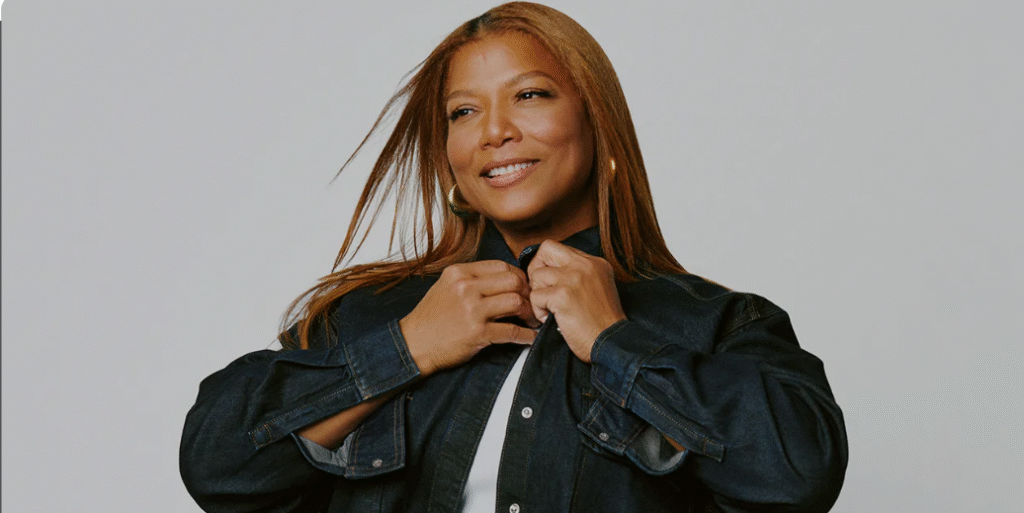
Imagine growing up in Newark, New Jersey, armed with nothing but raw talent, bold ambition, and an unshakable spirit. That’s exactly how Dana Elaine Owens—better known as Queen Latifah—transformed herself from a high-school rapper into a global icon in music, film, and culture. Her journey blends artistic innovation with fearless advocacy—and it’s one you’ll want to hear from beginning to legendary now.
Queen Latifah: From Newark’s Streets to Stardom
Early Life & Musical Breakthrough
Queen Latifah was born Dana Elaine Owens on March 18, 1970, in Newark, New Jersey, and grew up primarily in East Orange. Her father was a police officer and mother a teacher; they divorced when she was ten WikipediaHELLO!. Raised in the Baptist faith, she attended Catholic schools and played basketball as a power forward—her stage name “Latifah,” meaning “delicate” or “kind,” was chosen by her at age eight from a book of Arabic names.
In high school, she formed the rap group Ladies Fresh (later embedded into the Flavor Unit crew), and her talent caught the attention of DJ Mark the 45 King. At just 18, she signed with Tommy Boy Records, releasing her debut single, “Wrath of My Madness” (1988), followed by the feminist-infused debut album All Hail the Queen (1989).
All Hail the Queen—a vibrant mix of hip-hop, reggae, and jazz—peaked at #6 on Billboard’s Hip-Hop/R&B chart and earned a place in the 2023 National Recording Registry for its cultural significance.

From Grammys to Gold Records
Her 1993 album Black Reign, a heartfelt tribute to her late brother, became her most successful album to date, certified Gold and featuring the Grammy-winning single “U.N.I.T.Y.”, which stood against misogyny and domestic violence WikipediaEBSCO.
Transition into Acting & Empowering Storytelling
In 1991, Queen Latifah made her film debut with Jungle Fever. Soon after, she starred as Khadijah James in the successful sitcom Living Single (1993–1998), becoming a cultural face of the ‘90s.
Her Hollywood ascent included roles in Set It Off (1996), Chicago (2002)—earning an Academy Award nomination—Hairspray (2007), and HBO’s Bessie (2015), where she portrayed blues legend Bessie Smith with critical acclaim.
Reinvention and Broad Influence
Beyond music and acting, she co-founded Flavor Unit Entertainment, producing content like Steel Magnolias (2012), The Equalizer reboot (2021–2025), and more EBSCOAAE Speakers Bureau.
As host of The Queen Latifah Show (1999–2001, revived 2013–2015), she showcased her warm, charismatic presence and earned critical acclaim.
Legacy, Social Impact & Recent Highlights
Queen Latifah has been a staunch advocate for body positivity, breaking beauty norms and urging self-acceptance throughout her career Vogue. In 2023, she made history as the first female rapper to receive a Kennedy Center Honor Encyclopedia Britannica.
Her role in The Equalizer brought her back into TV prominence, though the series concluded in 2025. Still, her impact on the set and enthusiasm for mentorship centered her as a family-like force behind the scenes New York PostEW.comPeople.com.

Human Behind the Icon—Personal Life & Resilience
Queen Latifah has fiercely protected her privacy, proudly stating her personal life is off-limits—her spirituality, strength, and unapologetic confidence speak louder than rumors Biography.
Her life hasn’t been without pain: she lost her brother in 1992, survived a violent incident during a carjacking, and overcame a DUI arrest—all of which she addressed candidly in her autobiography Ladies First: Revelations of a Strong Black Woman (1999).
Quick Facts (Featured Snippet Ready)
Who is Queen Latifah?
- Born: March 18, 1970, Newark, New Jersey (Dana Elaine Owens)
- Renowned musician, actress, producer, and activist
Notable Milestones
- Debut album All Hail the Queen (1989), inducted into the National Recording Registry
- Grammy winner for “U.N.I.T.Y.” from Black Reign (1993) Wikipedia
- Oscar nomination for Chicago (2002)
- First female rapper to receive the Kennedy Center Honor (2023)
- Starred in and executive produced The Equalizer (2021–2025)
Why Queen Latifah Inspires Us
- Versatility Personified: From rap to acting to production and fashion—she refuses to be boxed in.
- Empowerment Embodied: She’s built a career on celebrating women, pride, and authenticity.
- Cultural Icon: She paved a way for future female rappers and Black entertainers.
Conclusion & Call to Action
Queen Latifah is more than a star—she’s a movement in motion, a symbol of strength, innovation, and enduring grace. As she transitions between genres, roles, and eras, her legacy only grows.
Curious what’s next for this renaissance woman? Stay tuned for my next post: “Queen Latifah’s Future: Producing Change On-Screen and Off”—where we’ll explore her upcoming projects, mentorship, and cultural influence.

[…] growing up in a household where football wasn’t just a game—it was part of your family DNA. For Jamie Burrow, the eldest brother of NFL superstar quarterback Joe Burrow, this was reality. While his younger […]
[…] influence extended beyond personal awards. Like Queen Latifah, who left a mark in entertainment, Lowe’s presence shaped his field. He introduced fresh […]
[…] presented at academic conferences, where her contributions can be compared to public figures like Queen Latifah, who use platforms to share ideas and inspire. These talks extend her influence and showcase her […]